On This Page
Description
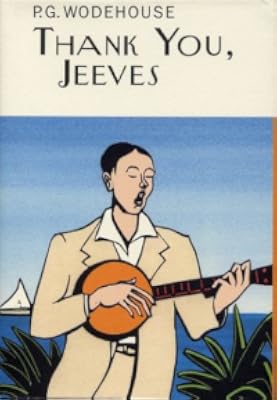
Bertie Wooster was indignant-and with reason. The neighbors had dared to make a fuss about the assiduous practicing of his beloved banjolele. But a further blow was to come. "If," said Jeeves, "it is really your intention to continue playing that instrument, I have no option but to leave." Haughtily rejecting this ultimatum, Bertie sought refuge in a cottage owned by his buddy, Lord Chuffington. But the peace and quiet were rudely shattered by the arrival of Pauline Stoker-to whom he was show more once unnervingly engaged-and her formidable father, who saw in Bertie a pestilential suitor barmy to the core. show lessTags
Recommendations


















Member Recommendations
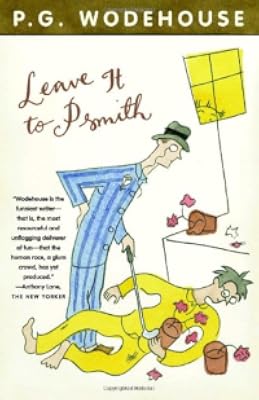
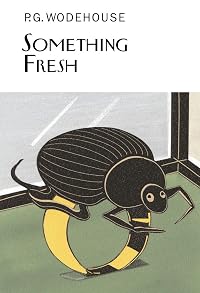
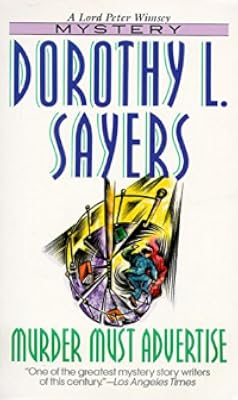
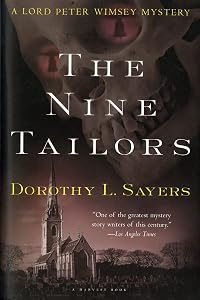
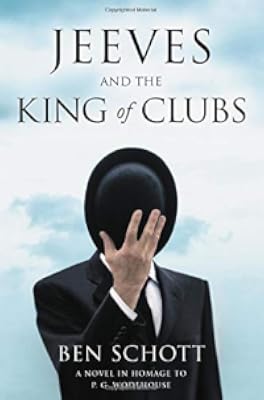
themulhern Lord Peter is pretty obviously inspired by Bertie, as Bunter by Jeeves. This just seems impossible to deny.
Note that this Wodehouse was published after "Whose Body?". But the character of Bertie had been around for about a decade by the time "Whose Body?" was published.
Member Reviews
"I mean, if you're asking a fellow to come out of a room so that you can dismember him with a carving knife, it's absurd to tack a 'sir' on to every sentence. The two things don't do together."
Bertie Wooster has taken up a musical instrument, the banjolele but when his playing sparks complaints from his London neighbours rather than countenance abandoning his art Bertie decides to move to the country where there are fewer people to annoy. When it becomes clear that Bertie will continue to make his music within the confines of a small cottage, his man-servant, Jeeves, offers his resignation rather than accompany him. Undeterred, Bertie pursues his plan anyway.
The cottage is rented from his old school friend, Lord Chuffnell, who resides show more in a stately pile nearby. On hearing that Jeeves has left Bertie's service, Chuffy hires him for himself.
On arrival at Chuffnell Regis Bertie discovers that Chuffy has fallen madly in love with an American heiress, Pauline Stoker, who was once engaged to Bertie until her father put a swift end to their planned nuptials after hearing tales of Bertie’s madcap exploits from Bertie's old nemesis Sir Roderick Glossop. What is more all of these characters are now residing nearby.
Throw into the mix a pair of over-zealous policemen, two young boys who could only be loved by their mothers and you get the usual mixture of farce and misplaced good intentions. Throughout it all Jeeves remains calm and only he can ultimately save the day.
Now I should point out that this book was written in the 1930's and as such does contain numerous racial slurs that today's readers would find distasteful. Also I should point out that I am a great fan of Mr Wodehouse's writings, usually finding myself laughing out loud in public. However, whether or not it was the racial epithets or something else I'm not sure but I do know that I found that particular tale fell a little flat for me. Maybe I have just become immunised to this kind of humour and although it did at times make me smile, in general I found it just a tad predictable.
That said and done if you are looking for a bit of escapism amongst the privileged classes with clever writing and no sex or violence then this is a fun and easy read. show less
Bertie Wooster has taken up a musical instrument, the banjolele but when his playing sparks complaints from his London neighbours rather than countenance abandoning his art Bertie decides to move to the country where there are fewer people to annoy. When it becomes clear that Bertie will continue to make his music within the confines of a small cottage, his man-servant, Jeeves, offers his resignation rather than accompany him. Undeterred, Bertie pursues his plan anyway.
The cottage is rented from his old school friend, Lord Chuffnell, who resides show more in a stately pile nearby. On hearing that Jeeves has left Bertie's service, Chuffy hires him for himself.
On arrival at Chuffnell Regis Bertie discovers that Chuffy has fallen madly in love with an American heiress, Pauline Stoker, who was once engaged to Bertie until her father put a swift end to their planned nuptials after hearing tales of Bertie’s madcap exploits from Bertie's old nemesis Sir Roderick Glossop. What is more all of these characters are now residing nearby.
Throw into the mix a pair of over-zealous policemen, two young boys who could only be loved by their mothers and you get the usual mixture of farce and misplaced good intentions. Throughout it all Jeeves remains calm and only he can ultimately save the day.
Now I should point out that this book was written in the 1930's and as such does contain numerous racial slurs that today's readers would find distasteful. Also I should point out that I am a great fan of Mr Wodehouse's writings, usually finding myself laughing out loud in public. However, whether or not it was the racial epithets or something else I'm not sure but I do know that I found that particular tale fell a little flat for me. Maybe I have just become immunised to this kind of humour and although it did at times make me smile, in general I found it just a tad predictable.
That said and done if you are looking for a bit of escapism amongst the privileged classes with clever writing and no sex or violence then this is a fun and easy read. show less
> Say what you like against civilization, it comes in dashed handy in a crisis like this. It may be a purely artificial code that keeps a father from hoofing his daughter's kisser when they are fellow guests at a house, but at this moment I felt that I could do with all the purely artificial codes that were going.
I had never read any P G Wodehouse before, but this will not be my last, and it was a very enjoyable light-hearted read, a bit of a relief from grimmer reading matter (though with some of the outdated racial attitudes of the time, albeit not maliciously intended). This was the author's first full length Jeeves novel, published in 1934, though Jeeves himself is absent from large parts of it, having left his master Bertie Wooster's service as he cannot stand the latter's playing on his newly acquired banjolele (a cross between a banjo and a ukelele). The story is very funny, of course, and much of the dialogue hilarious and mannered; I remember seeing the TV adaptation featuring Hugh Laurie and Stephen Fry in the 1990s, and Fry was the show more perfect Jeeves with his deadpan dry wit. Good stuff, though perhaps slightly long-winded in places. show less
Bertram Wooster has a problem. His neighbors are complaining about his banjolele playing. The building manager has given him an ultimatum: stop playing the thing or move elsewhere. And, naturally, being the man he is, he won't give up the instrument for anything. Not even when his trusty valet Jeeves proclaims that he will quit if forced to bear the music within the confines of the small country cottage Wooster proposes to move to. Take the cottage Wooster does, moving onto land owned by an old school friend, but when that friend falls in love with the daughter of a rich American man who tries to confine said daughter to his yacht, fearing that she's going to attempt to run off with Wooster, everyone falls into a tangle. Will Wooster be show more able to extricate himself and play successful matchmaker for the two lovebirds? Or will it all descend into chaos?
Originally written in the 1930's, this is a book that shows its age. In terms of the writing itself, you'll find a casual style with a lot of British-isms, many of which I didn't recognize, but in all cases I was able to rely on context clues to understand without much difficulty.
Apart from that, the simple style makes for a quick and easy read. This isn't a book that forces you to read slowly and thoughtfully as it presents depth of emotion or of thought. Instead, it focuses entirely on humor. The cleverness is in its humor. The most important feature of the writing is its comedic timing. And in this way, the book certainly excels.
But unfortunately, the slang terms and the lack of modern technology are not the only things that show this book was written in the early 1900's. And nothing quite kills a good laugh like racial slurs and blackface. There are other points as well, like sexism and some problematic attitudes regarding mental health, but the racism really takes the cake. And sticks around a good long while, banishing all hope that it might at least be over quickly.
It's really a shame, since I picked this up hoping for a good laugh and a lightened mood. It had everything else going for it. The situations created a compelling plot without ever being so serious that I worried for the characters instead of being able to laugh at their predicaments. The narrator was likeable and just the right degree of ridiculous. Several of the jokes were clever and not ones that I'd ever heard before. If only society hadn't possessed so many horrendous attitudes during the time that it was written, it might have really been something.
So should you read it? Maybe if you want to study it, for the sake of cultural relevance, for the sake of learning how to write in a similar comedic style. But if you're looking for a humorous book to enjoy, I'm sure you can find better options. Or at least options without these drawbacks. At the very least, you might try a different one of the stories featuring these characters, as I've heard they're not all quite so bad. I picked this one because of its appearance on the 1001 Books You Must Read Before You Die list, but since reading it I'm forced to wonder if it was chosen over others in the series simply due to its length (word count high enough to count as a "real" book) rather than its comparative quality. Maybe someday I'll pick up another one and find out, but I must admit this book hasn't made me immediately eager to do so. show less
Originally written in the 1930's, this is a book that shows its age. In terms of the writing itself, you'll find a casual style with a lot of British-isms, many of which I didn't recognize, but in all cases I was able to rely on context clues to understand without much difficulty.
Apart from that, the simple style makes for a quick and easy read. This isn't a book that forces you to read slowly and thoughtfully as it presents depth of emotion or of thought. Instead, it focuses entirely on humor. The cleverness is in its humor. The most important feature of the writing is its comedic timing. And in this way, the book certainly excels.
But unfortunately, the slang terms and the lack of modern technology are not the only things that show this book was written in the early 1900's. And nothing quite kills a good laugh like racial slurs and blackface. There are other points as well, like sexism and some problematic attitudes regarding mental health, but the racism really takes the cake. And sticks around a good long while, banishing all hope that it might at least be over quickly.
It's really a shame, since I picked this up hoping for a good laugh and a lightened mood. It had everything else going for it. The situations created a compelling plot without ever being so serious that I worried for the characters instead of being able to laugh at their predicaments. The narrator was likeable and just the right degree of ridiculous. Several of the jokes were clever and not ones that I'd ever heard before. If only society hadn't possessed so many horrendous attitudes during the time that it was written, it might have really been something.
So should you read it? Maybe if you want to study it, for the sake of cultural relevance, for the sake of learning how to write in a similar comedic style. But if you're looking for a humorous book to enjoy, I'm sure you can find better options. Or at least options without these drawbacks. At the very least, you might try a different one of the stories featuring these characters, as I've heard they're not all quite so bad. I picked this one because of its appearance on the 1001 Books You Must Read Before You Die list, but since reading it I'm forced to wonder if it was chosen over others in the series simply due to its length (word count high enough to count as a "real" book) rather than its comparative quality. Maybe someday I'll pick up another one and find out, but I must admit this book hasn't made me immediately eager to do so. show less
Wodehouse can't really write a bad book, but the casual racism as a fundamental plot point left a sour taste in my mouth. Not that the English aristocracy WASN'T built on casual racism, but still, like cheese or a tennis backhand, Wodehouse's novels improved with time.
That being said, this book is still wacky, hilarious, tightly-plotted, and dripping with bons mots. Like the "My Old Kentucky Home" episode of Mad Men, treat the blackface as the viewers today do . . . with discomfort and concern, rather than laughter (although, to pretend that our generation is necessarily more enlightened when it comes to race/class relations could show a distinct lack of humility).
Bertie's off-and-on engagement reminded me of the goings-on at BYU, show more that's for sure! show less
That being said, this book is still wacky, hilarious, tightly-plotted, and dripping with bons mots. Like the "My Old Kentucky Home" episode of Mad Men, treat the blackface as the viewers today do . . . with discomfort and concern, rather than laughter (although, to pretend that our generation is necessarily more enlightened when it comes to race/class relations could show a distinct lack of humility).
Bertie's off-and-on engagement reminded me of the goings-on at BYU, show more that's for sure! show less
The first of the eleven Jeeves and Wooster novels, Thank You, Jeeves bolts out of the gate, instantly funnier than the best of the (very funny) 33 short stories that preceded it. The novel opens with Bertie's horror at being forced to choose between his current flat and his beloved instrument, the banjolele, which his neighbours will not stomach. He makes the only reasonable choice - the banjolele, of course - only to find Jeeves handing in his notice. From there, it's one long descent into madness!
If you’ve ever wondered how Wooster would survive without Jeeves to bail him out of his predicaments, the answer is, not well. This installment gives you the scoop on a “Jeeves-less” existence for Bertie, and neither seems to be happy without the other. Bertie ends up with a new valet, Brinkley, who would win the worst valet ever contest, if there were such a thing. Jeeves still can’t stop himself from advising and rescuing Bertie. It’s all good – if outlandish – fun, and a great read for escapism. In the end, Jeeves finds his purpose in life – to quietly be superior to the fumbling Bertie – and Bertie finds he can finally relax, knowing that Jeeves is there in the background, waiting to save Bertie’s bacon whenever show more necessary. Well done, Sir Wodehouse! show less
Members
- Recently Added By
Lists

1001 Books You Must Read Before You Die
1,448 works; 1,133 members

The Guardian's 1000 Novels Everyone Must Read
1,005 works; 550 members

Read the book and saw the movie
1,170 works; 195 members

Books I've Read More Than Once
602 works; 49 members

Folio Society
831 works; 53 members

Canon de la narrativa universal del siglo XX
254 works; 6 members

1,001 BYMRBYD Concensus
723 works; 27 members

1930s
262 works; 5 members

Books Read in 2015
3,299 works; 129 members

Books Read in 2017
4,249 works; 129 members

NOVELAS Y RELATOS DE HUMOR
60 works; 1 member
Canon de la narrativa universal del s. XX (cicutadry)
499 works; 3 members

Art Bourgeau's Favorites [Mystery Lovers Companion, 1986]
124 works; 2 members
Author Information

657+ Works 110,726 Members
P. G. Wodehouse was born in Guildford, United Kingdom on October 15, 1881. After completing school, he spent two years as a banker at the Hong Kong and Shanghai Bank in London and then took a job as a sports reporter and columnist for the Globe newspaper. His first novel, The Pothunters, was published in 1902. He wrote over 100 novels and short show more story collections during his lifetime including A Perfect Uncle, Love Among the Chickens, The Swoop, P. Smith in the City, Meet Mr. Milliner, Doctor Sally, Quick Service, The Old Reliable, Uneasy Money, A Damsel in Distress, Jill the Reckless, The Adventures of Sally, A Pelican at Blandings, The Girl in Blue, and Aunts Aren't Gentlemen. His most famous characters, Bertie Wooster and his manservant, Jeeves, appeared in books such as Much Obliged, Jeeves. He also wrote lyrics for musical comedies and worked as screenwriter in Hollywood in the 1930s. In 1939, he bought a villa in Le Touquet on the coast of France. He remained there when World War II started in 1939. The following year, the Germans appropriated the villa, confiscated property, and arrested him. He was detained in various German camps for almost one year before being released in 1941. He went to Berlin and spoke of his experience in five radio talks to be broadcast to America and England. The talks themselves were completely innocuous, but he was charged with treason in England. He was cleared, but settled permanently in the United States. He became a citizen in 1955. He was made a Knight Commander of the Order of the British Empire in 1975. He died from a heart attack after a long illness on February 14, 1975 at the age of 93. (Bowker Author Biography) show less
All Editions
Some Editions
Awards and Honors
Series

Belongs to Publisher Series
Work Relationships
Is contained in
Has the adaptation
Has as a student's study guide
Common Knowledge
- Canonical title
- Thank You, Jeeves
- Original title
- Thank you, Jeeves
- Original publication date
- 1934
- People/Characters
- Reginald Jeeves; Bertram Wilberforce Wooster (Bertie); Lord "Chuffy" Chuffnell; Pauline Stoker; J. Washburn Stoker; Sir Roderick Glossop (show all 7); Brinkley
- Important places
- England, UK; Chuffnell Hall, Chuffnell Regis, Dorset, England, UK
- Related movies*
- Jeeves and Wooster (1990 | IMDb)
- First words
- I was a shade perturbed.
- Quotations
- "I fancy the individual you have in mind, sir, is the poet Keats, who compared his emotions on first reading Chapman's Homer to those of stout Cortex when with eagle eyes he stared at the Pacific.... And all his men looked at... (show all) each other with a wild surmise, silent upon a peak in Darien."
Say what you like against civilisation, it comes in dashed handy in a crisis like this.
'You were talking with Chuffy, did you say?'
'Yes, sir.'
'And he heard all that, too?'
'Yes, sir.'
'About me kissing Miss Stoker?'
'Yes, sir.'
'Did it stir him up?'
'Yes, sir.'
'What did he say?'
'H... (show all)e mentioned something about scooping out your insides, sir.'
I wiped the brow.
'In other words, he's actually being paid to chivvy me about with carving knives. If that's not Life,' I said thoughtfully, 'what is?' - Last words
- (Click to show. Warning: May contain spoilers.)'Not at all, sir.'
- Original language
- English
*Some information comes from Common Knowledge in other languages. Click "Edit" for more information.
Classifications
Statistics
- Members
- 2,846
- Popularity
- 6,375
- Reviews
- 79
- Rating
- (4.10)
- Languages
- 14 — Dutch, English, Finnish, French, German, Hungarian, Italian, Norwegian, Polish, Russian, Slovenian, Spanish, Swedish, Portuguese (Brazil)
- Media
- Paper, Audiobook, Ebook
- ISBNs
- 77
- UPCs
- 2
- ASINs
- 45