
Steven Guarnaccia
Author of The Three Little Pigs: An Architectural Tale
Works by Steven Guarnaccia
Designing for Children 1 copy
Interior Desecration 1 copy
Associated Works
The Art of Mickey Mouse: Artists Interpret The World's Favorite Mouse (Disney Miniature Series) (1991) — Illustrator, some editions — 97 copies, 3 reviews
Tagged
Common Knowledge
- Gender
- male
Members
Reviews
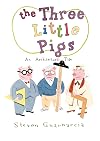
When I first heard about this book, I was not enthusiastic. Suuuure, we need a version of the three little pigs as an "architectural tale." Then I got a good look at it and fell in love. This is the best retelling of the three little pigs I've seen for quite a long time.
There's a point when you get tired of all the fancy retellings - of course we love Sciesczka's remaginings and Marshall's kooky illustrations, but to really appreciate a fractured fairy tale you have to know where it came show more from, right? Plus, I think we're so caught up in the retellings and rewritings we lose sight of the basic strength of the story that has made folktales survive for so long.
Guarnaccia, while keeping a unique viewpoint of the story with a fun twist, has given us a strong, simple retelling - back to the basics! The three pigs, stylishly dressed in suits, set off into the world from their mother's house. They construct their houses of metal scraps, glass, and finally concrete and stone. The big bad wolf, suitably attired in black leather, blows down the first two houses but can't make a dent in the third. So he tries to lure out the third little pig with a viewing of a tomato greenhouse and an orchard of tasty apples - but this little pig gets up way too early for the wolf! Finally, the wolf tricks the little pig into meeting him at Frank's Flea Market...but the pig escapes yet again, rolling down the hill in a rug. The wolf tries to climb down the chimney, gets his tail scorched in the fireplace, and runs away, never to return.
Architectural fans of course will get a big kick out of identifying the various buildings and furniture on the end pages in the illustrations. But for kids, this is one fun story. It has all the classic elements of the original folktale, with plenty of modern pizzaz and flourish.
Verdict: Recommended for the story and the clean, excellent art. Read this one aloud to preschool and up so they'll be able to appreciate Sciesczka's fractured retelling when they're older! show less
There's a point when you get tired of all the fancy retellings - of course we love Sciesczka's remaginings and Marshall's kooky illustrations, but to really appreciate a fractured fairy tale you have to know where it came show more from, right? Plus, I think we're so caught up in the retellings and rewritings we lose sight of the basic strength of the story that has made folktales survive for so long.
Guarnaccia, while keeping a unique viewpoint of the story with a fun twist, has given us a strong, simple retelling - back to the basics! The three pigs, stylishly dressed in suits, set off into the world from their mother's house. They construct their houses of metal scraps, glass, and finally concrete and stone. The big bad wolf, suitably attired in black leather, blows down the first two houses but can't make a dent in the third. So he tries to lure out the third little pig with a viewing of a tomato greenhouse and an orchard of tasty apples - but this little pig gets up way too early for the wolf! Finally, the wolf tricks the little pig into meeting him at Frank's Flea Market...but the pig escapes yet again, rolling down the hill in a rug. The wolf tries to climb down the chimney, gets his tail scorched in the fireplace, and runs away, never to return.
Architectural fans of course will get a big kick out of identifying the various buildings and furniture on the end pages in the illustrations. But for kids, this is one fun story. It has all the classic elements of the original folktale, with plenty of modern pizzaz and flourish.
Verdict: Recommended for the story and the clean, excellent art. Read this one aloud to preschool and up so they'll be able to appreciate Sciesczka's fractured retelling when they're older! show less
This is an artsy retelling of “The Three Little Pigs” using 3 famous architects—Frank Gehry, Phillip Johnson, and Frank Lloyd Wright—to illustrate the pigs' 3 houses. Each house is filled with clever details, including furnishings by the architects and their contemporaries -- more understood by adults who were around in the 1950's-60's. However, pics of these architects' houses around the world. At the story level, this book can be enjoyed by 4-6 year old children. The design ideas show more are more accessible to older children. show less
The Three Little Pigs: An Architectural Tale
Bryan O’Keeffe
I have read a bunch of different versions of The Three Little Pigs and this book might be my favorite version yet. I thought the best thing about the book was the illustrations. Out of all of the books I have read for this assignment so far they are the best and the coolest looking illustrations. They are done really well and definitely enhance the story, especially since this was centered on architecture. The illustrations show more definitely are very appropriate to the mood of the story because The Three Little Pigs is a fun child’s story to read, thus the illustrations must be fun, which they definitely are.
Everything about this version holds true to the original Three Little Pigs tale. However the author adds his own version after the third house was attempted to be blown down by the big bad wolf. The author has the wolf try to continue to trick the third pig by the wolf inviting him to a greenhouse to pick tomatoes, to an orchard to pick apples and to a flea market. Each time the third pig outsmarts the wolf by arriving an hour earlier than the wolf states and lives to see another day. Eventually when the wolf tries to outsmart the pigs by climbing down their chimney, he is burned by the fire of the three pigs feasting on the tomatoes and apples the third pig had picked in the previous days. The adding of this to the tale gives this version a little more authenticity. Each little pig was believable because all of them were architects and built their own houses. Each house was unique and different from the rest while still staying true to the original tale where each house was stronger than the last pigs. I think the message in The Three Little Pigs takes a little bit of thinking to derive it. However the ending is always the same, never take the easy way out. show less
Bryan O’Keeffe
I have read a bunch of different versions of The Three Little Pigs and this book might be my favorite version yet. I thought the best thing about the book was the illustrations. Out of all of the books I have read for this assignment so far they are the best and the coolest looking illustrations. They are done really well and definitely enhance the story, especially since this was centered on architecture. The illustrations show more definitely are very appropriate to the mood of the story because The Three Little Pigs is a fun child’s story to read, thus the illustrations must be fun, which they definitely are.
Everything about this version holds true to the original Three Little Pigs tale. However the author adds his own version after the third house was attempted to be blown down by the big bad wolf. The author has the wolf try to continue to trick the third pig by the wolf inviting him to a greenhouse to pick tomatoes, to an orchard to pick apples and to a flea market. Each time the third pig outsmarts the wolf by arriving an hour earlier than the wolf states and lives to see another day. Eventually when the wolf tries to outsmart the pigs by climbing down their chimney, he is burned by the fire of the three pigs feasting on the tomatoes and apples the third pig had picked in the previous days. The adding of this to the tale gives this version a little more authenticity. Each little pig was believable because all of them were architects and built their own houses. Each house was unique and different from the rest while still staying true to the original tale where each house was stronger than the last pigs. I think the message in The Three Little Pigs takes a little bit of thinking to derive it. However the ending is always the same, never take the easy way out. show less
I had two reactions to this book. My first reaction was after I read the book by myself. I didn't really care for it. The story was a straight forward re-telling. I like a bit more of a twist like the 'The True Story of the Three Little Pigs' told from the wolf's perspective. Plus I just don't like Gehry or Philip Johnson. Perhaps the author doesn't care for them either as their houses got blown over.
The second reaction stemmed from reading aloud to my daughters. I took time to talk about show more the architecture. Discussing Gehry's house as the beginnings of the Deconstructivist movement in America and Philip Johnson's early career marked by plagiarism (Le Corbusier) followed by his series of post modern one-liners (Portland Building)...I really don't like Johnson. I told them how Falling Water is one of the masterpieces of American Architecture, yet would be a tough place to live. Frank sacrificed comfortable ceiling height in order to preserve the elegant horizontal lines of the house. It was also fun to share my interest in mid-century furnishings...where were the Eames chairs? It also provided a great opportunity for them to ask questions about architecture.
So...indifference on the story...big plus as means to engage kids about architecture. show less
The second reaction stemmed from reading aloud to my daughters. I took time to talk about show more the architecture. Discussing Gehry's house as the beginnings of the Deconstructivist movement in America and Philip Johnson's early career marked by plagiarism (Le Corbusier) followed by his series of post modern one-liners (Portland Building)...I really don't like Johnson. I told them how Falling Water is one of the masterpieces of American Architecture, yet would be a tough place to live. Frank sacrificed comfortable ceiling height in order to preserve the elegant horizontal lines of the house. It was also fun to share my interest in mid-century furnishings...where were the Eames chairs? It also provided a great opportunity for them to ask questions about architecture.
So...indifference on the story...big plus as means to engage kids about architecture. show less
Lists
Youth: Food (1)
Awards


You May Also Like


Associated Authors
Statistics
- Works
- 20
- Also by
- 10
- Members
- 484
- Popularity
- #51,010
- Rating
- 4.1
- Reviews
- 33
- ISBNs
- 26
- Languages
- 4