
Christy Hale
Author of Elizabeti's Doll
Works by Christy Hale
Todos Iguales / All Equal: Un Corrido De Lemon Grove/A Ballad of Lemon Grove (Spanish and English Edition) (2019) 66 copies, 2 reviews
Quilting Activities for Young Learners: 15 Easy & Delightful "No-Sew" Projects That Reinforce Early Skills & Concepts (2005) 13 copies
Associated Works
Tagged
Common Knowledge
There is no Common Knowledge data for this author yet. You can help.
Members
Reviews
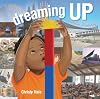
Deceptively simple poems (most rhyming, but all arranged in concrete form) accompany illustrations of children building with various toys and materials, from stacking blocks, blanket and pillow forts, cardboard boxes and tubes, mud pies, Legos, and playing cards. The facing page shows a photograph of a building that in some way mirrors what the child is doing and the form of the structure they're building. Back matter identifies each building as well as the architect that designed it, with show more quotes from each. The buildings and architects are diverse, as are the children and their materials. Clever and satisfying. show less
The spreads with the drawing of children 'playing at' building on the left, and a photograph of a recognized building on the other, is very effective. Children's imaginations will surely be stimulated as they see what can develop from small starts.
The concrete poetic text is a wonderful bonus - a simple narrative would have been fine, to see the words chosen so carefully, and then placed on the page so cleverly, just wows me. And there's more - each building (and its architect) is explored show more further in the end notes. Sources are also listed (but unfortunately there's no actual further reading list).
I especially appreciate that attention is given to more 'green' buildings, including a Fuller dome and a work by Simon Velez, who is quoted w/: "Bamboo is the green steel of nature."
The only thing some people might miss is that this is all buildings, no bridges etc. But I don't think it's a loss; rather, it's about having a tight focus. Anyway, fantastic book for any library or educator of any age 3-13 and up. I will definitely look for more by the author.
edit: shared with 22 yo son and husband; they both liked and recommended it, too. show less
The concrete poetic text is a wonderful bonus - a simple narrative would have been fine, to see the words chosen so carefully, and then placed on the page so cleverly, just wows me. And there's more - each building (and its architect) is explored show more further in the end notes. Sources are also listed (but unfortunately there's no actual further reading list).
I especially appreciate that attention is given to more 'green' buildings, including a Fuller dome and a work by Simon Velez, who is quoted w/: "Bamboo is the green steel of nature."
The only thing some people might miss is that this is all buildings, no bridges etc. But I don't think it's a loss; rather, it's about having a tight focus. Anyway, fantastic book for any library or educator of any age 3-13 and up. I will definitely look for more by the author.
edit: shared with 22 yo son and husband; they both liked and recommended it, too. show less
Imagine a book that "teaches" architecture, concrete poetry, design, and the power of imagination. Now imagine that book is suitable for preschoolers up to grade 4, that it sparks opportunities for imaginative play, that it is factual (Architecture, DDC 720), that it is properly sourced, that it is multicultural, and yes - it's attractive, too!
On the page facing each illustrated poem is a photograph of the famous or architecturally significant structure which inspired the poem. Featured show more buildings are from locations around the globe and include the Guggenheim Museum Bilbao in Spain, Petronas Twin Towers in Kuala Lumpur, Malaysia, and Frank Lloyd Wright's Fallingwater in Pennsylvania. Back matter includes information on each of the fifteen structures as well as biographical information on each building's architect.
No need to dream; there is such a book and it's Dreaming Up: A Celebration of Building. Go. Read it. Share it.
Get out some boxes, and blankets, and pillows, and playing cards, and Popsicle sticks and building blocks. Encourage the young people you know to "dream up."
more @ http://shelf-employed.blogspot.com show less
On the page facing each illustrated poem is a photograph of the famous or architecturally significant structure which inspired the poem. Featured show more buildings are from locations around the globe and include the Guggenheim Museum Bilbao in Spain, Petronas Twin Towers in Kuala Lumpur, Malaysia, and Frank Lloyd Wright's Fallingwater in Pennsylvania. Back matter includes information on each of the fifteen structures as well as biographical information on each building's architect.
No need to dream; there is such a book and it's Dreaming Up: A Celebration of Building. Go. Read it. Share it.
Get out some boxes, and blankets, and pillows, and playing cards, and Popsicle sticks and building blocks. Encourage the young people you know to "dream up."
more @ http://shelf-employed.blogspot.com show less
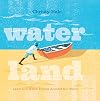
This is a really interesting and unique look at parallel geographical features. Each thick, glossy spread shows a body of water, like a system of lakes. Small people are shown in the background and on the water. Turn the page and the cut-out of the water turns into a land feature, like an archipelago.
After the five spreads, there's a comparison of each of the water and land forms with a definition and a thumbnail. Open this spread up and see a list of examples of specific bodies of water and show more land formations, then open it out into a giant outline map of the world with the different areas pinpointed on it.
The art looks like prints, but is actually created with digital layers. The small people shown enjoying the water and land are shown in a variety of races and hues, but none have visible disabilities.
Verdict: While not a particularly interesting book for storytime, this would be a unique addition to a unit on geography or the water cycle and fills a gap in this area. It would also make a good choice for an art or science-themed program, encouraging kids to create their own art that flips to create a new picture.
ISBN: 9781250152442; Published 2018 by Roaring Brook; Borrowed from another library in my consortium show less
After the five spreads, there's a comparison of each of the water and land forms with a definition and a thumbnail. Open this spread up and see a list of examples of specific bodies of water and show more land formations, then open it out into a giant outline map of the world with the different areas pinpointed on it.
The art looks like prints, but is actually created with digital layers. The small people shown enjoying the water and land are shown in a variety of races and hues, but none have visible disabilities.
Verdict: While not a particularly interesting book for storytime, this would be a unique addition to a unit on geography or the water cycle and fills a gap in this area. It would also make a good choice for an art or science-themed program, encouraging kids to create their own art that flips to create a new picture.
ISBN: 9781250152442; Published 2018 by Roaring Brook; Borrowed from another library in my consortium show less
Lists
Awards


You May Also Like


Associated Authors
Statistics
- Works
- 13
- Also by
- 4
- Members
- 1,373
- Popularity
- #18,735
- Rating
- 4.2
- Reviews
- 84
- ISBNs
- 45
- Languages
- 2