
Duncan Tonatiuh
Author of Separate Is Never Equal: Sylvia Mendez and Her Family’s Fight for Desegregation
About the Author
Image credit: Duncan Tonatiuh receives a 2018 Americas Award from the Library of Congress By LibraryOfCongress - 2018 Americas Awards, Public Domain, https://commons.wikimedia.org/w/index.php?curid=76565705
Works by Duncan Tonatiuh
Separate Is Never Equal: Sylvia Mendez and Her Family’s Fight for Desegregation (2014) 1,365 copies, 159 reviews
Associated Works
Tagged
Common Knowledge
- Gender
- male
Members
Reviews

Mexican picture-book author and artist Duncan Tonatiuh delivers another fascinating Aztec myth, following upon his earlier The Princess and the Warrior: A Tale of Two Volcanoes. That story told how the twin volcanos outside of Mexico City came to be, but here we learn about the five suns, and how humans were created. Having created humans four times, with little success - each incarnation of human had some flaw, and was transformed into something else, from mountains to fish, monkeys to show more birds - the gods grew weary of the project. Only Quetzalcóatl, the Feathered Serpent and the god of knowledge, wanted to continue. But to do this, he had to retrieve the human bones given to Mictlantecuhtli, the god of the underworld. Traveling to Mictlan, Quetzalcóatl had to traverse nine different levels of the underworld, each with its own danger, confronting Mictlantecuhtli at the end, and meeting his final challenge. Eventually successful in escaping with the bones, he then created a new king of human, mixed from the bone dust of previous humans, and divine blood. From that fifth and final creation, came the human beings of today...
As Tonatiuh makes plain in his afterword to Feathered Serpent and the Five Suns: A Mesoamerican Creation Myth, this story and its hero can be found in the belief systems of many Mesoamerican cultures, including the Toletcs, Mayan and Aztecs. This particularly retelling uses Nahuatl (Aztec) names and words, many of them glossed at the rear of the book. It is a fascinating story, and reminded me of similar creation myths I have encountered, from other cultures around the globe. The idea of the underworld, which one reaches by (among other things) crossing a great river, or the idea of a great and terrible dog guarding that world, are both themes I have seen in Greek and other mythologies. The idea of different races of humankind being created before our own is also one I have seen elsewhere, particularly in ancient Greek culture (the myth of the golden men, then the silver men, etc), and the idea of previous worlds before our own is also not uncommon. Finding these kinds of parallels is fascinating for me, as someone who loves folklore and mythology, but the story here was also just interesting, in its own right. The accompanying artwork, drawn and then enhanced digitally, was quite attention-grabbing, and is well-suited, stylistically speaking to the story. All in all, an engaging retelling of a fascinating creation myth, one I would recommend to picture-book readers who enjoy such fare, as well as to anyone interested in Aztec or other Mesoamerican civilizations and cultures. show less
As Tonatiuh makes plain in his afterword to Feathered Serpent and the Five Suns: A Mesoamerican Creation Myth, this story and its hero can be found in the belief systems of many Mesoamerican cultures, including the Toletcs, Mayan and Aztecs. This particularly retelling uses Nahuatl (Aztec) names and words, many of them glossed at the rear of the book. It is a fascinating story, and reminded me of similar creation myths I have encountered, from other cultures around the globe. The idea of the underworld, which one reaches by (among other things) crossing a great river, or the idea of a great and terrible dog guarding that world, are both themes I have seen in Greek and other mythologies. The idea of different races of humankind being created before our own is also one I have seen elsewhere, particularly in ancient Greek culture (the myth of the golden men, then the silver men, etc), and the idea of previous worlds before our own is also not uncommon. Finding these kinds of parallels is fascinating for me, as someone who loves folklore and mythology, but the story here was also just interesting, in its own right. The accompanying artwork, drawn and then enhanced digitally, was quite attention-grabbing, and is well-suited, stylistically speaking to the story. All in all, an engaging retelling of a fascinating creation myth, one I would recommend to picture-book readers who enjoy such fare, as well as to anyone interested in Aztec or other Mesoamerican civilizations and cultures. show less

When Sylvia Mendez and her family moved from Santa Ana, California to nearby Westminster in 1944, they discovered that the local educational authorities would not allow Sylvia and her brothers to attend the town's well-funded school, instead insisting that they go to the far inferior "Mexican School." After failing to convince the authorities that his children should attend the public school near where they lived, Sylvia's father, Gonzalo Mendez, began to organize a petition against show more segregation in the schools of Orange County. Eventually he enlisted the help of lawyer David Marcus, and the Mendez vs. Westminster case began. In 1947, seven years before Brown vs. the Board of Education struck down segregated schooling nationally, the California courts decided, in response to the Mendez case, to outlaw segregation in their state's schools...
Separate Is Never Equal: Sylvia Mendez and Her Family's Fight for Desegregation provides an important addition to the body of works devoted to the Civil Rights Movement in the United States, highlighting a legal case that provided the basis for the better known Brown vs. the Board of Education. I was not familiar with this story, and am very glad indeed to have that gap in my knowledge corrected. The story of Sylvia and her family is an inspiring one, and it highlights, not just the idea that standing up for justice can bring people of disparate backgrounds together - something emphasized in the story, through Sylvia's mother and her wise words - but also that every advance in freedom and equality is built upon the work of earlier people. It is unfortunate, but I think many, both children and adults, have an atomized view of history, often seeing certain developments in isolation, rather than as part of a rich tapestry of events. Author/illustrator Duncan Tonatiuh's book works to correct this myopic view, and it tells a story important in its own right as well - a story about standing up to racism and segregation. I appreciated both the story, which I found educational and moving, in equal measure; and the illustrations, done by Tonatiuh in his signature folk-art style, which owes so much to pre-Columbian Mesoamerican aesthetic traditions. The back matter, which includes an author's note, photographs on Sylvia Mendez and her family, a glossary, bibliography and index, provides additional information. Recommended to readers looking for children's books about the struggle to desegregate American schools. It could be paired very nicely with titles like The Story of Ruby Bridges, about one of the African-American children who desegregated the New Orleans schools in 1960. show less
Separate Is Never Equal: Sylvia Mendez and Her Family's Fight for Desegregation provides an important addition to the body of works devoted to the Civil Rights Movement in the United States, highlighting a legal case that provided the basis for the better known Brown vs. the Board of Education. I was not familiar with this story, and am very glad indeed to have that gap in my knowledge corrected. The story of Sylvia and her family is an inspiring one, and it highlights, not just the idea that standing up for justice can bring people of disparate backgrounds together - something emphasized in the story, through Sylvia's mother and her wise words - but also that every advance in freedom and equality is built upon the work of earlier people. It is unfortunate, but I think many, both children and adults, have an atomized view of history, often seeing certain developments in isolation, rather than as part of a rich tapestry of events. Author/illustrator Duncan Tonatiuh's book works to correct this myopic view, and it tells a story important in its own right as well - a story about standing up to racism and segregation. I appreciated both the story, which I found educational and moving, in equal measure; and the illustrations, done by Tonatiuh in his signature folk-art style, which owes so much to pre-Columbian Mesoamerican aesthetic traditions. The back matter, which includes an author's note, photographs on Sylvia Mendez and her family, a glossary, bibliography and index, provides additional information. Recommended to readers looking for children's books about the struggle to desegregate American schools. It could be paired very nicely with titles like The Story of Ruby Bridges, about one of the African-American children who desegregated the New Orleans schools in 1960. show less
The Princess and the Warrior: A Tale of Two Volcanoes (Americas Award for Children's and Young Adult Literature. Commended) by Duncan Tonatiuh
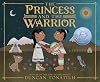
The Princess and the Warrior is a beautiful adaptation of a beloved Mexican legend that chronicles the "birth" of two of the largest mountains in Mexico. Izta, a kind and beautiful princess, is courted by many suitors, none of which is acceptable to her. They lavish her with gifts, which isn't what is important to her. She enjoys poetry (flor y canto) and teaches it to the people planting corn. These are the people she enjoys spending time with. A warrior, Popoca, commits to love her for who show more she is and to always stay by her side "as long as tonatiuh rises and the cenzontle bird sings." She falls in love with his honesty and kindness, but her father (the emperor) doesn't want her to marry a common soldier. He tells Popoca that he can marry Izta IF he defeats (once and for all!) Jaguar Claw, who he has a long-standing war with. Popoca marches into battle with his best soldiers, fights hard and is close to winning. Jaguar Claw smells defeat and devises a plan to take what is most important to Popoca. He bribes a messenger to deliver the news that Popoca has died, along with a potion to "soother her grief." As expected, Izta is distraught and drinks the potion. She falls into a deep sleep, which is how Popoca finds her when he returns. He carries her to the 'tepetl" (mountain), hoping the fresh air will wake her. Time passes and the cool air changes to snow. Still, Popoca kneels beside her, just as he said he would. The snow continues to fall and she doesn't wake. Over time, the falling snow covers both of them and they become mountains -- Iztaccihuatl and Popocatepetl,. Izta is dormant and Popoca spews ash, trying to wake his princess. This book has beautiful illustrations with colors and shapes true to the time period and geographic area. It is one version a legend passed down orally through the generations. I appreciate that Nahuatl words (which have become part of Spanish) are sprinkled in throughout the story and a "Glossary" at the back shows their pronunciations and definitions. It's a beautiful story to explain the emergence of Mexico's second and third largest mountains at 17,160 feet and 17,802 feet, respectively. The title has understandably won nine awards and is a great addition to a library collection. show less

This story begins with a little girl explaining to her (presumably younger) brother that theirs is a world of “amoxtlalpan,” which we learn from the glossary means “a land of books.” They are Mexhicah, an ancient Mesoamerican civilization that flourished between the fourteen and sixteenth centuries, and who are usually referred to in English as the Aztecs. Their parents are “painters of words,” making codices, or long strips of paper that formed books made entirely of paintings. show more The people in the codices are always drawn flat and facing sideways; they were not meant to be realistic, but rather were stylized pictograms, similar, Tonatiuh suggests, to emojis we use today. Interestingly, readers learned to interpret the colors, positions of hands, and other features of the drawings to know the ranks and even names of people depicted in the codices.
Many of the codices were destroyed during the Spanish conquest and in the years afterward. Catholic priests who came over to convert the indigenous people thought the books were the work of the devil and burned codices when they found them. Tonatiuh writes:
“It is impossible to know exactly how many Mesoamerican books were destroyed, but it was a large number. The bishop Diego de Landa wrote in the 1560s that he burned thousands of Maya documents and artifacts in a single day. The knowledge and stories that people of Mesoamerica had painted in books and collected over centuries were destroyed by the flames of a fire in a few hours.”
As usual, Tonatiuh combines meticulous research with outstanding art in the mesoamerican style to bring attention to history that should be better known. The little girl tells her brother about the importance of bookmaking in their culture, how the codices were constructed, and how the colors were made. She described the different kinds of books, including those that kept count of days and those that suggested cures for illnesses, inter alia.
Not everyone could read the books though, the little girl explained: only noblemen, priests, and wise elders had access to them and were taught how to interpret them.
She also educates her brother about their religion, legends about their past, and how their empire was built.
The story concludes on the day of the annual flower festival, when performers sing the words in the codices. [Tonatiuh illustrated a book by Gloria Amescua on the flower song festival, called Child of the Flower-Song People reviewed by us here.]
The little girl ends her narration to her brother with the hope, “May our world always be an amoxtlalpan - a land of books!”
Back matter includes a glossary of words in Nahuatl (the language spoken by the Aztecs) with pronunciation guide, an extensive author’s note which expands upon the history of Mesoamerican codices, a bibliography, and list of websites where you can see reproductions of codices.
Evaluation:: Any book written and/or illustrated by award-winner Duncan Tonatiuh is a treat. Tonatiuh creates gorgeous folkloric art work, using the pictures to enlarge upon the text. Because the illustrations also tell the story without words, they serves to extend the recommended age range of his books (in this case, ages 4 to 8).
Tonatiuh (see how to pronounce his name here where he reveals that his last name is the name of the Aztec God of the Sun) wrote on the Seven Impossible Things blog about his art work:
“My artwork is very much inspired by Pre-Columbian art, especially by Mixtec codices from the 14th century. That is why my art is very geometric, my characters are always in profile, and their ears look a bit like the number three. My intention is to celebrate that ancient art and keep it alive.”
Kids could try their hands at making their own modern versions of codices using emojis. show less
Many of the codices were destroyed during the Spanish conquest and in the years afterward. Catholic priests who came over to convert the indigenous people thought the books were the work of the devil and burned codices when they found them. Tonatiuh writes:
“It is impossible to know exactly how many Mesoamerican books were destroyed, but it was a large number. The bishop Diego de Landa wrote in the 1560s that he burned thousands of Maya documents and artifacts in a single day. The knowledge and stories that people of Mesoamerica had painted in books and collected over centuries were destroyed by the flames of a fire in a few hours.”
As usual, Tonatiuh combines meticulous research with outstanding art in the mesoamerican style to bring attention to history that should be better known. The little girl tells her brother about the importance of bookmaking in their culture, how the codices were constructed, and how the colors were made. She described the different kinds of books, including those that kept count of days and those that suggested cures for illnesses, inter alia.
Not everyone could read the books though, the little girl explained: only noblemen, priests, and wise elders had access to them and were taught how to interpret them.
She also educates her brother about their religion, legends about their past, and how their empire was built.
The story concludes on the day of the annual flower festival, when performers sing the words in the codices. [Tonatiuh illustrated a book by Gloria Amescua on the flower song festival, called Child of the Flower-Song People reviewed by us here.]
The little girl ends her narration to her brother with the hope, “May our world always be an amoxtlalpan - a land of books!”
Back matter includes a glossary of words in Nahuatl (the language spoken by the Aztecs) with pronunciation guide, an extensive author’s note which expands upon the history of Mesoamerican codices, a bibliography, and list of websites where you can see reproductions of codices.
Evaluation:: Any book written and/or illustrated by award-winner Duncan Tonatiuh is a treat. Tonatiuh creates gorgeous folkloric art work, using the pictures to enlarge upon the text. Because the illustrations also tell the story without words, they serves to extend the recommended age range of his books (in this case, ages 4 to 8).
Tonatiuh (see how to pronounce his name here where he reveals that his last name is the name of the Aztec God of the Sun) wrote on the Seven Impossible Things blog about his art work:
“My artwork is very much inspired by Pre-Columbian art, especially by Mixtec codices from the 14th century. That is why my art is very geometric, my characters are always in profile, and their ears look a bit like the number three. My intention is to celebrate that ancient art and keep it alive.”
Kids could try their hands at making their own modern versions of codices using emojis. show less
Lists
Awards


Separate Is Never Equal: Sylvia Mendez and Her Family’s Fight for Desegregation (Five to Nine – 2015)
Funny Bones: Posada and His Day of the Dead Calaveras (Nine to Twelve, Information Books, Arts – 2016)
The Princess and the Warrior: A Tale of Two Volcanoes (*Five to Nine, Fiction, Folk and Fairy Tales – 2017)


Separate Is Never Equal: Sylvia Mendez and Her Family’s Fight for Desegregation (Informational Books for Younger Readers – 2014)
Separate Is Never Equal: Sylvia Mendez and Her Family’s Fight for Desegregation (Informational Books for Younger Readers – 2024)
Separate Is Never Equal: Sylvia Mendez and Her Family’s Fight for Desegregation (Libros en español – 2024)
Funny Bones: Posada and His Day of the Dead Calaveras (Informational Books for Older Readers – 2015)
The Princess and the Warrior: A Tale of Two Volcanoes (Informational Books for Younger Readers – 2016)
The Princess and the Warrior: A Tale of Two Volcanoes (Informational Books for Younger Readers – 2024)
Soldier for Equality: José de la Luz Sáenz and the Great War (Informational Books for Younger Readers – 2019)
You May Also Like


Associated Authors
Statistics
- Works
- 17
- Also by
- 3
- Members
- 4,201
- Popularity
- #5,982
- Rating
- 4.3
- Reviews
- 466
- ISBNs
- 129
- Languages
- 2