
Jonah Winter
Author of Frida
About the Author
Children's author and illustrator Jonah Winter was born in Fort Worth, Texas in 1962. He has created many popular books, including works about baseball and biographies of famous individuals including Frida Kahlo, Roberto Clemente, and Barack Obama. (Bowker Author Biography)
Image credit: Uncredited photo found at Scholastic.com
Series
Works by Jonah Winter
Sonia Sotomayor: A Judge Grows in the Bronx / La juez que crecio en el Bronx (Spanish and English Edition) (2009) 626 copies, 24 reviews
Lillian's Right to Vote: A Celebration of the Voting Rights Act of 1965 (2015) 274 copies, 27 reviews
The Founding Fathers!: Those Horse-Ridin', Fiddle-Playin', Book-Readin', Gun-Totin' Gentlemen Who Started America (2015) 62 copies, 3 reviews
Accadde a Salem. Ediz. illustrata 2 copies
Book Reports 1 copy
Associated Works
Talisman: A Journal of Contemporary Poetry and Poetics, Number 13, The Anne Waldman Issue — Contributor — 1 copy
Tagged
Common Knowledge
- Gender
- male
- Occupations
- author
- Relationships
- Winter, Jeanette (parent)
Winter, Roger (parent) - Nationality
- USA
- Places of residence
- Pittsburgh, Pennsylvania, USA
- Associated Place (for map)
- Pennsylvania, USA
Members
Reviews
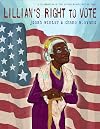
In a symbolic journey up a long steep hill, 100-year-old Lillian heads to vote, recalling with each step the history of oppression that led to this moment: great-great grandparents sold on the auction block, her great grandfather enslaved and picking cotton. Powerful words and powerful images trace the voting rights from the 15th amendment in 1870 that allowed Lillian’s great grandpa but not grandma to vote to the steps backward when poll taxes and impossible-to-pass literacy tests were show more imposed, and to the protest march from Selma to Montgomery. This stirring tribute to the 50th anniversary of the Voting Rights Act of 1965 should be shared every election season to impress on the young the hard-earned right to vote. show less

A book about book banning, filled with censorship bars. The number of censorship bars increases until, gradually, even the reasons for censorship are censored.
As a children's book, I'm not sure how well this would work, and I expect it would be difficult to figure out how to read it aloud. Plus, there'd be the issue of explaining it if there wasn't some sort of active censorship case going on at the child's school.
However, as an art piece about censorship, I thought this was effective. I show more bought it new, and it arrived wrapped in plastic, with a black paper strip over the title. Combine that with the actual content of the book, and the whole thing was pretty on point.
(Original review posted on A Library Girl's Familiar Diversions.) show less
As a children's book, I'm not sure how well this would work, and I expect it would be difficult to figure out how to read it aloud. Plus, there'd be the issue of explaining it if there wasn't some sort of active censorship case going on at the child's school.
However, as an art piece about censorship, I thought this was effective. I show more bought it new, and it arrived wrapped in plastic, with a black paper strip over the title. Combine that with the actual content of the book, and the whole thing was pretty on point.
(Original review posted on A Library Girl's Familiar Diversions.) show less
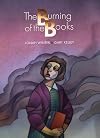
What happens when a government decides which books are "too dangerous" for its people to read? When it polices not only the creative output of its citizens but also their very thoughts? As author Jonah Winter describes the Nazi book burnings of the 1930s, Gary Kelley's atmospheric paintings communicate a sense of ominous foreboding that lingers past the closing lines: And what happened in Germany could happen anywhere. It could even happen in America.

This story is told in the voice of James Madison Hemings, born a slave to Sally Hemings, the enslaved mistress of Thomas Jefferson. Madison, as he was called, reflects back on his childhood, and what it was like to be the son of a famous father, but still a slave on his father’s plantation. We learn in the Author’s Note that the book was inspired by James Madison Hemings’s 1873 newspaper interview in which he told his family’s story. As the author notes, he was the only one of Sally show more Hemings’ children to go public about it. The author also drew from the historical account by Annette Gordon-Reed, The Hemingses of Monticello, which won the 2009 Pulitzer Prize for History.
Gordon-Reed’s book reveals that Sally Hemings was one-fourth white, and was the half-sister of Jefferson’s wife Martha, who died in 1782 at age 34. Martha and Jefferson had two daughters; Sally served as the enslaved maid of their two daughters.
On May 17, 1784, the Confederation Congress appointed Thomas Jefferson as a Minister Plenipotentiary to the Court of Versailles, directing him to join Benjamin Franklin and John Adams in Paris where he would eventually become the senior Minister in France. Jefferson’s wife was already dead, so he wanted his daughters to follow him, and Sally came along as a companion, purportedly for the girls. But Jefferson’s daughters were sent away to attend a boarding school outside of Paris. Jefferson, in his early forties, apparently began to have sexual relations with 14-year-old Sally. [It is only fair to note that “the age of consent in eighteenth-century Virginia was ten.” Of course, “consent” when you are virtually a child and moreover are owned by someone as a slave is a different matter.] By the time Jefferson was ready to return to the U.S., Sally was pregnant.
As Madison grew up he learned that Jefferson was his father although he was never to speak of it. But indeed, as the author notes, the truth was “self-evident” - in a deliberate reference to Jefferson’s words about freedom in the Declaration of Independence - from Sally’s children’s fair skin and resemblance to Jefferson. Although they were enslaved, the children did receive “somewhat special treatment,” because they were able to avoid working in the fields and do other jobs instead. Madison even learned how to read and write. “And yet,” the author writes in Madison’s voice, “my name was written in my father’s ‘Farm Book’ - the ledger where he recorded all his property. My brothers’ and sister’s names were also there, alongside the names of all the people he owned, right amongst the pages listing sheep and hogs.”
Sally Hemings was 53 at the time Jefferson died. It was thought her fate thereafter was laid out in oral requests by Jefferson, still loathe to mention her specifically in any document. Jefferson’s daughter Martha, who possibly had a great resentment for Sally ever since Jefferson took her as his “concubine,” granted Sally her “time” 8 years after Jefferson’s death. ["Granting time" was a way to confer a sort of freedom without formal emancipation, which would force the person to leave the state. Martha did however permit Sally at least to leave Monticello after Jefferson died to go live with their sons in Charlottesville.]. Why did Martha wait 8 years? It is unclear. Thomas Jefferson did free all of Sally Hemings's children as he had allegedly promised her he would: Beverly and Harriet were allowed to leave Monticello in 1822; and Madison and Eston were released in Jefferson's 1826 will.
Terry Widener uses acrylic illustrations with soft colors to depict the Hemingses and their life at Monticello.
Evaluation: This books for readers 5 and over may never see the light of day in states that want school children shielded from the truth about slavery, especially with respect to the Founding Fathers. But where it is allowed, it will encourage readers to think about all the questions it raises, including about the hypocrisy of the man who wrote in 1776, "We hold these truths to be self-evident, that all men are created equal, that they are endowed by their Creator with certain unalienable Rights, that among these are Life, Liberty and the pursuit of Happiness." show less
Gordon-Reed’s book reveals that Sally Hemings was one-fourth white, and was the half-sister of Jefferson’s wife Martha, who died in 1782 at age 34. Martha and Jefferson had two daughters; Sally served as the enslaved maid of their two daughters.
On May 17, 1784, the Confederation Congress appointed Thomas Jefferson as a Minister Plenipotentiary to the Court of Versailles, directing him to join Benjamin Franklin and John Adams in Paris where he would eventually become the senior Minister in France. Jefferson’s wife was already dead, so he wanted his daughters to follow him, and Sally came along as a companion, purportedly for the girls. But Jefferson’s daughters were sent away to attend a boarding school outside of Paris. Jefferson, in his early forties, apparently began to have sexual relations with 14-year-old Sally. [It is only fair to note that “the age of consent in eighteenth-century Virginia was ten.” Of course, “consent” when you are virtually a child and moreover are owned by someone as a slave is a different matter.] By the time Jefferson was ready to return to the U.S., Sally was pregnant.
As Madison grew up he learned that Jefferson was his father although he was never to speak of it. But indeed, as the author notes, the truth was “self-evident” - in a deliberate reference to Jefferson’s words about freedom in the Declaration of Independence - from Sally’s children’s fair skin and resemblance to Jefferson. Although they were enslaved, the children did receive “somewhat special treatment,” because they were able to avoid working in the fields and do other jobs instead. Madison even learned how to read and write. “And yet,” the author writes in Madison’s voice, “my name was written in my father’s ‘Farm Book’ - the ledger where he recorded all his property. My brothers’ and sister’s names were also there, alongside the names of all the people he owned, right amongst the pages listing sheep and hogs.”
Sally Hemings was 53 at the time Jefferson died. It was thought her fate thereafter was laid out in oral requests by Jefferson, still loathe to mention her specifically in any document. Jefferson’s daughter Martha, who possibly had a great resentment for Sally ever since Jefferson took her as his “concubine,” granted Sally her “time” 8 years after Jefferson’s death. ["Granting time" was a way to confer a sort of freedom without formal emancipation, which would force the person to leave the state. Martha did however permit Sally at least to leave Monticello after Jefferson died to go live with their sons in Charlottesville.]. Why did Martha wait 8 years? It is unclear. Thomas Jefferson did free all of Sally Hemings's children as he had allegedly promised her he would: Beverly and Harriet were allowed to leave Monticello in 1822; and Madison and Eston were released in Jefferson's 1826 will.
Terry Widener uses acrylic illustrations with soft colors to depict the Hemingses and their life at Monticello.
Evaluation: This books for readers 5 and over may never see the light of day in states that want school children shielded from the truth about slavery, especially with respect to the Founding Fathers. But where it is allowed, it will encourage readers to think about all the questions it raises, including about the hypocrisy of the man who wrote in 1776, "We hold these truths to be self-evident, that all men are created equal, that they are endowed by their Creator with certain unalienable Rights, that among these are Life, Liberty and the pursuit of Happiness." show less
Lists
4th Grade Books (2)
Awards


You May Also Like


Associated Authors
Statistics
- Works
- 52
- Also by
- 1
- Members
- 6,494
- Popularity
- #3,781
- Rating
- 4.0
- Reviews
- 468
- ISBNs
- 213
- Languages
- 5