
Barb Rosenstock
Author of The Camping Trip That Changed America
About the Author
Works by Barb Rosenstock
The Noisy Paint Box: The Colors and Sounds of Kandinsky's Abstract Art (2014) — Author — 725 copies, 82 reviews
Ben Franklin's Big Splash: The Mostly True Story of His First Invention (2014) 318 copies, 9 reviews
Otis and Will Discover the Deep: The Record-Setting Dive of the Bathysphere (2018) 164 copies, 9 reviews
The Secret Kingdom: Nek Chand, a Changing India, and a Hidden World of Art (2018) 103 copies, 3 reviews
The Mystery of the Monarchs: How Kids, Teachers, and Butterfly Fans Helped Fred and Norah Urquhart Track the Great Monarch Migration (2022) 70 copies, 1 review
Tagged
Common Knowledge
- Other names
- Rosenstock, Barbara L.
- Birthdate
- 1959-04-01
- Gender
- female
- Education
- National Louis University (M.A.|teaching)
Loyola University of Chicago (B.S.|psychology) - Occupations
- children's book author
children's book illustrator - Organizations
- Society of Children's Book Writers and Illustrators
- Agent
- Rosemary Stimola
- Short biography
- [from author's website]
Barb Rosenstock likes true stories about real people. She is the author of nonfiction and historical fiction children's books that combine deep research and playful language to bring history to life. Her book, The Noisy Paint Box, illustrated by Mary Grandpré, received a Caldecott Honor. Other awards include an Orbis Pictus Honor, a Sydney Taylor Honor and the California Library Association Beatty Award as well as numerous national and state recognitions. Barb loves sharing stories and inspiring students in schools and libraries across the country. She lives with her family near Chicago. - Nationality
- USA
- Places of residence
- Chicago, Illinois, USA
Vernon Hills, Illinois, USA - Associated Place (for map)
- Illinois, USA
Members
Reviews

Author Barb Rosenstock and illustrator Elizabeth Baddeley tell the story of Abigail Adams, an outspoken, self-educated 18th-century American woman who became the wife of Founding Father and second president John Adams in this somewhat flawed picture-book biography. Despite the expectations of her day, when it came to the proper behavior of women and girls, Abigail was never quiet and meek, choosing instead to be engaged with the world around her, and the events in it. After her marriage to show more Adams, a poor country lawyer at the time, she became a hard-working wife and mother, often helping her husband with his cases, and moving their household, as the need arose. She managed the family farm when Adams was away during the Revolutionary War, and was an important source of information and advice for him. She joined him in Europe after the war, when he served as ambassador to France, and then England, and she became the second First Lady, when Adams became president. She was the first First Lady to live in the White House, and remained deeply involved in her husband's work. Although not a feminist in the modern sense, she was an early advocate for woman's rights, and was an inspiration to generations of women to come...
As someone who was named after Abigail Adams - I was born in 1976, on the bicentennial of American independence, and my parents wished to name me after a strong woman from the revolutionary generation - I picked up Leave It to Abigail!: The Revolutionary Life of Abigail Adams with great interest. I have read quite a bit about the Adams family over the years - because of my name, I have often been gifted with books about Abigail and John Adams, from childhood onward - and was curious to see what this new book would have to say. Unfortunately, despite its good qualities, the book had a number of flaws which prevented me from taking it entirely to heart. The narrative captures the idea that Abigail Adams was atypical, of the women of her generation, but because it is aiming to emphasize its subject as an inspirational figure, it sometimes overplays its hand a bit. Yes, Adams went against expectations in many respects, but in others, her actions were quite common for her time and place - necessitated by the events of the day. When the narrative informs us that "everyone knew that a woman couldn't manage a farm alone," and then proceeds to describe how Abigail did it anyway, it implies that this was quite unusual. This seems to run counter to the reality that, when men were absent - whether through death, or through service in the Colonial militias before the Revolution, or with/against the Continental Army during that conflict - all farmers' wives would have had to manage on their own. This must surely have also been a reality in many other times and places throughout history. The reader gets the sense that, because Rosenstock has a particular didactic aim here - to emphasize just how atypical Adams was, in order to show her as an early American exemplar of female competence and power - she has flattened history out a bit. This impression was solidified for me by the absence of any mention of Mercy Otis Warren, the published poet, playwright and political commentator who was a friend of Abigail Adams, and who was another unusual woman of the revolutionary period. Warren may not have been a major part of Adams' life, but as a personal friend and correspondent who was also quite atypical for the women of the period, one would think that her life could present an interesting parallel to that of Abigail Adams. I was therefore surprised not to see her name, even if only in the back matter, and again came away with the impression that the historical narrative was being simplified, in order to drive home the book's central message that its subject was wholly unique, amongst the women of her generation.
Another omission that greatly surprised me in Rosenstock's narrative, was the total absence of John Quincy Adams, John and Abigail Adams' oldest son, who served as an ambassador to Russia, and then to Britain, and who became the sixth president of the United States. As influential as Abigail was, in the life of her husband, she must surely have also been influential in the life and development of her son, who became a national leader, and an important part of American history. One would think that this would therefore deserve at least a mention in a book devoted to her legacy, but the name John Quincy Adams does not appear anywhere in the book, in either the main narrative, or in the back matter. While Rosenstock does acknowledge in her afterword that Abigail Adams had a conventional view of women and their place in the world - a place that involved being a wife and mother - it's clear that she has sought to downplay that view, perhaps because it was not atypical enough to suit the tone of her book. This sense of history being overwhelmed by the didactic aim and editorial stance of the author can also be seen in the list of women that Rosenstock considers the inheritors of Adams' legacy, a list which seems to exclude any women of conservative political or social leanings. I was particularly disappointed to see that Linda Sarsour, who has been rightly criticized for her antisemitic behavior, made the list.
Although I really like the idea of a book celebrating the legacy of Abigail Adams, and although I found some of the storytelling here engaging, in the end I found Leave It to Abigail!: The Revolutionary Life of Abigail Adams mostly wanting, as a biography. The accompanying artwork from illustrator Elizabeth Baddeley, done in the form of a cross stitch sampler, was probably the best thing about this one, and elevated it from a two to a three-star title. Still, I'm not sure I would strongly recommend this one, unless the adult reader is willing to read with the child, and explain that history was just a bit more complicated than it is made out to be here, and that Adams, as admirable as she truly was, was just a bit less unusual. show less
As someone who was named after Abigail Adams - I was born in 1976, on the bicentennial of American independence, and my parents wished to name me after a strong woman from the revolutionary generation - I picked up Leave It to Abigail!: The Revolutionary Life of Abigail Adams with great interest. I have read quite a bit about the Adams family over the years - because of my name, I have often been gifted with books about Abigail and John Adams, from childhood onward - and was curious to see what this new book would have to say. Unfortunately, despite its good qualities, the book had a number of flaws which prevented me from taking it entirely to heart. The narrative captures the idea that Abigail Adams was atypical, of the women of her generation, but because it is aiming to emphasize its subject as an inspirational figure, it sometimes overplays its hand a bit. Yes, Adams went against expectations in many respects, but in others, her actions were quite common for her time and place - necessitated by the events of the day. When the narrative informs us that "everyone knew that a woman couldn't manage a farm alone," and then proceeds to describe how Abigail did it anyway, it implies that this was quite unusual. This seems to run counter to the reality that, when men were absent - whether through death, or through service in the Colonial militias before the Revolution, or with/against the Continental Army during that conflict - all farmers' wives would have had to manage on their own. This must surely have also been a reality in many other times and places throughout history. The reader gets the sense that, because Rosenstock has a particular didactic aim here - to emphasize just how atypical Adams was, in order to show her as an early American exemplar of female competence and power - she has flattened history out a bit. This impression was solidified for me by the absence of any mention of Mercy Otis Warren, the published poet, playwright and political commentator who was a friend of Abigail Adams, and who was another unusual woman of the revolutionary period. Warren may not have been a major part of Adams' life, but as a personal friend and correspondent who was also quite atypical for the women of the period, one would think that her life could present an interesting parallel to that of Abigail Adams. I was therefore surprised not to see her name, even if only in the back matter, and again came away with the impression that the historical narrative was being simplified, in order to drive home the book's central message that its subject was wholly unique, amongst the women of her generation.
Another omission that greatly surprised me in Rosenstock's narrative, was the total absence of John Quincy Adams, John and Abigail Adams' oldest son, who served as an ambassador to Russia, and then to Britain, and who became the sixth president of the United States. As influential as Abigail was, in the life of her husband, she must surely have also been influential in the life and development of her son, who became a national leader, and an important part of American history. One would think that this would therefore deserve at least a mention in a book devoted to her legacy, but the name John Quincy Adams does not appear anywhere in the book, in either the main narrative, or in the back matter. While Rosenstock does acknowledge in her afterword that Abigail Adams had a conventional view of women and their place in the world - a place that involved being a wife and mother - it's clear that she has sought to downplay that view, perhaps because it was not atypical enough to suit the tone of her book. This sense of history being overwhelmed by the didactic aim and editorial stance of the author can also be seen in the list of women that Rosenstock considers the inheritors of Adams' legacy, a list which seems to exclude any women of conservative political or social leanings. I was particularly disappointed to see that Linda Sarsour, who has been rightly criticized for her antisemitic behavior, made the list.
Although I really like the idea of a book celebrating the legacy of Abigail Adams, and although I found some of the storytelling here engaging, in the end I found Leave It to Abigail!: The Revolutionary Life of Abigail Adams mostly wanting, as a biography. The accompanying artwork from illustrator Elizabeth Baddeley, done in the form of a cross stitch sampler, was probably the best thing about this one, and elevated it from a two to a three-star title. Still, I'm not sure I would strongly recommend this one, unless the adult reader is willing to read with the child, and explain that history was just a bit more complicated than it is made out to be here, and that Adams, as admirable as she truly was, was just a bit less unusual. show less
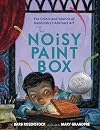
Vasya Kandinsky was a proper little boy: he studied math and history, he practiced the piano, he sat up straight and was perfectly polite. And when his family sent him to art classes, they expected him to paint pretty houses and flowers—like a proper artist.
But as Vasya opened his paint box and began mixing the reds, the yellows, the blues, he heard a strange sound—the swirling colors trilled like an orchestra tuning up for a symphony! And as he grew older, he continued to hear show more brilliant colors singing and see vibrant sounds dancing. But was Vasya brave enough to put aside his proper still lifes and portraits and paint . . . music?
In this exuberant celebration of creativity, Barb Rosenstock and Mary GrandPré tell the fascinating story of Vasily Kandinsky, one of the very first painters of abstract art. Throughout his life, Kandinsky experienced colors as sounds, and sounds as colors—and bold, groundbreaking works burst forth from his noisy paint box. show less
But as Vasya opened his paint box and began mixing the reds, the yellows, the blues, he heard a strange sound—the swirling colors trilled like an orchestra tuning up for a symphony! And as he grew older, he continued to hear show more brilliant colors singing and see vibrant sounds dancing. But was Vasya brave enough to put aside his proper still lifes and portraits and paint . . . music?
In this exuberant celebration of creativity, Barb Rosenstock and Mary GrandPré tell the fascinating story of Vasily Kandinsky, one of the very first painters of abstract art. Throughout his life, Kandinsky experienced colors as sounds, and sounds as colors—and bold, groundbreaking works burst forth from his noisy paint box. show less
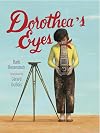
I genuinely loved this book, and it’s because Barbara Rosenstock captures the essence of Dorothea Lange's heart with a few powerful words. Dorothea was invisible. The reason for this was due to the fact that she was teased for limping because of her childhood illness, polio. Dorothea develops a love for people watching, but specifically, she loves their faces. She eventually wants to capture people’s faces through photography because she believes even the ordinary, the lame, and the poor show more are all beautiful. Rosenstock states, “They are ashamed. They are invisible. Dorothea understands. She loves their faces. And their faces tell her camera the truth. They are good people in real trouble.” This quote had me in tears because Barbara Rosenstock did such a wonderful job capturing Dorothea’s precious soul. I loved how the illustrates fit the tone of the story. The illustrations are very ordinary and simple, with muted colors and blurry faces, but I believe that it is purposeful with the overall message of the story, ordinary beauty. This is definitely a book I will be reading to my students. show less
Vasya Kandinsky was a proper little boy: he studied math and history, he practiced the piano, he sat up straight and was perfectly polite. And when his family sent him to art classes, they expected him to paint pretty houses and flowers—like a proper artist. But as Vasya opened his paint box and began mixing the reds, the yellows, the blues, he heard a strange sound—the swirling colors trilled like an orchestra tuning up for a symphony! And as he grew older, he continued to hear show more brilliant colors singing and see vibrant sounds dancing. But was Vasya brave enough to put aside his proper still lifes and portraits and paint . . . music? In this exuberant celebration of creativity, Barb Rosenstock and Mary GrandPré tell the fascinating story of Vasily Kandinsky, one of the very first painters of abstract art. Throughout his life, Kandinsky experienced colors as sounds, and sounds as colors—and bold, groundbreaking works burst forth from his noisy paint box. show less
Lists
Awards


The Mystery of the Monarchs: How Kids, Teachers, and Butterfly Fans Helped Fred and Norah Urquhart Track the Great Monarch Migration (Science, Technology, and the Natural World – 2023)


You May Also Like


Associated Authors
Statistics
- Works
- 26
- Members
- 3,853
- Popularity
- #6,579
- Rating
- 4.2
- Reviews
- 207
- ISBNs
- 84
- Languages
- 4
