
Jen Bryant
Author of The Right Word: Roget and His Thesaurus
About the Author
Image credit: photo credit: 2006 Visual Technology
Works by Jen Bryant
Associated Works
Tagged
Common Knowledge
- Birthdate
- 20th century
- Gender
- female
- Education
- Gettysburg College
- Occupations
- high school teacher
cross-country coach
college professor
poet - Organizations
- National Council of Teachers of English (NCTE)
Society of Children's Book Writers and Illustrators (SCBWI)
Young Adult Library Services Association (YALSA) - Awards and honors
- Caldecott Honor Medal
Robert E. Sibert Medal - Nationality
- USA
- Birthplace
- Easton, Pennsylvania, USA
- Places of residence
- Flemington, New Jersey, USA
Chester County, Pennsylvania, USA - Associated Place (for map)
- Pennsylvania, USA
Members
Reviews
Just wow!
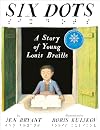
The artwork evokes a childlike wonder almost feels like stepping into a fable,but nothing sinister is lurking around the corner. While the language is simplistic it conveys such depth,empathy and understanding for blind children and disable children on a humanistic fundamental level that makes it quite universal for whomever the reader might be. It really touched my heart in an unexpected way. I also enjoyed the q&a portion at the end of the book,in addition to the Braille alphabet. show more What a lovely/unexpected surprise. I think books like this could teach kids a lot about empathy and civil duty. It would be a nice addition to those reading corners for kids. show less
The artwork evokes a childlike wonder almost feels like stepping into a fable,but nothing sinister is lurking around the corner. While the language is simplistic it conveys such depth,empathy and understanding for blind children and disable children on a humanistic fundamental level that makes it quite universal for whomever the reader might be. It really touched my heart in an unexpected way. I also enjoyed the q&a portion at the end of the book,in addition to the Braille alphabet. show more What a lovely/unexpected surprise. I think books like this could teach kids a lot about empathy and civil duty. It would be a nice addition to those reading corners for kids. show less

Based upon a very brief reminiscence from Abraham Lincoln, about an experience he had during the War of 1812, author Jen Bryant and illustrator Amy June Bates have created this lovely picture-book about a possible episode from his childhood. Having caught a fish for supper, young Abe is on his way home when he encounters a soldier, also heading home. Seeing that the man is poor and hungry, and recalling the story of the Good Samaritan, Abe offers him the fish, thinking he needs it more. show more Having been told the soldiers were off fighting for freedom, Abe asks whether the man found it, receiving an answer that has him pondering...
Having greatly enjoyed a number of Bryant's other picture-book biographies, from The Right Word: Roget and His Thesaurus to A Splash of Red: The Life and Art of Horace Pippin, not to mention some of Bates' other tiles, from Ketzel, the Cat Who Composed to Gittel's Journey: An Ellis Island Story, both written by Lesléa Newman, I felt sure I would enjoy Abe's Fish: A Boyhood Tale of Abraham Lincoln, and I was not wrong. The story was heartwarming, with its tale of a poor young boy giving up his supper, because another needs it more, but it was also thought-provoking. The soldier's response to Abe's question about freedom - "I reckon I did see it sometimes... But other times, it seemed a long way off" - is one that will stick with me, I think, and is a poignant reminder that freedom is often an ephemeral state, rather than a permanent one. The artwork, done in pencil and watercolor, is lovely, capturing the beauty of the natural world around Abe, and his changing emotional state in each scene. In addition to finding both story and illustration excellent, I also appreciated the detailed afterword, which gave more information about Abe's life, and a list of further reading. Recommended to picture-book readers interested in Abraham Lincoln, particularly his youth, or in stories about generosity in general. show less
Having greatly enjoyed a number of Bryant's other picture-book biographies, from The Right Word: Roget and His Thesaurus to A Splash of Red: The Life and Art of Horace Pippin, not to mention some of Bates' other tiles, from Ketzel, the Cat Who Composed to Gittel's Journey: An Ellis Island Story, both written by Lesléa Newman, I felt sure I would enjoy Abe's Fish: A Boyhood Tale of Abraham Lincoln, and I was not wrong. The story was heartwarming, with its tale of a poor young boy giving up his supper, because another needs it more, but it was also thought-provoking. The soldier's response to Abe's question about freedom - "I reckon I did see it sometimes... But other times, it seemed a long way off" - is one that will stick with me, I think, and is a poignant reminder that freedom is often an ephemeral state, rather than a permanent one. The artwork, done in pencil and watercolor, is lovely, capturing the beauty of the natural world around Abe, and his changing emotional state in each scene. In addition to finding both story and illustration excellent, I also appreciated the detailed afterword, which gave more information about Abe's life, and a list of further reading. Recommended to picture-book readers interested in Abraham Lincoln, particularly his youth, or in stories about generosity in general. show less
A Splash of Red: The Life and Art of Horace Pippin (Orbis Pictus Award for Outstanding Nonfiction for Children (Awards)) by Jen Bryant
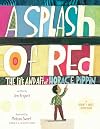
When I saw there was another book by the team that produced “A River of Words: The Story of William Carlos Williams” and “The Right Words: Roget and His Thesaurus” I knew I had to see it. It seems that author Jen Bryant and illustrator Melissa Sweet just can’t miss.
This book tells the story of Horace Pippin (1888-1946), the self-taught African American painter whose works have been featured in museums around the world including the Art Institute of Chicago, the National Gallery of show more Art in Washington, D.C.; and Tate Gallery, in London.
Born in West Chester, Pennsylvania, from the time he was little, Pippin loved to draw, using scraps of paper and charcoal. While still a young boy, he entered a drawing contest sponsored by an art supply company and won colored pencils, a pair of brushes, and a box of paints. When he was in eighth grade his father left and he had to quit school and work to support his family. Nevertheless, he still drew pictures whenever he could.
He joined the army during World War I, and there filled notebooks with pictures of what he saw (six of which survive). Then he was shot and his right arm was badly damaged, and he was unable to draw. Moreover, he had trouble finding a job because he couldn’t do any lifting. He took whatever employment he could find, and at night, he worked on moving his right arm.
With practice, his arm improved and his hand grew steadier, and he began to paint again, using an old brush, leftover house paint he found in alleys, and extra pieces of cloth. He hung his pictures in local stores, but no one responded to them until the famous painter N.C. Wyeth saw them and arranged an exhibition for him in West Chester. Suddenly, he became famous, and he was busy painting again.
He produced some 140 works including several self portraits, and paintings portraying American historical events.
As the author says in a note at the end of the book:
"He has been variously labeled a folk artist, a self-taught artist, and a primitive painter - but he is certainly and indisputably an American master.”
Melissa Sweet enhances Pippin’s story with her visual interpretation of his life. She adopts a folk-art approach in her own pictures, using watercolor, gouache, and collage in vivid colors, echoing Pippin’s love of deep, rich hues, and adding Pippin’s own words to her illustrations.
A map at the back of the book shows locations in the U.S. where you can find his paintings.
Evaluation: This excellent and inspirational story deserves the awards it has garnered, and furthermore performs the service of introducing new audiences to the heroic life of Horace Pippin. show less
This book tells the story of Horace Pippin (1888-1946), the self-taught African American painter whose works have been featured in museums around the world including the Art Institute of Chicago, the National Gallery of show more Art in Washington, D.C.; and Tate Gallery, in London.
Born in West Chester, Pennsylvania, from the time he was little, Pippin loved to draw, using scraps of paper and charcoal. While still a young boy, he entered a drawing contest sponsored by an art supply company and won colored pencils, a pair of brushes, and a box of paints. When he was in eighth grade his father left and he had to quit school and work to support his family. Nevertheless, he still drew pictures whenever he could.
He joined the army during World War I, and there filled notebooks with pictures of what he saw (six of which survive). Then he was shot and his right arm was badly damaged, and he was unable to draw. Moreover, he had trouble finding a job because he couldn’t do any lifting. He took whatever employment he could find, and at night, he worked on moving his right arm.
With practice, his arm improved and his hand grew steadier, and he began to paint again, using an old brush, leftover house paint he found in alleys, and extra pieces of cloth. He hung his pictures in local stores, but no one responded to them until the famous painter N.C. Wyeth saw them and arranged an exhibition for him in West Chester. Suddenly, he became famous, and he was busy painting again.
He produced some 140 works including several self portraits, and paintings portraying American historical events.
As the author says in a note at the end of the book:
"He has been variously labeled a folk artist, a self-taught artist, and a primitive painter - but he is certainly and indisputably an American master.”
Melissa Sweet enhances Pippin’s story with her visual interpretation of his life. She adopts a folk-art approach in her own pictures, using watercolor, gouache, and collage in vivid colors, echoing Pippin’s love of deep, rich hues, and adding Pippin’s own words to her illustrations.
A map at the back of the book shows locations in the U.S. where you can find his paintings.
Evaluation: This excellent and inspirational story deserves the awards it has garnered, and furthermore performs the service of introducing new audiences to the heroic life of Horace Pippin. show less

Author Jen Bryant, whose many well-regarded picture-book biographies include such titles as The Right Word: Roget and His Thesaurus and Six Dots: A Story of Young Louis Braille, returns to the form in this exploration of the life of groundbreaking African-American basketball player Elgin Baylor. Born in the 1930s, Baylor grew up in a segregated Washington, DC, and only discovered basketball later in his childhood. Self taught, he evolved a unique style of play, one that served him well in show more high school, and when he went west (first to Idaho, and then to Seattle) for college. Drafted into the NBA, he played for the Lakers, and greatly improved their standing. With the Civil Rights Movement taking off around the country, Baylor himself made a contribution, quietly standing up for his own rights by refusing to play, when his team traveled to West Virginia for a game and he was refused service in a number of local businesses, because of his race. His actions led the NBA to change their policy, declaring that no team in the league was permitted to stay at a hotel or eat in a restaurant that practiced discrimination...
Although familiar with the name Elgin Baylor, I knew very little else about the man and his career, going in to Above the Rim: How Elgin Baylor Changed Basketball, with the result that I found the story here most informative, not to mention inspiring. Bryant's narrative was engaging, and I appreciated the way that she alternated between the events of Baylor's own life, and the wider social and political events unfolding in the country at the same time. This will allow the young reader to see the influence of larger historical movements on Baylor's life, while also highlighting how Baylor contributed to those movements. The timeline at the rear of the book - there is also an author's note, and a list of further resources - continues this trend, including both personal and national events. The accompanying artwork here from Frank Morrison, done in oil paint, is quite striking, utilizing a deep, rich color palette and depicting figures in motion. All in all, this was a solid biography of an important figure in the history of basketball, and is one I would recommend to picture-book readers interested in biography, stories about athletes, or the history of the American Civil Rights Movement of the 1950s and 60s. show less
Although familiar with the name Elgin Baylor, I knew very little else about the man and his career, going in to Above the Rim: How Elgin Baylor Changed Basketball, with the result that I found the story here most informative, not to mention inspiring. Bryant's narrative was engaging, and I appreciated the way that she alternated between the events of Baylor's own life, and the wider social and political events unfolding in the country at the same time. This will allow the young reader to see the influence of larger historical movements on Baylor's life, while also highlighting how Baylor contributed to those movements. The timeline at the rear of the book - there is also an author's note, and a list of further resources - continues this trend, including both personal and national events. The accompanying artwork here from Frank Morrison, done in oil paint, is quite striking, utilizing a deep, rich color palette and depicting figures in motion. All in all, this was a solid biography of an important figure in the history of basketball, and is one I would recommend to picture-book readers interested in biography, stories about athletes, or the history of the American Civil Rights Movement of the 1950s and 60s. show less
Lists
Youth: BLM (1)
Awards


You May Also Like


Associated Authors
Statistics
- Works
- 27
- Also by
- 1
- Members
- 4,254
- Popularity
- #5,911
- Rating
- 4.2
- Reviews
- 438
- ISBNs
- 98
- Languages
- 3
