
Patricia Hruby Powell
Author of Josephine: The Dazzling Life of Josephine Baker
About the Author
Works by Patricia Hruby Powell
Loving vs. Virginia: A Documentary Novel of the Landmark Civil Rights Case (2017) 306 copies, 25 reviews
Struttin' with Some Barbecue: Lil Hardin Armstrong Becomes the First Lady of Jazz (2018) 18 copies, 1 review
Tagged
Common Knowledge
- Birthdate
- 20th Century
- Gender
- female
- Nationality
- USA
- Associated Place (for map)
- USA
Members
Reviews
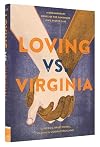
"Tell the Court I love my wife"
(Full disclosure: I received a free copy of this book for review through Library Thing's Early Reviewers program, as well as an e-ARC through NetGalley. Trigger warning for racism and an allusion to rape.)
MILDRED
Richard once said,
"It could be worse, Bean.
If you was the white one
and I was the colored one,
people saw us together?
They'd lynch me.
We can do this."
RICHARD
After waiting another year -
more like fourteen months -
they lost that case.
Is that four now?
They show more called for another.
They lawyers sure are excited
for losing.
As its 50th anniversary approaches, the 1967 Supreme Court case Loving vs. Virginia is receiving some extra attention: from the recently released film starring Ruth Negga (forever my Annie Cresta!) and Joel Edgerton (titled simply Loving), to a mention on the ABC sitcom Blackish, and now a "documentary novel" written by Patricia Hruby Powell, with illustrations by Shadra Strickland.
For those unfamiliar with the case, Loving vs. Virginia struck down the state's anti-miscegenation statute (the Racial Integrity Act of 1924) - and, by extension, similar statutes that existed in twenty-five other states - which prohibited whites from marrying outside their race. Interestingly, no such restrictions existed for non-whites, which is part of what led to the law's downfall: The Lovings' lawyers argued that the emphasis on maintaining the racial purity of whites (but not nonwhites) presupposed the superiority of the "white race," in clear violation of the 14th Amendment.
In Loving vs. Virginia, Hruby Powell tells the story of Mildred and Richard's historic fight, from the genesis of their relationship to their victory in the Supreme Court on June 12, 1967 (a day that's now remembered as Loving Day). The couple grew up together in Central Point, Virginia; their rural neighborhood was home to people of all colors: black, white, Native American, and multiracial. (Mildred herself was light-skinned, with both African and Native American ancestry.) They socialized, shared potluck dinners, and helped each other with farm work. Despite the state's law against it, interracial relationships were not unheard of.
Millie and Richard started dating in 1955, and two years later they had their first child, Sidney Clay. When Mildred found herself pregnant for the second time, the couple decided to get married - in nearby Washington, D.C. Just five weeks later, they were arrested in the dead of night. Sheriff Garnett Brooks and two deputies stormed into the couple's bedroom in the Jeter house and demanded of Richard, "Who's that woman you're sleeping with?" When Mildred replied that she was his wife, Brooks shot back, "Not here, she ain't."
While Richard was released on bail the next day, they held Mildred for a week or more. (Sources seem to vary on this.) Though she was the only woman in a cell meant for many more, the conditions were substandard, and Millie's jailers threatened her, including with rape. After her release, the couple moved to D.C., where they stayed with Millie's cousin Alex and his wife Laura. They returned to Virginia in January, after baby Donald was born, where they received a one-year suspended sentence - as long as the couple never returned to the state together. For the next eight years, the Lovings found themselves shunted between Virginia and D.C., as they fought to return to their home and the case wound its way through the courts. A refrain you'll often hear repeated about them is that they never set out to make history; they just wanted to go home.
Told in verse, from Mildred and Richard's alternating perspectives, Loving vs. Virginia is a beautiful and heartbreaking book. As with any work of historical fiction, you wonder how much is grounded in truth, and which parts are the author's invention. According to the Acknowledgements, Hruby Powell spoke to the Lovings' family and friends - including Lewis and Otha Jeter, two of Millie's seven brothers - as well as neighbors who frequented the same hangout spots, so I think it's safe to assume that much of the narrative is firmly grounded in reality.
Though I was vaguely aware of the case, I learned a ton from Loving vs. Virginia, especially about the anti-miscegenation laws (which I had assumed banned all interracial marriage).
It can be all too easy to view historical events through a lens of removal or disconnect, but Hruby Powell deftly shows the impact they can have on those who live through them. Millie was very much a country girl, and her excommunication to (comparatively) dirty and crowded D.C. took a toll on her mental well-being. Meanwhile, Richard was forced to make a three hour round-trip commute to Central Point every day for work, eating up much of his time and earnings. For the better part of the decade, they lived in limbo, a state of uncertainty, anger, and hope, wishing nothing more than to be allowed back home, as a family.
She humanizes Mildred and Richard so well, in fact, that I found it especially difficult to reconcile the couple's six-year age difference: when they first met, Millie was eleven, while Richard was seventeen. They began courting when Millie was sixteen, and she first became pregnant at seventeen. (Again, accounts seem to differ, but in the context of this story, she was seventeen.) The back matter describes this as a story about "two teenagers" who fell in love, which is ... not quite right.
Intellectually I get that this was more acceptable back then; but emotionally, my heart still ached for seventeen-year-old Millie, unexpectedly pregnant and with no one to turn to for help. (The neighborhood midwife just so happened to be her boyfriend's mother!) I rooted for the Lovings, of course, because racism is bullshit. But I also rooted for Millie, because every girl has the right to a quality education, as well as the ability to plan their families.
The Lovings' story is peppered with contemporary information about the civil rights movement, to help put their struggle in context, to great effect. In this vein, I wish Hruby Powell had included a page about reproductive freedom. For example, it wasn't until 1965, in Griswold v. Connecticut, that the Supreme Court ruled it unconstitutional for the state to prohibit married couples from using contraception. I get that the main thrust of the book is civil rights vs. women's rights, but it feels odd to gloss over this detail, especially in a book that seems geared toward MG/YA readers. Teenage pregnancy at the expense of a high school education isn't something that has to happen nowadays, not when our access to contraception has grown in leaps and bounds. (Yet, as recent events have demonstrated, is still under attack.)
Likewise, before her death in 2008, Mildred voiced her support for same-sex marriage:
I would have loved to have seen some mention of this in the "afterward," which is otherwise tragic as heck: just eight years after the ruling, Richard was killed by a drunk driver. (Mildred, who was also in the car, was blinded in one eye.)
Finally, a note on the format: Though I usually prefer ebooks to print books, Loving vs. Virginia is the rare exception. The hardcover is a feast for the eyes, handsome and thoughtfully designed.
Hruby Powell's prose is complemented wonderfully by Strickland's illustrations, done in the style of "visual journalism."
The book also includes historic, period photographs, for example, side-by-side images of all-white and colored schoolrooms to demonstrate the bald-faced lie of "separate but equal" education.
While there aren't many photos of the Lovings (none exist from their childhood), Strickland does a masterful job bringing them to life in pen and ink.
The result is a lovely and heartrending book that's needed now more than ever. ♥
http://www.easyvegan.info/2017/01/30/loving-vs-virginia-by-patricia-hruby-powell... show less
(Full disclosure: I received a free copy of this book for review through Library Thing's Early Reviewers program, as well as an e-ARC through NetGalley. Trigger warning for racism and an allusion to rape.)
MILDRED
Richard once said,
"It could be worse, Bean.
If you was the white one
and I was the colored one,
people saw us together?
They'd lynch me.
We can do this."
RICHARD
After waiting another year -
more like fourteen months -
they lost that case.
Is that four now?
They show more called for another.
They lawyers sure are excited
for losing.
As its 50th anniversary approaches, the 1967 Supreme Court case Loving vs. Virginia is receiving some extra attention: from the recently released film starring Ruth Negga (forever my Annie Cresta!) and Joel Edgerton (titled simply Loving), to a mention on the ABC sitcom Blackish, and now a "documentary novel" written by Patricia Hruby Powell, with illustrations by Shadra Strickland.
For those unfamiliar with the case, Loving vs. Virginia struck down the state's anti-miscegenation statute (the Racial Integrity Act of 1924) - and, by extension, similar statutes that existed in twenty-five other states - which prohibited whites from marrying outside their race. Interestingly, no such restrictions existed for non-whites, which is part of what led to the law's downfall: The Lovings' lawyers argued that the emphasis on maintaining the racial purity of whites (but not nonwhites) presupposed the superiority of the "white race," in clear violation of the 14th Amendment.
In Loving vs. Virginia, Hruby Powell tells the story of Mildred and Richard's historic fight, from the genesis of their relationship to their victory in the Supreme Court on June 12, 1967 (a day that's now remembered as Loving Day). The couple grew up together in Central Point, Virginia; their rural neighborhood was home to people of all colors: black, white, Native American, and multiracial. (Mildred herself was light-skinned, with both African and Native American ancestry.) They socialized, shared potluck dinners, and helped each other with farm work. Despite the state's law against it, interracial relationships were not unheard of.
Millie and Richard started dating in 1955, and two years later they had their first child, Sidney Clay. When Mildred found herself pregnant for the second time, the couple decided to get married - in nearby Washington, D.C. Just five weeks later, they were arrested in the dead of night. Sheriff Garnett Brooks and two deputies stormed into the couple's bedroom in the Jeter house and demanded of Richard, "Who's that woman you're sleeping with?" When Mildred replied that she was his wife, Brooks shot back, "Not here, she ain't."
While Richard was released on bail the next day, they held Mildred for a week or more. (Sources seem to vary on this.) Though she was the only woman in a cell meant for many more, the conditions were substandard, and Millie's jailers threatened her, including with rape. After her release, the couple moved to D.C., where they stayed with Millie's cousin Alex and his wife Laura. They returned to Virginia in January, after baby Donald was born, where they received a one-year suspended sentence - as long as the couple never returned to the state together. For the next eight years, the Lovings found themselves shunted between Virginia and D.C., as they fought to return to their home and the case wound its way through the courts. A refrain you'll often hear repeated about them is that they never set out to make history; they just wanted to go home.
Told in verse, from Mildred and Richard's alternating perspectives, Loving vs. Virginia is a beautiful and heartbreaking book. As with any work of historical fiction, you wonder how much is grounded in truth, and which parts are the author's invention. According to the Acknowledgements, Hruby Powell spoke to the Lovings' family and friends - including Lewis and Otha Jeter, two of Millie's seven brothers - as well as neighbors who frequented the same hangout spots, so I think it's safe to assume that much of the narrative is firmly grounded in reality.
Though I was vaguely aware of the case, I learned a ton from Loving vs. Virginia, especially about the anti-miscegenation laws (which I had assumed banned all interracial marriage).
It can be all too easy to view historical events through a lens of removal or disconnect, but Hruby Powell deftly shows the impact they can have on those who live through them. Millie was very much a country girl, and her excommunication to (comparatively) dirty and crowded D.C. took a toll on her mental well-being. Meanwhile, Richard was forced to make a three hour round-trip commute to Central Point every day for work, eating up much of his time and earnings. For the better part of the decade, they lived in limbo, a state of uncertainty, anger, and hope, wishing nothing more than to be allowed back home, as a family.
She humanizes Mildred and Richard so well, in fact, that I found it especially difficult to reconcile the couple's six-year age difference: when they first met, Millie was eleven, while Richard was seventeen. They began courting when Millie was sixteen, and she first became pregnant at seventeen. (Again, accounts seem to differ, but in the context of this story, she was seventeen.) The back matter describes this as a story about "two teenagers" who fell in love, which is ... not quite right.
Intellectually I get that this was more acceptable back then; but emotionally, my heart still ached for seventeen-year-old Millie, unexpectedly pregnant and with no one to turn to for help. (The neighborhood midwife just so happened to be her boyfriend's mother!) I rooted for the Lovings, of course, because racism is bullshit. But I also rooted for Millie, because every girl has the right to a quality education, as well as the ability to plan their families.
The Lovings' story is peppered with contemporary information about the civil rights movement, to help put their struggle in context, to great effect. In this vein, I wish Hruby Powell had included a page about reproductive freedom. For example, it wasn't until 1965, in Griswold v. Connecticut, that the Supreme Court ruled it unconstitutional for the state to prohibit married couples from using contraception. I get that the main thrust of the book is civil rights vs. women's rights, but it feels odd to gloss over this detail, especially in a book that seems geared toward MG/YA readers. Teenage pregnancy at the expense of a high school education isn't something that has to happen nowadays, not when our access to contraception has grown in leaps and bounds. (Yet, as recent events have demonstrated, is still under attack.)
Likewise, before her death in 2008, Mildred voiced her support for same-sex marriage:
My generation was bitterly divided over something that should have been so clear and right. The majority believed that what the judge said, that it was God's plan to keep people apart, and that government should discriminate against people in love. But I have lived long enough now to see big changes. The older generation's fears and prejudices have given way, and today's young people realize that if someone loves someone they have a right to marry.
Surrounded as I am now by wonderful children and grandchildren, not a day goes by that I don't think of Richard and our love, our right to marry, and how much it meant to me to have that freedom to marry the person precious to me, even if others thought he was the "wrong kind of person" for me to marry. I believe all Americans, no matter their race, no matter their sex, no matter their sexual orientation, should have that same freedom to marry. Government has no business imposing some people’s religious beliefs over others. Especially if it denies people’s civil rights.
I am still not a political person, but I am proud that Richard's and my name is on a court case that can help reinforce the love, the commitment, the fairness, and the family that so many people, black or white, young or old, gay or straight seek in life. I support the freedom to marry for all. That's what Loving, and loving, are all about.
I would have loved to have seen some mention of this in the "afterward," which is otherwise tragic as heck: just eight years after the ruling, Richard was killed by a drunk driver. (Mildred, who was also in the car, was blinded in one eye.)
Finally, a note on the format: Though I usually prefer ebooks to print books, Loving vs. Virginia is the rare exception. The hardcover is a feast for the eyes, handsome and thoughtfully designed.
Hruby Powell's prose is complemented wonderfully by Strickland's illustrations, done in the style of "visual journalism."
The book also includes historic, period photographs, for example, side-by-side images of all-white and colored schoolrooms to demonstrate the bald-faced lie of "separate but equal" education.
While there aren't many photos of the Lovings (none exist from their childhood), Strickland does a masterful job bringing them to life in pen and ink.
The result is a lovely and heartrending book that's needed now more than ever. ♥
http://www.easyvegan.info/2017/01/30/loving-vs-virginia-by-patricia-hruby-powell... show less
 This review was written for LibraryThing Early Reviewers.
Josephine: The Dazzling Life of Josephine Baker (Coretta Scott King Illustrator Honor Books) by Patricia Hruby Powell
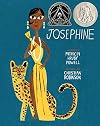
Christian Robinson's illustrations present Josephine's volcanic energy - sometimes silly, sometimes serious - through her journey from childhood in Saint Louis, working in vaudeville in the South, making her way north, and finally performing in Paris. She works as a dresser and snags every opportunity to be on stage, until she becomes the star. She marries and divorces, encounters racism and welcome, adopts children of many backgrounds (her "rainbow tribe"), goes broke and dances again.
The show more text is like a prose poem, with short lines, indents, and frequent capitals for emphasis - easy to read, with a lot of expression and Josephine's own exuberance. show less
The show more text is like a prose poem, with short lines, indents, and frequent capitals for emphasis - easy to read, with a lot of expression and Josephine's own exuberance. show less
Josephine: The Dazzling Life of Josephine Baker (Coretta Scott King Illustrator Honor Books) by Patricia Hruby Powell
Josephine is the tragic retelling of the life of a black dancer who became rich, successful, and influential, but in the end died with financial struggles, leaving her 12 adopted children behind. This book, written in poetry form, describes the struggle of growing up poor and black during segregation. Josephine finds success in France where desegregation had already occurred. Using her connections as a star, Josephine works as a spy during WWII and encourages American citizens to desegregate show more in hiring and Jim Crow laws. This book while sharing Josephine’s positive influence and zest for life still leaves one sad that despite all her success, she does not have a happy ending. show less

What a charming illustrated life of the legendary Josephine Baker this is! Starting with her years growing up in poverty in St. Louis, this book moves on to her years in New Orleans, years as part of a dance troupe, her career on Broadway, and her debut in France. It discusses her love of the French people for accepting her as a black person and mentions her espionage activities, including her hospitalization in Casablanca during World War II. I loved that she owned a leopard! (Here kitty, show more kitty!) It goes on to discuss her adoption of twelve "rainbow" children and how overspending caused her to lose some of her most cherished possessions and rely upon the generosity of others. It describes her small comeback at the end of her life. It's a great introduction to Josephine for young readers. show less
Lists
Awards


You May Also Like


Associated Authors
Statistics
- Works
- 9
- Members
- 908
- Popularity
- #28,240
- Rating
- 4.2
- Reviews
- 78
- ISBNs
- 30
- Languages
- 2
- Favorited
- 1
