
Tanya Lee Stone
Author of Almost Astronauts: 13 Women Who Dared to Dream
About the Author
Tanya Lee Stone studied English at Oberlin College and was an editor of children's nonfiction for many years. She also has a Masters Degree. She teaches writing at Champlain College. After many years as an editor. Tanya moved to Vermont and returned to writing. This award-winning author has written show more titles that include the young adult novel, A Bad Boy Can Be Good for a Girl, Up Close: Ella Fitzgerald , picture books Elizabeth Leads the Way, Sandy's Circus, and Who Says Women Can't Be Doctors? She has also written narrative nonfiction with her titles: Almost Astronauts: 13 Women Who Dared to Dream, and The Good, the Bad, and the Barbie. In 2014 her title, Courage Has No Color: The True Story of the Triple Nickles, made The New York Times Best Seller List. (Bowker Author Biography) show less
Image credit: reading at National Book Festival By Slowking4 - Own work, GFDL 1.2, https://commons.wikimedia.org/w/index.php?curid=62180278
Series
Works by Tanya Lee Stone
Courage Has No Color, The True Story of the Triple Nickles: America's First Black Paratroopers (2013) 620 copies, 30 reviews
The Good, the Bad, and the Barbie: A Doll's History and Her Impact on Us (2010) 231 copies, 18 reviews
Who Says Women Can't Be Computer Programmers?: The Story of Ada Lovelace (2018) 52 copies, 7 reviews
Peace Is a Chain Reaction: How World War II Japanese Balloon Bombs Brought People of Two Nations Together (2022) 34 copies, 4 reviews
Remembering Rosalind Franklin: Rosalind Franklin & the Discovery of the Double Helix Structure of DNA (2024) 27 copies, 4 reviews
P is for Passover 1 copy
Associated Works
The Great War: Stories Inspired by Items from the First World War (2015) — Contributor — 119 copies, 18 reviews
1789: Twelve Authors Explore a Year of Rebellion, Revolution, and Change (2020) — Contributor — 59 copies, 14 reviews
Tagged
Common Knowledge
- Gender
- female
Members
Reviews
Remembering Rosalind Franklin : Rosalind Franklin & the discovery of the double helix structure of DNA by Tanya Lee Stone

Tanya Lee Stone begins this picture book for kids 7 and up in a very unusual way:
"Dear reader,
This true story doesn't really have a happy ending.
Why would I start by telling you that? Because sometimes a person can do something extraordinary and not get the win. They don't become famous, or earn a prize, or live happily ever after. Sometimes, they never even find out they made a difference.”
She then tells the story of Rosalind Franklin, born in 1920 in London, England. Rosalind was a show more bright and curious girl who grew up to provide the key to the groundbreaking revelation of the double helix structure of DNA. But Rosalind didn’t get credit until many years later. Instead, and to this day, most people associate the discovery with James Watson and Francis Crick.
Rosalind loved science, scoring higher than anyone else at the University of Cambridge who took the chemistry test. After graduation, she was offered a research job in Paris and became an expert at X-ray crystallography. This is a process by which one uses X-rays to examine atoms and molecules, letting her see the inside of tiny particles. She missed her family however, so she moved back to London, taking a position at King’s College. Watson and Crick were studying DNA at nearby University of Cambridge.
Meanwhile, Maurice Wilkins had been the lead DNA scientist at King’s, and resented that Rosalind was not only hired to be his assistant, but was given her own assistant.
Rosalind’s x-ray diffraction work showed that DNA had different patterns, and presented her discovery at a lecture which James Watson attended. A week later, Francis Crick invited Rosalind and Maurice to see their DNA model, and Rosalind pointed out their errors.
Take note: Rosalind now has three men resentful of her role and achievements as a woman.
Back in her lab, Rosalind finally captured a clear image of DNA in 1952, “Photo 51” showing the double helix. But she encountered so much hostility generally at King’s College that she moved to the Biomolecular Research Laboratory at Birkbeck College, also in London. But first, she wrote up everything she discovered as part of her lab’s progress report.
Alas, Wilkins showed Rosalind’s Photo 51 to Watson, and within weeks, Watson and Crick completed a correct model of DNA, “fully cracking the code to the secret of life,” announcing their discovery in early 1953. They never mentioned Rosalind or her work at all, and in 1962, the Nobel Prize in Physiology or Medicine in 1962 was awarded to James Watson, Francis Crick and Maurice Wilkins for their [sic] discovery of the molecular structure of DNA.
Rosalind was not around to see it happen. She died at the age of 37 on April 16, 1958 in Chelsea, London, from ovarian cancer. Exposure to X-ray radiation is sometimes considered to be a possible factor in Franklin's illness.
In 1968, as the author recounts, Watson wrote a book about “their” discovery, and mentioned Rosalind in such comments as “she was not unattractive and might have been quite stunning had she taken even a mild interest in clothes.”
Happily, although too late for Rosalind, her accomplishments and especially her pivotal role in uncovering the secret of life itself are now better known. But not widely enough. The author is to be commended for helping to spread the word. Back matter includes quotes and sources.
Illustrations in soft watercolors by Gretchen Ellen Powers portray the characters as almost childlike, perhaps a reflection of her work on such books as The Boxcar Children’s 75th Anniversary Edition as well as Summer’s Call.
Evaluation: This story for ages 7 and over relates a common theme in history: not only of women not being acknowledged for their important work, but of men taking the credit. It will be a fine day indeed if that pattern ever changes. Children will gain insight into the struggle for equal treatment, and the need to rectify unfair situations when they are discovered. And they will learn about a wonderful scientist whose work changed not only our understanding of how living forms are made, but who thereby opened up myriad possibilities to improve life through greater knowledge of genetics. show less
"Dear reader,
This true story doesn't really have a happy ending.
Why would I start by telling you that? Because sometimes a person can do something extraordinary and not get the win. They don't become famous, or earn a prize, or live happily ever after. Sometimes, they never even find out they made a difference.”
She then tells the story of Rosalind Franklin, born in 1920 in London, England. Rosalind was a show more bright and curious girl who grew up to provide the key to the groundbreaking revelation of the double helix structure of DNA. But Rosalind didn’t get credit until many years later. Instead, and to this day, most people associate the discovery with James Watson and Francis Crick.
Rosalind loved science, scoring higher than anyone else at the University of Cambridge who took the chemistry test. After graduation, she was offered a research job in Paris and became an expert at X-ray crystallography. This is a process by which one uses X-rays to examine atoms and molecules, letting her see the inside of tiny particles. She missed her family however, so she moved back to London, taking a position at King’s College. Watson and Crick were studying DNA at nearby University of Cambridge.
Meanwhile, Maurice Wilkins had been the lead DNA scientist at King’s, and resented that Rosalind was not only hired to be his assistant, but was given her own assistant.
Rosalind’s x-ray diffraction work showed that DNA had different patterns, and presented her discovery at a lecture which James Watson attended. A week later, Francis Crick invited Rosalind and Maurice to see their DNA model, and Rosalind pointed out their errors.
Take note: Rosalind now has three men resentful of her role and achievements as a woman.
Back in her lab, Rosalind finally captured a clear image of DNA in 1952, “Photo 51” showing the double helix. But she encountered so much hostility generally at King’s College that she moved to the Biomolecular Research Laboratory at Birkbeck College, also in London. But first, she wrote up everything she discovered as part of her lab’s progress report.
Alas, Wilkins showed Rosalind’s Photo 51 to Watson, and within weeks, Watson and Crick completed a correct model of DNA, “fully cracking the code to the secret of life,” announcing their discovery in early 1953. They never mentioned Rosalind or her work at all, and in 1962, the Nobel Prize in Physiology or Medicine in 1962 was awarded to James Watson, Francis Crick and Maurice Wilkins for their [sic] discovery of the molecular structure of DNA.
Rosalind was not around to see it happen. She died at the age of 37 on April 16, 1958 in Chelsea, London, from ovarian cancer. Exposure to X-ray radiation is sometimes considered to be a possible factor in Franklin's illness.
In 1968, as the author recounts, Watson wrote a book about “their” discovery, and mentioned Rosalind in such comments as “she was not unattractive and might have been quite stunning had she taken even a mild interest in clothes.”
Happily, although too late for Rosalind, her accomplishments and especially her pivotal role in uncovering the secret of life itself are now better known. But not widely enough. The author is to be commended for helping to spread the word. Back matter includes quotes and sources.
Illustrations in soft watercolors by Gretchen Ellen Powers portray the characters as almost childlike, perhaps a reflection of her work on such books as The Boxcar Children’s 75th Anniversary Edition as well as Summer’s Call.
Evaluation: This story for ages 7 and over relates a common theme in history: not only of women not being acknowledged for their important work, but of men taking the credit. It will be a fine day indeed if that pattern ever changes. Children will gain insight into the struggle for equal treatment, and the need to rectify unfair situations when they are discovered. And they will learn about a wonderful scientist whose work changed not only our understanding of how living forms are made, but who thereby opened up myriad possibilities to improve life through greater knowledge of genetics. show less
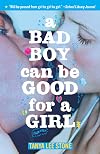
Plot: What does Josie, Nicolette, and Aviva have in common: they all dated the same asshole. The novel is written in a poetry format and each section tells one of the girl's stories. Josie decides to write a warning about this guy at the back of the school library's copy of Judy Blume's Forever. In the end, the reader gets to see the experience of each girl with the same guy and how they all became fools for "love"...or what they thought was love.
Evaluation: I was struck by the author's show more writing style in this book. Her complete candor and descriptive language that she used in order to formulate each girl's experience was exceptional and as a reader, I felt really sympathetic towards her characters. Josie, although younger than the other girls, seems to be the one with the better sense. She decides not to have sex with this guy and even writes a warning about him in the back of the book Forever. She tries to warn other girls, but that doesn't work because this guy seems to make girls weak at the knees when he even looks at them. Ah, that's what a smooth style and sideburns like Luke Perry can do that to a girl (okay, the guy didn't have sideburns...I just imagined that).
The character that I felt went through the most was Nicolette. She is such a lonely character and even though she tries to act all cool and that she doesn't care, you know that she does and that she really wants to be loved. When she is made fun of and called a whore, you can tell that she didn't think of herself that way. She thought that that the darkroom, where she would fool around with this guy was special, but the red light of the darkroom symbolized something else...it wasn't special to him at all and in reality he was basically calling her a whore. Ouch! When she comes to this realization, you can tell that Nicolette is just shattered and I felt so sorry for her.
Stone has created a novel, which reflects the good times as well as the bad of dating a "bad boy." I think that knowing is half the battle, especially when it comes to dating and relationships. Not all boys are like Michael Wagner in Forever because some boys just don't care whether a girl really has a good time the first time that she has sex and this novel demonstrates that in a frank manner. show less
Evaluation: I was struck by the author's show more writing style in this book. Her complete candor and descriptive language that she used in order to formulate each girl's experience was exceptional and as a reader, I felt really sympathetic towards her characters. Josie, although younger than the other girls, seems to be the one with the better sense. She decides not to have sex with this guy and even writes a warning about him in the back of the book Forever. She tries to warn other girls, but that doesn't work because this guy seems to make girls weak at the knees when he even looks at them. Ah, that's what a smooth style and sideburns like Luke Perry can do that to a girl (okay, the guy didn't have sideburns...I just imagined that).
The character that I felt went through the most was Nicolette. She is such a lonely character and even though she tries to act all cool and that she doesn't care, you know that she does and that she really wants to be loved. When she is made fun of and called a whore, you can tell that she didn't think of herself that way. She thought that that the darkroom, where she would fool around with this guy was special, but the red light of the darkroom symbolized something else...it wasn't special to him at all and in reality he was basically calling her a whore. Ouch! When she comes to this realization, you can tell that Nicolette is just shattered and I felt so sorry for her.
Stone has created a novel, which reflects the good times as well as the bad of dating a "bad boy." I think that knowing is half the battle, especially when it comes to dating and relationships. Not all boys are like Michael Wagner in Forever because some boys just don't care whether a girl really has a good time the first time that she has sex and this novel demonstrates that in a frank manner. show less
Remembering Rosalind Franklin: Rosalind Franklin & the Discovery of the Double Helix Structure of DNA by Tanya Lee Stone
The life story of scientist and x-ray crystallographer Rosalind Franklin, whose work was essential to the discovery of the structure of DNA, is told for children in this picture book from author Tanya Lee Stone and illustrator Gretchen Ellen Powers. This is not a happy story, as the author informs the reader at the beginning of the book, because although Franklin's achievement was significant, she never received the credit she deserved in her lifetime. Scientifically inclined from a young show more age, she became a chemist, working in Paris and then in London, for King's College. Here her "Photo 51" helped to demonstrate the double-helix structure of DNA, a piece of the puzzle that would aid Crick and Watson in their work on the subject, for which they would receive Nobel Prizes, along with Maurice Wilkins (of King's College). Sadly, Franklin's contribution was not credited at the time, and she died shortly thereafter, never seeing the great discoveries which were advanced by her work.
I have been aware of the Rosalind Franklin story for some time, but was not familiar with many of the details, so when I saw that artist Gretchen Ellen Powers, whose work I admire, had illustrated a picture book biography of her, I immediately set out to track it down. I am glad I did, as I found Remembering Rosalind Franklin: Rosalind Franklin & the Discovery of the Double Helix Structure of DNA quite interesting. The story it tells, although not happy, is an important one, giving more information about the woman who helped to make one of the most important scientific discoveries to date. The author's note at the rear gives more information about Franklin, and about the "Matilda Effect," in which the work of women is claimed by men. I was intrigued to see, from that note, that author Tanya Lee Stone actually met Francis Crick as a child, when he visited her home, and that he expressed regret for not crediting Franklin's work. As expected, the artwork here—done in watercolor—was very appealing, with a sense of warmth and a wealth of charm. Powers' work reminds me a bit of Wendy Anderson Halperin, which is a welcome similarity! In any case, this is one I would recommend to young scientists, and to anyone looking for picture book biographies of woman scientists. show less
I have been aware of the Rosalind Franklin story for some time, but was not familiar with many of the details, so when I saw that artist Gretchen Ellen Powers, whose work I admire, had illustrated a picture book biography of her, I immediately set out to track it down. I am glad I did, as I found Remembering Rosalind Franklin: Rosalind Franklin & the Discovery of the Double Helix Structure of DNA quite interesting. The story it tells, although not happy, is an important one, giving more information about the woman who helped to make one of the most important scientific discoveries to date. The author's note at the rear gives more information about Franklin, and about the "Matilda Effect," in which the work of women is claimed by men. I was intrigued to see, from that note, that author Tanya Lee Stone actually met Francis Crick as a child, when he visited her home, and that he expressed regret for not crediting Franklin's work. As expected, the artwork here—done in watercolor—was very appealing, with a sense of warmth and a wealth of charm. Powers' work reminds me a bit of Wendy Anderson Halperin, which is a welcome similarity! In any case, this is one I would recommend to young scientists, and to anyone looking for picture book biographies of woman scientists. show less
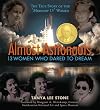
Almost Astronauts is by turns inspiring and enraging. It is the story of 13 women pilots who were selected, in 1961, to undergo the same (and in some cases, more stringent) harrowing physical and psychological testing that the seven Mercury astronauts underwent, and who passed these tests with flying colors. The project was the brainchild of Randolph Lovelace, the NASA doctor who tested the Mercury Seven. He wanted to know: with their lighter body mass and lower oxygen requirements, would show more women be more cost-effective astronauts than men? But by embarking on a scientific program to answer this question, he and the 13 women astronaut candidates plunged into the 1960s' swirling maelstrom of prejudice and politics. Of course, those 13 women never made it to space, and it was not until 1999 that 8 of the surviving 11 were able to witness the first American space launch to be piloted by a woman. The second half of the book details the tumultuous social changes in both the public and military spheres that were necessary before women could be admitted to the inner core of America's space program, first as mission specialists and later as shuttle pilots. Although this story is often frustrating, the book is no feminist rant against past injustice. Instead, the reader is left with admiration for how brave, how resourceful, how strong, how capable these thirteen women were; how they competed on a very unequal playing field to achieve thousands of hours in the air as civilian pilots; and, once they were finally admitted into a program where they were tested no differently from the men, they rose to the challenge and demonstrated that they, too, had the legendary Right Stuff. They may never have made it to space, but because of their courageous struggle, later generations succeeded. The 13 were Myrtle Cagle, Jerrie Cobb, Janet Dietrich, Marion Dietrich, Wally Funk, Sarah Gorelick, Jane "Janey" Briggs Hart, Jean Hixson, Rhea Woltman, Gene Nora Stumbough, Irene Leverton, Jerri Sloan, and Bernice Steadman. show less
Lists
Awards


Courage Has No Color, The True Story of the Triple Nickles: America's First Black Paratroopers (Twelve to Fourteen – 2014)
The House That Jane Built: A Story About Jane Addams (Nine to Twelve, Information Books, Biography and Memoir – 2016)


Courage Has No Color, The True Story of the Triple Nickles: America's First Black Paratroopers (Long Form Nonfiction – 2013)
Who Says Women Can't Be Doctors?: The Story of Elizabeth Blackwell (Nonfiction Picture Books – 2013)


Courage Has No Color, The True Story of the Triple Nickles: America's First Black Paratroopers (Informational Books – 2013)
Pass Go and Collect $200: The Real Story of How Monopoly Was Invented (Informational Books for Younger Readers – 2018)
The House That Jane Built: A Story About Jane Addams (Informational Books for Younger Readers – 2015)
You May Also Like


Associated Authors
Statistics
- Works
- 97
- Also by
- 4
- Members
- 6,847
- Popularity
- #3,569
- Rating
- 4.0
- Reviews
- 474
- ISBNs
- 220
- Languages
- 3
- Favorited
- 2
