
Susan Campbell Bartoletti
Author of The Boy Who Dared
About the Author
A former 8th-grade English teacher, Susan Campbell Bartoletti writes fiction and nonfiction for all ages. Black Potatoes is the winner of the ALA Sibert Award for Best Information book, the NCTE Orbis Pictus Award for Distinguished Nonfiction, and the SCBWI Golden Kite Nonfiction award. She lives show more with her family in Moscow, PA. show less
Works by Susan Campbell Bartoletti
A Coal Miner's Bride: The Diary of Anetka Kaminska, Lattimer, Pennsylvania, 1896 (2000) 1,364 copies, 13 reviews
They Called Themselves the K.K.K.: The Birth of an American Terrorist Group (2010) 492 copies, 63 reviews
1789: Twelve Authors Explore a Year of Rebellion, Revolution, and Change (2020) — Editor — 59 copies, 14 reviews
The Untold History of the United States, Volume 1: Young Readers Edition, 1898-1945 (2014) — Adapter — 51 copies, 1 review
Associated Works
Tagged
Common Knowledge
- Canonical name
- Bartoletti, Susan Campbell
- Birthdate
- 1958-11-18
- Gender
- female
- Education
- Marywood University (BA|English, Secondary Education)
University of Scranton (MA|English)
Binghamton University (Ph.D|English) - Occupations
- teacher
- Nationality
- USA
- Birthplace
- Harrisburg, Pennsylvania, USA
- Places of residence
- Moscow, Pennsylvania, USA
- Associated Place (for map)
- Pennsylvania, USA
Members
Reviews
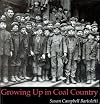
Reason for Reading: Read aloud to my son as part of our history curriculum.
This book centres on Pennsylvanian coal country in the late 1800s to early 1900s. It also mainly focuses on the child workers though it doesn't exclude the men, nor the women back at home. The book is also profusely illustrated with contemporary photographs, some from the author's family as it was personal history that inspired her to write the book. During the author's research she listened to many interview tapes show more and read transcripts and has included many quotes from men who were once the boys described in the book. This makes for very interesting reading and brings the book closer to reality for the juvenile reader.
The book is incredibly thorough, going through all the different jobs involved in working at the mine. Then moving on to the company village and day-to-day life for the women and such things as scrounging for scraps of coal, the company store and school. Then the book moves on to recreation after working hours. A chapter on dangers and tragedies and common accidents prefaces a final chapter on the beginning of unionization and the big strike in Pennsylvania. A conclusion then follows up with the reasons coal mining ended as such a big industry.
While the book is centred on Pennsylvania, the majority of the information is general in nature and can be applied to anywhere coal mining took place in North America. The photographs are amazing and add volumes to the book's enjoyability. The text is narrative, interesting and while never written down to its audience does keep topics lively remembering who it's audience is. My son loved this book so much. Often when I read to him he will sit in another chair than me and I will hold the book up for him to look at pictures, or he likes to walk around the room but whenever I brought this book out he jumped up and ran right over to snuggle right next to me so he wouldn't miss the pictures. For myself, this is a topic I really knew little about and I enjoyed the book very much as well. A tremendously, enjoyable read about an industry once so important to everyday life and the terrible working conditions, child labour, and oppression workers had to face and in spite of it all they grew up to actually have fond memories and say it wasn't all bad. Highly recommended. show less
This book centres on Pennsylvanian coal country in the late 1800s to early 1900s. It also mainly focuses on the child workers though it doesn't exclude the men, nor the women back at home. The book is also profusely illustrated with contemporary photographs, some from the author's family as it was personal history that inspired her to write the book. During the author's research she listened to many interview tapes show more and read transcripts and has included many quotes from men who were once the boys described in the book. This makes for very interesting reading and brings the book closer to reality for the juvenile reader.
The book is incredibly thorough, going through all the different jobs involved in working at the mine. Then moving on to the company village and day-to-day life for the women and such things as scrounging for scraps of coal, the company store and school. Then the book moves on to recreation after working hours. A chapter on dangers and tragedies and common accidents prefaces a final chapter on the beginning of unionization and the big strike in Pennsylvania. A conclusion then follows up with the reasons coal mining ended as such a big industry.
While the book is centred on Pennsylvania, the majority of the information is general in nature and can be applied to anywhere coal mining took place in North America. The photographs are amazing and add volumes to the book's enjoyability. The text is narrative, interesting and while never written down to its audience does keep topics lively remembering who it's audience is. My son loved this book so much. Often when I read to him he will sit in another chair than me and I will hold the book up for him to look at pictures, or he likes to walk around the room but whenever I brought this book out he jumped up and ran right over to snuggle right next to me so he wouldn't miss the pictures. For myself, this is a topic I really knew little about and I enjoyed the book very much as well. A tremendously, enjoyable read about an industry once so important to everyday life and the terrible working conditions, child labour, and oppression workers had to face and in spite of it all they grew up to actually have fond memories and say it wasn't all bad. Highly recommended. show less
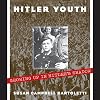
"Hitler Youth" is a chilling look at the Hitler's young followers in Germany under the Third Reich. Bartoletti uses a combination of narrative, facts, and historical photographs to tell the story of Germany's youth, and how they lost their childhoods under the leadership and coercion of Der Fuhrer, Adolf Hitler.
Bartoletti begins by explaining this is not a book about Hitler; it is meant to tell the story of a generation of German children who were part of one of history's darkest hours. The show more book then goes on to tell of the murder of Herbert Norkus, a young Hitler Youth who was murdered by a gang of "reds" after pleading to be let into several homes and businesses. Bartoletti explains how this event served to rally the young people around a single purpose, and a single martyr, allowing Hitler to gain greater control over his young charges. The book is a fascinating, terrifying look at what happens when one man has absolute control, and when we stop teaching children to think for themselves. It also highlights, however, those children who did. Woven throughout the story of the Hitler Youth is that of Sophie Scholl and her siblings; Sophie was executed for defying the blind subservience that Hitler Youth were supposed to embody.
The book takes a look at a part of Nazi history that is not often discussed -- the children who were part of the movement. While it is terrifying and eye-opening in many ways, it is also striking for its sensitivity. It humanizes these children who lost their childhoods. In doing so, it highlights the most terrifying part of this period in history -- the fact that the Nazi party was made of, in it's lower ranks and in its youth -- normal people who became swept up in a wave that was too powerful to stop, and said nothing. This book is highly recommended for middle and high school collections, or children in grades 8-12. show less
Bartoletti begins by explaining this is not a book about Hitler; it is meant to tell the story of a generation of German children who were part of one of history's darkest hours. The show more book then goes on to tell of the murder of Herbert Norkus, a young Hitler Youth who was murdered by a gang of "reds" after pleading to be let into several homes and businesses. Bartoletti explains how this event served to rally the young people around a single purpose, and a single martyr, allowing Hitler to gain greater control over his young charges. The book is a fascinating, terrifying look at what happens when one man has absolute control, and when we stop teaching children to think for themselves. It also highlights, however, those children who did. Woven throughout the story of the Hitler Youth is that of Sophie Scholl and her siblings; Sophie was executed for defying the blind subservience that Hitler Youth were supposed to embody.
The book takes a look at a part of Nazi history that is not often discussed -- the children who were part of the movement. While it is terrifying and eye-opening in many ways, it is also striking for its sensitivity. It humanizes these children who lost their childhoods. In doing so, it highlights the most terrifying part of this period in history -- the fact that the Nazi party was made of, in it's lower ranks and in its youth -- normal people who became swept up in a wave that was too powerful to stop, and said nothing. This book is highly recommended for middle and high school collections, or children in grades 8-12. show less
They Called Themselves the K.k.k.: The Birth of an American Terrorist Group by Susan Campbell Bartoletti

On a May evening in 1866, in Pulaski, Tenn., six men lounged about a law office. “Boys, let us get up a club or society,” John Lester said. And they did. Two of the men suggested that they call themselves “Kuklos,” the Greek word for “circle” or “band,” but that wasn’t mysterious enough, so they made up a variation: Ku Klux Klan, which literally means “circle circle.” They delighted in dressing up in flowing white robes, riding about town pretending to be ghosts of show more Confederate dead and playing pranks, but they also understood the power of anonymity to stir up fear and thwart the new Freedmen’s Bureau programs to help former slaves. Balancing the stories of the Klan and the former slaves’ determination to remake their lives, Bartoletti makes extensive use of congressional testimony, interviews, journals, diaries and slave narratives to allow the players to speak in their own voices as much as possible. Documentation is superb, and even the source notes are fascinating. An exemplar of history writing and a must for libraries and classrooms. (a note to the reader, time line, quote attributions, bibliography) (Nonfiction. 12 & up)
-Kirkus Review show less
-Kirkus Review show less
Fantastic story about 14 year old Helmuth which is so gut-wrenching because it is based on true events. After reading so many holocaust books, I wonder what happened to the people who stood up against the Nazis - the ordinary, decent Germans who could see what was happening. This is one of those people. A boy who has access to a radio that can receive BBC broadcasts and so when he hears the BBC giving out information about their own losses, he starts to believe what they say over the show more propaganda and lies around him. He is driven to start writing pamphlets that reveal what he has heard and leaves them on shop windows and inphone boxes, so others will read them. Helmut realizes he can't do this alone; so he starts to reveal what he knows to others around him. But who can he trust? show less
Lists
Awards


They Called Themselves the K.K.K.: The Birth of an American Terrorist Group (Nominee – Grades 6-12 Nonfiction – 2013)


You May Also Like


Associated Authors
Statistics
- Works
- 25
- Also by
- 1
- Members
- 8,023
- Popularity
- #3,019
- Rating
- 4.0
- Reviews
- 466
- ISBNs
- 132
- Languages
- 2
- Favorited
- 3
