
Kristiana Gregory
Author of Across the Wide and Lonesome Prairie: The Oregon Trail Diary of Hattie Campbell, 1847
About the Author
Series
Works by Kristiana Gregory
Across the Wide and Lonesome Prairie: The Oregon Trail Diary of Hattie Campbell, 1847 (1997) 2,725 copies, 42 reviews
The Winter of Red Snow: The Revolutionary War Diary of Abigail Jane Stewart, Valley Forge, Pennsylvania, 1777 (1996) 2,630 copies, 23 reviews
My America: Five Smooth Stones: Hope's Revolutionary War Diary, Book One (2001) 1,061 copies, 4 reviews
Seeds of Hope: The Gold Rush Diary of Susanna Fairchild, California Territory, 1849 (2001) 734 copies, 5 reviews
Dear America: The Winter of Red Snow, A Line in the Sand, A Light in the Storm, When Will This Cruel War Be Over? (4 Volumes) (1997) 6 copies
Lily's Crossing 6 copies
Dear America: The Winter of Red Snow (TV episode) — Creator — 3 copies
Tagged
Common Knowledge
- Canonical name
- Gregory, Kristiana
- Other names
- Rutty, Lynn Christine
Rutty, Lynn Christine Gregory
Gregory, Lynn Christine (birth name) - Birthdate
- 1951-06-12
- Gender
- female
- Education
- California State University, Dominguez Hills
- Occupations
- children's book author
editor
journalist - Organizations
- Los Angeles Times
Southern California Area Chamber of Commerce - Agent
- Elizabeth Harding (Curtis Brown Literary Agency)
- Nationality
- USA
- Birthplace
- Los Angeles, California, USA
- Places of residence
- Los Angeles, California, USA
Manhattan Beach, California, USA
New Mexico, USA
Boise, Idaho, USA - Map Location
- California, USA
Members
Discussions
YA/ SF Earthquake in Name that Book (January 2009)
Reviews
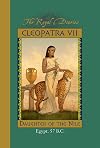
Of the four "Royal Diaries" I've read, this one was by far the best. Maybe it was because Cleopatra's life as a child was so much more interesting than that of Anastasia Romanova or Marie Antoinette or Isabel of Aragon, or, since there was less known about Cleopatra's childhood, the author was able to use more imagination in making Cleopatra a personality who was capable of and did rule Egypt.
Kristina Gregory used as much actual history and events as she could, but what Cleopatra actually show more thought about her father, her older sister, her personal fears and ambitions are, of course, speculative. Nevertheless, it is a wild, frightening and believable story.
Some may wonder whether the events are appropriate for 8-10 year-olds for whom this series is aimed, but I feel that showing how a girl of 12 was able to maneuver and survive (at least through her adolescence) attempts on her life, her father's alcoholism, the contempt of the Romans by using her intellect is uplifting. The extra information at the endof the book and the pictures of the main characters also feeds the imagination. show less
Kristina Gregory used as much actual history and events as she could, but what Cleopatra actually show more thought about her father, her older sister, her personal fears and ambitions are, of course, speculative. Nevertheless, it is a wild, frightening and believable story.
Some may wonder whether the events are appropriate for 8-10 year-olds for whom this series is aimed, but I feel that showing how a girl of 12 was able to maneuver and survive (at least through her adolescence) attempts on her life, her father's alcoholism, the contempt of the Romans by using her intellect is uplifting. The extra information at the endof the book and the pictures of the main characters also feeds the imagination. show less
Two stars because the writing was absorbing.
If I had wanted to read about a princess in ancient Rome, I would have picked up a book that fucking took place in ancient Rome. I wanted Egypt! I wanted sandy deserts, Egyptian gods, Arabic and Aramaic, and an education on parts of history. Instead, noooo I got water water sailing my sisters hate me water I have a leopard oh Julius is cute look at Marc Antony. Like wtf. Over half the book takes place in ancient Rome, where the character is...not show more my idea of a princess in ancient Egypt. It apparently lines up with a specific part of her childhood, but was not what I wanted as a reader perusing ancient Egypt.
Cleopatra, as written in this novel, doesn't sound twelve. She had two brothers, both named Ptolemy, and two sisters, Bernice and Arsinoe. So the super evil sister, whose name escapes me, in the novel didn't exist in real life.
What's with the instalove? Why does she develop crushes on men who are so much older than her? I'm not saying it can't happen at all. But why, within the confines of this story? Was it because the author needed to hammer in as much well-known knowledge and figures as she could? Glass windows did exist in Rome, but they were not the glass windows of today. They were thin and barely transparent, not the translucent ones of today. Horseshoes did exist, as did the game of horseshoe throwing, but...not really. The book portrays them in a much more modern sense. Pet collars did exist the way they are portrayed here, but eh...just super rare and it's off-putting in this book. It doesn't make Cleopatra seem extravagant or wealthy. It makes me think "the author loves her cat and put her in a fictionalized version of ancient Egypt." Quick research indicates Cleopatra may well have owned a cat, but it was probably an African wildcat, not a leopard.
Why underline certain words rather than put them in italics? .
WHY was there Christian coding and an emphasis on Jesus? That didn't happen for fifty-eight more years! This was super out-of-place and preachy. Which, now that I think about it, was probably the author's intent. Why wasn't Bastet mentioned? Isis was mentioned a handful of times, and not in a thoroughly theological manner.
This...is not an interesting time in Cleopatra's life. Other Royal Diaries and My Name is America books have girls that are sometimes fourteen or fifteen, even seventeen. I feel like if this had been written with Cleopatra at fourteen, the author could have done more. She could have written a far more engaging and dynamic story while sticking to real history, but chose not to. She wrote this instead, and it's lazy writing. show less
If I had wanted to read about a princess in ancient Rome, I would have picked up a book that fucking took place in ancient Rome. I wanted Egypt! I wanted sandy deserts, Egyptian gods, Arabic and Aramaic, and an education on parts of history. Instead, noooo I got water water sailing my sisters hate me water I have a leopard oh Julius is cute look at Marc Antony. Like wtf. Over half the book takes place in ancient Rome, where the character is...not show more my idea of a princess in ancient Egypt. It apparently lines up with a specific part of her childhood, but was not what I wanted as a reader perusing ancient Egypt.
Cleopatra, as written in this novel, doesn't sound twelve. She had two brothers, both named Ptolemy, and two sisters, Bernice and Arsinoe. So the super evil sister, whose name escapes me, in the novel didn't exist in real life.
What's with the instalove? Why does she develop crushes on men who are so much older than her? I'm not saying it can't happen at all. But why, within the confines of this story? Was it because the author needed to hammer in as much well-known knowledge and figures as she could? Glass windows did exist in Rome, but they were not the glass windows of today. They were thin and barely transparent, not the translucent ones of today. Horseshoes did exist, as did the game of horseshoe throwing, but...not really. The book portrays them in a much more modern sense. Pet collars did exist the way they are portrayed here, but eh...just super rare and it's off-putting in this book. It doesn't make Cleopatra seem extravagant or wealthy. It makes me think "the author loves her cat and put her in a fictionalized version of ancient Egypt." Quick research indicates Cleopatra may well have owned a cat, but it was probably an African wildcat, not a leopard.
Why underline certain words rather than put them in italics? .
WHY was there Christian coding and an emphasis on Jesus? That didn't happen for fifty-eight more years! This was super out-of-place and preachy. Which, now that I think about it, was probably the author's intent. Why wasn't Bastet mentioned? Isis was mentioned a handful of times, and not in a thoroughly theological manner.
This...is not an interesting time in Cleopatra's life. Other Royal Diaries and My Name is America books have girls that are sometimes fourteen or fifteen, even seventeen. I feel like if this had been written with Cleopatra at fourteen, the author could have done more. She could have written a far more engaging and dynamic story while sticking to real history, but chose not to. She wrote this instead, and it's lazy writing. show less
Across the Wide and Lonesome Prairie (Dear America): The Diary of Hattie Campbell, The Oregon Trail, 1847 by Kristiana Gregory
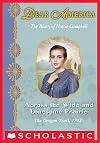
This was the first or second book I read of the series and its spinoffs (Royals plus a few of the My Name is America books). I have a definite soft spot for it, and was pleased to discover I hadn't outgrown it. Still a really good historical fiction diary, and what a way to write! Most of the action takes place over three months, but feels much longer. The descriptions were vivid as ever, the stakes just as high. I shook my head at the teenagers and was shocked they were marrying so early, show more and with their parents' consent. It was a different time, indeed. I was fascinated at the references to other trails and groups and how they were approached. When the Donner party was first mentioned, I thought of the Youtube video by Caitlin Doughty, which examines the events with modern knowledge. That made it even sadder. I laughed when Hattie discovered Pacific NW weather for the first time (born and raised Seattle, here), and crowed, "You're Southern and the sun's never gonna appear again!" I was teasing a fictional teen, but it's fun to poke fun at people who don't know what a sun break is. I had fun reading this again. I'm glad I was able to get it at my library. show less
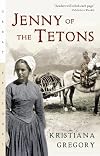
Kristiana Gregory's fictional account of Carrie Hill, a teenage girl orphaned by an Indian attack on her wagon train heading for Oregon was a surprisingly good read. The book may be aimed at YA readers, but nevertheless I certainly enjoyed it. The title character of JENNY OF THE TETONS is an Indian (Native American) woman married to an 'Englishman,' Richard "Beaver Dick" Leigh, who is a most resourceful hunter and trapper (as well as a loving husband and father). Dick and Jenny have five show more children and take on the teenage narrator, as a foster child/mother's helper. The book, presented in the form of a journal Carrie keeps, documents the seasonal moves and very gritty life of living in the wild mountains of Montana/Idaho/Wyoming in the 1870s. I was reminded a bit of the Little House stories, except Carrie's story is much more graphic, and the frontier life depicted is much harder than that of the Ingalls family. Daily life is plagued by the constant presence of mosquitoes, flies and yellow jackets, relieved only by campfire smoke. Deeply frigid winters and torridly hot bug-infested summers were part of everyday life, with other dangers as well, including marauding grizzly bears, brush fires and unfriendly Indian tribes. It's also a coming-of-age story as Carrie develops feelings for a handsome young carpenter who visits Dick's camp often from Fort Hall. JENNY OF THE TETONS is a little book. I found it at a local thrift store and read it in one afternoon. A rewarding read, thoroughly researched (based in part on the actual journals of Richard Leigh) and well-written. A window into every-day life of the American West in the time of the Little Big Horn. The 'blended' family aspect of a white-Indian mixed marriage makes the story even more interesting. I'll pass this along to some younger readers I know. Highly recommended. show less
Lists
Awards


You May Also Like


Associated Authors
Statistics
- Works
- 45
- Members
- 17,737
- Popularity
- #1,241
- Rating
- 3.8
- Reviews
- 181
- ISBNs
- 258
- Languages
- 4
- Favorited
- 8
