
Kathryn Lasky
Author of The Capture
About the Author
Kathryn Lasky was born in Indianapolis, Indiana on June 24, 1944, and knew she wanted to be a writer from the time she was ten. She majored in English in college and after graduation wrote for various magazines and taught. Her first book, I Have Four Names for My Grandfather, was published while show more she was teaching. She has written more than seventy books for children and young adults on everything from historical fiction to picture books and nonfiction books including the Dear America books and the Guardians of Ga'Hoole series. Many of her books are illustrated with photographs by her husband, Christopher Knight. She has received many awards for her titles including Sugaring Time which was a Newberry Honor Book; The Night Journey which won the National Jewish Book Award for Children; Pageant which was an ALA Notable Children's book; and Beyond the Burning Time which was an ALA Best Book for Young Adults. She has also received the Washington Post's Children's Book Guild Award for her contribution to children's nonfiction. She lives in Cambridge, Massachusetts. (Bowker Author Biography) show less
Series
Works by Kathryn Lasky
A Journey to the New World: The Diary of Remember Patience Whipple, Mayflower, 1620 (1996) 3,316 copies, 26 reviews
Marie Antoinette: Princess of Versailles, Austria-France 1769 (2000) — Author — 2,176 copies, 21 reviews
Dreams in the Golden Country: The Diary of Zipporah Feldman, a Jewish Immigrant Girl, New York City, 1903 (1998) 1,790 copies, 16 reviews
Christmas After All: The Great Depression Diary of Minnie Swift, Indianapolis, Indiana, 1932 (2001) 995 copies, 12 reviews
A Time for Courage: The Suffragette Diary of Kathleen Bowen, Washington, D.C., 1917 (2002) 836 copies, 8 reviews
The Journal of Augustus Pelletier: The Lewis and Clark Expedition, 1804 (2000) 700 copies, 3 reviews
A Voice of Her Own: The Story of Phillis Wheatley, Slave Poet (2003) — Author — 495 copies, 19 reviews
Guardians Of Ga'hoole Series Books 1 - 5 Collection Set by Kathryn Lasky (The Capture, The Journey, The Rescue, The Siege & The Shattering) (2020) 10 copies
Supplement to the Flora of Norfolk. 2 copies
Die Legende der Wächter Folge 1-3 im Schuber: Die Entführung, Die Wanderschaft, Die Rettung (2010) 2 copies
Guardians of Ga'Hoole (Books #1-12) Capture, Journey; Rescue; Seige; Burning; Hatchling; Outcast... (2008) 2 copies
Mortal Wounds 1 copy
The Siege 1 copy
[Legend of the Guardians: The Owls of Ga'Hoole] (By: Kathryn Lasky) [published: September, 2010] 1 copy
A Viagem 1 copy
My America: Hope in My Heart 1 copy
My America: Home At Last 1 copy
Associated Works
Tagged
Common Knowledge
- Legal name
- Knight, Kathryn Lasky
- Other names
- Swann, E. L.
- Birthdate
- 1944-06-24
- Gender
- female
- Education
- University of Michigan (BA, English)
- Occupations
- children's book author
- Awards and honors
- Anne V. Zarrow Award for Young Readers' Literature (2011)
- Relationships
- Knight, Christopher (husband)
- Short biography
- Kathryn Lasky is a Newbery Honor author of over one hundred fiction and nonfiction books for children and young adults. Her books range from critically acclaimed nonfiction titles such as Beyond the Burning Time and True North to the wildly popular Guardians of Ga'hoole fantasy series about owls.
- Nationality
- USA
- Birthplace
- Indianapolis, Indiana, USA
- Places of residence
- Cambridge, Massachusetts, USA
- Map Location
- Indiana, USA
Members
Discussions
Fiction story with plot about girl living her ancestors memories in Name that Book (April 2013)
Born to Rule in Read YA Lit (July 2011)
Reviews

Opening in 1761, as a young girl sits miserably huddled in the hold of a slave ship bound for the Americas, A Voice of Her Own is a picture-book examination of the life of Phillis Wheatley, the first African-American poet ever to be published. Purchased by the wealthy Wheatley family of Boston, and named 'Phillis' after the ship which brought her from Africa, she so impressed her owners with her intelligence that they took the unheard of step of educating her. While still a slave in the show more Wheatley household, she became a published poet, a guest in many of Boston's finest homes, where she was asked to recite, and traveled to England. She dedicated poems to well-known clergymen, to George Washington, and wrote sympathetically of the colonists' determination to free themselves from British rule. Eventually, she herself was freed, although (as is made plain in the afterword) her story did not end happily...
I found this an immensely engaging biography of a fascinating historical and literary figure, and was impressed with the way that Lasky's well-written narrative captured the desolation of Wheatley's early kidnapping and enslavement, and the subsequent story of her education, and development as a writer. How strange and disconcerting it must have been for Wheatley, to take tea in the drawing room of the Finch family, when the master of the house owned the very ship, the 'Phillis,' that brought her to the Americas! How odd that she wrote so sympathetically of the patriots' cause, and believe in their right to freedom, when no American publisher would print her work, because she was African! So many things struck me, in my reading: how unusual Wheatley's story was, how few women of that day were educated to her level, and how few slaves.
All in all, this is an effective biography, in that it made me want to know more! I want to know more about Wheatley's life, and I want to read her poetry - in the eighteenth-century original, of course! I may have to look her up on archive.org... show less
I found this an immensely engaging biography of a fascinating historical and literary figure, and was impressed with the way that Lasky's well-written narrative captured the desolation of Wheatley's early kidnapping and enslavement, and the subsequent story of her education, and development as a writer. How strange and disconcerting it must have been for Wheatley, to take tea in the drawing room of the Finch family, when the master of the house owned the very ship, the 'Phillis,' that brought her to the Americas! How odd that she wrote so sympathetically of the patriots' cause, and believe in their right to freedom, when no American publisher would print her work, because she was African! So many things struck me, in my reading: how unusual Wheatley's story was, how few women of that day were educated to her level, and how few slaves.
All in all, this is an effective biography, in that it made me want to know more! I want to know more about Wheatley's life, and I want to read her poetry - in the eighteenth-century original, of course! I may have to look her up on archive.org... show less
The Royal Diaries: Jahanara, Princess Of Princesses: India, 1627 (The Royal Diaries) by Kathryn Lasky
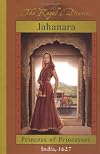
The Royal Diaries are a spin off from The Dear America series....both offer a wonderful way to teach children history. I thoroughly enjoy reading them myself.... and as a homeschooling Mom, I consider them a very valuable educational resource.
This book is one of my least favored in the series. The customs, lifestyle, titles, and societal expectations are very different in India than in America.....baring in mind that this series is intended for youths......I don't feel that there was enough show more detail given. It's only because I'm an adult with prior knowledge of Indian culture that I was able to easily follow this book. Unless a child is of Indian ethnicity and/or has some prior knowledge of the culture, I feel this could be a bit confusing.
The one real gripe I have is the derogatory racial and cultural slants I was rather surprised and disappointed to find.....I've read several of the books in this series and have never encountered this before. The writer has Jahanara think very negatively about the English in general, and references their supposedly unflattering pink skin, unbathed bodies, and flea infested wigs.....at one point she expressed how thankful she was not to have the coloring of Queen Elizabeth I.....who was actually considered quite beautiful.
After reading this I researched Jahanara and found no indications that she harbored any ill feeling towards the English....in fact, she had a long standing trade relationship with them, and was said to have admired Queen Elizabeth I......therefore, I can only conclude these things were added due to the personal feelings of the writer or to push some narrative.....I don't find this acceptable in children's literature.
This book was interesting and well written, just as the others in the series....unfortunately, due to the reasons I've mentioned, I can't rate this one highly and I wouldn't recommend it for children. show less
This book is one of my least favored in the series. The customs, lifestyle, titles, and societal expectations are very different in India than in America.....baring in mind that this series is intended for youths......I don't feel that there was enough show more detail given. It's only because I'm an adult with prior knowledge of Indian culture that I was able to easily follow this book. Unless a child is of Indian ethnicity and/or has some prior knowledge of the culture, I feel this could be a bit confusing.
The one real gripe I have is the derogatory racial and cultural slants I was rather surprised and disappointed to find.....I've read several of the books in this series and have never encountered this before. The writer has Jahanara think very negatively about the English in general, and references their supposedly unflattering pink skin, unbathed bodies, and flea infested wigs.....at one point she expressed how thankful she was not to have the coloring of Queen Elizabeth I.....who was actually considered quite beautiful.
After reading this I researched Jahanara and found no indications that she harbored any ill feeling towards the English....in fact, she had a long standing trade relationship with them, and was said to have admired Queen Elizabeth I......therefore, I can only conclude these things were added due to the personal feelings of the writer or to push some narrative.....I don't find this acceptable in children's literature.
This book was interesting and well written, just as the others in the series....unfortunately, due to the reasons I've mentioned, I can't rate this one highly and I wouldn't recommend it for children. show less

A few weeks ago, we studied Mary, Queen of Scots for history, and several days later I happened upon a My Story book about her on the section of shelves that holds books we haven’t yet read and added to the library. So, I read it aloud. This book, covering one year of the queen’s life when she was 11 years old, brings her alive in a way that the biography we read did not. We all agreed, by the end of the book, that we don’t want to be royalty!
One section of the book that my daughters show more (ages 11 and 6) asked a lot of questions about was where someone tried to molest one of Mary’s friends. I used that story to try to teach them what to do if someone tells them to keep an interaction a secret. Mary’s diary shows the good results when such behavior is exposed rather than hidden. show less
One section of the book that my daughters show more (ages 11 and 6) asked a lot of questions about was where someone tried to molest one of Mary’s friends. I used that story to try to teach them what to do if someone tells them to keep an interaction a secret. Mary’s diary shows the good results when such behavior is exposed rather than hidden. show less

This wonderful picture-book follows the true story of cousins Harriet Hemenway and Minna Hall, two very proper Boston ladies who, in the early years of the twentieth century, formed the Massachusetts Audubon Society, in response to the appalling hat fashions of the day. As the title, She's Wearing a Dead Bird on Her Head!, suggests, these fashions involved the widespread slaughter of many different species of bird, so that their feathers and bodies could be used as decorations. Determined to show more put a stop to this "revolting" practice, Harriet and Minna launched a campaign that would have far-reaching consequences, both for the environmental and woman suffrage movements...
I really liked Lasky's narrative, which emphasized the strong feelings and high principles of both her heroines, while also subtly depicting the social constraints of their world: "ladies" didn't speak with their mouth full, didn't investigate without a male companion, and so on. I also liked that she highlighted the ties between different kinds of organizing, from bird protection to women's rights. The watercolor and ink illustrations by David Catrow - She's Wearing a Dead Bird on her Head! was chosen as a New York Times Best Illustrated Children's Book for 1995 - accentuated the humor and emotion of the story.
In her afterword, Lasky claims that the campaign started by Hemenway and Hall was instrumental in leading to a ban on the killing of birds by the hat industry, and that their organization, although not the first Audubon Society, was the first long-lasting one. None of that history is mentioned in the main Wikipedia entry on The National Audubon Society, making me doubly glad that this book is available to young readers. I think I will have to track down Jennifer Price's essay, When Women Were Women, Men Were Men, and Birds Were Hats, from Flight Maps: Adventures with Nature in Modern America, for more information... show less
I really liked Lasky's narrative, which emphasized the strong feelings and high principles of both her heroines, while also subtly depicting the social constraints of their world: "ladies" didn't speak with their mouth full, didn't investigate without a male companion, and so on. I also liked that she highlighted the ties between different kinds of organizing, from bird protection to women's rights. The watercolor and ink illustrations by David Catrow - She's Wearing a Dead Bird on her Head! was chosen as a New York Times Best Illustrated Children's Book for 1995 - accentuated the humor and emotion of the story.
In her afterword, Lasky claims that the campaign started by Hemenway and Hall was instrumental in leading to a ban on the killing of birds by the hat industry, and that their organization, although not the first Audubon Society, was the first long-lasting one. None of that history is mentioned in the main Wikipedia entry on The National Audubon Society, making me doubly glad that this book is available to young readers. I think I will have to track down Jennifer Price's essay, When Women Were Women, Men Were Men, and Birds Were Hats, from Flight Maps: Adventures with Nature in Modern America, for more information... show less
Lists
Awards


You May Also Like


Associated Authors
Statistics
- Works
- 198
- Also by
- 1
- Members
- 59,047
- Popularity
- #245
- Rating
- 3.8
- Reviews
- 810
- ISBNs
- 1,426
- Languages
- 12
- Favorited
- 19


