
George Sullivan (1) (1927–)
Author of Lewis and Clark: In Their Own Words
For other authors named George Sullivan, see the disambiguation page.
Series
Works by George Sullivan
Wind Power for Your Home : The First Complete Guide That Tells How to Make the Wind's Energy Work For You (1978) 22 copies
Philip Vampatella, fighter pilot;: The complete life story of a college dropout who became one of the first aircraft car (1966) 11 copies
Complete Beginner's Guide to Pool and Other Billiard Games (The Complete Beginner's Guide Series) (1979) 6 copies
The complete book of family bowling 2 copies
Harness racing 2 copies
Peace Corps Nurse 1 copy
The Complete Book Of Family Skiing (A Guide To America's Fastest-Growing Family Sport) (1966) 1 copy
Rise of the Orbits 1 copy
Story of Jumping Mouse, The 1 copy
Do-it-yourself moving 1 copy
Guide to Badminton 1 copy
The Cassius Clay story 1 copy
Associated Works
Tagged
Common Knowledge
- Legal name
- Sullivan, George Edward
- Other names
- Sullivan, George E.
- Birthdate
- 1927
- Gender
- male
- Nationality
- USA
- Places of residence
- New York, New York, USA
- Associated Place (for map)
- New York, USA
Members
Reviews
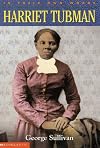
I've entered a point in my life that I have been excited to enter: I have a child who I can read with. I should probably rephrase that: I child who I can read a non-picture book with. I love reading to my children and they love being read to and I thank my lucky stars that they do because they are the children of an English teacher after all. Even though my 9-year-old still loves listening to me read her and her little sister picture books every night, there is something different about show more reading a more advanced book with more advanced topics with her. She randomly selected George Sullivan's book about Harriet Tubman for a school project and, in true teacher fashion, I saw this as a teachable moment.
Over the course of a weekend and two sittings, I read this book aloud to my daughter and, completely unintentionally, fell into teacher mode. We read, we discussed, I asked questions, she asked questions, I deviated to further discussion topics briefly mentioned in the book that I felt I should develop further with this curious kid, and I can honestly say that she and I both learned a lot about the marvelous woman that was Harriet Tubman.
Had I asked my daughter to read the book silently on her own, she would have been able to do so. That says quite a bit about the reading and writing level that Sullivan uses to describe Tubman's story. It is accessible to a 3rd grader without being too daunting or challenging. I knew I would read the book on my own to become better equipped to assist her with her book report, so I thought that combining the read-aloud aspect of our nightly picture books with the engaging discussions of reading a school book would work well for this particular situation, which it did.
The chapters are not too lengthy and they are clearly divided by time and topic, which helps a young reader to not become overloaded with an plethora of too much information at one time. While I wouldn't classify this as a picture book, it does contain a few pictures, some photographs and some sketches, which were perfectly fitting for the reading level of this book. The book begins with the beginning of Tubman's life and ends with her current-day ancestors, bringing Tubman's legacy full circle and hitting on the major events of her life. The little bit of details and descriptions rolled into Sullivan's presentation of each pivotal event in Tubman's life provide just enough appropriate detail for a young reader, but still enough to enlighten an adult with some information they may not have previously known about this courageous woman.
The book is a biography geared towards young readers and in that sense, I would call it a success. I learned some things that I never knew before, but I think that the most note-worthy aspect of Sullivan's book was the thinking that it incited in my daughter as I watched her take in the words. show less
Over the course of a weekend and two sittings, I read this book aloud to my daughter and, completely unintentionally, fell into teacher mode. We read, we discussed, I asked questions, she asked questions, I deviated to further discussion topics briefly mentioned in the book that I felt I should develop further with this curious kid, and I can honestly say that she and I both learned a lot about the marvelous woman that was Harriet Tubman.
Had I asked my daughter to read the book silently on her own, she would have been able to do so. That says quite a bit about the reading and writing level that Sullivan uses to describe Tubman's story. It is accessible to a 3rd grader without being too daunting or challenging. I knew I would read the book on my own to become better equipped to assist her with her book report, so I thought that combining the read-aloud aspect of our nightly picture books with the engaging discussions of reading a school book would work well for this particular situation, which it did.
The chapters are not too lengthy and they are clearly divided by time and topic, which helps a young reader to not become overloaded with an plethora of too much information at one time. While I wouldn't classify this as a picture book, it does contain a few pictures, some photographs and some sketches, which were perfectly fitting for the reading level of this book. The book begins with the beginning of Tubman's life and ends with her current-day ancestors, bringing Tubman's legacy full circle and hitting on the major events of her life. The little bit of details and descriptions rolled into Sullivan's presentation of each pivotal event in Tubman's life provide just enough appropriate detail for a young reader, but still enough to enlighten an adult with some information they may not have previously known about this courageous woman.
The book is a biography geared towards young readers and in that sense, I would call it a success. I learned some things that I never knew before, but I think that the most note-worthy aspect of Sullivan's book was the thinking that it incited in my daughter as I watched her take in the words. show less

There's a suspicious similarity to each chapter. I presume that the author asked very similar--and dull--questions when interviewing each of the kids. For example, in several chapters the kids list out some of the computer peripherals they own. Why? I presume they were asked to do exactly that. It's not outside the realm of possibility that they would volunteer that spontaneously when asked to describe what kind of computers they use, but it's a bit too specific. As well, in several of the show more chapters the kids give an example of simple programming information, describing FOR-NEXT loops, for example, or DATA statements. That's a weird and boring thing to spend a few paragraphs on, repeatedly--exactly what question prompted those responses, I wonder?
The book was marginally interesting, but only just. I had hoped to see if I could trace any future computer-related accomplishments of the kids, perhaps write a little blog post about how things developed, but I think it'll be a bust. I may have traced one of them, another died shortly after the book was published, and the others aren't traceable. Not surprising, since at least a couple of them are just kids who knew how to use a word processor, as far as I can tell, and that was good enough for them to be 'computer kids' to George Sullivan.
Sullivan also did not, in my estimation, try terribly hard when looking for subjects: they are mostly from New York, so I guess that he perhaps called up some local schools and asked if there were any kids nearby he could write a book about. I think that's possibly the most interesting thing about the book: not that it gives some limited biography of a few computer-inclined kids, but that it gives a little picture of how kids in New York first became exposed to computers and learned to use them. Public school programming classes, computer summer camps, user groups, magazines, BBSes... that's the eighties!
The author also manages to get the names of famous authors wrong: he calls Poul Anderson "Paul Anderson" and refers to "Andre Norton" as "Andrea Norton". I can understand that if you'd never heard of them before (how?) you might get their names wrong at first, but wouldn't you double-check before publication? show less
The book was marginally interesting, but only just. I had hoped to see if I could trace any future computer-related accomplishments of the kids, perhaps write a little blog post about how things developed, but I think it'll be a bust. I may have traced one of them, another died shortly after the book was published, and the others aren't traceable. Not surprising, since at least a couple of them are just kids who knew how to use a word processor, as far as I can tell, and that was good enough for them to be 'computer kids' to George Sullivan.
Sullivan also did not, in my estimation, try terribly hard when looking for subjects: they are mostly from New York, so I guess that he perhaps called up some local schools and asked if there were any kids nearby he could write a book about. I think that's possibly the most interesting thing about the book: not that it gives some limited biography of a few computer-inclined kids, but that it gives a little picture of how kids in New York first became exposed to computers and learned to use them. Public school programming classes, computer summer camps, user groups, magazines, BBSes... that's the eighties!
The author also manages to get the names of famous authors wrong: he calls Poul Anderson "Paul Anderson" and refers to "Andre Norton" as "Andrea Norton". I can understand that if you'd never heard of them before (how?) you might get their names wrong at first, but wouldn't you double-check before publication? show less
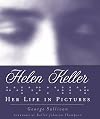
My 6.5yo daughter and I read this biography to fulfill one of the requirements for a Girl Scout "petal" about courage. We both enjoyed it a lot, and my daughter has read it again on her own at least twice since then.
This is a great child-appropriate biography of an incredible woman. The photos are beautiful and complement Sullivan's biography well. The story itself was, of course, inspiring. I found myself getting choked up a few times, like when Keller visits Hiroshima and Nagasaki. There show more were little surprises, too, like that Keller was close friends with Eleanor Roosevelt (the other biography we picked up from the library for the project) and that she and Annie Sullivan had a Vaudeville act. I think Keller's story is as much about the devotion of Annie Sullivan and the other women who shared Keller's life as it is about her own courage and determination. show less
This is a great child-appropriate biography of an incredible woman. The photos are beautiful and complement Sullivan's biography well. The story itself was, of course, inspiring. I found myself getting choked up a few times, like when Keller visits Hiroshima and Nagasaki. There show more were little surprises, too, like that Keller was close friends with Eleanor Roosevelt (the other biography we picked up from the library for the project) and that she and Annie Sullivan had a Vaudeville act. I think Keller's story is as much about the devotion of Annie Sullivan and the other women who shared Keller's life as it is about her own courage and determination. show less
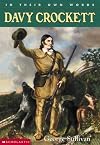
I decided to read a couple of my son’s old children’s books before donating them. This biography tells the story of Davy Crockett and his rise from a boy in East Tennessee to outdoorsman, soldier and politician, eventually being elected to Congress.
He supported squatter’s rights, which led later to the Homestead Act. and opposed the Indian Removal Act, infuriating Andrew Jackson. After losing an election he went west to Texas and was killed by the Mexican army at the Alamo. A series show more of almanacs and other writing about Davy propelled him to later fame long after his death. show less
He supported squatter’s rights, which led later to the Homestead Act. and opposed the Indian Removal Act, infuriating Andrew Jackson. After losing an election he went west to Texas and was killed by the Mexican army at the Alamo. A series show more of almanacs and other writing about Davy propelled him to later fame long after his death. show less
Awards


You May Also Like


Associated Authors
Statistics
- Works
- 217
- Also by
- 3
- Members
- 12,443
- Popularity
- #1,884
- Rating
- 3.9
- Reviews
- 86
- ISBNs
- 436
- Languages
- 3
- Favorited
- 1
