
Don Tate
Author of Poet: The Remarkable Story of George Moses Horton
About the Author
Image credit: Author Don Tate at the 2017 Texas Book Festival. By Larry D. Moore, CC BY-SA 4.0, https://commons.wikimedia.org/w/index.php?curid=64023088
Works by Don Tate
William Still and His Freedom Stories: The Father of the Underground Railroad (2020) 109 copies, 7 reviews
Jerry Changed the Game!: How Engineer Jerry Lawson Revolutionized Video Games Forever (2023) 42 copies, 1 review
Pigskins to Paintbrushes: The Story of Football-Playing Artist Ernie Barnes (2021) 40 copies, 3 reviews
Associated Works
Whoosh!: Lonnie Johnson's Super-Soaking Stream of Inventions (2016) — Illustrator, some editions — 809 copies, 35 reviews
The Legend of the Valentine: An Inspirational Story of Love and Reconciliation (2002) — Illustrator — 130 copies
Dear Teen Me: Authors Write Letters to Their Teen Selves (2012) — Contributor — 119 copies, 19 reviews
The Legend of the Valentine: An Inspirational Story of Love and Reconciliation (Legend of S.) (2003) — Illustrator — 13 copies
Tagged
Common Knowledge
- Canonical name
- Tate, Don
- Birthdate
- 1963
- Gender
- male
- Education
- Des Moines Area Community College
- Occupations
- illustrator (children's books)
- Birthplace
- Des Moines, Iowa, USA
- Places of residence
- Austin, Texas, USA
Des Moines, Iowa, USA - Associated Place (for map)
- USA
Members
Reviews

Ernest Eugene Barnes Jr., born in 1938 in Durham, North Carolina, was an American artist as well as a professional football player. But none of that could be foreseen when he was a kid.
As Tate writes:
“Sports didn’t come easy for Ernest. He couldn’t run very fast. He couldn’t dribble a basketball to save his life. No one picked him to play on their teams. Ernest felt pretty lousy about it all. ‘I couldn’t conform easily to the athletic ideal,’ he once said.”
Such a beginning show more pulls you right in. Hey, you might think, I am, or was, like that too. What happened to turn him into a star?
There was something Ernie was good at, and that was art. But “opportunities to learn about art were slim for kids in the Bottom during the 1930s.” Especially if you were a Black kid: art museums were segregated in the 1930s and 1940s and would not admit Blacks to look at art. But Ernie’s mother found a way. She did domestic work for an attorney in Durham who loved classical music and art. So sometimes, she took Ernie along with her while she worked, and he sat and looked through the art books.
At school, Ernie was bullied:
“A boy who didn’t play sports. Who loved art, played the trombone, and enjoyed reading poetry? He got teased for being different. ‘They hated me,’ he once said.”
It got so bad, teachers allowed him to leave school early to avoid more fights. At home, he sketched in his art pad.
In junior high, just to try to stop the bullying, he “dragged himself to the coaches’ office and joined the football team.” He couldn’t keep up. But Ernie was big, and everyone thought he would make a great defensive lineman. So in high school, Ernie’s mom signed him up. The weight-lifting coach took an interest in Ernie and helped him build muscle.
Soon, he improved his game, along with his confidence. His life changed:
“Not only did he play football, but Ernest also became the team captain. Later, he joined the track team, too, becoming state champion in the shot put. By graduation, he had earned twenty-six athletic scholarships to colleges and universities.”
All the good offers were from schools far from home however. Segregation still was the pattern in North Carolina. He decided to attend nearby North Carolina College, an all-Black school. He played football for them, but quit track to devote more time to art.
Ernie didn’t know what to paint, however, and his art teacher encouraged him to “use what you see.” What was all around Ernie was football, and so that is what he began to paint.
He also got to go to the North Carolina Museum of Art for the first time when segregation laws eased, but didn’t see any Black artists there. Tate tells of Ernie's recollections about the visit:
“‘Where are the paintings by Negro artists’ he asked the museum guide. ‘I’m afraid your people don’t express themselves this way,’ she said.”
Ernie was determined to change that misconception. He did play professional football after his college graduation, but before and after games, and during time-outs, he would sketch. It didn’t go over well with coaches. He decided to stop playing when he was twenty-seven, and league owners agreed to hire him as the Official Artist of the American Football League. His paintings were popular, and he had exhibits all over the country. In 1979, he even exhibited at the North Carolina Museum of Art!
Tate concludes:
“From pigskins to paintbrushes, Ernie Barnes grew to be a man successful at being himself.”
Back matter includes an Afterword with more about Ernie’s story, Author’s Note, and references including websites and video links. In the note, Tate - both the author and the illustrator - recounts that as a child he loved the television show “Good Times,” and especially the artwork of one of the characters J.J. Evans. He later learned that the art shown as J.J.’s was actually by Ernie Barnes. He also related to Barnes’ life story as a kid interested in art and vilified for it, and who later took up sports and did well at both.
Evaluation: This is the second book for kids I have read about the life of Ernie Barnes (the first was Between the Lines: How Ernie Barnes Went from the Football Field to the Art Gallery by Sandra Neil Wallace). The authors of each book were moved by the dedication and optimism of Ernie Barnes, and his perseverance in both doing what he loved, and in trying to change people’s points of view through art. In Tate’s case, the more personal element comes through as well. It’s a stirring story, and children who want to learn more about Barnes will benefit from a long list of resources for further exploration of Barnes’ life and work. (Ernies Barnes died in 2009.) show less
As Tate writes:
“Sports didn’t come easy for Ernest. He couldn’t run very fast. He couldn’t dribble a basketball to save his life. No one picked him to play on their teams. Ernest felt pretty lousy about it all. ‘I couldn’t conform easily to the athletic ideal,’ he once said.”
Such a beginning show more pulls you right in. Hey, you might think, I am, or was, like that too. What happened to turn him into a star?
There was something Ernie was good at, and that was art. But “opportunities to learn about art were slim for kids in the Bottom during the 1930s.” Especially if you were a Black kid: art museums were segregated in the 1930s and 1940s and would not admit Blacks to look at art. But Ernie’s mother found a way. She did domestic work for an attorney in Durham who loved classical music and art. So sometimes, she took Ernie along with her while she worked, and he sat and looked through the art books.
At school, Ernie was bullied:
“A boy who didn’t play sports. Who loved art, played the trombone, and enjoyed reading poetry? He got teased for being different. ‘They hated me,’ he once said.”
It got so bad, teachers allowed him to leave school early to avoid more fights. At home, he sketched in his art pad.
In junior high, just to try to stop the bullying, he “dragged himself to the coaches’ office and joined the football team.” He couldn’t keep up. But Ernie was big, and everyone thought he would make a great defensive lineman. So in high school, Ernie’s mom signed him up. The weight-lifting coach took an interest in Ernie and helped him build muscle.
Soon, he improved his game, along with his confidence. His life changed:
“Not only did he play football, but Ernest also became the team captain. Later, he joined the track team, too, becoming state champion in the shot put. By graduation, he had earned twenty-six athletic scholarships to colleges and universities.”
All the good offers were from schools far from home however. Segregation still was the pattern in North Carolina. He decided to attend nearby North Carolina College, an all-Black school. He played football for them, but quit track to devote more time to art.
Ernie didn’t know what to paint, however, and his art teacher encouraged him to “use what you see.” What was all around Ernie was football, and so that is what he began to paint.
He also got to go to the North Carolina Museum of Art for the first time when segregation laws eased, but didn’t see any Black artists there. Tate tells of Ernie's recollections about the visit:
“‘Where are the paintings by Negro artists’ he asked the museum guide. ‘I’m afraid your people don’t express themselves this way,’ she said.”
Ernie was determined to change that misconception. He did play professional football after his college graduation, but before and after games, and during time-outs, he would sketch. It didn’t go over well with coaches. He decided to stop playing when he was twenty-seven, and league owners agreed to hire him as the Official Artist of the American Football League. His paintings were popular, and he had exhibits all over the country. In 1979, he even exhibited at the North Carolina Museum of Art!
Tate concludes:
“From pigskins to paintbrushes, Ernie Barnes grew to be a man successful at being himself.”
Back matter includes an Afterword with more about Ernie’s story, Author’s Note, and references including websites and video links. In the note, Tate - both the author and the illustrator - recounts that as a child he loved the television show “Good Times,” and especially the artwork of one of the characters J.J. Evans. He later learned that the art shown as J.J.’s was actually by Ernie Barnes. He also related to Barnes’ life story as a kid interested in art and vilified for it, and who later took up sports and did well at both.
Evaluation: This is the second book for kids I have read about the life of Ernie Barnes (the first was Between the Lines: How Ernie Barnes Went from the Football Field to the Art Gallery by Sandra Neil Wallace). The authors of each book were moved by the dedication and optimism of Ernie Barnes, and his perseverance in both doing what he loved, and in trying to change people’s points of view through art. In Tate’s case, the more personal element comes through as well. It’s a stirring story, and children who want to learn more about Barnes will benefit from a long list of resources for further exploration of Barnes’ life and work. (Ernies Barnes died in 2009.) show less
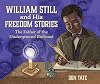
I'm cautious about the number of historical picture books I purchase. There's not a lot of audience for them, no matter their quality, and a few books on each familiar topic is generally all I need. So I was skeptical when I saw another book about the Underground Railroad. Do I really need another book on this?
Turns out the answer is absolutely, yes. In today's climate, many Wisconsin residents seem to have forgotten the state fought on the side of the Union in the Civil War and, despite not show more being particularly forward-thinking in the matter of desegregation (as far as I know) was considered at least better than living in the South to the extent of having several historical Black communities in some larger cities. A few lessons on the Underground Railroad and Harriet Tubman, and that finishes off the Civil War. Growing up in the South myself, that was about all I ever heard about the Civil War either.
This is a whole new look at the Underground Railroad; speaking from the viewpoint of the slaves who traveled on it and, most importantly, the free Black people who helped them. Don Tate introduces readers to a largely forgotten but vitally important figure, William Still. His father was able to purchase his own freedom, but left for the North to escape the risk of being enslaved again. His wife, Sidney, took her two daughters and escaped North to rejoin her husband, leaving behind her two older sons.
In New Jersey they raised a family of 15 children, including the youngest, William. As a child he helped an escaped slave hide from slave catchers and flee farther north. He struggled to attend school, between his father's demands that survival and their farm be the priority and the racism and attacks he experienced when trying to attend school. As a young man he journeyed to Philadelphia, hoping to make a new life for himself.
After several years of low-paying and arduous work, he found a job as an office clerk with the Pennsylvania Anti-Slavery Society. He hoped to find more freedom and improve himself, but was at first disappointed. The pay was low and the actual work of the Society - speaking and writing - was done by white people. William was basically the janitor. Eventually, however, he became the Manager of the society. With his home as a stop on the Underground Railroad, William was shocked one day, when listening to the story of an escaped slave, to discover the man was his own older brother.
In an effort to help other families be reunited, William Still began to keep records of names, physical appearances, missing family, and the stories of those who had fled slavery. When the Fugitive Slave Act was passed, resulting not only in the brutal re-enslavement of escaped slaves but the kidnapping and enslavement of free Blacks as well, William Still hid the records that were now deadly for both him and those he had helped.
Eventually, he resigned from the society to start a business and support his family. The Civil War resulted in the end of slavery, though not of prejudice and injustice. William Still, now a successful businessman, continued to fight for freedom for other Black people and in 1872 published the stories he had so carefully saved.
Don Tate's illustrations show the sorrow and hardship of slavery and life for Black people, free or enslaved, without being graphic or frightening for young readers. A palette of soft colors emphasizes a wide variety of brown skin tones that glow with the colors recorded by William Still, "Copper. Chestnut. Dark brown."
Back matter includes a timeline and an author's note, talking about his research and inspiration for this book.
Verdict: There are so many powerful things about this book; the age-appropriate but honest description of slavery, prejudice, and the hardships faced by William Still and other Black people. The expansion of the story of the Underground Railroad to emphasize the slaves who escaped on it and the Black people who helped them, rather than the stories of white people. Like William Still, who wanted the stories of his people to be heard, Don Tate has done an excellent job of reviving the long-lost voice of a powerful figure from history.
ISBN: 9781561459353; Published November 2020 by Peachtree; F&G provided by publisher; Preordered for the library show less
Turns out the answer is absolutely, yes. In today's climate, many Wisconsin residents seem to have forgotten the state fought on the side of the Union in the Civil War and, despite not show more being particularly forward-thinking in the matter of desegregation (as far as I know) was considered at least better than living in the South to the extent of having several historical Black communities in some larger cities. A few lessons on the Underground Railroad and Harriet Tubman, and that finishes off the Civil War. Growing up in the South myself, that was about all I ever heard about the Civil War either.
This is a whole new look at the Underground Railroad; speaking from the viewpoint of the slaves who traveled on it and, most importantly, the free Black people who helped them. Don Tate introduces readers to a largely forgotten but vitally important figure, William Still. His father was able to purchase his own freedom, but left for the North to escape the risk of being enslaved again. His wife, Sidney, took her two daughters and escaped North to rejoin her husband, leaving behind her two older sons.
In New Jersey they raised a family of 15 children, including the youngest, William. As a child he helped an escaped slave hide from slave catchers and flee farther north. He struggled to attend school, between his father's demands that survival and their farm be the priority and the racism and attacks he experienced when trying to attend school. As a young man he journeyed to Philadelphia, hoping to make a new life for himself.
After several years of low-paying and arduous work, he found a job as an office clerk with the Pennsylvania Anti-Slavery Society. He hoped to find more freedom and improve himself, but was at first disappointed. The pay was low and the actual work of the Society - speaking and writing - was done by white people. William was basically the janitor. Eventually, however, he became the Manager of the society. With his home as a stop on the Underground Railroad, William was shocked one day, when listening to the story of an escaped slave, to discover the man was his own older brother.
In an effort to help other families be reunited, William Still began to keep records of names, physical appearances, missing family, and the stories of those who had fled slavery. When the Fugitive Slave Act was passed, resulting not only in the brutal re-enslavement of escaped slaves but the kidnapping and enslavement of free Blacks as well, William Still hid the records that were now deadly for both him and those he had helped.
Eventually, he resigned from the society to start a business and support his family. The Civil War resulted in the end of slavery, though not of prejudice and injustice. William Still, now a successful businessman, continued to fight for freedom for other Black people and in 1872 published the stories he had so carefully saved.
Don Tate's illustrations show the sorrow and hardship of slavery and life for Black people, free or enslaved, without being graphic or frightening for young readers. A palette of soft colors emphasizes a wide variety of brown skin tones that glow with the colors recorded by William Still, "Copper. Chestnut. Dark brown."
Back matter includes a timeline and an author's note, talking about his research and inspiration for this book.
Verdict: There are so many powerful things about this book; the age-appropriate but honest description of slavery, prejudice, and the hardships faced by William Still and other Black people. The expansion of the story of the Underground Railroad to emphasize the slaves who escaped on it and the Black people who helped them, rather than the stories of white people. Like William Still, who wanted the stories of his people to be heard, Don Tate has done an excellent job of reviving the long-lost voice of a powerful figure from history.
ISBN: 9781561459353; Published November 2020 by Peachtree; F&G provided by publisher; Preordered for the library show less
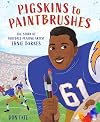
Ernest “Ernie” Barnes was teased for his love for art and indifference to sports; despite this, Ernie found a way to satisfy his love of art and stop the teasing.
This biography begins with Barnes’ early life in segregated Durham, North Carolina, where he was singled out by classmates for his lack of athletic ability. In junior high, Barnes joined his school’s football team but later quit. In high school, coaches recruited Barnes due to his size, and after taking up weight training, show more he became a powerhouse player. His incredible talent on the field led to college scholarships and, eventually, spots on several pro teams. At the end of his athletic career, Barnes decided to return to art full time and held his first art show while employed as an artist for the New York Jets. Barnes’ paintings were featured in art shows across the country and appeared on the TV show Good Times, a show Barnes also appeared on and that young Tate watched regularly. Via quotations, Tate weaves Barnes’ own voice into his smoothly told narrative, to great effect. Tate’s illustrations are a bit of a departure from his characteristic style, using matte surfaces and collage to evoke Barnes’ times. A scene of Barnes in uniform, sketching on the sidelines, says it all. A conversational afterword and author’s note flesh out Barnes’ life and describe Tate’s process. (This book was reviewed digitally.)
Will inspire young readers to stay true to themselves. (source notes, bibliography) show less
This biography begins with Barnes’ early life in segregated Durham, North Carolina, where he was singled out by classmates for his lack of athletic ability. In junior high, Barnes joined his school’s football team but later quit. In high school, coaches recruited Barnes due to his size, and after taking up weight training, show more he became a powerhouse player. His incredible talent on the field led to college scholarships and, eventually, spots on several pro teams. At the end of his athletic career, Barnes decided to return to art full time and held his first art show while employed as an artist for the New York Jets. Barnes’ paintings were featured in art shows across the country and appeared on the TV show Good Times, a show Barnes also appeared on and that young Tate watched regularly. Via quotations, Tate weaves Barnes’ own voice into his smoothly told narrative, to great effect. Tate’s illustrations are a bit of a departure from his characteristic style, using matte surfaces and collage to evoke Barnes’ times. A scene of Barnes in uniform, sketching on the sidelines, says it all. A conversational afterword and author’s note flesh out Barnes’ life and describe Tate’s process. (This book was reviewed digitally.)
Will inspire young readers to stay true to themselves. (source notes, bibliography) show less
This is a wonderful story about a little-known Black man born into freedom in 1821 who grew up determined to help enslaved blacks escape to the North.
William’s parents were originally enslaved in Maryland. His father purchased his freedom and went North. His mother escaped along with their two girls, leaving their two boys behind. They started a new life in New Jersey, eventually having fifteen children. The youngest was William. When William was eight, he helped an escaped slave get to show more safety; William knew every corner of the woods. The author writes, “The experience defined the rest of his life."
Growing up, he got a job in Philadelphia, at the Pennsylvania Anti-Slavery Society, eventually working his way up to manager. William sought out travelers on the “Underground Railroad” - i.e., escaped slaves from the South, and welcomed them into his home, which became a “station” on the Underground Railroad. One evening a “passenger” arrived at his office - an elderly man - and it turned out to be his long-lost older brother Peter.
The author recounts:
“Peter’s story was sad. Tragic. Miraculous. And extraordinary. And Peter’s story restored his family.”
William wondered, could other people’s stories help reunite families torn apart by slavery? He started to record every detail escaped slaves could provide to him, and in 1872 published The Underground Rail Road, a collection of those stories from his journals. (Photographs of pages from Still’s journal are shown on the front endpapers, with transcriptions of them featured on the back endpapers.) Tate writes:
“William Still’s records, and the stories he preserved, reunited families torn apart by slavery.”
Back matter includes a timeline, an author’s note about the book’s inspiration, and a bibliography.
The author, also a noted illustrator, used his warm illustrations and variations in font to help tell the story.
Evaluation: This inspiring history for ages 6 and up shows how one person, starting in the worst of circumstances, can work hard and make a difference. I also love that he brings much-needed attention to other African Americans besides the names everyone knows, like Harriet Tubman, who worked so hard to help slaves gain their freedom. show less
William’s parents were originally enslaved in Maryland. His father purchased his freedom and went North. His mother escaped along with their two girls, leaving their two boys behind. They started a new life in New Jersey, eventually having fifteen children. The youngest was William. When William was eight, he helped an escaped slave get to show more safety; William knew every corner of the woods. The author writes, “The experience defined the rest of his life."
Growing up, he got a job in Philadelphia, at the Pennsylvania Anti-Slavery Society, eventually working his way up to manager. William sought out travelers on the “Underground Railroad” - i.e., escaped slaves from the South, and welcomed them into his home, which became a “station” on the Underground Railroad. One evening a “passenger” arrived at his office - an elderly man - and it turned out to be his long-lost older brother Peter.
The author recounts:
“Peter’s story was sad. Tragic. Miraculous. And extraordinary. And Peter’s story restored his family.”
William wondered, could other people’s stories help reunite families torn apart by slavery? He started to record every detail escaped slaves could provide to him, and in 1872 published The Underground Rail Road, a collection of those stories from his journals. (Photographs of pages from Still’s journal are shown on the front endpapers, with transcriptions of them featured on the back endpapers.) Tate writes:
“William Still’s records, and the stories he preserved, reunited families torn apart by slavery.”
Back matter includes a timeline, an author’s note about the book’s inspiration, and a bibliography.
The author, also a noted illustrator, used his warm illustrations and variations in font to help tell the story.
Evaluation: This inspiring history for ages 6 and up shows how one person, starting in the worst of circumstances, can work hard and make a difference. I also love that he brings much-needed attention to other African Americans besides the names everyone knows, like Harriet Tubman, who worked so hard to help slaves gain their freedom. show less
Lists
Awards


You May Also Like


Associated Authors
Statistics
- Works
- 11
- Also by
- 10
- Members
- 713
- Popularity
- #35,569
- Rating
- 4.2
- Reviews
- 66
- ISBNs
- 40