
Alan Schroeder (1)
Author of Minty: A Story of Young Harriet Tubman
For other authors named Alan Schroeder, see the disambiguation page.
About the Author
Image credit: via Lee & Low
Works by Alan Schroeder
Tagged
Common Knowledge
- Gender
- male
Members
Reviews

When honest Drashi and his elderly mother are driven out by elder brother and son Jarlo, a goldsmith who was as greedy as he was dishonest, they trek into the mountains of Tibet, making a home for themselves in an abandoned hut at the bottom of a tall peak. Gathering firewood, Drashi is careful to observe his mother's instruction only to select deadwood, eventually climbing the nearby mountain, where he is surprised to discover a massive stone lion. This guardian speaks to him, and show more recognizing his piety and honesty, rewards him with a bucket full of gold and silver coins. But when Jarlo and his wife come to investigate this newfound wealth, the greedy son and brother finds that he has a very different experience with the stone lion, teaching him an important lesson...
Published in 1994, The Stone Lion is the third folkloric picture book I have read from author Alan Schroeder, following upon his Smoky Mountain Rose: An Appalachian Cinderella and Lily and the Wooden Bowl, and the second from illustrator Todd Doney, following upon Saint Ciaran: The Tale of a Saint of Ireland, written by Gary D. Schmidt. It is described as a Tibetan folktale on both the front jacket flap and the colophon, although no source material is given for the story. I do regret this, as I haven't read a great deal of Tibetan folklore, and would like to find more, but leaving that aside I enjoyed the book and am surprised to see that it doesn't appear to have been reviewed very frequently online. The story is engaging, with the classic tale type of two siblings with very different character traits, who win two different results when confronted with the same tasks and challenges. I appreciated the fact that Jarlo is given the chance to reform in this tale, after his trial on the mountain. The accompanying artwork, which looks like it might have been done in oil paint, is lovely. Recommended to young folklore enthusiasts, and to anyone looking for Tibetan stories for children. show less
Published in 1994, The Stone Lion is the third folkloric picture book I have read from author Alan Schroeder, following upon his Smoky Mountain Rose: An Appalachian Cinderella and Lily and the Wooden Bowl, and the second from illustrator Todd Doney, following upon Saint Ciaran: The Tale of a Saint of Ireland, written by Gary D. Schmidt. It is described as a Tibetan folktale on both the front jacket flap and the colophon, although no source material is given for the story. I do regret this, as I haven't read a great deal of Tibetan folklore, and would like to find more, but leaving that aside I enjoyed the book and am surprised to see that it doesn't appear to have been reviewed very frequently online. The story is engaging, with the classic tale type of two siblings with very different character traits, who win two different results when confronted with the same tasks and challenges. I appreciated the fact that Jarlo is given the chance to reform in this tale, after his trial on the mountain. The accompanying artwork, which looks like it might have been done in oil paint, is lovely. Recommended to young folklore enthusiasts, and to anyone looking for Tibetan stories for children. show less

When Rose's trapper father remarries, her new stepmother, Gertie, makes her life very unpleasant in this Cinderella story set in the Smoky Mountains. Made to do all of the work on the farm, while her stepsisters laze about, Rose remains gentle and kind. When a wealthy man from over the hill throws a party and Rose is left behind, she finds herself assisted by one of the hogs on the farm, who knows a little magic, and sends her off to the celebration in enchanted finery. Sure enough, she wins show more Seb's heart, and when she must flee at midnight, leaving behind one of her pretty (but impractical) glass slippers, he sets out to find her...
Although there are a number of Cinderella variants that come from Appalachian and other Euro-American lore - see Joanne Compton's Ashpet: An Appalachian Tale for a retelling of one such tale - Alan Schroeder chose to retell the French variant from Perrault in this picture-book, transplanting it to the Smoky Mountains, and giving it a country flavor. I'm not really sure why that was necessary, when there are already American variants of the story to retell, but leaving that aside, the story here was engaging enough. The artwork from Brad Sneed, whose edition of Hans Christian Andersen's Thumbelina I found quite charming, was lovely, and greatly enhanced my reading pleasure. Although I wouldn't describe this as a favorite, of the many Cinderella retellings I have read, it was entertaining, and I would recommend it to young folk and fairy-tale lovers, as well as to readers interested in the Cinderella story and its many variants.
NOTE: I notice that Schroeder repeats the false claim that the first appearance of Cinderella in world folklore comes from China, and dates to ca. 850 AD. I'm not sure why this misinformation is so widespread - I see it repeated in many places - but in fact, the first recorded version of the Cinderella story was set in ancient Egypt, and comes from the Greek author Strabo, writing in the first century BC. There is also a telling of this story in the Roman author Aelian (ca. 175–235 AD). show less
Although there are a number of Cinderella variants that come from Appalachian and other Euro-American lore - see Joanne Compton's Ashpet: An Appalachian Tale for a retelling of one such tale - Alan Schroeder chose to retell the French variant from Perrault in this picture-book, transplanting it to the Smoky Mountains, and giving it a country flavor. I'm not really sure why that was necessary, when there are already American variants of the story to retell, but leaving that aside, the story here was engaging enough. The artwork from Brad Sneed, whose edition of Hans Christian Andersen's Thumbelina I found quite charming, was lovely, and greatly enhanced my reading pleasure. Although I wouldn't describe this as a favorite, of the many Cinderella retellings I have read, it was entertaining, and I would recommend it to young folk and fairy-tale lovers, as well as to readers interested in the Cinderella story and its many variants.
NOTE: I notice that Schroeder repeats the false claim that the first appearance of Cinderella in world folklore comes from China, and dates to ca. 850 AD. I'm not sure why this misinformation is so widespread - I see it repeated in many places - but in fact, the first recorded version of the Cinderella story was set in ancient Egypt, and comes from the Greek author Strabo, writing in the first century BC. There is also a telling of this story in the Roman author Aelian (ca. 175–235 AD). show less

Devoted to her grandmother, a poor but beautiful young woman faithfully promises to wear the wooden bowl placed upon her head by that beloved elder as she lies dying in this retelling of a traditional Japanese folktale. A means of protecting her by hiding her beauty, the bowl causes trouble for Lily when she goes to work in the rice fields. Eventually taken into the home of a wealthy landowner in order to assist his wife, Lily instead becomes the target of her malice, especially when the show more landowner's son becomes interested in her, and falls in love. Determined to prevent a marriage, the wife and mother sets an impossible task, and when the magic of the wooden rice paddle left to her by her grandmother aids Lily, she uses magic herself to sabotage the results. Found out by her more kind-hearted husband and son, the mother is banished, and the wedding proceeds...
According to the brief author's note from Alan Schroeder, the story in Lily and the Wooden Bowl can also be found in Lafcadio Hearn's Japanese Fairy Tales and Eric Quayle's The Shining Princess and Other Japanese Legends. For my part, I initially tracked it down because I saw it described as a Cinderella story, and I am currently involved in a themed reading project involving such tales. That said, while I do think it belongs to the general tale type that also includes Cinderella—Aarne-Thompson-Uther tale-type 510, "The Persecuted Heroine"—I would not describe it as a Cinderella story, specifically. Despite that fact, I am not sorry to have sought it out, as I enjoyed the story quite a bit, and also enjoyed the lovely artwork of Japanese illustrator Yoriko Ito. I will certainly be seeking out more of it, as well as other books from Schroeder. This is one I would recommend to young folk and fairy-tale lovers, particularly those looking for Japanese tales. show less
According to the brief author's note from Alan Schroeder, the story in Lily and the Wooden Bowl can also be found in Lafcadio Hearn's Japanese Fairy Tales and Eric Quayle's The Shining Princess and Other Japanese Legends. For my part, I initially tracked it down because I saw it described as a Cinderella story, and I am currently involved in a themed reading project involving such tales. That said, while I do think it belongs to the general tale type that also includes Cinderella—Aarne-Thompson-Uther tale-type 510, "The Persecuted Heroine"—I would not describe it as a Cinderella story, specifically. Despite that fact, I am not sorry to have sought it out, as I enjoyed the story quite a bit, and also enjoyed the lovely artwork of Japanese illustrator Yoriko Ito. I will certainly be seeking out more of it, as well as other books from Schroeder. This is one I would recommend to young folk and fairy-tale lovers, particularly those looking for Japanese tales. show less
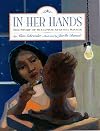
Augusta Savage made clay sculptures from her earliest days on, forming farm animals out of clay as a child in the mud pit of her small-town Florida home. But her fervently religious father disapproved of her making art, often smashing the pieces she made. With perseverance in her craft, August continued to sculpt, and by age 27 made it to New York where she found a room in Harlem and attended the Cooper Union. Augusta became well known for her sculpture at the time. As the author's note show more reveals, Augusta lived with severe depression. She spent the later years of her life in obscurity in upstate New York, and not much of her work has survived to present day. This book was a welcome look into the life of an artist I have never heard of. I'm glad to now ponder her life and am curious to see more of her work.
The text was almost too rose-colored. Though the author mentions Augusta lived in poverty as a child, there is zero mention of racism or sexism, both of which she undoubtedly experienced as a Black woman breaking into the 1920s and 30s art world of New York City. I appreciated the detail of the text, but wondered how much of the story the author had to invent due to a lack of documentation about Augusta's life. The painted illustrations were up and down for me. Some were beautiful and evocative – such as that of Augusta creating a bust of a pastor late at night. Other illustrations felt flat and cartoony. show less
The text was almost too rose-colored. Though the author mentions Augusta lived in poverty as a child, there is zero mention of racism or sexism, both of which she undoubtedly experienced as a Black woman breaking into the 1920s and 30s art world of New York City. I appreciated the detail of the text, but wondered how much of the story the author had to invent due to a lack of documentation about Augusta's life. The painted illustrations were up and down for me. Some were beautiful and evocative – such as that of Augusta creating a bust of a pastor late at night. Other illustrations felt flat and cartoony. show less
Lists
Awards


You May Also Like


Associated Authors
Statistics
- Works
- 17
- Members
- 2,292
- Popularity
- #11,208
- Rating
- 4.0
- Reviews
- 70
- ISBNs
- 96
- Favorited
- 1