
Nomadland
by Jessica Bruder
On This Page
Description
Politics. Sociology. Nonfiction. From the beet fields of North Dakota to the wilderness campgrounds of California to an Amazon warehouse in Texas, people who once might have kicked back to enjoy their sunset years are hard at work. Underwater on mortgages or finding that Social Security comes up short, they're hitting the road in astonishing numbers, forming a new community of nomads: RV and van-dwelling migrant laborers, or "workampers." Building on her groundbreaking Harper's cover story, show more "The End of Retirement," which brought attention to these formerly settled members of the middle class, Jessica Bruder follows one such RVer, Linda, between physically taxing seasonal jobs and reunions of her new van-dweller family, or "vanily." Bruder tells a compelling, eye-opening tale of both the economy's dark underbelly and the extraordinary resilience, creativity, and hope of these hardworking, quintessential Americans?many of them single women?who have traded rootedness for the dream of a better life. show lessTags
Recommendations












Member Recommendations
Member Reviews
(13) This a a journalist's account of the phenomena of living in a van or an RV driving around the country off the grid and accepting short term jobs like working in an Amazon warehouse or being a camp host in national forests and campgrounds. Making just enough to survive, buy groceries, do repairs on your vehicle, etc. Apparently there is a growing class of people that should be retirees but that couldn't scrape together enough to retire on after eking out a middle class living. It is depressing as hell. Many of these people are smart and resourceful and there is a whole underground of leaders, you-tubers, unofficial gatherings, etc. The author follows one 66 yo woman, Linda, in particular. Somebody's sweet grandmother forced to live show more in a tiny RV parked in Walmart parking lots. Her dream is to build some sort of a biosphere out in the dessert, self-sustaining - needing nothing she can't get from the Earth and a bit of elbow grease. I dunno...
I thought the author did an excellent job depicting these individuals - according them the dignity they deserve, but also pointing out some hard truths. Many of them really are just eating a shit sandwich and pretending to like it. Interestingly, they are almost all white people and she muses carefully and eloquently about why this might be. I loved the quote from the satirical website - "Things that White People Do" - hilarious; what most black people call their worst nightmare, white people call "camping." The bootstraps American in me blamed the victims - these people must have made some very poor choices to end up in this situation. And the author doesn't outright deny that. These people lost jobs, had health problems like 'headaches,' "bad investments," "bad divorces," alcoholism - The author states these things in a non-judgmental way but still... There was no one who just decided to do it -- just for fun. Even the author herself would apply for these seasonal gigs just to see what they were like and then quit them after a few weeks. They were decidedly not fun. I also liked that the author did not bring these peoples politics into the book. It was refreshing to not have to read about a backdrop of political partisanship; it didn't matter.
Anyway, intriguing, well written. I have both empathy and a desire to blame the victims which to me says that this struck a chord with me. How close are any of us to being in a situation like this this? Or what would I do in a situation like this? I would never find myself in a situation like this. Right? Right?.... show less
I thought the author did an excellent job depicting these individuals - according them the dignity they deserve, but also pointing out some hard truths. Many of them really are just eating a shit sandwich and pretending to like it. Interestingly, they are almost all white people and she muses carefully and eloquently about why this might be. I loved the quote from the satirical website - "Things that White People Do" - hilarious; what most black people call their worst nightmare, white people call "camping." The bootstraps American in me blamed the victims - these people must have made some very poor choices to end up in this situation. And the author doesn't outright deny that. These people lost jobs, had health problems like 'headaches,' "bad investments," "bad divorces," alcoholism - The author states these things in a non-judgmental way but still... There was no one who just decided to do it -- just for fun. Even the author herself would apply for these seasonal gigs just to see what they were like and then quit them after a few weeks. They were decidedly not fun. I also liked that the author did not bring these peoples politics into the book. It was refreshing to not have to read about a backdrop of political partisanship; it didn't matter.
Anyway, intriguing, well written. I have both empathy and a desire to blame the victims which to me says that this struck a chord with me. How close are any of us to being in a situation like this this? Or what would I do in a situation like this? I would never find myself in a situation like this. Right? Right?.... show less
Journalist Jessica Bruder writes about subcultures. In 2014 for an article in Harper's Magazine, Bruder profiled Linda May, a retired woman who lives in a camper, traveling the U.S. and taking seasonal jobs with campgrounds, an Amazon warehouse, and the like, and was introduced to a whole bunch of "workampers" who do the same. After a couple of years of interviews, and living temporarily in an RV of her own while working at an Amazon warehouse and beet factory, Bruder presented this book showing these folks in all their complexity.
If I had one takeaway from this book, it's that workampers are not a one-size-fits-all monolith. There are many reasons they would take to the road, from financial necessity to a desire for freedom from the show more rat race - or some combination of the two. They are hard-working, often debt-free, often what we'd picture as "retirement age", and mostly white. And while it's hard to pin down an exact number, there were about 300,000 when the book was published (2017), a number that seems to be growing. I found it fascinating, sometimes heartbreaking, thought-provoking - all the qualities you'd want in a book club choice. Highly recommended. show less
If I had one takeaway from this book, it's that workampers are not a one-size-fits-all monolith. There are many reasons they would take to the road, from financial necessity to a desire for freedom from the show more rat race - or some combination of the two. They are hard-working, often debt-free, often what we'd picture as "retirement age", and mostly white. And while it's hard to pin down an exact number, there were about 300,000 when the book was published (2017), a number that seems to be growing. I found it fascinating, sometimes heartbreaking, thought-provoking - all the qualities you'd want in a book club choice. Highly recommended. show less
“In America, if you don’t have an address, you’re not a real person.”
This book is copyrighted 2017, and things have only gotten worse.
In my town, Novato, CA, there have been a long string of RVs along Airport Road for a few years now. And a homeless encampment around our public library. I myself am a letter carrier for the United States Postal Service, but my salary in this county (Marin County) qualifies me as low income. At one time, a mail carrier could own a home in this country and support a family on his/her lone income. Not anymore... "This is not a wage gap - it's a chasm."
This book details the shame of the United States, its people being unable to afford housing. "Nomads", "houseless", or folks living in "wheel estate" show more because they can't afford a “stick-and-brick” home, or even the rent. They have to decide what they can pay for - food or dental work, mortgage or electricity, rent or student loan, warm clothes or gas to get to work? "When do impossible choices start to tear people - a society - apart?" Can’t get a raise? Live in your vehicle... You can be a workamper, “...modern mobile travelers who take temporary jobs around the U.S. in exchange for a free campsite...”! Fun, huh? Like “Grapes of Wrath” fun! But instead of picking fruit, a lot of these poor folks end up picking packages in Amazon warehouses. Which sounds tough too - “If I can do the Army, I can do Amazon.” And Amazon “reaps federal tax credits” for hiring them! SMH.
Interesting how white privilege is part of this. Of course it is. Another, even worse, shame of the United States.
I want to go to Quartzsite.
“These mobile shelters are everywhere - an invisible city, hidden in plain sight.” show less
This book is copyrighted 2017, and things have only gotten worse.
In my town, Novato, CA, there have been a long string of RVs along Airport Road for a few years now. And a homeless encampment around our public library. I myself am a letter carrier for the United States Postal Service, but my salary in this county (Marin County) qualifies me as low income. At one time, a mail carrier could own a home in this country and support a family on his/her lone income. Not anymore... "This is not a wage gap - it's a chasm."
This book details the shame of the United States, its people being unable to afford housing. "Nomads", "houseless", or folks living in "wheel estate" show more because they can't afford a “stick-and-brick” home, or even the rent. They have to decide what they can pay for - food or dental work, mortgage or electricity, rent or student loan, warm clothes or gas to get to work? "When do impossible choices start to tear people - a society - apart?" Can’t get a raise? Live in your vehicle... You can be a workamper, “...modern mobile travelers who take temporary jobs around the U.S. in exchange for a free campsite...”! Fun, huh? Like “Grapes of Wrath” fun! But instead of picking fruit, a lot of these poor folks end up picking packages in Amazon warehouses. Which sounds tough too - “If I can do the Army, I can do Amazon.” And Amazon “reaps federal tax credits” for hiring them! SMH.
Interesting how white privilege is part of this. Of course it is. Another, even worse, shame of the United States.
I want to go to Quartzsite.
“These mobile shelters are everywhere - an invisible city, hidden in plain sight.” show less
https://fromtheheartofeurope.eu/nomadland/
I’m a huge sucker for the participant-observer mode of anthropology, and this brand of “immersive journalism” comes very close to it. Good writing like this lets the stories come out in their own way and their own time, and although the book is not long, nobody is rushed into fitting into a film scene. Inevitably the book ends up angrier than the film, even if its subjects in general accept their lot, because the mere facts of what the USA is doing to its own people are so enraging, and decent reportage will bring that out.
It also reminded me of Svetlana Alexievich, though Alexievich rarely inserts herself into the narrative as Bruder perforce has to, and her subject matter is much rawer. show more The collapse of the Soviet Union and the impact on its people was far more gruesome and broad than what has happened in America. So far. show less
I’m a huge sucker for the participant-observer mode of anthropology, and this brand of “immersive journalism” comes very close to it. Good writing like this lets the stories come out in their own way and their own time, and although the book is not long, nobody is rushed into fitting into a film scene. Inevitably the book ends up angrier than the film, even if its subjects in general accept their lot, because the mere facts of what the USA is doing to its own people are so enraging, and decent reportage will bring that out.
It also reminded me of Svetlana Alexievich, though Alexievich rarely inserts herself into the narrative as Bruder perforce has to, and her subject matter is much rawer. show more The collapse of the Soviet Union and the impact on its people was far more gruesome and broad than what has happened in America. So far. show less
Nomadland is the story of (mostly) older people for whom their retirement years are not "golden"--they are not technically homeless, but they live in their RVs or vans and traverse the country in search of seasonal, temporary work. Jessica Bruder spent a great deal of time with the people whose lives she portrays in this book.
The jobs they seek and hold range from janitorial/maintenance work at state and national parks during the summer, to farm work during beet harvest season, to work in one of Amazon's mammoth fulfillment centers during the buildup to the Holidays. The common factor is that the work is usually back-breaking, mind-numbing, and low-paying. In fact, Amazon relies on these workers--they have a name and a logo: "The Camper show more Force." One of the perks of being a Camper Force member is that Amazon provides free OTC pain relievers to these workers to relieve the pain and strain of the heavy lifting and miles walked each day. (I, for one, will be thinking of this each time I order from Amazon in the future.)
The people forced into this new economy include former blue and pink collar workers for whom Social Security is not quite enough to make it on, and also former college professors, software engineers, pastors and other theoretically middle class people. Many of them lost their savings and/or their houses in the financial crisis of 2008.
This is a very sobering book, and I fear that stories like these will become the norm as Congress marches relentlessly on its quest to demolish Social Security and Medicare with the goal of voucherizing Medicare and privatizing Social Security. However, despite the grim outlook, the people depicted in this book are for the most part hopeful and optimistic people who look on the bright side of things, which made it a pleasure to get to know them. Unfortunately, though, we don't need a dystopian novel to see where the future is headed.
4 stars show less
The jobs they seek and hold range from janitorial/maintenance work at state and national parks during the summer, to farm work during beet harvest season, to work in one of Amazon's mammoth fulfillment centers during the buildup to the Holidays. The common factor is that the work is usually back-breaking, mind-numbing, and low-paying. In fact, Amazon relies on these workers--they have a name and a logo: "The Camper show more Force." One of the perks of being a Camper Force member is that Amazon provides free OTC pain relievers to these workers to relieve the pain and strain of the heavy lifting and miles walked each day. (I, for one, will be thinking of this each time I order from Amazon in the future.)
The people forced into this new economy include former blue and pink collar workers for whom Social Security is not quite enough to make it on, and also former college professors, software engineers, pastors and other theoretically middle class people. Many of them lost their savings and/or their houses in the financial crisis of 2008.
This is a very sobering book, and I fear that stories like these will become the norm as Congress marches relentlessly on its quest to demolish Social Security and Medicare with the goal of voucherizing Medicare and privatizing Social Security. However, despite the grim outlook, the people depicted in this book are for the most part hopeful and optimistic people who look on the bright side of things, which made it a pleasure to get to know them. Unfortunately, though, we don't need a dystopian novel to see where the future is headed.
4 stars show less
Getting old in America is high risk. Age compels a great sorting. If you have the means to retire or keep working, great. But if you don’t, you have to find a way to keep going anyway.
This is about the people who don’t have the means and come out on the short end. Most, although not all, are older, past their prime working days. Social Security doesn't come close, for them, to paying rent and living expenses. These are people who often for no fault of their own, fell away from the lives they expected and thought they had earned. Bob Wells, a kind of guru of nomadic camper lifestyle, explained it. “At one time there was a social contract that if you played by the rules (went to school, got a job, and worked hard) everything would show more be fine. That’s no longer true today. You can do everything right, just the way society wants you to do it, and still end up broke, alone, and homeless.”
Many of the people Bruder met in her years of observing and participating in the camper culture came out on the wrong side of the sorting not because they weren’t skilled or knowledgeable, or because they didn’t work hard, but because their jobs dried up, their retirement savings were destroyed by the 2008 recession, or they met with injuries or medical conditions that ended their most productive and rewarding years of work. Or all of those things.
They made a last stand. They sold their houses (if they had them) and their belongings, and they hit the road in vans or campers. The act carries a point of pride and hope — rejecting the broken ideal of the suburban home, the “sticks and bricks” and the cocktail hour for the life of freedom on the road.
But freedom on the road isn’t financial freedom. These are “workampers” — people living in vans, RVs, cars, whatever they can make into a rolling home, moving from short term work to short term work. They earn low wages, work long shifts, enjoy no benefits, and have no security of employment from day to day.
On the other side of the equation are the enablers — the providers of those short term work opportunities. Amazon’s CamperForce program is the most prominent. These are temporary jobs at Amazon’s fulfillment centers. The jobs provide exactly those low wages, long shifts, lack of benefits (there do seem to be some healthcare benefits at least related to job-site injuries), and no security of employment. Plus facilities for parking and living out of vans, RVs, campers, or whatever the workers may have.
Amazon isn’t the only one. There are state campground host jobs (provided through private contractors), big agriculture (Bruder put in some short time at an American Crystal Sugar plant in Minnesota during the annual beet harvest), and others.
Certainly these employers exploit the availability and plight of the nomadic workers. The workers are a captive labor force. They are dependent on such opportunities, and they accept the conditions. It’s a hard bargain. Many, like the book’s most central figure, Linda May, hope to make and save enough to never have to go back, to find some stability and security.
The strength of the book is Bruder’s portrayals of people like Linda May, Bob Wells, and Charlene Swankie (all of whom portray themselves in the movie based on the book). You see vividly in their lives and in their words that tension between pride in the life they’ve chosen as a best option and the precariousness of that life. They wouldn’t have chosen it if they had practical alternatives, and they are staking their pride now on those virtues of independence and freedom — classic if hard worn American virtues.
As a reader, you feel for the precarious lives of the people Bruder portrays. And you have to admire them, too. Bruder summarizes, “The truth as I see it is that people can both struggle and remain upbeat simultaneously, through even the most soul-testing of challenges. This doesn’t mean they’re in denial. Rather, it testifies to the remarkable ability of humankind to adapt, to seek meaning and kinship when confronted with adversity.”
I know after having read this book that i see the campers and vans in my own city, and the people who live in them, with more respect. And I’m afraid they’re only the beginning. show less
This is about the people who don’t have the means and come out on the short end. Most, although not all, are older, past their prime working days. Social Security doesn't come close, for them, to paying rent and living expenses. These are people who often for no fault of their own, fell away from the lives they expected and thought they had earned. Bob Wells, a kind of guru of nomadic camper lifestyle, explained it. “At one time there was a social contract that if you played by the rules (went to school, got a job, and worked hard) everything would show more be fine. That’s no longer true today. You can do everything right, just the way society wants you to do it, and still end up broke, alone, and homeless.”
Many of the people Bruder met in her years of observing and participating in the camper culture came out on the wrong side of the sorting not because they weren’t skilled or knowledgeable, or because they didn’t work hard, but because their jobs dried up, their retirement savings were destroyed by the 2008 recession, or they met with injuries or medical conditions that ended their most productive and rewarding years of work. Or all of those things.
They made a last stand. They sold their houses (if they had them) and their belongings, and they hit the road in vans or campers. The act carries a point of pride and hope — rejecting the broken ideal of the suburban home, the “sticks and bricks” and the cocktail hour for the life of freedom on the road.
But freedom on the road isn’t financial freedom. These are “workampers” — people living in vans, RVs, cars, whatever they can make into a rolling home, moving from short term work to short term work. They earn low wages, work long shifts, enjoy no benefits, and have no security of employment from day to day.
On the other side of the equation are the enablers — the providers of those short term work opportunities. Amazon’s CamperForce program is the most prominent. These are temporary jobs at Amazon’s fulfillment centers. The jobs provide exactly those low wages, long shifts, lack of benefits (there do seem to be some healthcare benefits at least related to job-site injuries), and no security of employment. Plus facilities for parking and living out of vans, RVs, campers, or whatever the workers may have.
Amazon isn’t the only one. There are state campground host jobs (provided through private contractors), big agriculture (Bruder put in some short time at an American Crystal Sugar plant in Minnesota during the annual beet harvest), and others.
Certainly these employers exploit the availability and plight of the nomadic workers. The workers are a captive labor force. They are dependent on such opportunities, and they accept the conditions. It’s a hard bargain. Many, like the book’s most central figure, Linda May, hope to make and save enough to never have to go back, to find some stability and security.
The strength of the book is Bruder’s portrayals of people like Linda May, Bob Wells, and Charlene Swankie (all of whom portray themselves in the movie based on the book). You see vividly in their lives and in their words that tension between pride in the life they’ve chosen as a best option and the precariousness of that life. They wouldn’t have chosen it if they had practical alternatives, and they are staking their pride now on those virtues of independence and freedom — classic if hard worn American virtues.
As a reader, you feel for the precarious lives of the people Bruder portrays. And you have to admire them, too. Bruder summarizes, “The truth as I see it is that people can both struggle and remain upbeat simultaneously, through even the most soul-testing of challenges. This doesn’t mean they’re in denial. Rather, it testifies to the remarkable ability of humankind to adapt, to seek meaning and kinship when confronted with adversity.”
I know after having read this book that i see the campers and vans in my own city, and the people who live in them, with more respect. And I’m afraid they’re only the beginning. show less
Fascinating look at a sub-culture that we know little about: "houseless" seniors living on the road, picking up temporary jobs at Amazon warehouses, amusement parks and campsites to make ends meet. Bruder traveled and lived with these individuals for several years, giving the book complete authenticity. Not quite an indictment of 21st century capitalism because the individuals who live this way don't see themselves as victims - they've made the choice to pursue this unique type of freedom. So while it's easy to be horrified by the conditions in the Amazon warehouses, where 65 year old "workampers" endure difficult physical labor and mind-numbing boredom so that the rest of us can get our sunglasses and sex toys delivered in the next two show more days, it's also fairly tempting to be envious of the camaraderie they enjoy when they all join together in bizarre Quartzsite Arizona for the annual "vanily" gathering.
Well-written and extremely thought-provoking. show less
Well-written and extremely thought-provoking. show less
Members
- Recently Added By
Published Reviews
Seventeen years into the 21st century, the news for the middle class is bleak. As one expert puts it in the book, the “three-legged stool” of retirement security — Social Security, private pensions and personal savings — has given way to “a pogo stick,” with Social Security as the single “wobbly” leg...When Bruder does stand aside, “Nomadland” soars. Her subjects are show more self-sufficient, proud people. Many in their 60s and beyond, they should be entering Shakespeare’s sixth age of man, “into the lean and slippered pantaloon/ With spectacles on nose and pouch/ On side.” Instead they are sans homes, sans money, sans security, sans everything, except their dignity and self-reliance. show less
added by Lemeritus
If you’re in a city but you live in a van, or a trailer, or a tent, you are considered homeless. But if you’re in the desert or the forest, you’re camping. Rationalizations such as these are what make “Nomadland” such a compelling look at a weirdly camouflaged swath of society that’s more entwined around us than we realize....Change often began with a job layoff. Then they show more downsized, still fell behind and finally realized that their earlier lives cannot be reclaimed. Losers? Sure, some have made bad decisions. But most simply have lost, for reasons over which they had no control.... “What further contortions — or even mutations — of the social order will appear in years to come?” she asks. “How many people will get crushed by the system? How many will find a way to escape it?” This is important, eye-opening journalism, presented for us to contemplate: What if? show less
added by Lemeritus
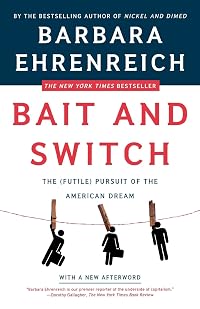
“Nomadland,” by Jessica Bruder, an important if frustrating new work influenced by such classics of immersion journalism as Barbara Ehrenreich’s “Nickel and Dimed,” looks at one strategy older workers have devised for “surviving America.” ... “Nomadland” is part of a fleet of recent books about the gig economy. More than most, it’s able to comfortably contain various show more contradictions: “The nomads I’d been interviewing for months were neither powerless victims nor carefree adventurers,” Bruder writes.... Bruder is a poised and graceful writer. But her book is plagued by odd evasions. Take race, the major one.... there is no acknowledgment of the more than three million migrant workers in this country, who perhaps pick the same fruit and work the same backbreaking jobs as Bruder’s white would-be retirees.... These omissions don’t doom the book; but they do mark it. show less
added by Lemeritus
Lists

Top Five Books of 2021
604 works; 181 members

Phi Beta Kappa reading list
260 works; 8 members

W. W. Norton & Company
47 works; 2 members

Club Read's Recommended Nonfiction Written by Women
618 works; 30 members
Author Information

3 Works 1,582 Members
Jessica Bruder is an award-winning journalist whose work focuses on subcultures and the dark corners of the economy. She has written for Harper's Magazine, the New York Times, and the Washington Post. Bruder teaches at the Columbia School of Journalism.
Some Editions
Awards and Honors
Awards
Distinctions
Notable Lists
Series
Belongs to Publisher Series
J'ai lu (13095)
Work Relationships
Is contained in
Has the adaptation
Common Knowledge
- Canonical title
- Nomadland
- Original title
- Nomadland: Surviving America in the Twenty-First Century
- Original publication date
- 2017-09 (1st edition, original American ∙ W.W. Norton & Company, Inc., New York) (1st edition, original American ∙ | W.W. Norton & Company, Inc., New York); 2019-02-06 (1e traduction et édition française ∙ Globe) (1e traduction et é | dition franç | aise ∙ | Globe); 2020-11-25 (Réédition française ∙ J'ai lu) (Ré | é | dition franç | aise ∙ | J'ai lu)
- People/Characters
- Linda May; Bob Wells; Charlene Swankie (Swankie Wheels)
- Important places
- Nevada, USA; Fernley, Nevada, USA; Arizona, USA; Quartzsite, Arizona, USA; La Paz County, Arizona, USA
- Related movies
- Nomadland (2020 | IMDb)
- Epigraph
- "There's a crack in everything. That is how the light gets in." -Leonard Cohen
"The capitalists don't want anyone living off their economic grid." -Anonymous commenter, Azdailysun.com - Dedication
- For Dale
- First words
- On the Foothill Freeway, about an hour inland from Los Angeles, a mountain range looms ahead of northbound traffic, bringing suburbia to a sudden stop.
- Quotations
- Some call them “homeless.” The new nomads reject that label. Equipped with both shelter and transportation, they’ve adopted a different word. They refer to themselves, quite simply, as “houseless.”
Being human means yearning for more than subsistence. As much as food or shelter, we require hope.
Driving on, they’re secure in this knowledge: The last free place in America is a parking spot.
...there are only a dozen counties and one metro area in America where a full-time minimum wage worker can afford a one-bedroom apartment at fair market rent. You’d have to make at least $16.35 an hour—more than twice the... (show all) federal minimum wage—to rent such an apartment without spending more than the recommended 30 percent of income on housing.
Full-time travelers are a demographer’s nightmare. Statistically they blend in with the rest of the population, since the law requires them to maintain fixed—in other words, fake—addresses. No matter how widely they wan... (show all)der, nomads must be officially “domiciled” somewhere. Your state of residence is where you get vehicles registered and inspected, renew drivers’ licenses, pay taxes, vote, serve on juries, sign up for health insurance (except for those on Medicare), and fulfill a litany of other responsibilities.
Workampers are plug-and-play labor, the epitome of convenience for employers in search of seasonal staffing. They appear where and when they are needed. They bring their own homes, transforming trailer parks into ephemeral co... (show all)mpany towns that empty out once the jobs are gone. They aren’t around long enough to unionize. On jobs that are physically difficult, many are too tired even to socialize after their shifts.
“The Work Opportunity Tax Credit is the reason Amazon can take on such a slow, inefficient workforce,” noted one itinerant worker on her blog, Tales from the Rampage. “Since they are getting us off government assistance... (show all) for almost three months of the year, we are a tax deduction for them.”
Monique Morrissey, an economist at the Economic Policy Institute, spoke with me about the unprecedented nature of this change. “We’re facing the first-ever reversal in retirement security in modern U.S. history,” she ex... (show all)plained. “Starting with the younger baby boomers, each successive generation is now doing worse than previous generations in terms of their ability to retire without seeing a drop in living standards.”
In 1795, forward-thinking founding father Thomas Paine penned a pamphlet called “Agrarian Justice” that proposed an annual pension of ten pounds sterling starting at age fifty, which he regarded as a typical life expectan... (show all)cy. Americans ignored him and more than a century passed before the German statesman Otto von Bismarck created the world’s first old-age insurance.
“You have a cart with fourteen tubs of Chinese junk,” she told me. “One of the depressing parts was I knew all this stuff was going to end up in a landfill.” That part demoralized her. “You think about all the resou... (show all)rces it took to get it there,” she mused. “And then it’s ‘Use it up. Throw it away.’”
“Our society is turning to that a lot,” she said. “They don’t want long-term employees, because then you do have pensions, then you do have to keep giving them cost-of-living increases and, if they’ve been working f... (show all)or the company a long time, they’re going to want a merit-based raise.” The new management, she said, “literally wanted disposable people. And to make disposable people you have to have a disposable job. And so everything became automated.”
THE LONDON FINANCIAL TIMES called Quartzsite “one of America’s more bizarre and seriously demented places.” But Quartzsite is not a national aberration. You’d be hard-pressed to find a town that is so quintessentially... (show all) American—hyper-American to the point of caricature. Here the native inhabitants are mostly gone and, in their place, visitors snap up souvenir dreamcatchers made in Pakistan and beaded moccasins from China. Winter doesn’t exist. Soothsayers and spiritual seekers and discount shoppers come together around the shared belief that the best way to escape life’s problems is by filling up the gas tank and hitting the road. Quartzsite has always been a refuge for travelers, outsiders, people trying to reinvent themselves. And it has perfected the art of the boom and bust cycle.
...people can both struggle and remain upbeat simultaneously, through even the most soul-testing of challenges. This doesn’t mean they’re in denial. Rather, it testifies to the remarkable ability of humankind to adapt, to... (show all) seek meaning and kinship when confronted with adversity. As Rebecca Solnit points out in her book A Paradise Built in Hell: The Extraordinary Communities That Arise in Disaster, people not only buck up in times of crisis, but do so with a “startling, sharp joy.”
In America, if you don’t have an address, you’re not a real person.
When do impossible choices start to tear people—a society—apart?
The top 1 percent now makes eighty-one times what those in the bottom half do, when you compare average earnings. For American adults on the lower half of the income ladder—some 117 million of them—earnings haven’t chan... (show all)ged since the 1970s. This is not a wage gap—it’s a chasm. And the cost of that growing divide is paid by everyone.
Today the United States has the most unequal society of all developed nations. America’s level of inequality is comparable to that of Russia, China, Argentina, and the war-torn Democratic Republic of the Congo. - Last words
- (Click to show. Warning: May contain spoilers.)Soon the job is done. When the excavator departs, Linda walks into the flat, blank space it left behind. This land is ready for her now - one perfect acre, something to build on.
- Blurbers
- Solnit, Rebecca; Ehrenreich, Barbara; Conover, Ted
- Original language
- English
- Canonical DDC/MDS
- 331.3980973
- Canonical LCC
- HD6280
Classifications
- Genres
- Sociology, General Nonfiction, Nonfiction
- DDC/MDS
- 331.3980973 — Society, government, & culture Economics Labor economics Workers by age group Other age groups Older workers
- LCC
- HD6280 — Social sciences Industries. Land use. Labor Industries. Land use. Labor Labor. Work. Working class Classes of labor
- BISAC
Statistics
- Members
- 1,469
- Popularity
- 15,885
- Reviews
- 60
- Rating
- (4.06)
- Languages
- 10 — Chinese, Czech, English, French, German, Italian, Polish, Spanish, Turkish, Portuguese (Portugal)
- Media
- Paper, Audiobook, Ebook
- ISBNs
- 32
- ASINs
- 9