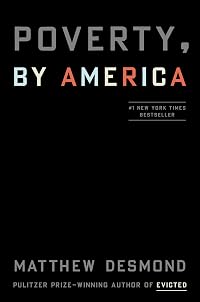
Poverty, by America
by Matthew Desmond
On This Page
Description
"The United States, the richest country on earth, has more poverty than any other advanced democracy. Why? Why does this land of plenty allow one in every eight of its children to go without basic necessities, permit scores of its citizens to live and die on the streets, and authorize its corporations to pay poverty wages? In this landmark book, acclaimed sociologist Matthew Desmond draws on history, research, and original reporting to show how affluent Americans knowingly and unknowingly show more keep poor people poor"-- show lessTags
Recommendations












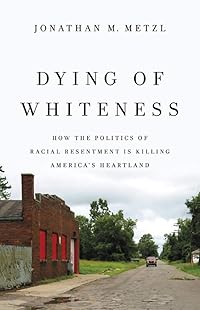

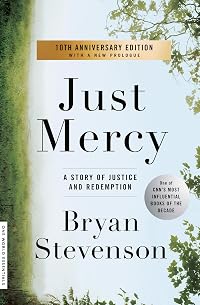

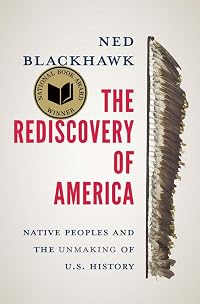
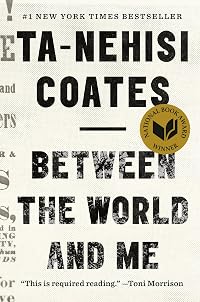


Member Recommendations

Member Reviews
Not poverty in America; by America. We’’ve sustained it by choice and we can abolish it by choice. There’s plenty of money, Desmond shows us, to get rid of poverty altogether in this country. All of us non-poor are benefitting, to one degree or another, from perpetuating it. He proves in detail how this is so. As in his monumental Evicted, every “radical” conclusion he reaches is based on deep and extensive research detailed in his notes, and comes across to the reader as common sense. If we enforced our tax laws against the wealthy and corporations, there’s plenty of money. If we tax the wealthy as we did in pre-Reagan years, there’s plenty. If we redirect existing government money in sensible ways, there’s plenty. And show more it’s not just throwing money. In various parts of this large country communities have found effective ways to alleviate poverty and provide affordable housing. (New Jersey(!) is a surprising exemplar for the latter), and these can be more widely adapted.
You and I also can provide the type of boycotts and directional buying we’ve supplied in favor of other social causes like combatting racism and sexism; we can become “poverty abolitionists”. If a company is unfairly underpaying its workers and overpaying its leadership, we can apply both consumer and investor pressure. We have been and are, he persuasively argues, exploiting the poor for our extra measures of affluence. It’s time to recognize it and remedy it.
I can already hear the cries of alarm over libtard “socialism.” As he shows us, it’s more a matter of fairness and easy affordability than anything else. No need to dismantle our system or overhaul it. It’s a matter of direction and will. And making our country great .. . . finally.
What an exciting and flowing read. “Common Sense”, as Thomas Paine might’ve titled it.
Some Excerpts;
"(The question) we should ask every time we pass a tent encampment, those tarped American slums smelling of asphalt and bodies, every time we see someone asleep on the bus,slumped over in work clothes, is simply Who benefits?Not Why don’t you find a job? Or Why don’t you move or Why dion’t you stop taking out such bad loans? but Who is feeding off this?
In 2020 the federal government spent more than $193 billion on homeowner subsidies, a figure that far exceeds the amount spent on direct housing assistance for low income families ($53 billion). Most families who enjoy those subsidies have six figure incomes and are white.
I can’t tell you how many times someone has informed me that we should reduce military spending and redirect the savings to the poor. . . . In a public venue, it always garners applause. I’ve met far fewer people who have suggested we boost aid to the poor by reducing tax breaks that mostly benefit the upper class, even though we spend twice as much on them as on the military and national defense.
The American government gives the most help to those that need it the least. This is the true nature of our welfare state, and it has far-reaching implications, not just for our bank accounts and poverty levels, but also for our psychology and civic spirit." show less
You and I also can provide the type of boycotts and directional buying we’ve supplied in favor of other social causes like combatting racism and sexism; we can become “poverty abolitionists”. If a company is unfairly underpaying its workers and overpaying its leadership, we can apply both consumer and investor pressure. We have been and are, he persuasively argues, exploiting the poor for our extra measures of affluence. It’s time to recognize it and remedy it.
I can already hear the cries of alarm over libtard “socialism.” As he shows us, it’s more a matter of fairness and easy affordability than anything else. No need to dismantle our system or overhaul it. It’s a matter of direction and will. And making our country great .. . . finally.
What an exciting and flowing read. “Common Sense”, as Thomas Paine might’ve titled it.
Some Excerpts;
"(The question) we should ask every time we pass a tent encampment, those tarped American slums smelling of asphalt and bodies, every time we see someone asleep on the bus,slumped over in work clothes, is simply Who benefits?Not Why don’t you find a job? Or Why don’t you move or Why dion’t you stop taking out such bad loans? but Who is feeding off this?
In 2020 the federal government spent more than $193 billion on homeowner subsidies, a figure that far exceeds the amount spent on direct housing assistance for low income families ($53 billion). Most families who enjoy those subsidies have six figure incomes and are white.
I can’t tell you how many times someone has informed me that we should reduce military spending and redirect the savings to the poor. . . . In a public venue, it always garners applause. I’ve met far fewer people who have suggested we boost aid to the poor by reducing tax breaks that mostly benefit the upper class, even though we spend twice as much on them as on the military and national defense.
The American government gives the most help to those that need it the least. This is the true nature of our welfare state, and it has far-reaching implications, not just for our bank accounts and poverty levels, but also for our psychology and civic spirit." show less
This is the only book I have ever read twice, right in a row. I was so taken in by his arguments that I kept reading on, eventually forgetting the important facts and statistics he brought up. So once I finished the book, I began again, this time taking the time to underline points I wanted to remember. The problem was that I found myself underlining quite a bit of the book!
Matthew Desmond is really making the uncomfortable argument that we are all active participants in the escalation of poverty in our country. We, the middle class and especially the rich, are the country’s biggest welfare recipients, primarily in the form of the huge tax breaks we take. I have lived at 2 wildly different income levels in my life, and I found myself show more nodding in agreement with Desmond throughout the book. He is right - our current system is set up to reward the rich and penalize the poor. I still remember one time when we finally earned a salary that allowed us to breathe, finding that we received a refund on our taxes. This was actually frustrating for me, as Ithought, ‘Gee, it would have been nice to get this money back years ago when we earned less but still had to pay instead of receive a refund.’ Living at my current income has shown me that money compounds rewards in our society. What I didn’t understand, until reading this book, is that the advantages I currently receive directly relate to the poverty my neighbors experience. Quite a sobering thought.
This is not always a comfortable book to read, but one that I believe is necessary (particularly for anyone entering the political field). Read it once, and then read it again. show less
Matthew Desmond is really making the uncomfortable argument that we are all active participants in the escalation of poverty in our country. We, the middle class and especially the rich, are the country’s biggest welfare recipients, primarily in the form of the huge tax breaks we take. I have lived at 2 wildly different income levels in my life, and I found myself show more nodding in agreement with Desmond throughout the book. He is right - our current system is set up to reward the rich and penalize the poor. I still remember one time when we finally earned a salary that allowed us to breathe, finding that we received a refund on our taxes. This was actually frustrating for me, as Ithought, ‘Gee, it would have been nice to get this money back years ago when we earned less but still had to pay instead of receive a refund.’ Living at my current income has shown me that money compounds rewards in our society. What I didn’t understand, until reading this book, is that the advantages I currently receive directly relate to the poverty my neighbors experience. Quite a sobering thought.
This is not always a comfortable book to read, but one that I believe is necessary (particularly for anyone entering the political field). Read it once, and then read it again. show less
Why is it that poverty persists in the U.S., a country uniquely blessed with ample resources and opportunities? You don’t have to look far for strongly-held opinions: immigrants are taking the jobs, poor people are lazy, poor people need to be pulling themselves up by their bootstraps, increasing minimum wage leads to higher unemployment, institutionalized racism continues to stack the decks against minority populations.
Desmond’s done yoeman’s work identifying and analyzing the research that’s actually been done on poverty to separate the wheat from the chaff, shedding light on the actual factors that perpetuate poverty and dispelling the myths that get in the way of a reasoned, rational, discussion of the issue – the kind of show more discussion we need to have in order to begin dismantling the obstacles to helping people escape poverty and build wealth.
To be clear, this isn’t a research report. Desmond’s got a strong point of view – that the U.S. suffers from institutionalized, structural immorality when it comes to exploiting people in poverty – and he’s not above cherry-picking the data to prove his point. (For instance, he’ll compare unemployment figures now vs. the Great Depression, without correcting for population growth.) But that doesn’t mean that the data he’s included isn’t valid, as the books 76 pages of annotated footnotes will attest.
The good news: once you work your way through the increasingly bleak chapters that examine the myriad ways in which the U.S. profits from poverty, misdirects funds meant to alleviate poverty, and continues to prioritize programs that subsidize poverty rather than alleviate it, you get to the chapters where Desmond starts talking about solutions. Some of the solutions feel a little pie-in-the-sky (regardless of morality, we Americans have an ingrained, dog-whistle aversion to anything that smacks of socialism that I don’t see going anywhere), others are so easily implemented (more oversight of predatory lending and housing, more child care so people can work, reforming federal/state poverty-alleviation programs to increase efficiency, reducing barriers to unionization), one emerges from these chapters with a sense that solutions are available, if and when our nation ever evinces the political will to address the problem. (Are you listening, politicians? If 1 in 7 Americans live in poverty, that’s 14% of the vote up for grabs!)
At 189 pages (less footnotes & indexes), this is a short read, but an incredibly powerful one. I went into this thinking that I was pretty well educated about the subject, but even I emerged with important new understandings and perspectives. Whether you agree with Desmond’s thesis, you can’t argue with his data, which suggests that as long as we Americans continue to profit from poverty, it’s not going anywhere. show less
Desmond’s done yoeman’s work identifying and analyzing the research that’s actually been done on poverty to separate the wheat from the chaff, shedding light on the actual factors that perpetuate poverty and dispelling the myths that get in the way of a reasoned, rational, discussion of the issue – the kind of show more discussion we need to have in order to begin dismantling the obstacles to helping people escape poverty and build wealth.
To be clear, this isn’t a research report. Desmond’s got a strong point of view – that the U.S. suffers from institutionalized, structural immorality when it comes to exploiting people in poverty – and he’s not above cherry-picking the data to prove his point. (For instance, he’ll compare unemployment figures now vs. the Great Depression, without correcting for population growth.) But that doesn’t mean that the data he’s included isn’t valid, as the books 76 pages of annotated footnotes will attest.
The good news: once you work your way through the increasingly bleak chapters that examine the myriad ways in which the U.S. profits from poverty, misdirects funds meant to alleviate poverty, and continues to prioritize programs that subsidize poverty rather than alleviate it, you get to the chapters where Desmond starts talking about solutions. Some of the solutions feel a little pie-in-the-sky (regardless of morality, we Americans have an ingrained, dog-whistle aversion to anything that smacks of socialism that I don’t see going anywhere), others are so easily implemented (more oversight of predatory lending and housing, more child care so people can work, reforming federal/state poverty-alleviation programs to increase efficiency, reducing barriers to unionization), one emerges from these chapters with a sense that solutions are available, if and when our nation ever evinces the political will to address the problem. (Are you listening, politicians? If 1 in 7 Americans live in poverty, that’s 14% of the vote up for grabs!)
At 189 pages (less footnotes & indexes), this is a short read, but an incredibly powerful one. I went into this thinking that I was pretty well educated about the subject, but even I emerged with important new understandings and perspectives. Whether you agree with Desmond’s thesis, you can’t argue with his data, which suggests that as long as we Americans continue to profit from poverty, it’s not going anywhere. show less
In the follow-up to his excellent work Evicted, Matthew Desmond examines the root causes of poverty in the United States. He eschews the usual route of explaining why the poor are poor, but instead what the middle and upper class have done to impoverish the poor (an approach that ultimately implicates just about everyone who will read this book). Exploitation of the poor falls on the hands of landlords, payday lenders and banks, employers, the gig economy, and government regulations that encourage the opposite of what is supposed to be the path out of poverty.
Desmond has no patience for the oft-used"we can't afford it" excuse for not alleviating poverty at a systemic level, outlining numerous actions we can take collectively the would show more address poverty well within the economy of the world's wealthiest nation. Desmond challenges readers to recognize how most of us in the middle and upper class benefit from exploitation and poverty and be willing to sacrifice these things to become "poverty abolitionists." Honestly, I regret listening to this as an audiobook because if I read it in print I would've highlighted key passages to share. But it's a short book and I recommend reading it if you care about reversing poverty. show less
Desmond has no patience for the oft-used"we can't afford it" excuse for not alleviating poverty at a systemic level, outlining numerous actions we can take collectively the would show more address poverty well within the economy of the world's wealthiest nation. Desmond challenges readers to recognize how most of us in the middle and upper class benefit from exploitation and poverty and be willing to sacrifice these things to become "poverty abolitionists." Honestly, I regret listening to this as an audiobook because if I read it in print I would've highlighted key passages to share. But it's a short book and I recommend reading it if you care about reversing poverty. show less
Poverty, by America by Matthew Desmond is an in-depth look at why poverty persists in the United States and offers some suggestions for making actual improvements, not just cosmetic patchwork.
People in the US rely, whether knowingly or not, on having a certain amount of poverty. It is the nature of both capitalism and the "American Way." Even those of us who believe that making the world better for those suffering hardship and those oppressed makes the world better for all reap the benefits of having poor people. Even more damning, in having groups of people locked into generational poverty.
There is no single way to measure or understand poverty. Numbers alone only tell part of the story, especially when those numbers can be manipulated show more by who does or doesn't get counted, how percentages of income are figured, and even what counts as income is counted. Factors ranging from race and gender to environmental impact and horribly skewed governmental policy all play parts.
If there is no singular way to measure poverty, then there can't be a single one-size-fits-all solution. Many things need to be done, ideally in conjunction with each other, and including the dismantling of many institutions that have been around so long that people have come to think of them as having always been present.
Until we take into account the many things that make up the broad concept of poverty, we are limited in how effective any proposed solution can be. Desmond goes a long way in making the reader gain a broader and more compassionate view of poverty. From this new vantage point we can begin to formulate ideas that might actually work, and there are some suggestions here.
Highly recommended for anyone who wants to know more about poverty, particularly in the US, and why we haven't been able to make progress in spite of (alleged) good intentions from legislators.
Reviewed from a copy made available by the publisher via NetGalley. show less
People in the US rely, whether knowingly or not, on having a certain amount of poverty. It is the nature of both capitalism and the "American Way." Even those of us who believe that making the world better for those suffering hardship and those oppressed makes the world better for all reap the benefits of having poor people. Even more damning, in having groups of people locked into generational poverty.
There is no single way to measure or understand poverty. Numbers alone only tell part of the story, especially when those numbers can be manipulated show more by who does or doesn't get counted, how percentages of income are figured, and even what counts as income is counted. Factors ranging from race and gender to environmental impact and horribly skewed governmental policy all play parts.
If there is no singular way to measure poverty, then there can't be a single one-size-fits-all solution. Many things need to be done, ideally in conjunction with each other, and including the dismantling of many institutions that have been around so long that people have come to think of them as having always been present.
Until we take into account the many things that make up the broad concept of poverty, we are limited in how effective any proposed solution can be. Desmond goes a long way in making the reader gain a broader and more compassionate view of poverty. From this new vantage point we can begin to formulate ideas that might actually work, and there are some suggestions here.
Highly recommended for anyone who wants to know more about poverty, particularly in the US, and why we haven't been able to make progress in spite of (alleged) good intentions from legislators.
Reviewed from a copy made available by the publisher via NetGalley. show less
Desmond, whose earlier book "Evicted" is highly recommended, comments on poverty not "in" but "by" America. His thesis is that poverty in this country is made possible, not by the faults of the poor, but by the system of expoltation that pervades our nation. Employers exploit their low wage workers, housing is purposely segregated by class. He points out the irony of the Earned Income Tax Credit Program which actually enables employers to maintain their low benefits and wages in the pursuit of profits. He says the benefits of America's wealth is massively skewed to those who already have it. He makes an excellent point that our government throws welfare benefits to the already prosperous in the form of tax benefits and other means of show more wealth transfer. This massive aid to the middle and upper classes is not appreciated and understood as just another form of welfare. Instead, the poor are blamed for their straits as if they only are responsible for their situation.
Desmond suggests that in our country we have the wealth and means to lift people from poverty, but not the desire to honestly embrace the challenge. He calls for a movement of "poverty abolition" which, as we sadly realize, is unlikely to take hold in our greedy society immersed in self-interest. show less
Desmond suggests that in our country we have the wealth and means to lift people from poverty, but not the desire to honestly embrace the challenge. He calls for a movement of "poverty abolition" which, as we sadly realize, is unlikely to take hold in our greedy society immersed in self-interest. show less
https://www.goodreads.com/review/show/5326809308
A stunning critique of our systems and how we allow, and benefit from, their designed system of taking from the poor to prop up the rich. Those with experience growing up in poverty and working with the impoverished will find much to be furious about, and just as much to be inspired by.
I wrote a longer review / reflection with my thoughts on the book from the perspective of someone who has worked on homelessness for some years here: https://www.thomasbates.info/field-notes/book-review-poverty-by-america
A stunning critique of our systems and how we allow, and benefit from, their designed system of taking from the poor to prop up the rich. Those with experience growing up in poverty and working with the impoverished will find much to be furious about, and just as much to be inspired by.
I wrote a longer review / reflection with my thoughts on the book from the perspective of someone who has worked on homelessness for some years here: https://www.thomasbates.info/field-notes/book-review-poverty-by-america
Members
- Recently Added By
Lists

Phi Beta Kappa reading list
260 works; 8 members

Obama Reads
181 works; 3 members

Penguin Random House
458 works; 4 members

Books recommended by Barack Obama
295 works; 28 members

Top Five Books of 2023
767 works; 317 members

2024 Notable Books for Adults
26 works; 1 member
Barack Obama's Summer Reading List 2023
9 works; 1 member

LIT - Il Bookclub Della McMusa
51 works; 1 member

Books in the Bibliography of Humans: A Monstrous History by Surekha Davies
346 works; 1 member

Science: Social
9 works; 1 member
Author Information

8+ Works 6,132 Members
Matthew Desmond received a bachelor's degree from Arizona State University and a Ph.D. in sociology from the University of Wisconsin at Madison in 2010. He is a professor of social sciences at Harvard University. His books include On the Fireline: Living and Dying with Wildland Firefighters, Race in America written with Mustafa Emirbayer, The show more Racial Order written with Mustafa Emirbayer, and Evicted: Poverty and Profit in the American City, which won the Pulitzer Prize for general nonfiction in 2017. (Bowker Author Biography) show less
Some Editions
Awards and Honors
Awards
Distinctions
Work Relationships
Common Knowledge
- Original publication date
- 2023-03-21
- Epigraph
- We imagine that their sufferings are one thing and our life another.
—LEO TOLSTOY - Dedication
- For Devah
- First words
- Why is there so much poverty in America?
- Quotations
- Poverty isn't simply the condition of not having enough money. It's the condition of not having enough choice and being taken advantage of because of that.
- Original language
- English
Classifications
- Genres
- Sociology, Economics, General Nonfiction, Nonfiction, History
- DDC/MDS
- 362.50973 — Society, government, & culture Social problems and social services Social Welfare Poor (from social service perspectives) Biography; History By Place North America United States
- LCC
- HC110 .P6 .D46 — Social sciences Economic history and conditions Economic history and conditions By region or country
- BISAC
Statistics
- Members
- 1,686
- Popularity
- 13,237
- Reviews
- 50
- Rating
- (4.10)
- Languages
- English, German, Spanish
- Media
- Paper, Audiobook, Ebook
- ISBNs
- 15
- ASINs
- 6