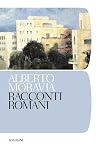
Roman Tales
by Alberto Moravia
On This Page
Description
19 short stories set in the poorer parts and slums of Rome and whose heros are the ordinary people - plumbers, washerwomen, thieves, small shopkeepers and prostitutes. newspapers in London and Paris. He now lives in Rome and is a well-established writer.Tags
Recommendations




















Member Recommendations


Member Reviews
In general the stories tell of commonplace events in each narrator's life, sometimes spanning only a single afternoon or evening. Taken together they provide a snapshot of the Roman working class, but they are perhaps even more interesting individually: each is a study of character, a portrayal of a small sample of the diversity of human experience, and an attempt to understand how people think, and why they behave the way they do. The overriding sense is one of unhappiness and loneliness, of people trapped partly by circumstances, and partly by their own character flaws. Continued
Alcuni racconti noiosi, altri piu' interessanti. Non terribili, ma l'enorme numero talvolta faceva si' che diventassero prevedibili dopo avere letto i primi.
Great stories about Roman life in the 1950s. I learned that Rome is Rome is Rome. It's called the eternal city for a reason.
Více jak šedesát povídek ze života drobných lidí Říma s nezakrývanou sympatií, s humorem plným soucitu a účasti. Výbor pořízen z knih Racconti romani (1954) a Nuovi racconti romani (1959).
Apr 6, 2022Slovak
Non amo molto i racconti brevi, ma queste storie, dodici per la precisione, di Alberto Moravia mi hanno letteralmente incantato. Lo scrittore romano racconta la quotidianità, con episodi che trovano nella loro semplicità il punto di forza. Sono vicende all'apparenza banali, ma nelle mani di Moravia diventano strumenti per indagare le debolezze, le illusioni, i desideri e le contraddizioni dell'uomo comune, con uno sguardo lucido, ironico e mai banale. Il tassista che si scontra con tre piccoli criminali, l’uomo che pensa di essere tradito, il cameriere che si ribella, il marito abbandonato dalla moglie perché noioso, ma anche tanti altri personaggi che popolano la città con le loro piccole miserie e i loro improvvisi slanci di show more dignità, nelle storie di Moravia emerge tutta la complessità dell'uomo, con le sue debolezze, i suoi slanci, le sue miserie e la sua ostinata voglia di andare avanti. Protagonista è Roma che pur stando sempre sullo sfondo del racconto diventa quasi un personaggio invisibile, caratterizzando ogni vicenda con le sue strade, i suoi odori, la sua vitalità. È la Roma popolare del secondo dopoguerra, fatta di trattorie, tram, cortili e periferie, osservata con un realismo che non rinuncia mai a una sottile vena di umanità. Lettura breve ma molto piacevole, che conferma ancora una volta la straordinaria capacità di Moravia di raccontare la complessità dell'esistenza attraverso gesti e situazioni solo apparentemente ordinarie. show less
Jul 23, 2026Italian
Balda 2
Nov 14, 2025Spanish
Nota de Pamen en 1ª pág.: Anexo al bandolerismo. xxxx xxxx. Pamen 21/3/96
Feb 9, 2024Spanish
Members
- Recently Added By
Lists

Italian Literature
558 works; 43 members
Author Information

475+ Works 10,556 Members
Born in Rome of Jewish-Roman Catholic parents, Moravia was not much affected by the "Fascist racial laws" until Mussolini's fall in 1943 and the consequent German occupation of Rome. Under fascism, Moravia published his first novel, The Time of Indifference (1929), at his own expense when he was only 22; yet it was a great success and remains his show more most characteristic work. He produced nothing to match it until after World War II, when he emerged as the leading Italian neorealist, publishing in rapid order The Woman of Rome (1947), Disobedience (1948), The Conformist (1951), Ghost at Noon (1948), Roman Tales (1954), and Two Women (1957). Many believe the latter is his best novel, telling of the efforts of a shopkeeper and her daughter, raped by Italy's liberators and learning to adapt themselves to the postwar new order. Moravia made a great stir in world literary circles after World War II by announcing his conversion to Roman Catholicism, which had given him solace and protection during the German occupation. Among his more recent publications is 1984. In 1941 Moravia married ~Elsa Morante. They separated in 1962. (Bowker Author Biography) show less
Awards and Honors
Awards
Distinctions
Series
Belongs to Publisher Series
rororo (705)
dtv zweisprachig (Italienisch)
Tascabili [Bompiani] (29)
Work Relationships
Is contained in
Common Knowledge
- Canonical title
- Roman Tales
- Original title
- Racconti romani
- Original publication date
- 1954
- People/Characters
- Dirce Toochi; Antonio Toochi; Milone; Proietti; Serafino; Rainmondo (show all 17); Giuseppina; Clementina; Tuda; Gerardo Mucchietto; Natale; Lionello; Alessandro; Vincenzo; Rinaldi; Teodora; Emilia
- Important places*
- Rome, Italië
- First words
- One morning in July I was dozing in the Piazza Melozzo da Forli, in the shade of the eucalyptus-tress, close to the dried:-p fountain, when two men and a woman came up and asked me to drive them to the Lido di Lavinio.
- Quotations
- 'You women are the ruin of humanity.'
- Last words
- (Click to show. Warning: May contain spoilers.)With a nose like his there was nothing to be done; the fault was entirely on my side, for not having realized that before.
*Some information comes from Common Knowledge in other languages. Click "Edit" for more information.
Classifications
Statistics
- Members
- 435
- Popularity
- 70,989
- Reviews
- 10
- Rating
- (3.88)
- Languages
- 15 — Czech, Danish, Dutch, English, Finnish, French, German, Hungarian, Italian, Multiple languages, Norwegian, Portuguese, Russian, Spanish, Swedish
- Media
- Paper, Ebook
- ISBNs
- 33
- ASINs
- 13