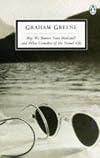
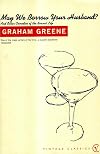
May We Borrow Your Husband?
by Graham Greene 
On This Page
Description
A collection of twelve disarmingly witty tales about the complexities of love and intimacy from "a storyteller of genius" (Evelyn Waugh). "The sense of the author at play dominates" Graham Greene's entertaining anthology as the masterful British author looks at love, lies, vanity, mortality, romantic obsessions, and seduction from a dozen sharply observed perspectives ( The New York Times ). A bored faculty wife looking for a fling discovers something more illuminating than sex; a jaded show more writer who eavesdrops on a pair of hopeful lovers feels compelled to relieve them of their foolish ideals and ambitions; a widow and a divorce?e commiserate in mourning for their lost men, only to rejoice in their freedom after two bottles of blanc de blancs; a young man devises a test of true love-to find a woman who won't laugh at the absurd circumstances of his father's death; and in the title story, an oblivious young bride honeymooning in Antibes encourages a friendship between a gay couple and her adventurous and handsome new husband. show lessTags
Recommendations
























Member Recommendations


Member Reviews
What is cowardice in the young is wisdom in the old, but all the same one can be ashamed of wisdom.
4.5 stars. This was a necessary return. If I felt younger at present, this collection would've spared me its wrench. Who are my favorites anymore, aside from Dylan? As to authors, my grasp remains firm around Balzac and Grass. Greene speaks to the faded but civilized self that keeps buggering along. These are stories of nostalgia and regret. The hapless find destiny and mumble as it passes them by. Greene made happy if wistful here. I do regard him as a master. There are reckless steps and then a measured glimpse. There's a salty sniff of locale -- most of the stories occur in the south of France, a powerful one in Jamaica.
4.5 stars. This was a necessary return. If I felt younger at present, this collection would've spared me its wrench. Who are my favorites anymore, aside from Dylan? As to authors, my grasp remains firm around Balzac and Grass. Greene speaks to the faded but civilized self that keeps buggering along. These are stories of nostalgia and regret. The hapless find destiny and mumble as it passes them by. Greene made happy if wistful here. I do regard him as a master. There are reckless steps and then a measured glimpse. There's a salty sniff of locale -- most of the stories occur in the south of France, a powerful one in Jamaica.
I had not read any of Greene's short fiction before this book. These stories are as advertised, except that the "comedies" of the title seems to be meant sardonically.
Collection of short stories, delightful to read. These little gems sparkle in their economy and brilliance of language. Greene's sophisticated humor consistently charms without cloying.
Una serie di racconti vivaci e ironici, il cui punto di forza sta nell'originalità delle trame e nello humour sofisticato, tipicamente inglese. Non ho mai letto nulla di Greene e so che ha spaziato in molti generi, dal thriller alla saggistica: devo dire che anche come scrittore di racconti se la cava benissimo, in poche pagine riesce a costruire delle storie accattivanti; probabilmente il merito è dei dialoghi brillanti, che danno verve alla storia e rendono i protagonisti credibili nelle loro eccentricità.
In conclusione un testo leggero, che però assolve in pieno alla sua funzione di divertire con intelligenza.
In conclusione un testo leggero, che però assolve in pieno alla sua funzione di divertire con intelligenza.
Mar 19, 2016 (Edited)Italian
Indeholder "May We Borrow Your Husband?", "Beauty", "Chagrin in Three Parts", "The Over-Night Bag", "Mortmain", "Cheap in August", "A Shocking Accident", "The Invisible Japanese Gentlemen", "Awful When You Think of It", "Doctor Crombie", "The Root of All Evil", "Two Gentle People".
"May We Borrow Your Husband?" handler om ???
"Beauty" handler om ???
"Chagrin in Three Parts" handler om ???
"The Over-Night Bag" handler om ???
"Mortmain" handler om ???
"Cheap in August" handler om ???
"A Shocking Accident" handler om ???
"The Invisible Japanese Gentlemen" handler om ???
"Awful When You Think of It" handler om ???
"Doctor Crombie" handler om ???
"The Root of All Evil" handler om ???
"Two Gentle People" handler om et midaldrende par, der tilfældigt show more mødes på en bænk i Parc Monceau i Paris. Hun er fransk, men taler glimrende engelsk. Han taler engelsk med et strejf amerikansk. Faktisk er han amerikaner, men har altid følt sig mere hjemme blandt englændere. Han hedder Henry C. Greaves og hun hedder Marie-Claire Duval. Begge er gift. De snakker sammen og han inviterer på middag på Brasserie Lorraine, hvis hun har lyst og tid. De får sole meunière og taler en smule sammen. Efterfølgende skilles de igen uden at udveksle adresser eller andet. Marie-Claire går hjem til lejligheden og kan høre at hendes mand hygger sig seksuelt med en anden mand i værelset ved siden af. Henry går hejm til sin kone, der er tåbeligt jaloux og bebrejder ham at han kommer tyve minutter senere hjem end aftalt. Man kan undre sig over hvorfor Henry og Marie-Claire begge bliver i så glædesløse ægteskaber, men der kan jo være andre fordele eller måske er det bare ud af ren pligtfølelse?
??? show less
"May We Borrow Your Husband?" handler om ???
"Beauty" handler om ???
"Chagrin in Three Parts" handler om ???
"The Over-Night Bag" handler om ???
"Mortmain" handler om ???
"Cheap in August" handler om ???
"A Shocking Accident" handler om ???
"The Invisible Japanese Gentlemen" handler om ???
"Awful When You Think of It" handler om ???
"Doctor Crombie" handler om ???
"The Root of All Evil" handler om ???
"Two Gentle People" handler om et midaldrende par, der tilfældigt show more mødes på en bænk i Parc Monceau i Paris. Hun er fransk, men taler glimrende engelsk. Han taler engelsk med et strejf amerikansk. Faktisk er han amerikaner, men har altid følt sig mere hjemme blandt englændere. Han hedder Henry C. Greaves og hun hedder Marie-Claire Duval. Begge er gift. De snakker sammen og han inviterer på middag på Brasserie Lorraine, hvis hun har lyst og tid. De får sole meunière og taler en smule sammen. Efterfølgende skilles de igen uden at udveksle adresser eller andet. Marie-Claire går hjem til lejligheden og kan høre at hendes mand hygger sig seksuelt med en anden mand i værelset ved siden af. Henry går hejm til sin kone, der er tåbeligt jaloux og bebrejder ham at han kommer tyve minutter senere hjem end aftalt. Man kan undre sig over hvorfor Henry og Marie-Claire begge bliver i så glædesløse ægteskaber, men der kan jo være andre fordele eller måske er det bare ud af ren pligtfølelse?
??? show less
Oct 8, 2023Danish
¿PUEDE PRESTARNOS A SU MARIDO? ♦ BELLEZA ♦ PENA EN TRES TIEMPOS ♦ EL BOLSO DE VIAJE ♦ MANO MUERTA ♦ MAS BARATO EN AGOSTO ♦ UN ACCIDENTE ABSURDO ♦ LOS INVISIBLES CABALLEROS JAPONESES ♦ TERRIBLE, CUANDO PIENSA UNO EN ELLO ♦ EL DOCTOR CROMBIE ♦ LA RAIZ DE TODO MAL ♦ DOS PERSONAS DELICADAS
Mar 5, 2020Spanish
Ratings
Members
- Recently Added By
Published Reviews
Elsewhere -- and he is unlikely to take this as praise -- he seems bent on showing us that he can take on Maugham at his own game and do it better. The comparison arises not merely from the fact that may of these stories are set in the south of France. It stems also from the nature of the narrator, the elderly author, his sensual appetites attenuated to the appreciation of good wine and good show more cheese, who observes the passing scene and records it with a sort of romantic cynicism. So. in the title story, the narrator (working out of season at Antibes on a biography of the Earl of Rochester) watches two extremely unpleasant homosexuals seduce the male half of a honeymoon couple and make all the necessary arrangements for the taking over of their lives. show less
added by John_Vaughan
Author Information

356+ Works 87,436 Members
Born in 1904, Graham Greene was the son of a headmaster and the fourth of six children. Preferring to stay home and read rather than endure the teasing at school that was a by-product of his father's occupation, Greene attempted suicide several times and eventually dropped out of school at the age of 15. His parents sent him to an analyst in show more London who recommended he try writing as therapy. He completed his first novel by the time he graduated from college in 1925. Greene wrote both entertainments and serious novels. Catholicism was a recurring theme in his work, notable examples being The Power and the Glory (1940) and The End of the Affair (1951). Popular suspense novels include: The Heart of the Matter, Our Man in Havana and The Quiet American. Greene was also a world traveler and he used his experiences as the basis for many books. One popular example, Journey Without Maps (1936), was based on a trip through the jungles of Liberia. Greene also wrote and adapted screenplays, including that of the 1949 film, The Third Man, which starred Orson Welles. He died in Vevey, Switzerland in 1991. (Bowker Author Biography) show less
Graham Greene has a Legacy Library. Legacy libraries are the personal libraries of famous readers, entered by LibraryThing members from the Legacy Libraries group.
Some Editions
Awards and Honors
Notable Lists
Series
Belongs to Publisher Series
Work Relationships
Common Knowledge
- Canonical title
- May We Borrow Your Husband?
- Original title
- May We Borrow Your Husband? : and other comedies of the sexual life
- Alternate titles*
- Mogen we je man even lenen? : en andere kleine komedies over seksuele verhoudingen
- Original publication date
- 1967
- Important places*
- Costa Azzurra, Francia; Francia
- Epigraph
- Cling to the virtues normally
manifested by all Lebanese
PRIME MINISTER SAMI-AS-SULH - First words
- I never heard her called anything else but Poopy, either by her husband or by the two men who became their friends.
- Quotations
- Frau Schmidt had reached an age when she had a great yearning to sit
quietly with another woman knitting something or other for her grandchildren
and talking about their latest maladies. You can't do that at ease with a... (show all)
man continually on the go to a cellar for another litre. There's a man's
atmosphere and a woman's atmosphere, and they don't mix ...
Frau Schmidt took her trouble to Frau Muller who suffered in just the same
manner as herself. Frau Muller was a stronger type of woman and she set out
to build an organisation. She found four other women starved of female company and female interests, and they
arranged to forgather once a week with their sewing and take their evening
coffee together. They took it in turn to act hostess and make the cakes. - Last words*
- (Click to show. Warning: May contain spoilers.)Era la più grande protesta che si fosse mai permesso di fare contro la vita.
(Due nobili persone) - Original language
- English
*Some information comes from Common Knowledge in other languages. Click "Edit" for more information.
Classifications
Statistics
- Members
- 672
- Popularity
- 42,886
- Reviews
- 6
- Rating
- (3.56)
- Languages
- 12 — Catalan, Czech, Dutch, English, French, German, Italian, Norwegian (Bokmål), Polish, Portuguese, Spanish, Swedish
- Media
- Paper, Ebook
- ISBNs
- 19
- ASINs
- 26