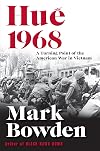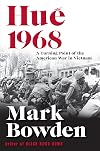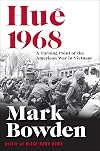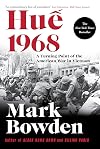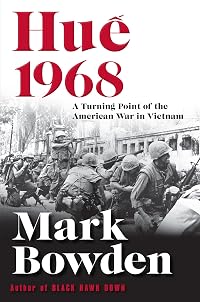
Hue 1968: A Turning Point of the American War in Vietnam
by Mark Bowden
On This Page
Description
New York Times Bestseller A Los Angeles Times Book Prize Finalist in HistoryWinner of the 2018 Marine Corps Heritage Foundation Greene Award for a distinguished work of nonfiction
"An extraordinary feat of journalism . . . full of emotion and color."—Karl Marlantes, Wall Street Journal
The first battle book from Mark Bowden since his #1 New York Times bestseller Black Hawk Down, Hue 1968 is the story of the centerpiece of the Tet Offensive and a turning point in the American War in show more Vietnam. In the early hours of January 31, 1968, the North Vietnamese launched over one hundred attacks across South Vietnam in what would become known as the Tet Offensive. The lynchpin of Tet was the capture of Hue, Vietnam?s intellectual and cultural capital, by 10,000 National Liberation Front troops who descended from hidden camps and surged across the city of 140,000. Within hours the entire city was in their hands save for two small military outposts. American commanders refused to believe the size and scope of the Front?s presence, ordering small companies of marines against thousands of entrenched enemy troops. After several futile and deadly days, Lieutenant Colonel Ernie Cheatham would finally come up with a strategy to retake the city, block by block and building by building, in some of the most intense urban combat since World War II.
With unprecedented access to war archives in the U.S. and Vietnam and interviews with participants from both sides, Bowden narrates each stage of this crucial battle through multiple viewpoints. Played out over 24 days and ultimately costing 10,000 lives, the Battle of Hue was by far the bloodiest of the entire war. When it ended, the American debate was never again about winning, only about how to leave. Hue 1968 is a gripping and moving account of this pivotal moment.
. show less
Tags
Recommendations







Member Reviews
“But there was blame enough for both sides. The storm of war blew flat all semblance of law, logic, and decency. To soldiers there was a kind of order - causes and lines to be defended, soldiers who were either friend or enemy - but to civilians it was just savagery”
You know, as a real deal principled Marxist (wink wink), I should be staunchly and vehemently against this sort of thing. The American War in Vietnam was a reprehensible blot on the already blot-ridden history of “Western Civilisation” (bearing in mind that nearly all of history is, of course, constituted almost wholly by blots - but we have been particularly naughty in this regard). Bowden does try his hand at bipartisanship, although it does seem that for large show more swathes of the narrative the soldiers from the Front are just portrayed as cannon fodder for our good ol’ boys (admittedly the battle scenes, the descriptions of clearing houses and city tactics were enthralling each and every time - whenever a Zippo or an Onto is whipped out you kinda go ‘oh shit it’s go time fellas’) . I’m amazed that in the postscript he has to mention that he has received a fair amount of criticism for trying to don such a perspective, as a great deal of emphasis is placed on the North Vietnamese’s barbarity and skill - there’s no justification for anything they do, aside from showing how they wanted to stretch out the battle to drain the US’ motivation to fight (attrition of the national will). Bowden goes with the age old ‘lions led by donkeys’ approach, with General Westmoreland being portrayed as the biggest, most negligent dipshit in the armed forces at that time (Khe Sanh forever à venir).
Taking a critical stance toward the American War as an established prerequisite (unjustified shitshow, as one source has it the US were ‘effective heirs to colonial authority’), you still have to take your hats off to the heroism shown by some of the American troops out there, at least within the context of Hue provided here. Medics and amateur teenage soldiers alike threw themselves down to retrieve their wounded and dying fellow men, often catching stray rounds to the head and neck and dying where they stood. Their sheer balls-to-the-wall will to dig in their heels and not retreat when faced with incredibly unfavourable odds, surrounded on all sides by overwhelming enemy forces, is truly admirable. I do think that particularity can transcend the universal, the universal here being an ideological lens through which to perceive and sift events (not to ascertain some always-already preformed, holistic meaning, but instead a principled method of analysis/organon that provides valid formulations which are authentically wrought from events as and when they unfold). What am I saying here in concrete terms? American soldiers participating in an unjust war did good things, and can indeed be worthy of veneration and respect. Barbarism abounded, but the good stood as an undercurrent, the wellspring of the ethical came up, as it always does. We do not denigrate our ideological commitments by recognising valour, or perhaps we do, and the particular, the concrete situation, easily trumps the importance of ideological consistency (hell I've been reading Levinas, give me a break).
I also think, and this must have occurred somewhere and I just haven’t done the necessary research, that there needs to be serious thought dedicated to why the nhan dan (’the people’) didn’t rise up and support the effort on behalf of the Viet Cong? It can’t just be marked down to false consciousness, and the population of Hue can’t be branded as vulgar reactionaries, class-traitors, anti-revolutionaries etc. etc. something fundamentally wrong occurred, a massive miscalculation. Bowden asserts that it came down to pure survival instinct, and admits that the fight in Hue did show a chink in the armour when it came to the legitimacy of the South Vietnamese regime - they now had to make a choice, and then history did its thing and wrote itself (what is Saigon called nowadays, I hear you proclaim - and I’m also aware that ‘chink in the armour’ probably isn’t the most appropriate metaphor given the context… tut tut tut). Anyway, that’s enough thinking from me. Shoutout to my dawg Ernie Cheatham, that fucker was as hard as nails (the principled commie and love of Shane Gillis semper fi fuck yeah attitude within me are currently at war, who knows who will win??).
The Americans should have just listened to good old Uncle Ho - this wasn’t a question of containment and communism, it was one of national self-determination against colonial oppression, a cause the US (if it can truly say with a straight face that it rallies behind the ideals of freedom, liberty and all of its derivatives) should have been a proponent of. Pretty great book. show less
You know, as a real deal principled Marxist (wink wink), I should be staunchly and vehemently against this sort of thing. The American War in Vietnam was a reprehensible blot on the already blot-ridden history of “Western Civilisation” (bearing in mind that nearly all of history is, of course, constituted almost wholly by blots - but we have been particularly naughty in this regard). Bowden does try his hand at bipartisanship, although it does seem that for large show more swathes of the narrative the soldiers from the Front are just portrayed as cannon fodder for our good ol’ boys (admittedly the battle scenes, the descriptions of clearing houses and city tactics were enthralling each and every time - whenever a Zippo or an Onto is whipped out you kinda go ‘oh shit it’s go time fellas’) . I’m amazed that in the postscript he has to mention that he has received a fair amount of criticism for trying to don such a perspective, as a great deal of emphasis is placed on the North Vietnamese’s barbarity and skill - there’s no justification for anything they do, aside from showing how they wanted to stretch out the battle to drain the US’ motivation to fight (attrition of the national will). Bowden goes with the age old ‘lions led by donkeys’ approach, with General Westmoreland being portrayed as the biggest, most negligent dipshit in the armed forces at that time (Khe Sanh forever à venir).
Taking a critical stance toward the American War as an established prerequisite (unjustified shitshow, as one source has it the US were ‘effective heirs to colonial authority’), you still have to take your hats off to the heroism shown by some of the American troops out there, at least within the context of Hue provided here. Medics and amateur teenage soldiers alike threw themselves down to retrieve their wounded and dying fellow men, often catching stray rounds to the head and neck and dying where they stood. Their sheer balls-to-the-wall will to dig in their heels and not retreat when faced with incredibly unfavourable odds, surrounded on all sides by overwhelming enemy forces, is truly admirable. I do think that particularity can transcend the universal, the universal here being an ideological lens through which to perceive and sift events (not to ascertain some always-already preformed, holistic meaning, but instead a principled method of analysis/organon that provides valid formulations which are authentically wrought from events as and when they unfold). What am I saying here in concrete terms? American soldiers participating in an unjust war did good things, and can indeed be worthy of veneration and respect. Barbarism abounded, but the good stood as an undercurrent, the wellspring of the ethical came up, as it always does. We do not denigrate our ideological commitments by recognising valour, or perhaps we do, and the particular, the concrete situation, easily trumps the importance of ideological consistency (hell I've been reading Levinas, give me a break).
I also think, and this must have occurred somewhere and I just haven’t done the necessary research, that there needs to be serious thought dedicated to why the nhan dan (’the people’) didn’t rise up and support the effort on behalf of the Viet Cong? It can’t just be marked down to false consciousness, and the population of Hue can’t be branded as vulgar reactionaries, class-traitors, anti-revolutionaries etc. etc. something fundamentally wrong occurred, a massive miscalculation. Bowden asserts that it came down to pure survival instinct, and admits that the fight in Hue did show a chink in the armour when it came to the legitimacy of the South Vietnamese regime - they now had to make a choice, and then history did its thing and wrote itself (what is Saigon called nowadays, I hear you proclaim - and I’m also aware that ‘chink in the armour’ probably isn’t the most appropriate metaphor given the context… tut tut tut). Anyway, that’s enough thinking from me. Shoutout to my dawg Ernie Cheatham, that fucker was as hard as nails (the principled commie and love of Shane Gillis semper fi fuck yeah attitude within me are currently at war, who knows who will win??).
The Americans should have just listened to good old Uncle Ho - this wasn’t a question of containment and communism, it was one of national self-determination against colonial oppression, a cause the US (if it can truly say with a straight face that it rallies behind the ideals of freedom, liberty and all of its derivatives) should have been a proponent of. Pretty great book. show less
While Max Hastings attempted to do the impossible and cover the entire 14 years plus of the American War in Indochina, Mark Bowden humbles himself before the historic edifice and accepts that a focus on Hue alone will convey all you need to know. He’s not far wrong.
Hue is in many ways a microcosm of the entire farcical episode. It contains incredible perseverence from both sides. From the Vietnamese fighting to liberate their country from control by a foreign power, it shows their dedication, courage and commitment in the face of overwhelming odds. For the US and South Vietnamese forces it shows dedication and courage in the face of overwhelming hubris, self-aggrandisement and prejudice. For both, it was fought in the face of show more overwhelming self-deception that their cause was in any way actually allied to the propaganda they spewed forth.
Hue had, until January 1968, escaped the conflict relatively unscathed. It was chosen by the Viet Cong because of its historical significance as a major target in the meticulously planned and executed Tet Offensive. They very nearly captured the entire city in 24 hours.
Crucially, however, they failed to completely eradicate two small bases belonging to the South Vietnamese and the US military despite having the forces to do so. It was from these two small bases that their enemies mounted campaign after campaign that eventually, after 31 days’ of fighting managed to drive them into retreat. By that point however, the US government had suffered such a pounding in its national press that their withdrawal from the entire conflict was inevitable.
The strength of Bowden’s work is the detail in the telling of individual stories. You follow people from both sides, civilian and military, young and old. You see what they suffered, you follow how they have suffered since and understand that they suffer still. Bowden builds the battle out of these intimate episodes and thus gives a perspective you never quite get from Hastings’ tome.
The book is an excellent read; don’t pick it up at bedtime if you’ve got to be up early the next day. I’d recommend a couple of things to supplement it: firstly, make sure you get yourself a good supply of photography from the web. The images in the book are good, but Hue provided some of the very best war photography including the not-to-be-missed works of Don McCullin. Secondly, when you get to the part where Walter Cronkite visits, it’s worth pausing to watch his documentary on YouTube. There aren’t many films which have been so influential in world politics as that one ultimately was.
If there’s a weakness in Bowden’s book it’s that it is balanced more heavily in the telling of the US story. This is inevitable not only because of the simple fact that it’s a tale in English, but from the fact that the vast majority of stories from the Viet Cong side are very hard to get hold of.
Despite this, in comparison to Hastings’ Vietnam, the reader gets far more insight into what the battle was like for the Viet Cong. This is essential to redress the balance in English literature of the US side of the story (critical or otherwise). As it was the Viet Cong who were the underdogs and the ones who had a legitimate cause, the fact that some, like veteran Nicholas Warr, condemn Bowden for this seems ludicrous to me.
That the ironically named Warr has the ability to correct any errors in his story by publishing on his own website only serves to illustrate the reason why Bowden’s telling of the socialist side of things is important. When those who fought with the Viet Cong do tell the truth of their experiences, even today they risk ostracism in a nation that has fought and died for its own choice of socialist ideals. Bowden admits as much in his epilogue. Vietnam chose national freedom over freedom of the individual. Warr’s vocal criticism only serves to illustrate the lack of genuine desire US forces had to actually liberate the voice of the individual Vietnamese from socialism. If he truly wants them to experience democracy, he would applaud any efforts to tell their own tale show less
Hue is in many ways a microcosm of the entire farcical episode. It contains incredible perseverence from both sides. From the Vietnamese fighting to liberate their country from control by a foreign power, it shows their dedication, courage and commitment in the face of overwhelming odds. For the US and South Vietnamese forces it shows dedication and courage in the face of overwhelming hubris, self-aggrandisement and prejudice. For both, it was fought in the face of show more overwhelming self-deception that their cause was in any way actually allied to the propaganda they spewed forth.
Hue had, until January 1968, escaped the conflict relatively unscathed. It was chosen by the Viet Cong because of its historical significance as a major target in the meticulously planned and executed Tet Offensive. They very nearly captured the entire city in 24 hours.
Crucially, however, they failed to completely eradicate two small bases belonging to the South Vietnamese and the US military despite having the forces to do so. It was from these two small bases that their enemies mounted campaign after campaign that eventually, after 31 days’ of fighting managed to drive them into retreat. By that point however, the US government had suffered such a pounding in its national press that their withdrawal from the entire conflict was inevitable.
The strength of Bowden’s work is the detail in the telling of individual stories. You follow people from both sides, civilian and military, young and old. You see what they suffered, you follow how they have suffered since and understand that they suffer still. Bowden builds the battle out of these intimate episodes and thus gives a perspective you never quite get from Hastings’ tome.
The book is an excellent read; don’t pick it up at bedtime if you’ve got to be up early the next day. I’d recommend a couple of things to supplement it: firstly, make sure you get yourself a good supply of photography from the web. The images in the book are good, but Hue provided some of the very best war photography including the not-to-be-missed works of Don McCullin. Secondly, when you get to the part where Walter Cronkite visits, it’s worth pausing to watch his documentary on YouTube. There aren’t many films which have been so influential in world politics as that one ultimately was.
If there’s a weakness in Bowden’s book it’s that it is balanced more heavily in the telling of the US story. This is inevitable not only because of the simple fact that it’s a tale in English, but from the fact that the vast majority of stories from the Viet Cong side are very hard to get hold of.
Despite this, in comparison to Hastings’ Vietnam, the reader gets far more insight into what the battle was like for the Viet Cong. This is essential to redress the balance in English literature of the US side of the story (critical or otherwise). As it was the Viet Cong who were the underdogs and the ones who had a legitimate cause, the fact that some, like veteran Nicholas Warr, condemn Bowden for this seems ludicrous to me.
That the ironically named Warr has the ability to correct any errors in his story by publishing on his own website only serves to illustrate the reason why Bowden’s telling of the socialist side of things is important. When those who fought with the Viet Cong do tell the truth of their experiences, even today they risk ostracism in a nation that has fought and died for its own choice of socialist ideals. Bowden admits as much in his epilogue. Vietnam chose national freedom over freedom of the individual. Warr’s vocal criticism only serves to illustrate the lack of genuine desire US forces had to actually liberate the voice of the individual Vietnamese from socialism. If he truly wants them to experience democracy, he would applaud any efforts to tell their own tale show less
It's almost exactly 50 years from the Tet Offensive, one of the most decisive and misunderstood campaigns in history. Tet was based on delusion on both sides. The Communist leadership believed that the people of South Vietnam were primed to join a general offensive and overthrow the puppet government. General Westmoreland and MACV were sure that the Communists were on the ropes, and that the key battle was at the remote firebase of Khe Sanh. On the Vietnamese New Year, Jan 30 1968, VC units backed by NVA regulars launched attacks across South Vietnam, showing that the Communists were capable of massive organized operations with exceptional operational security. Most of these assaults were repelled, but the city of Hue fell to the show more Communists, with small pockets of resistance around the MACV compound in the south of the city, and the ARVN headquarters in the northern parts of the 19th century citadel.
What followed could only be described as a fiasco on the American side. Marine companies were fed into the city piecemeal, and told to expect only light resistance. What they found were Communists fighters dug in, with ample supplies and reinforcements, willing to contest every block and building. Bad weather and restrictive rules of engagement prevent the Marines from using their artillery and air support at first, though by the end of the battle shells were falling freely, wrecking 80% of the city. The Marines hadn't done any urban combat since Seoul in 1950, but they relearned fast. M48 Patton tanks become mobile bunkers. The Ontos tank destroyer, armed with six 106mm recoilless rifles, would scoot out, demolish a building with a salvo, an retreat. Marines learned to 'walk through walls', avoiding doors and intersections by blasting holes in the buildings. Over 24 grueling days, they forced the Communist forces to retreat.
Both sides claimed victory, but the surest losers were the civilians of Hue. The Communists wasted no time setting up revolutionary tribunals and executing "enemies of the people". The Americans and South Vietnamese had no formal policies of execution, but their lavish use of firepower did not discriminate between fighting positions and refugees sheltering in bunkers. Suspicious GIs shot first and asked questions never, gunning down people searching for food or trying to cross the lines. Thousands of civilians were murdered by their supposed "liberators". Westmoreland's reputation, tarnished by Tet, was done in by the Battle of Hue and the Siege of Khe Sanh.
Bowden is a talented author, and he makes the action come alive again, putting you there with the Marines and the Vietnamese. This is the authoritative account of the Battle of Hue, and a required part of any Vietnam War book collection. show less
What followed could only be described as a fiasco on the American side. Marine companies were fed into the city piecemeal, and told to expect only light resistance. What they found were Communists fighters dug in, with ample supplies and reinforcements, willing to contest every block and building. Bad weather and restrictive rules of engagement prevent the Marines from using their artillery and air support at first, though by the end of the battle shells were falling freely, wrecking 80% of the city. The Marines hadn't done any urban combat since Seoul in 1950, but they relearned fast. M48 Patton tanks become mobile bunkers. The Ontos tank destroyer, armed with six 106mm recoilless rifles, would scoot out, demolish a building with a salvo, an retreat. Marines learned to 'walk through walls', avoiding doors and intersections by blasting holes in the buildings. Over 24 grueling days, they forced the Communist forces to retreat.
Both sides claimed victory, but the surest losers were the civilians of Hue. The Communists wasted no time setting up revolutionary tribunals and executing "enemies of the people". The Americans and South Vietnamese had no formal policies of execution, but their lavish use of firepower did not discriminate between fighting positions and refugees sheltering in bunkers. Suspicious GIs shot first and asked questions never, gunning down people searching for food or trying to cross the lines. Thousands of civilians were murdered by their supposed "liberators". Westmoreland's reputation, tarnished by Tet, was done in by the Battle of Hue and the Siege of Khe Sanh.
Bowden is a talented author, and he makes the action come alive again, putting you there with the Marines and the Vietnamese. This is the authoritative account of the Battle of Hue, and a required part of any Vietnam War book collection. show less
This book by Mark Bowden is an absolutely stunning one. I am not familiar with the details of the Vietnam war, and this book brings the crucial battle at Hue to life.
It brings it to a life that makes the horrors of war immediate and very real to all of us. The writing is vivid. While he does write from an American perspective, he does show considerable respect for the Vietnamese.
Through the telling of the tale of American bravery, we come across some heroic characters and are reminded of the perfidy of politicians of all hues.
A bullet wound, as one soldier mentions, is not a neat round hole that we see in movies. It is mangled limbs, shattered lungs, skulls blown off. War is shitting in the trenches, not bathing, shaving, living in show more constant fear that the next minute will be your last.
The men who fight are the ones who deserve glory and respect. They are, sadly, expendable.
This is a brilliant book. show less
It brings it to a life that makes the horrors of war immediate and very real to all of us. The writing is vivid. While he does write from an American perspective, he does show considerable respect for the Vietnamese.
Through the telling of the tale of American bravery, we come across some heroic characters and are reminded of the perfidy of politicians of all hues.
A bullet wound, as one soldier mentions, is not a neat round hole that we see in movies. It is mangled limbs, shattered lungs, skulls blown off. War is shitting in the trenches, not bathing, shaving, living in show more constant fear that the next minute will be your last.
The men who fight are the ones who deserve glory and respect. They are, sadly, expendable.
This is a brilliant book. show less
I really love Bowden’s writing style. I’m a huge fan of [b:Black Hawk Down: A Story of Modern War|55403|Black Hawk Down A Story of Modern War|Mark Bowden|https://images.gr-assets.com/books/1442149156s/55403.jpg|1041952] and I wasn’t disappointed by this one either. Bowden tells the story of one of the pivotal battles of the Vietnam war utilizing eye witness account, news stories and primary source information from archives and libraries. It was the first urban battle fought by the US military since the Korean War over 15 years prior. The story is told from both sides and also has some insight from the civilian perspective. There are stories of incredible individual bravery and also just plain luck, leaving the reader with the show more wonder how anyone survived this battle.
Bowden does a good job of summarizing the political environment surrounding the battle and the attitude in general of the American public to the war in late ’67/early ’68. The Tet offensive caught the American leadership completely by surprise and a week into the battle were still in denial as to the scale of the attack on Hue. Wesmoreland isn’t portrayed in a particularly good light, his repeated and blatant denials of what was really going on somewhat unbelievable but plainly reflected in the TV interviews and declassified communiques of the time. One of Bowden’s conclusions and main points is that the Tet offensive and its aftermath would forever change America’s attitude toward her leaders - they would never again be blindly trusted.
I highly recommend this book. If one is interested in the entire conflict, watch the excellent eighteen or so hour PBS documentary series on the Vietnam War produced by Ken Burns and Lynn Novick. A whole episode is spent on Tet, with pretty much the same conclusions as Bowden. show less
Bowden does a good job of summarizing the political environment surrounding the battle and the attitude in general of the American public to the war in late ’67/early ’68. The Tet offensive caught the American leadership completely by surprise and a week into the battle were still in denial as to the scale of the attack on Hue. Wesmoreland isn’t portrayed in a particularly good light, his repeated and blatant denials of what was really going on somewhat unbelievable but plainly reflected in the TV interviews and declassified communiques of the time. One of Bowden’s conclusions and main points is that the Tet offensive and its aftermath would forever change America’s attitude toward her leaders - they would never again be blindly trusted.
I highly recommend this book. If one is interested in the entire conflict, watch the excellent eighteen or so hour PBS documentary series on the Vietnam War produced by Ken Burns and Lynn Novick. A whole episode is spent on Tet, with pretty much the same conclusions as Bowden. show less
Mark Bowden's recently published Hue 1968 is a first rate history of the battle for Hue City during Tet in 1968 that also provides quite a solid context for the overall war. Bowden is an excellent writer and the book is accessible and engrossing. Charges that the work is too "scholarly" or "academic," are flat out wrong. Hue 1968 is better than that. It also employs a journalistic methodology of focusing on multiple individual storylines that are, in a word, captivating.
Best of all, this is a fair history of the battle for Hue, giving ample time to participants on both sides. For example, it gives space to understanding the self delusions of the leadership of both sides, the American generals and politicians as well as the North show more Vietnamese. While Gen. Westmoreland had prepared for an assault in all the wrong places, the North Vietnamese fooled themselves into believing their own propaganda that the Tet offensive would generate a general uprising among the populace that would push the United States out of Vietnam.
If there is one fault with the book it is that much of the good information given in the endnotes should be included the main text. Bowden's decision to avoid or gently introduce the myriad acronyms and source details is understandable. Vietnam, for the Americans, was a war unmatched in its use of official acronyms and military slang. And Bowden doesn't want the reader to get bogged down in them and lose interest. But as a result, he also leaves much important information to be lost in the endnotes, which 99 percent of his readers will never touch. The best example is AP photographer Eddie Adams' famous photo of South Vietnam's national police chief shooting a handcuffed Viet Cong prisoner in the head. As Bowden explains in the notes, the executed prisoner had himself just killed "scores" of innocent civilians, including an 80 year old woman. This is information I would bet has never been given to almost every person who has seen the photo since it was first delivered to worldwide audiences in 1968. show less
Best of all, this is a fair history of the battle for Hue, giving ample time to participants on both sides. For example, it gives space to understanding the self delusions of the leadership of both sides, the American generals and politicians as well as the North show more Vietnamese. While Gen. Westmoreland had prepared for an assault in all the wrong places, the North Vietnamese fooled themselves into believing their own propaganda that the Tet offensive would generate a general uprising among the populace that would push the United States out of Vietnam.
If there is one fault with the book it is that much of the good information given in the endnotes should be included the main text. Bowden's decision to avoid or gently introduce the myriad acronyms and source details is understandable. Vietnam, for the Americans, was a war unmatched in its use of official acronyms and military slang. And Bowden doesn't want the reader to get bogged down in them and lose interest. But as a result, he also leaves much important information to be lost in the endnotes, which 99 percent of his readers will never touch. The best example is AP photographer Eddie Adams' famous photo of South Vietnam's national police chief shooting a handcuffed Viet Cong prisoner in the head. As Bowden explains in the notes, the executed prisoner had himself just killed "scores" of innocent civilians, including an 80 year old woman. This is information I would bet has never been given to almost every person who has seen the photo since it was first delivered to worldwide audiences in 1968. show less
A graphic and tremendously well researched book on the battle for the city of Hue which the author sees as the crucial turning point (the Tet Offensive) that will seal America's fate in the Vietnam War. Both sides misjudged the attack - the Communists believing the citizenry would rise up and support them and the American leadership misjudging the abilities and commitment of the North Vietnamese. If there is a villain it is General Westmoreland that feeds President Johnson and the American people over optimistic information throughout. A great study.
Members
- Recently Added By
Lists

Best Military History Books
123 works; 21 members

BEST BOOKS TO UNDERSTAND XX CENTURY'S HISTORY
63 works; 3 members

The Cold War
54 works; 2 members

2018 Notable Books for Adults
26 works; 4 members

Books About the Vietnam War
15 works; 6 members
Author Information

23+ Works 10,866 Members
Mark Bowden has been a reporter at The Philadelphia Inquirer for twenty-one years and has won many national awards for his writing. He is the author of "Black Hawk Down," "Bringing the Heat," "Doctor Dealer", "Killing Pablo: The Hunt for the World's Greatest Outlaw." and, more recently, The Finish: "The Killing of Osama bin Laden", and Hue 1968: A show more Turning point of the American war in Vietnam. Bowden has also written for Talk, Men's Journal, Sports Illustrated, Rolling Stone and Playboy, among others. The original series of articles which became "Black Hawk Down" earned him the Overseas Press Club's Hal Boyle Award, and made him a finalist for the NBA in nonfiction. (Bowker Author Biography) show less
Awards and Honors
Awards
Common Knowledge
- Original title
- Hue 1968: A Turning Point of the American War in Vietnam
- Original publication date
- 2017
- Important places
- Hue, Vietnam
- Important events
- Battle of Hue (1968); Tet Offensive (1968); Vietnam War
- Epigraph
- Wisdom comes to us when it can no longer do any good.
- Gabriel Garcia Marquez - Dedication
- For Gene Roberts
- First words
- Hours before daylight on January 31, 1968, the first day of Tet, the Lunar New Year, nearly ten thousand North Vietnamese Army (NVA) and Vietnam Cong (VC) troops descended from hidden camps in the Central Highlands and overra... (show all)n the city of Hue, the historical capital of Vietnam.
- Last words
- (Click to show. Warning: May contain spoilers.)But no one outside his immediate family and friends ever recognized that the stricken marine with the hole in his chest on that tank in Life magazine was Alvin Bert Grantham, and that he, unlike so many other of his fellow marines and soldiers, lived to tell the tale.
(Click to show. Warning: May contain spoilers.)(Epilogue) For all these reasons, this book is dedicated to him. - Original language
- English US
Classifications
- Genres
- History, General Nonfiction, Nonfiction
- DDC/MDS
- 959.704 — History & geography History of Asia Southeast Asia: Myanmar, Thailand, Laos, Cambodia, Vietnam Vietnam 1949-
- LCC
- DS557.8 .H83 .B68 — History of Europe, Asia, Africa and Oceania Asia History of Asia Southeast Asia French Indochina Vietnam. Annam Vietnamese Conflict
- BISAC
Statistics
- Members
- 795
- Popularity
- 35,072
- Reviews
- 19
- Rating
- (4.32)
- Languages
- English, Italian, Spanish
- Media
- Paper, Audiobook, Ebook
- ISBNs
- 13
- ASINs
- 4