On This Page
Description
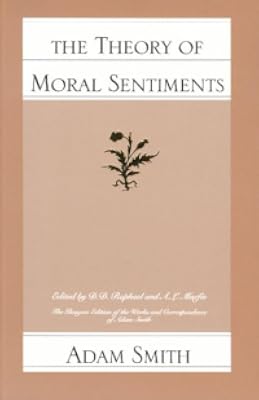
Adam Smith's Theory of Moral Sentiments (1759) lays the foundation for a general system of morals, and is a text of central importance in the history of moral and political thought. It presents a theory of the imagination which Smith derived from David Hume but which encompasses an idea of sympathy that in some ways is more sophisticated than anything in Hume's philosophy. By means of sympathy and the mental construct of an impartial spectator, Smith formulated highly original theories of show more conscience, moral judgment and the virtues. The enduring legacy of his work is its reconstruction of the Enlightenment idea of a moral, or social, science encompassing both political economy and the theory of law and government. This 2002 volume offers a new edition of the text with clear and helpful notes for the student reader, together with a substantial introduction that sets the work in its philosophical and historical context. show lessTags
Recommendations






















Member Reviews
The mind, therefore, is rarely so disturbed, but that the company of a friend will restore it to some degree of tranquility and sedateness. The breast is, in some measure, calmed and composed the moment we come into his presence. We are immediately put in mind of the light in which he will view our situation, and we begin to view it ourselves in the same light; for the effect of sympathy is instantaneous.
The Theory of Moral Sentiments is not what Smith is known for, but it should be. In it, he argues comprehensively that to the extent that we sympathize with the passions of another person, we find their passions proper. Specifically, we "approve of another man's judgment, not as something useful, but as right, as accurate, as agreeable show more to truth and reality: and it is evident we attribute those qualities to it for no other reason but because we find that it agrees with our own."
I especially appreciate Smith's observation that our desire for praise is largely derived from our desire for praiseworthiness, not the other way around. When we impartially imagine our own conduct or character as praiseworthy, and it is subsequently praised by others, we feel confirmed and reassured; however, we feel our blameworthy actions no more praiseworthy simply because they were improperly praised by others.
As other reviewers have noted, the prose is certainly 18th century, but articulate and clear nonetheless. Smith covers sympathy's role in determining propriety, merit, duty, justice, and utility. He is commonly understood as utilitarian of sorts, but this is not truly accurate. His version of moral sentimentalism is something more akin to a hybrid of virtue ethics and utilitarianism—almost a precursor to modern day social intuitionism.
I definitely recommend TMS for anyone who is interested in less rigid moral systems that reflect the indeterminate and vague nature of human morality. show less
The Theory of Moral Sentiments is not what Smith is known for, but it should be. In it, he argues comprehensively that to the extent that we sympathize with the passions of another person, we find their passions proper. Specifically, we "approve of another man's judgment, not as something useful, but as right, as accurate, as agreeable show more to truth and reality: and it is evident we attribute those qualities to it for no other reason but because we find that it agrees with our own."
I especially appreciate Smith's observation that our desire for praise is largely derived from our desire for praiseworthiness, not the other way around. When we impartially imagine our own conduct or character as praiseworthy, and it is subsequently praised by others, we feel confirmed and reassured; however, we feel our blameworthy actions no more praiseworthy simply because they were improperly praised by others.
As other reviewers have noted, the prose is certainly 18th century, but articulate and clear nonetheless. Smith covers sympathy's role in determining propriety, merit, duty, justice, and utility. He is commonly understood as utilitarian of sorts, but this is not truly accurate. His version of moral sentimentalism is something more akin to a hybrid of virtue ethics and utilitarianism—almost a precursor to modern day social intuitionism.
I definitely recommend TMS for anyone who is interested in less rigid moral systems that reflect the indeterminate and vague nature of human morality. show less
Like many great thinkers who are scorned by the disciples of collectivism, Adam Smith (1723-1790) displays a depth of understanding that is rather alien to the white noise that too often passes for our intellectual life. Anyone familiar with his work knows that his precision and the organization of his arguments border on perfection.
Another aspect of his writing that stands out is his acknowledgement of reality. This is not to be taken for granted; not long after his death, the flirtation with Socialism began, forever scarring the cultural landscape.
Smith was not interested in fantasies, but rather in improving the lot of real people, via a truly scientific analysis of human society. His legacy was inherited by thinkers such as show more Tocqueville and Hayek, but unfortunately it did not make deep inroads into the dominant strains of 20th century social science.
Smith is best known for his magnum opus, "The Wealth of Nations." His other writing should not be neglected. This includes, of course, "The Theory of Moral Sentiments." Different in tone, it is thoroughly Smithian in its depth and its approach to reality. Here, his grasp of the entire range of the human condition shines forth in all its brilliance.
Typical is his juxtaposition of "beneficence" (love, kindness, and mercy) with justice. Justice, says Smith, must be ranked as a higher priority. His reasoning is as follows. Man, being the social animal that he is, "can subsist only in society." And that society can survive only if its members extend to one another mutual assistance. The preferable scenario:
"Where the necessary assistance is reciprocally afforded from love, from gratitude, from friendship, and esteem, the society flourishes and is happy. All the different members of it are bound together by the agreeable bands of love and affection, and are, as it were, drawn to one common centre of mutual good offices."
If this should prove impossible, society can still function adequately by recognizing the utility and necessity of mutual assistance:
"Society may subsist among different men, as among different merchants, from a sense of its utility, without any mutual love or affection; and though no man in it should owe any obligation, or be bound in gratitude to any other, it may still be upheld by a mercenary exchange of good offices according to an agreed valuation."
But if this arrangement is eroded, society will find itself in dire straits:
"Society, however, cannot subsist among those who are at all times ready to hurt and injure one another. The moment that injury begins, the moment that mutual resentment and animosity take place, all the bands of it are broken asunder, and the different members of which it consisted are, as it were, dissipated and scattered abroad by the violence and opposition of their discordant affections. If there is any society among robbers and murderers, they must at least, according to the trite observation, abstain from robbing and murdering each other. Beneficence, therefore, is less essential to the existence of society than justice. Society may subsist, though not in the most comfortable state, without beneficence; but the prevalence of injustice must utterly destroy it."
What a chilling premonition of our own flirtation with over-inflated beneficence--such as victim worship--at the expense of justice.
It is a measure of his intellectual honesty that Smith can point to the futility, from the standpoint of the individual, of the obsession with wealth and power. In a passage reminiscent of Ecclesiastes, he writes:
"In the langour of disease and the weariness of old age, the pleasures of the vain and empty distinctions of greatness disappear...In this miserable aspect does greatness appear to every man when reduced, either by spleen or disease, to observe with attention his own situation, and to consider what it is that is really wanting to his happiness. Power and riches appear then to be, what they are, enormous and operose machines contrived to produce a few trifling conveniences to the body, consisting of springs the most nice and delicate, which must be kept in order with the most anxious attention, and which, in spite of all our care, are ready every moment to burst into pieces, and to crush in their ruins their unfortunate possessor."
Despite this sober view of human foibles, Smith once again rises to his role as the consummate social scientist, separating personal behavior and motivation from its effect on the whole:
"And it is well that nature imposes upon us in this manner. It is this deception [of wealth and power] which rouses and keeps in continual motion the industry of mankind. It is this which first prompted them to cultivate the ground, to build houses, to found cities and commonwealths, and to invent and improve all the sciences and arts, which ennoble and embellish human life..."
There is much to learn from this genius of Western civilization. show less
Another aspect of his writing that stands out is his acknowledgement of reality. This is not to be taken for granted; not long after his death, the flirtation with Socialism began, forever scarring the cultural landscape.
Smith was not interested in fantasies, but rather in improving the lot of real people, via a truly scientific analysis of human society. His legacy was inherited by thinkers such as show more Tocqueville and Hayek, but unfortunately it did not make deep inroads into the dominant strains of 20th century social science.
Smith is best known for his magnum opus, "The Wealth of Nations." His other writing should not be neglected. This includes, of course, "The Theory of Moral Sentiments." Different in tone, it is thoroughly Smithian in its depth and its approach to reality. Here, his grasp of the entire range of the human condition shines forth in all its brilliance.
Typical is his juxtaposition of "beneficence" (love, kindness, and mercy) with justice. Justice, says Smith, must be ranked as a higher priority. His reasoning is as follows. Man, being the social animal that he is, "can subsist only in society." And that society can survive only if its members extend to one another mutual assistance. The preferable scenario:
"Where the necessary assistance is reciprocally afforded from love, from gratitude, from friendship, and esteem, the society flourishes and is happy. All the different members of it are bound together by the agreeable bands of love and affection, and are, as it were, drawn to one common centre of mutual good offices."
If this should prove impossible, society can still function adequately by recognizing the utility and necessity of mutual assistance:
"Society may subsist among different men, as among different merchants, from a sense of its utility, without any mutual love or affection; and though no man in it should owe any obligation, or be bound in gratitude to any other, it may still be upheld by a mercenary exchange of good offices according to an agreed valuation."
But if this arrangement is eroded, society will find itself in dire straits:
"Society, however, cannot subsist among those who are at all times ready to hurt and injure one another. The moment that injury begins, the moment that mutual resentment and animosity take place, all the bands of it are broken asunder, and the different members of which it consisted are, as it were, dissipated and scattered abroad by the violence and opposition of their discordant affections. If there is any society among robbers and murderers, they must at least, according to the trite observation, abstain from robbing and murdering each other. Beneficence, therefore, is less essential to the existence of society than justice. Society may subsist, though not in the most comfortable state, without beneficence; but the prevalence of injustice must utterly destroy it."
What a chilling premonition of our own flirtation with over-inflated beneficence--such as victim worship--at the expense of justice.
It is a measure of his intellectual honesty that Smith can point to the futility, from the standpoint of the individual, of the obsession with wealth and power. In a passage reminiscent of Ecclesiastes, he writes:
"In the langour of disease and the weariness of old age, the pleasures of the vain and empty distinctions of greatness disappear...In this miserable aspect does greatness appear to every man when reduced, either by spleen or disease, to observe with attention his own situation, and to consider what it is that is really wanting to his happiness. Power and riches appear then to be, what they are, enormous and operose machines contrived to produce a few trifling conveniences to the body, consisting of springs the most nice and delicate, which must be kept in order with the most anxious attention, and which, in spite of all our care, are ready every moment to burst into pieces, and to crush in their ruins their unfortunate possessor."
Despite this sober view of human foibles, Smith once again rises to his role as the consummate social scientist, separating personal behavior and motivation from its effect on the whole:
"And it is well that nature imposes upon us in this manner. It is this deception [of wealth and power] which rouses and keeps in continual motion the industry of mankind. It is this which first prompted them to cultivate the ground, to build houses, to found cities and commonwealths, and to invent and improve all the sciences and arts, which ennoble and embellish human life..."
There is much to learn from this genius of Western civilization. show less
An exposition relying on common sense moral realism to explore why people maintain the moral frameworks and structures they do. Smith seems to rely heavily on the premise that sympathy/empathy is a primary driver for the kind of ways people behave.
That's a very short summary of a much longer and expansive presentation. Much of the time I was not quite really sure what I was reading. There's not much appeal to any other kind of authority other than what an 18th century Scotsman who traveled around the United Kingdom and France and heard some stories about America would accept based on his experience. In this respect the difference between the past and present proves quite vast; one comes to realize quickly how much of what we today show more accept and believe about people and their behaviors should have some kind of basis in psychiatry, sociology, and results from experiments and studies in those domains. Granted, neither existed in the middle of the 18th century, and so that's not exactly Smith's fault.
Thus, as a relic of a former age and part of the heritage upon which later belief systems were built, this volume has value. Just accepting his conclusions based on his premises would, however, prove woefully insufficient today. show less
That's a very short summary of a much longer and expansive presentation. Much of the time I was not quite really sure what I was reading. There's not much appeal to any other kind of authority other than what an 18th century Scotsman who traveled around the United Kingdom and France and heard some stories about America would accept based on his experience. In this respect the difference between the past and present proves quite vast; one comes to realize quickly how much of what we today show more accept and believe about people and their behaviors should have some kind of basis in psychiatry, sociology, and results from experiments and studies in those domains. Granted, neither existed in the middle of the 18th century, and so that's not exactly Smith's fault.
Thus, as a relic of a former age and part of the heritage upon which later belief systems were built, this volume has value. Just accepting his conclusions based on his premises would, however, prove woefully insufficient today. show less
Ik geef toe als econoom nog nooit De welvaart van landen (The wealth of nations) van de Schot Adam Smith gelezen te hebben. Dat ga ik 27 jaar na mijn afstuderen binnenkort inhalen. Want met het lezen van het daaraan voorafgaande werk, De theorie over morele gevoelens, heb ik de smaak te pakken gekregen. Dit moraalfilosofische theorie verscheen voor het eerst in 1759, maar Smith bleef er tot zijn overlijden in 1790 aan werken.
Makkelijk samen te vatten is zijn verhandeling niet, wel trof me regelmatig de treffende observaties van gevoelens, het onderscheid tussen mannen en vrouwen en het doorhebben van verschillen in culturen. De theorie over morele gevoelens geeft een boeiend inzicht hoe de beste man, als diepgelovige, raad wist met de show more klassieke filosofen, tijdgenoten en tegelijk de vertaling kon maken naar de praktijk van alledag. Wat citaten: "Ontberingen, gevaren, kwetsuren, onrecht en tegenspoed zijn de enige leermeesters die ons de uitoefening van deze deugd (zelfbeheersing) kunnen onderwijzen. Ze zijn echter stuk voor stuk leermeesters bij wie niemand graag in de leer gaat." (p.248).
"Als we alleen zijn, hebben we de neiging om alles wat onszelf raakt te sterk te ervaren; we zijn dan geneigd de goede diensten te overschatten die we anderen hebben verleend, en de krenkingen te overdrijven die ons zijn aangedaan; we zijn geneigd te opgetogen te zijn over het goede dat ons toevalt en al te bedroefd vanwege ons ongeluk." (p.250).
De roemruchte 'onzichtbare hand' uit De welvaart van landen gebruikt hij eenmaal in dit boek om uit te leggen hoe bijvoorbeeld een landheren met zijn horigen en voedselproducten uiteindelijk tot eenzelfde verdeling van eerste levensbehoeften over de bevolking komt als "de aarde in gelijke delen onder al haar bewoners verdeeld was; en aldus, zonder dit oogmerk te hebben, zelfs zonder het te weten, dienen ze het belang van de samenleving en verschaffen ze middelen voor de vermenigvuldiging van de soort." (p.299)
"Wil je je kinderen zo opvoeden dat ze zich van hun plichten jegens hun ouders bewust zijn, dat ze aardig en liefdevol jegens hun broers en zusters zijn? Breng hen dan in een positie waarin ze genoodzaakt zijn hun plichtsbesef te tonen, om vriendelijke, warme en hartelijke broers en zusters te zijn, en voed hen thuis op." (p.360).
Adam Smith worstelt zich door de morele systemen van zijn eveneens gelovige voorgangers uit de scholen van Platonisten, Stoïcijnen en Casuïsten heen, legt hun zwakheden bloot en tracht met een doordachte kijk op moraliteit, goed en fout, goed- en afkeuring, deugden en ondeugden te komen. En ja, native Americans, Afrikanen en Aziaten zijn nog 'wilden', slavernij geen discussiepunt en West-Europa (nog) heel duidelijk het centrum van de wereld. Off topic, maar evengoed interessant voor de klassiek opgeleiden onder ons en studenten taalwetenschappen, zijn zijn overwegingen over het ontstaan van talen in een appendix.
Complimenten voor vertaler Willem Visser die de honderden pagina's Engels uit de Penguin editie van 2009 omzette naar een soepel lopende, prettig leesbare Nederlandse tekst. Volgens de uitgever Boom pas ik de juiste volgorde toe: voorafgaand aan Wealth of Nations eerst The Theory of Moral Sentiments lezen om de ideeën van Adam Smith beter te begrijpen. show less
Makkelijk samen te vatten is zijn verhandeling niet, wel trof me regelmatig de treffende observaties van gevoelens, het onderscheid tussen mannen en vrouwen en het doorhebben van verschillen in culturen. De theorie over morele gevoelens geeft een boeiend inzicht hoe de beste man, als diepgelovige, raad wist met de show more klassieke filosofen, tijdgenoten en tegelijk de vertaling kon maken naar de praktijk van alledag. Wat citaten: "Ontberingen, gevaren, kwetsuren, onrecht en tegenspoed zijn de enige leermeesters die ons de uitoefening van deze deugd (zelfbeheersing) kunnen onderwijzen. Ze zijn echter stuk voor stuk leermeesters bij wie niemand graag in de leer gaat." (p.248).
"Als we alleen zijn, hebben we de neiging om alles wat onszelf raakt te sterk te ervaren; we zijn dan geneigd de goede diensten te overschatten die we anderen hebben verleend, en de krenkingen te overdrijven die ons zijn aangedaan; we zijn geneigd te opgetogen te zijn over het goede dat ons toevalt en al te bedroefd vanwege ons ongeluk." (p.250).
De roemruchte 'onzichtbare hand' uit De welvaart van landen gebruikt hij eenmaal in dit boek om uit te leggen hoe bijvoorbeeld een landheren met zijn horigen en voedselproducten uiteindelijk tot eenzelfde verdeling van eerste levensbehoeften over de bevolking komt als "de aarde in gelijke delen onder al haar bewoners verdeeld was; en aldus, zonder dit oogmerk te hebben, zelfs zonder het te weten, dienen ze het belang van de samenleving en verschaffen ze middelen voor de vermenigvuldiging van de soort." (p.299)
"Wil je je kinderen zo opvoeden dat ze zich van hun plichten jegens hun ouders bewust zijn, dat ze aardig en liefdevol jegens hun broers en zusters zijn? Breng hen dan in een positie waarin ze genoodzaakt zijn hun plichtsbesef te tonen, om vriendelijke, warme en hartelijke broers en zusters te zijn, en voed hen thuis op." (p.360).
Adam Smith worstelt zich door de morele systemen van zijn eveneens gelovige voorgangers uit de scholen van Platonisten, Stoïcijnen en Casuïsten heen, legt hun zwakheden bloot en tracht met een doordachte kijk op moraliteit, goed en fout, goed- en afkeuring, deugden en ondeugden te komen. En ja, native Americans, Afrikanen en Aziaten zijn nog 'wilden', slavernij geen discussiepunt en West-Europa (nog) heel duidelijk het centrum van de wereld. Off topic, maar evengoed interessant voor de klassiek opgeleiden onder ons en studenten taalwetenschappen, zijn zijn overwegingen over het ontstaan van talen in een appendix.
Complimenten voor vertaler Willem Visser die de honderden pagina's Engels uit de Penguin editie van 2009 omzette naar een soepel lopende, prettig leesbare Nederlandse tekst. Volgens de uitgever Boom pas ik de juiste volgorde toe: voorafgaand aan Wealth of Nations eerst The Theory of Moral Sentiments lezen om de ideeën van Adam Smith beter te begrijpen. show less
This is a fitting volume to stand beside Smith's more famous Wealth of Nations. His disquisition on the nature of moral sentiments and their importance is one of the greatest contributions to the Enlightenment.
Someday I hope I'll be ambitious enough to read this in its entirety, because the excerpts I've come across have been incredible. Latest example, found in [b:The Better Angels of Our Nature|11107244|The Better Angels of Our Nature Why Violence Has Declined|Steven Pinker|https://d202m5krfqbpi5.cloudfront.net/books/1311281857s/11107244.jpg|16029496]:
It is not the soft power of humanity, it is not that feeble spark of benevolence which Nature has lighted up in the human heart, that it is thus capable of counteracting the strongest impulses of self-love. It is a stronger power, a more forcible motive, which exerts itself upon such occasions. It is reason, principle, conscience, the inhabitant of the breast, the man within, the great judgeshow more
and arbiter of our conduct. It is he who, whenever we are about to act so as to affect the happiness of others, calls to us, with a voice capable of astonishing the most presumptuous of our passions, that we are but one of the multitude, in no respect better than any other in it; and that when we prefer ourselves so shamefully and so blindly to others, we become the proper objects of resentment, abhorrence, and execration. It is from him only that we learn the real littleness of ourselves, and of whatever relates to ourselves, and the natural misrepresentations of self-love can be corrected only by the eye of this impartial spectator. It is he who shows us the propriety of generosity and the deformity of injustice; the propriety of resigning the greatest interests of our own, for the yet greater interests of others, and the deformity of doing the smallest injury to another, in order to obtain the greatest benefit to ourselves.show less
Theory of Moral Sentiments by Adam Smith
BIBLIOGRAPHIC DETAILS
-PRINT: COPYRIGHT: (1759) 10/3/2009 ; ISBN979-8767293278; PUBLISHER: Independently published; LENGTH: 311 pages) [Info from Amazon]
-DIGITAL: COPYRIGHT: (1759) 11/14/2021 ; ISBN: 1090273142; PUBLISHER: Uplifting Publications; LENGTH: 440 pages; 563 KB) [Info from Amazon]
*AUDIO: COPYRIGHT: (1759) 7/30/2020; PUBLISHER: Author’s Republic; LENGTH: 16 hours (approx.); Unabridged. [Info from Libby-LAPL--the primary version I consumed-Goodreads doesn't list this version]
(Film: No).
SERIES
No
SUMMARY/ EVALUATION:
-SELECTION: I learned of this publication when reading “Wealth of Nations”. This was said to be a foundation for that.
-ABOUT: Descriptions of sympathy, passions, vices, show more strengths, gaining society’s approval. . There are 188 (give or take one or two) instances of “approbation” and 40 (give or take one or two) instances of “disapprobation”. The approval of one’s fellow man seems to be the primary theme.
-LIKED: At some point, this reminded me a little of “Emotional Intelligence”. Smith references many philosophers, both ancient and what would have been current for him. Of interest is that he does not refer to God, but seems to assign a feminine Director of Nature that position-
-DISLIKED: The narration was sometimes difficult to follow--an occasional slur of a word, an occasional intonation that sounded disconnected from the subject, by either being assigned to the sentence before or the sentence after the one it seemed it should belong to, but I can’t imagine this was an easy work to read. It was long, at times seeming repetitive-or unnecessarily so.
-OVERALL: Enjoyed. I’m a novice to philosophy so this was always interesting but at times incomprehensible.
AUTHOR: Adam Smith: “Adam Smith FRSA (baptised 16 June [O.S. 5 June] 1723[5] – 17 July 1790) was a Scottish[a] economist and philosopher who was a pioneer in the thinking of political economy and key figure during the Scottish Enlightenment.[7] Seen by some as "The Father of Economics"[8] or "The Father of Capitalism",[9] he wrote two classic works, The Theory of Moral Sentiments (1759) and An Inquiry into the Nature and Causes of the Wealth of Nations (1776). The latter, often abbreviated as The Wealth of Nations, is considered his magnum opus and the first modern work that treats economics as a comprehensive system and as an academic discipline. Smith refuses to explain the distribution of wealth and power in terms of God's will and instead appeals to natural, political, social, economic and technological factors and the interactions between them. Among other economic theories, the work introduced Smith's idea of absolute advantage.[10]
Smith studied social philosophy at the University of Glasgow and at Balliol College, Oxford, where he was one of the first students to benefit from scholarships set up by fellow Scot John Snell. After graduating, he delivered a successful series of public lectures at the University of Edinburgh,[11] leading him to collaborate with David Hume during the Scottish Enlightenment. Smith obtained a professorship at Glasgow, teaching moral philosophy and during this time, wrote and published The Theory of Moral Sentiments. In his later life, he took a tutoring position that allowed him to travel throughout Europe, where he met other intellectual leaders of his day.” [ ___Amazon.com ]
NARRATOR: John Klickman: [No bio info found online.]
GENRE: Nonfiction; Philosophy
LOCATIONS: NA
TIME FRAME 1759
SUBJECTS: Approbation, sympathy, empathy, morality, honesty, deceit, philosophy; casuistry; psychology; sociology; history;
SAMPLE QUOTATION: From “Of the Manner in Which Different Authors Have Treated of the Practical Rules of Morality”
“Frankness and openness conciliate confidence. We trust the man who seems willing to trust us. We see clearly, we think, the road by which he means to conduct us, and we abandon ourselves with pleasure to his guidance and direction. Reserve and concealment, on the contrary, call forth diffidence. We are afraid to follow the man who is going we do not know where. The great pleasure of conversation and society, besides, arises from a certain correspondence of sentiments and opinions, from a certain harmony of minds, which, like so many musical, instruments coincide and keep time with one another. But this most delightful harmony cannot be obtained unless there is a free communication of sentiments and opinions. We all desire, upon this account, to feel how each other is affected, to penetrate into each other’s bosoms, and to observe the sentiments and affections which really subsist there. The man who indulges us in this natural passion, who invites us into his heart, who, as it were, sets open the gates of his breast to us, seems to exercise a species of hospitality more delightful than any other. No man, who is in ordinary good temper, can fail of pleasing, if he has the courage to utter his real sentiments as he feels them, and because he feels them. It is this unreserved sincerity which renders even the prattle of a child agreeable. How weak and imperfect soever the views of the open-hearted, we take pleasure to enter into them, and endeavour, as much as we can, to bring down our own understanding to the level of their capacities, and to regard every subject in the particular light in which they appear to have considered it. This passion to discover the real sentiments of others is naturally so strong, that it often degenerates into a troublesome and impertinent curiosity to pry into those secrets of our neighbours which they have very justifiable reasons for concealing; and upon many occasions it requires prudence and a strong sense of propriety to govern this, as well as all the other passions of human nature, and to reduce it to that pitch which any impartial spectator can approve of. To disappoint this curiosity, however, when it is kept within proper bounds, and aims at nothing which there can be any just reason for concealing, is equally disagreeable in its turn. The man who eludes our most innocent questions, who gives no satisfaction to our most inoffensive inquiries, who plainly wraps himself up in impenetrable obscurity, seems, as it were, to build a wall about his breast. We run forward to get within it with all the eagerness of harmless curiosity, and feel ourselves all at once pushed back with the rudest and most offensive violence.
The man of reserve and concealment, though seldom a very amiable character, is not disrespected or despised. He seems to feel coldly towards us, and we feel as coldly towards him; he is not much praised or beloved, but he is as little hated or blamed. He very seldom, however, has occasion to repent of his caution, and is generally disposed rather to value himself upon the prudence of his reserve. Though his conduct, therefore, may have been very faulty, and sometimes even hurtful, he can very seldom be disposed to lay his case before the casuists, or to fancy that he has any occasion for their acquittal or approbation.
It is not always so with the man who, from false information, from inadvertency, from precipitancy and rashness, has involuntarily deceived. Though it should be in a matter of little consequence, in telling a piece of common news, for example, if he is a real lover of truth, he is ashamed of his own carelessness, and never fails to embrace the first opportunity of making the fullest acknowledgments. If it is in a matter of some consequence, his contrition is still greater; and if any unlucky or fatal consequence has followed from his misinformation, he can scarce ever forgive himself. Though not guilty, he feels himself to be in the highest degree what the ancients called piacular, and is anxious and eager to make every sort of atonement in his power. Such a person might frequently be disposed to lay his case before the casuists, who have in general been very favourable to him, and though they have sometimes justly condemned him for rashness, they have universally acquitted him of the ignominy of falsehood.
But the man who had the most frequent occasion to consult them was the man of equivocation and mental reservation, the man who seriously and deliberately meant to deceive, but who, at the same time, wished to flatter himself that he had really told the truth. With him they have dealt variously. When they approved very much of the motives of his deceit, they have sometimes acquitted him, though, to do them justice, they have in general, and much more frequently condemned him.
The chief subjects of the works of the casuists, therefore, were the conscientious regard that is due to the rules of justice; how far we ought to respect the life and property of our neighbour; the duty of restitution; the laws of chastity and modesty, and wherein consisted what in their language are called the sins of concupiscence; the rules of veracity, and the obligation of oaths, promises, and contracts of all kinds.
It may be said in general of the works of the casuists, that they attempted, to no purpose, to direct, by precise rules, what it belongs to feeling and sentiment only to judge of. How is it possible to ascertain by rules the exact point at which, in every case, a delicate sense of justice begins to run into a frivolous and weak scrupulosity of conscience? When it is that secrecy and reserve begin to grow into dissimulation? How far an agreeable irony may be carried, and at what precise point it begins to degenerate into a detestable lie? What is the highest pitch of freedom and ease of behaviour which can be regarded as graceful and becoming, and when it is that it first begins to run into a negligent and thoughtless licentiousness? With regard to all such matters, what would hold good in any one case would scarce do so exactly in any other, and what constitutes the propriety and happiness of behaviour varies in every case with the smallest variety of situation. Books of casuistry, therefore, are generally as useless as they are commonly tiresome. They could be of little use to one who should consult them upon occasion, even supposing their decisions to be just; because, notwithstanding the multitude of cases collected in them, yet, upon account of the still greater variety of possible circumstances, it is a chance if, among all those cases, there be found one exactly parallel to that under consideration. One who is really anxious to do his duty, must be very weak if he can imagine that he has much occasion for them; and with regard to one who is negligent of it, the style of those writings is not such as is likely to awaken him to more attention. None of them tend to animate us to what is generous and noble. None of them tend to soften us to what is gentle and humane. Many of them, on the contrary, tend rather to teach us to chicane with our own consciences, and, by their vain subtilties, serve to authorize innumerable evasive refinements with regard to the most essential articles of our duty. That frivolous accuracy which they attempted to introduce into subjects which do not admit of it, almost necessarily betrayed them into those dangerous errors, and at the same time rendered their works dry and disagreeable, abounding in abtruse and metaphysical distinctions, but incapable of exciting in the heart any of those emotions which it is the principal use of books of morality to excite.”
RATING: 3.5 stars. As always, this reflects my understanding more than the author’s writing.
STARTED-FINISHED 6/19/23 - 7/2/23 show less
BIBLIOGRAPHIC DETAILS
-PRINT: COPYRIGHT: (1759) 10/3/2009 ; ISBN979-8767293278; PUBLISHER: Independently published; LENGTH: 311 pages) [Info from Amazon]
-DIGITAL: COPYRIGHT: (1759) 11/14/2021 ; ISBN: 1090273142; PUBLISHER: Uplifting Publications; LENGTH: 440 pages; 563 KB) [Info from Amazon]
*AUDIO: COPYRIGHT: (1759) 7/30/2020; PUBLISHER: Author’s Republic; LENGTH: 16 hours (approx.); Unabridged. [Info from Libby-LAPL--the primary version I consumed-Goodreads doesn't list this version]
(Film: No).
SERIES
No
SUMMARY/ EVALUATION:
-SELECTION: I learned of this publication when reading “Wealth of Nations”. This was said to be a foundation for that.
-ABOUT: Descriptions of sympathy, passions, vices, show more strengths, gaining society’s approval. . There are 188 (give or take one or two) instances of “approbation” and 40 (give or take one or two) instances of “disapprobation”. The approval of one’s fellow man seems to be the primary theme.
-LIKED: At some point, this reminded me a little of “Emotional Intelligence”. Smith references many philosophers, both ancient and what would have been current for him. Of interest is that he does not refer to God, but seems to assign a feminine Director of Nature that position-
-DISLIKED: The narration was sometimes difficult to follow--an occasional slur of a word, an occasional intonation that sounded disconnected from the subject, by either being assigned to the sentence before or the sentence after the one it seemed it should belong to, but I can’t imagine this was an easy work to read. It was long, at times seeming repetitive-or unnecessarily so.
-OVERALL: Enjoyed. I’m a novice to philosophy so this was always interesting but at times incomprehensible.
AUTHOR: Adam Smith: “Adam Smith FRSA (baptised 16 June [O.S. 5 June] 1723[5] – 17 July 1790) was a Scottish[a] economist and philosopher who was a pioneer in the thinking of political economy and key figure during the Scottish Enlightenment.[7] Seen by some as "The Father of Economics"[8] or "The Father of Capitalism",[9] he wrote two classic works, The Theory of Moral Sentiments (1759) and An Inquiry into the Nature and Causes of the Wealth of Nations (1776). The latter, often abbreviated as The Wealth of Nations, is considered his magnum opus and the first modern work that treats economics as a comprehensive system and as an academic discipline. Smith refuses to explain the distribution of wealth and power in terms of God's will and instead appeals to natural, political, social, economic and technological factors and the interactions between them. Among other economic theories, the work introduced Smith's idea of absolute advantage.[10]
Smith studied social philosophy at the University of Glasgow and at Balliol College, Oxford, where he was one of the first students to benefit from scholarships set up by fellow Scot John Snell. After graduating, he delivered a successful series of public lectures at the University of Edinburgh,[11] leading him to collaborate with David Hume during the Scottish Enlightenment. Smith obtained a professorship at Glasgow, teaching moral philosophy and during this time, wrote and published The Theory of Moral Sentiments. In his later life, he took a tutoring position that allowed him to travel throughout Europe, where he met other intellectual leaders of his day.” [ ___Amazon.com ]
NARRATOR: John Klickman: [No bio info found online.]
GENRE: Nonfiction; Philosophy
LOCATIONS: NA
TIME FRAME 1759
SUBJECTS: Approbation, sympathy, empathy, morality, honesty, deceit, philosophy; casuistry; psychology; sociology; history;
SAMPLE QUOTATION: From “Of the Manner in Which Different Authors Have Treated of the Practical Rules of Morality”
“Frankness and openness conciliate confidence. We trust the man who seems willing to trust us. We see clearly, we think, the road by which he means to conduct us, and we abandon ourselves with pleasure to his guidance and direction. Reserve and concealment, on the contrary, call forth diffidence. We are afraid to follow the man who is going we do not know where. The great pleasure of conversation and society, besides, arises from a certain correspondence of sentiments and opinions, from a certain harmony of minds, which, like so many musical, instruments coincide and keep time with one another. But this most delightful harmony cannot be obtained unless there is a free communication of sentiments and opinions. We all desire, upon this account, to feel how each other is affected, to penetrate into each other’s bosoms, and to observe the sentiments and affections which really subsist there. The man who indulges us in this natural passion, who invites us into his heart, who, as it were, sets open the gates of his breast to us, seems to exercise a species of hospitality more delightful than any other. No man, who is in ordinary good temper, can fail of pleasing, if he has the courage to utter his real sentiments as he feels them, and because he feels them. It is this unreserved sincerity which renders even the prattle of a child agreeable. How weak and imperfect soever the views of the open-hearted, we take pleasure to enter into them, and endeavour, as much as we can, to bring down our own understanding to the level of their capacities, and to regard every subject in the particular light in which they appear to have considered it. This passion to discover the real sentiments of others is naturally so strong, that it often degenerates into a troublesome and impertinent curiosity to pry into those secrets of our neighbours which they have very justifiable reasons for concealing; and upon many occasions it requires prudence and a strong sense of propriety to govern this, as well as all the other passions of human nature, and to reduce it to that pitch which any impartial spectator can approve of. To disappoint this curiosity, however, when it is kept within proper bounds, and aims at nothing which there can be any just reason for concealing, is equally disagreeable in its turn. The man who eludes our most innocent questions, who gives no satisfaction to our most inoffensive inquiries, who plainly wraps himself up in impenetrable obscurity, seems, as it were, to build a wall about his breast. We run forward to get within it with all the eagerness of harmless curiosity, and feel ourselves all at once pushed back with the rudest and most offensive violence.
The man of reserve and concealment, though seldom a very amiable character, is not disrespected or despised. He seems to feel coldly towards us, and we feel as coldly towards him; he is not much praised or beloved, but he is as little hated or blamed. He very seldom, however, has occasion to repent of his caution, and is generally disposed rather to value himself upon the prudence of his reserve. Though his conduct, therefore, may have been very faulty, and sometimes even hurtful, he can very seldom be disposed to lay his case before the casuists, or to fancy that he has any occasion for their acquittal or approbation.
It is not always so with the man who, from false information, from inadvertency, from precipitancy and rashness, has involuntarily deceived. Though it should be in a matter of little consequence, in telling a piece of common news, for example, if he is a real lover of truth, he is ashamed of his own carelessness, and never fails to embrace the first opportunity of making the fullest acknowledgments. If it is in a matter of some consequence, his contrition is still greater; and if any unlucky or fatal consequence has followed from his misinformation, he can scarce ever forgive himself. Though not guilty, he feels himself to be in the highest degree what the ancients called piacular, and is anxious and eager to make every sort of atonement in his power. Such a person might frequently be disposed to lay his case before the casuists, who have in general been very favourable to him, and though they have sometimes justly condemned him for rashness, they have universally acquitted him of the ignominy of falsehood.
But the man who had the most frequent occasion to consult them was the man of equivocation and mental reservation, the man who seriously and deliberately meant to deceive, but who, at the same time, wished to flatter himself that he had really told the truth. With him they have dealt variously. When they approved very much of the motives of his deceit, they have sometimes acquitted him, though, to do them justice, they have in general, and much more frequently condemned him.
The chief subjects of the works of the casuists, therefore, were the conscientious regard that is due to the rules of justice; how far we ought to respect the life and property of our neighbour; the duty of restitution; the laws of chastity and modesty, and wherein consisted what in their language are called the sins of concupiscence; the rules of veracity, and the obligation of oaths, promises, and contracts of all kinds.
It may be said in general of the works of the casuists, that they attempted, to no purpose, to direct, by precise rules, what it belongs to feeling and sentiment only to judge of. How is it possible to ascertain by rules the exact point at which, in every case, a delicate sense of justice begins to run into a frivolous and weak scrupulosity of conscience? When it is that secrecy and reserve begin to grow into dissimulation? How far an agreeable irony may be carried, and at what precise point it begins to degenerate into a detestable lie? What is the highest pitch of freedom and ease of behaviour which can be regarded as graceful and becoming, and when it is that it first begins to run into a negligent and thoughtless licentiousness? With regard to all such matters, what would hold good in any one case would scarce do so exactly in any other, and what constitutes the propriety and happiness of behaviour varies in every case with the smallest variety of situation. Books of casuistry, therefore, are generally as useless as they are commonly tiresome. They could be of little use to one who should consult them upon occasion, even supposing their decisions to be just; because, notwithstanding the multitude of cases collected in them, yet, upon account of the still greater variety of possible circumstances, it is a chance if, among all those cases, there be found one exactly parallel to that under consideration. One who is really anxious to do his duty, must be very weak if he can imagine that he has much occasion for them; and with regard to one who is negligent of it, the style of those writings is not such as is likely to awaken him to more attention. None of them tend to animate us to what is generous and noble. None of them tend to soften us to what is gentle and humane. Many of them, on the contrary, tend rather to teach us to chicane with our own consciences, and, by their vain subtilties, serve to authorize innumerable evasive refinements with regard to the most essential articles of our duty. That frivolous accuracy which they attempted to introduce into subjects which do not admit of it, almost necessarily betrayed them into those dangerous errors, and at the same time rendered their works dry and disagreeable, abounding in abtruse and metaphysical distinctions, but incapable of exciting in the heart any of those emotions which it is the principal use of books of morality to excite.”
RATING: 3.5 stars. As always, this reflects my understanding more than the author’s writing.
STARTED-FINISHED 6/19/23 - 7/2/23 show less
Members
- Recently Added By
Lists

Books recommended by Barack Obama
295 works; 28 members

How to Read a Book's Recommended Reading List
309 works; 10 members

Books Referenced by Izetbegovic's Islam Between East and West
233 works; 2 members

In Our Time books
4,934 works; 2 members
Author Information

85+ Works 12,967 Members
Adam Smith (1723-1790) was a key figure in the Scottish Enlightenment. Born in Scotland and educated at Glasgow and Oxford universities, he was a professor of logic and later chair of moral philosophy at Glasgow University. Smith wrote two major classics, The Theory of Moral Sentiments (1759) and The Wealth of Nations (1776), earning him a show more reputation as "the Father of Economics." show less

Adam Smith has a Legacy Library. Legacy libraries are the personal libraries of famous readers, entered by LibraryThing members from the Legacy Libraries group.
Awards and Honors
Notable Lists
Series

Belongs to Publisher Series
Work Relationships
Is abridged in
Common Knowledge
- Canonical title*
- Teoria dei sentimenti morali
- Original title
- The Theory of Moral Sentiments
- Original publication date
- 1759
- First words
- Since the first publication of the Theory of Moral Sentiments, which was so long ago as the beginning of the year 1759, several corrections, and a good many illustrations of the doctrines it contained in it, have occurred to ... (show all)me.
- Last words
- (Click to show. Warning: May contain spoilers.)I shall not, therefore, at present enter into any further detail concerning the history of jurisprudence.
*Some information comes from Common Knowledge in other languages. Click "Edit" for more information.
Classifications
Statistics
- Members
- 1,814
- Popularity
- 12,001
- Reviews
- 14
- Rating
- (4.06)
- Languages
- 12 — Chinese, Czech, Dutch, English, Finnish, French, German, Italian, Spanish, Swedish, Turkish, Portuguese (Portugal)
- Media
- Paper, Audiobook, Ebook
- ISBNs
- 111
- ASINs
- 40