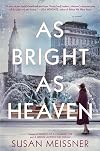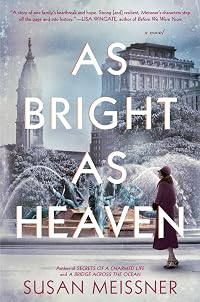
As Bright as Heaven
by Susan Meissner
On This Page
Description
"From the darkest hours rises life in all its glory ... From the acclaimed author of Secrets of a Charmed Life and A Bridge Across the Ocean comes a new novel set in Philadelphia during the Spanish flu epidemic of 1918, which tells the story of a family reborn through loss and love. In 1918, Philadelphia was a city teeming with promise. Even as its young men went off to fight in the Great War, there were opportunities for a fresh start on its cobblestone streets. Into this bustling town, show more came Pauline Bright and her husband, filled with hope that they could now give their three daughters--Evelyn, Maggie, and Willa--a chance at a better life. Their dreams are short-lived. Just months after they arrive, the Spanish Flu reaches the shores of America. As the pandemic claims more than twelve thousand victims in their adopted city, they find their lives left with a world that looks nothing like the one they knew. But even as they lose loved ones, they take in a baby orphaned by the disease who becomes their single source of hope. Amidst the tragedy and challenges that surround them, they learn what they cannot live without--and what they are willing to do about it. Under the Canopy of Heaven is the compelling story of a mother and her daughters who find themselves in a harsh world not of their making, which will either crush their resolve to survive or purify it"-- show lessTags
Recommendations















Member Recommendations
Member Reviews
In a year when the flu hit the US much harder than usual, Susan Meissner’s As Bright as Heaven, set during the deadly Spanish flu pandemic of 1918, sparks heightened interest. Following the death of an infant son, the Bright family moves to Philadelphia to aid an elderly uncle with his funeral business. As the flu strikes with a vengeance, the Brights struggle to balance helping those in need and keeping their own family safe and healthy. While categorized as historical fiction, the novel reads more like a melodrama with shallow characters making irresponsible and irrational decisions in exaggerated situations.
Pauline, the matriarch of the family, and her three daughters, Evelyn, Maggie, and Willa, narrate alternating chapters in the show more first person perspective. While the four women are easy to differentiate due in part to age and personality differences, the characterization appears lazy and superficial. Once Pauline is established as the mother, that’s all she is. Evelyn never moves beyond her label as the “intellectual,” while Willa, despite a significant leap in time halfway through the novel, is always the needy and selfish baby of the family. Maggie, the middle child and the character with the most substance, eventually loses her charm as she becomes consumed by her obsession with a young man. Poorly fleshed out characters lead to apathy and boredom.
The novel is separated into two parts, with the first half taking place pre- and post- flu, and the second half jumping ahead seven years to an older, allegedly wiser, family who have rooted themselves in the Philadelphia community. The three daughters have budding careers, but their personalities and decision-making abilities remain static. They do not learn from or even acknowledge the mistakes they made in the past. The tone shift between the two parts is also jarring. It is difficult to jump back and forth between profound tragedies and trivial matters. Whether it be a byproduct of so many different perspectives or not, it does not do the novel any favors, and comes across as insensitive.
Historical events take a backseat to the everyday lives of the Bright family. Meissner could have placed her characters in any time period and the essence of the novel would not have been affected. Readers who picked it up specifically to read about the Spanish flu will most likely leave disappointed, as it only directly appears in the middle of the novel, causes paranoia and death, and then promptly disappears throughout the last half. The Great War does play a small role, as well as Prohibition, but they are both glossed over quickly and without deep reflection.
As Bright as Heaven by Susan Meissner tries and fails to present a moving glimpse into the lives of a family intimate with death during the largest flu pandemic in modern history. Superficial characters, inane plot threads with laughable resolutions, and a lack of delicacy surrounding sensitive topics left me perplexed and disappointed. If you’re in the mood for tragedy dripping with drama, you may leave satisfied, but I still highly doubt it. show less
Pauline, the matriarch of the family, and her three daughters, Evelyn, Maggie, and Willa, narrate alternating chapters in the show more first person perspective. While the four women are easy to differentiate due in part to age and personality differences, the characterization appears lazy and superficial. Once Pauline is established as the mother, that’s all she is. Evelyn never moves beyond her label as the “intellectual,” while Willa, despite a significant leap in time halfway through the novel, is always the needy and selfish baby of the family. Maggie, the middle child and the character with the most substance, eventually loses her charm as she becomes consumed by her obsession with a young man. Poorly fleshed out characters lead to apathy and boredom.
The novel is separated into two parts, with the first half taking place pre- and post- flu, and the second half jumping ahead seven years to an older, allegedly wiser, family who have rooted themselves in the Philadelphia community. The three daughters have budding careers, but their personalities and decision-making abilities remain static. They do not learn from or even acknowledge the mistakes they made in the past. The tone shift between the two parts is also jarring. It is difficult to jump back and forth between profound tragedies and trivial matters. Whether it be a byproduct of so many different perspectives or not, it does not do the novel any favors, and comes across as insensitive.
Historical events take a backseat to the everyday lives of the Bright family. Meissner could have placed her characters in any time period and the essence of the novel would not have been affected. Readers who picked it up specifically to read about the Spanish flu will most likely leave disappointed, as it only directly appears in the middle of the novel, causes paranoia and death, and then promptly disappears throughout the last half. The Great War does play a small role, as well as Prohibition, but they are both glossed over quickly and without deep reflection.
As Bright as Heaven by Susan Meissner tries and fails to present a moving glimpse into the lives of a family intimate with death during the largest flu pandemic in modern history. Superficial characters, inane plot threads with laughable resolutions, and a lack of delicacy surrounding sensitive topics left me perplexed and disappointed. If you’re in the mood for tragedy dripping with drama, you may leave satisfied, but I still highly doubt it. show less
This is the type of story that, upon reading the last page, you slowly close the book, close your eyes, sigh and reflect. So many emotions roil through your mind and it takes some thought to allow them to settle.
I didn’t know what to expect from As Bright As Heaven. I’ve read other books by Susan Meissner, (Secrets of a Charmed Life is a favorite) so I was confident the author was a gifted storyteller who infuses deep emotion in her work, and I was drawn in by the exquisite cover art. But upon choosing a book to read, I normally only skim over the blurb to avoid learning ‘too much,’ so all I basically knew was the story was set in Philadelphia during the First World War.
I’m glad I didn’t know more, because learning each show more aspect of the multi-faceted story as it happened surprised me, grabbed me, and refused to release me. The storyline is riveting, the storytelling is stunning, and each heartbreaking challenge encountered is delicately wrapped in the hope and strength of the human spirit.
The story is presented in two parts, before the First World War and Spanish Flu pandemic (1918-1919) and after (1925.) The narration is voiced from the four riveting first-person points of view; the mother and three daughters of the Bright family—Pauline, Evelyn, Maggie, and Willa.
I became attached to each girl. They have distinct voices and views of the world, but I mostly connected and sympathized with Maggie. Perhaps because I’m also a middle sister.
Not only was I drawn into the Bright’s story, and pulled into the early 1900s and the hardships and atrocities endured and succumbed to, but I also learned much about the history of the Influenza (Spanish Flu) pandemic—the deadliest disease in history! I also have a better understanding of what it meant to be the wife and daughter of an undertaker during this time period, how widespread the Spanish Flu was distributed, precautions taken (or not,) and how bodies were delivered, prepared, and presented (or not) during the outbreak.
The Bright family finds themselves in a new city, new home, and new life after the death of their youngest Bright, only months-old, baby Henry. With death, war, sickness, and heartbreak around every corner, will they have the strength and desire to do more than exist in the new world they’ve been propelled into?
Without giving you more of a description or breakdown of the story, I can tell you that you will learn a lot.
You will most likely shed some tears, and find yourself in the circle of life and death, sadness and hope, heartbreak and healing. You might even wonder why you’re willingly putting yourself through such a host of emotions. But upon completion of the book, I doubt you’ll be able to forget a single member of the Bright family. And I’m also confident that you’ll be forever changed. Yes. It’s that powerful.
As Bright As Heaven is much more than a story. It is a powerful, riveting, unforgettable experience.
I received a complimentary copy of this book via BookPleasures and NetGalley. show less
I didn’t know what to expect from As Bright As Heaven. I’ve read other books by Susan Meissner, (Secrets of a Charmed Life is a favorite) so I was confident the author was a gifted storyteller who infuses deep emotion in her work, and I was drawn in by the exquisite cover art. But upon choosing a book to read, I normally only skim over the blurb to avoid learning ‘too much,’ so all I basically knew was the story was set in Philadelphia during the First World War.
I’m glad I didn’t know more, because learning each show more aspect of the multi-faceted story as it happened surprised me, grabbed me, and refused to release me. The storyline is riveting, the storytelling is stunning, and each heartbreaking challenge encountered is delicately wrapped in the hope and strength of the human spirit.
The story is presented in two parts, before the First World War and Spanish Flu pandemic (1918-1919) and after (1925.) The narration is voiced from the four riveting first-person points of view; the mother and three daughters of the Bright family—Pauline, Evelyn, Maggie, and Willa.
I became attached to each girl. They have distinct voices and views of the world, but I mostly connected and sympathized with Maggie. Perhaps because I’m also a middle sister.
Not only was I drawn into the Bright’s story, and pulled into the early 1900s and the hardships and atrocities endured and succumbed to, but I also learned much about the history of the Influenza (Spanish Flu) pandemic—the deadliest disease in history! I also have a better understanding of what it meant to be the wife and daughter of an undertaker during this time period, how widespread the Spanish Flu was distributed, precautions taken (or not,) and how bodies were delivered, prepared, and presented (or not) during the outbreak.
The Bright family finds themselves in a new city, new home, and new life after the death of their youngest Bright, only months-old, baby Henry. With death, war, sickness, and heartbreak around every corner, will they have the strength and desire to do more than exist in the new world they’ve been propelled into?
Without giving you more of a description or breakdown of the story, I can tell you that you will learn a lot.
You will most likely shed some tears, and find yourself in the circle of life and death, sadness and hope, heartbreak and healing. You might even wonder why you’re willingly putting yourself through such a host of emotions. But upon completion of the book, I doubt you’ll be able to forget a single member of the Bright family. And I’m also confident that you’ll be forever changed. Yes. It’s that powerful.
As Bright As Heaven is much more than a story. It is a powerful, riveting, unforgettable experience.
I received a complimentary copy of this book via BookPleasures and NetGalley. show less
"Every action has consequences. Even those that are done with the best of intentions have consequences that are often unseen and far reaching."...
Susan Meissner hits it out of the park with this refreshingly original tale. The Spanish flu pandemic coupled with an undertaker's perspective is intriguing and fresh. The stories that mirrored and overlapped each other through this blight, as well as afterwards, are heart wrenchingly fascinating, and definitely made the tapestry of As Bright As Heaven equally so.
Meissner's voice is intelligent, witty and stimulating throughout. The varying character points of view gave a unique insight into the events of this full bodied novel. The depths that were reached and the intricacies achieved are show more what avid readers crave and are the rare product of masterful writing.
Evie summed this novel up for me when she said,.."....it's not how short or long an experience is, it's the depth to which it touches the core of who you are that matters." As Bright As Heaven touched deeply- bravo.
* I received an arc from the publisher for an honest review show less
Susan Meissner hits it out of the park with this refreshingly original tale. The Spanish flu pandemic coupled with an undertaker's perspective is intriguing and fresh. The stories that mirrored and overlapped each other through this blight, as well as afterwards, are heart wrenchingly fascinating, and definitely made the tapestry of As Bright As Heaven equally so.
Meissner's voice is intelligent, witty and stimulating throughout. The varying character points of view gave a unique insight into the events of this full bodied novel. The depths that were reached and the intricacies achieved are show more what avid readers crave and are the rare product of masterful writing.
Evie summed this novel up for me when she said,.."....it's not how short or long an experience is, it's the depth to which it touches the core of who you are that matters." As Bright As Heaven touched deeply- bravo.
* I received an arc from the publisher for an honest review show less
Susan Meissner is one of my favorite authors. I have loved all the books that I have read by this very talented author — from her poignant contemporary debut through her richly detailed historical novels. When given the chance to read As Bright As Heaven, I, of course, issued a resounding YES! But I have to say I have mixed feelings about this novel. It is indeed a beautifully written novel set during an unfamiliar (to me) era in US history. But it was a difficult book to read. I said to a friend that it was very true to life, making it messy and filled with sorrow despite the joy. I definitely recommend this one, but this book requires work on the part of the reader, so don’t expect a quick or easy reading experience.
The setting of show more As Bright As Heaven is Philadelphia in 1918 and then skips ahead 7 years to 1925. The book begins in the early days of the United States’ involvement in WWI and before the devastating Spanish Flu pandemic hits the city. The Bright family has made a big transition from tobacco farm to the big city and a new venture for parents, Pauline and Thomas. The story is written in the first person voice of the Bright women, mom Pauline and daughters, Evelyn, Maggie, and Willa, with each chapter alternating perspective. The style of the novel provides an intimate look into each character’s thoughts while spotlighting the family dynamics. As the tragedy and consequences of both the flu and the war unfold, Meissner explores the impact on this family and the community as a whole. The combination of the two large events presents a unique framework to show how lives can be changed quickly and unexpectedly. Meissner certainly did her research — the fear, loss, and desperation of those times are clear. While the book is at times rather dark, the Brights have moments of beauty that keep the soul hoping and living. As one character puts it — “We only see a little bit of our stories at time, and the hard parts remind us too harshly that we’re fragile and flawed. But it isn’t all hard. Your story isn’t all hard parts. Some of it is incredibly beautiful.” That pretty much sums up the book and life in general. The characters are very real — they make bad choices often for the right reasons, and those have unimagined and widespread effects (again very true to life). For those who have read Meissner’s Christian fiction, this book is targeted to the general market and has no overt faith message. However, the author’s worldview informs the novel and breaks through in subtle ways.
As Bright As Heaven was a difficult book for me to read. It is a bit unconventional and it touched on difficult circumstances. I didn’t ugly cry during it, but I did have feelings of sorrow for both the characters and those who lived through those difficult times. Meisnner is a very talented writer and has created a beautifully crafted novel. It is a recommended read for me.
Recommended.
Audience: adults.
(Thanks to Berkley for a complimentary copy. All opinions expressed are mine alone.) show less
The setting of show more As Bright As Heaven is Philadelphia in 1918 and then skips ahead 7 years to 1925. The book begins in the early days of the United States’ involvement in WWI and before the devastating Spanish Flu pandemic hits the city. The Bright family has made a big transition from tobacco farm to the big city and a new venture for parents, Pauline and Thomas. The story is written in the first person voice of the Bright women, mom Pauline and daughters, Evelyn, Maggie, and Willa, with each chapter alternating perspective. The style of the novel provides an intimate look into each character’s thoughts while spotlighting the family dynamics. As the tragedy and consequences of both the flu and the war unfold, Meissner explores the impact on this family and the community as a whole. The combination of the two large events presents a unique framework to show how lives can be changed quickly and unexpectedly. Meissner certainly did her research — the fear, loss, and desperation of those times are clear. While the book is at times rather dark, the Brights have moments of beauty that keep the soul hoping and living. As one character puts it — “We only see a little bit of our stories at time, and the hard parts remind us too harshly that we’re fragile and flawed. But it isn’t all hard. Your story isn’t all hard parts. Some of it is incredibly beautiful.” That pretty much sums up the book and life in general. The characters are very real — they make bad choices often for the right reasons, and those have unimagined and widespread effects (again very true to life). For those who have read Meissner’s Christian fiction, this book is targeted to the general market and has no overt faith message. However, the author’s worldview informs the novel and breaks through in subtle ways.
As Bright As Heaven was a difficult book for me to read. It is a bit unconventional and it touched on difficult circumstances. I didn’t ugly cry during it, but I did have feelings of sorrow for both the characters and those who lived through those difficult times. Meisnner is a very talented writer and has created a beautifully crafted novel. It is a recommended read for me.
Recommended.
Audience: adults.
(Thanks to Berkley for a complimentary copy. All opinions expressed are mine alone.) show less
As a fan of Susan Meissner, I had no doubt that her tale of WWI and the crippling Spanish Flu would be a page-turning tale. I was not disappointed. Even though this tale of a family in Philadephia suffers greatly and tragic events fill the pages, I was still drawn to this story. Each chapter is told from a different character's perspective which gives the reader a broad view of how one small decision can change the trajectory of a family forever.
It's January 1918 and the Bright family has just buried their sweet infant, Henry, after an incurable heart condition. Pauline and her husband decide to join her husband's uncle in the funeral home business. This fairly new idea of funeral parlors and embalming is unheard of in their rural area, show more but Pauline is no longer afraid of death and has this desire to be closer to it. What she doesn't know is how surrounded by death she and her family will be.
Pauline and her three daughters tell their family's story. Evelyn, the bright teenager who is thrilled by the huge library in Philadephia. Maggie, the slightly younger caretaker of her siblings isn't afraid of what is behind the doors in the embalming room. Willa, the youngest, isn't happy with all the rules in this new house and doesn't understand why her family had to leave the countryside, her grandparents and live in a funeral home. As the family begins to adjust to living with Uncle Fred, to the dead bodies in the other side of the house, and the hustle and bustle of the city, their father decides to go help during the war efforts. Pauline is left behind to run the funeral home with Uncle Fred. There is word of a devastating flu moving swiftly through the city, but no one realizes the tragedies that lie ahead for them as bodies start to pile up outside their door.
You would think a story of war and a flu that took 12,000 lives in one city would be too full of sadness to read. Just when you think this family can't bear any more sadness, another layer is added, yet you keep reading because you have to believe there is hope for each of them. You have to believe that in the depths of a horrific disease, something will soon change. It does when Maggie finds a baby and saves him from certain death. This baby is the light in their dark tunnel. As Philadelphia emerges from disease, so too the Bright family must emerge from their own personal tragedies. Their story and resilience will amaze you and remind you that there can be happiness in even the worst of times.
Miessner expertly takes readers into the minds of her characters whether they are an eight-year-old girl full of fear and anger or a mother who can't shake the shadow of death following her every day since she buried her baby. The story moves swiftly because we are eager to hear the next character's voice. We wonder how Maggie is adjusting to her neighborhood crush leaving for the war or how Pauline is grappling with caring for her daughters and running an overflowing funeral home while trying to keep the disease away from her family.
I was fairly unaware of the devastation the Spanish Flu had in our country let alone the city of Philadephia. Meissner paints a vivid portrait of the awful events that took place and how it didn't discriminate...hitting the slums and the richest families equally. The fear seeps off the pages and the grief grabs you by the throat making it hard to believe any family could suffer this much. Fans of historical fiction and family stories will find Meissner's tale one they will want to talk about with others.
Favorite Quotes:
"You think you have a view of what's waiting for you just up the road,
but then something happens,
and you find out pretty quick you were looking at the wrong road."
"I think that grief is such a strange guest,
making its home in a person
like it's a new thing that no one has ever experienced before." show less
It's January 1918 and the Bright family has just buried their sweet infant, Henry, after an incurable heart condition. Pauline and her husband decide to join her husband's uncle in the funeral home business. This fairly new idea of funeral parlors and embalming is unheard of in their rural area, show more but Pauline is no longer afraid of death and has this desire to be closer to it. What she doesn't know is how surrounded by death she and her family will be.
Pauline and her three daughters tell their family's story. Evelyn, the bright teenager who is thrilled by the huge library in Philadephia. Maggie, the slightly younger caretaker of her siblings isn't afraid of what is behind the doors in the embalming room. Willa, the youngest, isn't happy with all the rules in this new house and doesn't understand why her family had to leave the countryside, her grandparents and live in a funeral home. As the family begins to adjust to living with Uncle Fred, to the dead bodies in the other side of the house, and the hustle and bustle of the city, their father decides to go help during the war efforts. Pauline is left behind to run the funeral home with Uncle Fred. There is word of a devastating flu moving swiftly through the city, but no one realizes the tragedies that lie ahead for them as bodies start to pile up outside their door.
You would think a story of war and a flu that took 12,000 lives in one city would be too full of sadness to read. Just when you think this family can't bear any more sadness, another layer is added, yet you keep reading because you have to believe there is hope for each of them. You have to believe that in the depths of a horrific disease, something will soon change. It does when Maggie finds a baby and saves him from certain death. This baby is the light in their dark tunnel. As Philadelphia emerges from disease, so too the Bright family must emerge from their own personal tragedies. Their story and resilience will amaze you and remind you that there can be happiness in even the worst of times.
Miessner expertly takes readers into the minds of her characters whether they are an eight-year-old girl full of fear and anger or a mother who can't shake the shadow of death following her every day since she buried her baby. The story moves swiftly because we are eager to hear the next character's voice. We wonder how Maggie is adjusting to her neighborhood crush leaving for the war or how Pauline is grappling with caring for her daughters and running an overflowing funeral home while trying to keep the disease away from her family.
I was fairly unaware of the devastation the Spanish Flu had in our country let alone the city of Philadephia. Meissner paints a vivid portrait of the awful events that took place and how it didn't discriminate...hitting the slums and the richest families equally. The fear seeps off the pages and the grief grabs you by the throat making it hard to believe any family could suffer this much. Fans of historical fiction and family stories will find Meissner's tale one they will want to talk about with others.
Favorite Quotes:
"You think you have a view of what's waiting for you just up the road,
but then something happens,
and you find out pretty quick you were looking at the wrong road."
"I think that grief is such a strange guest,
making its home in a person
like it's a new thing that no one has ever experienced before." show less
Kudos to author Susan Meissner whose thorough historical research provided solid ground on which she wove a stunningly beautiful and rich story of family, love, sorrow, regret, tragedy, endurance and joy. The precious nuggets of wisdom found within the book's pages are true gems. I savored each and every one of them.
This exquisitely written historical fiction book presents the life of the Bright family starting in 1918 and concluding in 1926. They had recently been struck by grief and find themselves moving to Philadelphia from Quakertown for opportunity and a fresh start. Mr. Bright is the sole relative of an aging uncle who owns a Philadelphia mortuary. The uncle would like to pass on the business to his nephew but first must teach show more him the ropes. In early 1918, no one could have imagined how vital that training would become as the Spanish Flu pandemic took hold of the entire world to the tune of 50 million lives lost. Philadelphia, in October 1918, was particularly hard hit. The story also weaves in historical elements concerning the Great War, Prohibition and current day psychology and psychiatric practices.
The story is told in alternating chapters through the voices and thoughts of the four strong Bright women; mother Pauline and daughters Evelyn (age 15), Maggie (age 12) and Willa (age 6). Each brings to the fore a different perspective regarding their observations and shared experiences.
Through Death's indiscriminate taking of lives, an orphaned infant is added to the Bright household. As much as the Bright's care for this child had likely spared him from the disease, he too, as it turned out, was a blessing to a yet grieving family.
During my own recent family genealogical digging, I've discovered several relatives stricken by this horrific flu pandemic. I found this story poignant as it gave voice to those family members taken so early in their lives.
I am grateful to author Susan Meissner, publisher Penguin Random House and Goodreads First Reads for having provided a free advance reading copy of this book. Their generosity, however, did not influence this review - the words of which are mine alone. show less
This exquisitely written historical fiction book presents the life of the Bright family starting in 1918 and concluding in 1926. They had recently been struck by grief and find themselves moving to Philadelphia from Quakertown for opportunity and a fresh start. Mr. Bright is the sole relative of an aging uncle who owns a Philadelphia mortuary. The uncle would like to pass on the business to his nephew but first must teach show more him the ropes. In early 1918, no one could have imagined how vital that training would become as the Spanish Flu pandemic took hold of the entire world to the tune of 50 million lives lost. Philadelphia, in October 1918, was particularly hard hit. The story also weaves in historical elements concerning the Great War, Prohibition and current day psychology and psychiatric practices.
The story is told in alternating chapters through the voices and thoughts of the four strong Bright women; mother Pauline and daughters Evelyn (age 15), Maggie (age 12) and Willa (age 6). Each brings to the fore a different perspective regarding their observations and shared experiences.
Through Death's indiscriminate taking of lives, an orphaned infant is added to the Bright household. As much as the Bright's care for this child had likely spared him from the disease, he too, as it turned out, was a blessing to a yet grieving family.
During my own recent family genealogical digging, I've discovered several relatives stricken by this horrific flu pandemic. I found this story poignant as it gave voice to those family members taken so early in their lives.
I am grateful to author Susan Meissner, publisher Penguin Random House and Goodreads First Reads for having provided a free advance reading copy of this book. Their generosity, however, did not influence this review - the words of which are mine alone. show less
Sue Meissner’s books just get better and better with each new one; every time I pick up her latest book I hope that it will be as good as her last ones, and instead I end up liking the newest one the most. Very few authors can sustain that level of excellence; it is quite an impressive feat. As Bright as Heaven is simply fantastic: Meissner’s tale is fascinating, heartbreaking and an all-around beautifully written book. Moreover, her characters are well-developed, authentic and believable. Using the four Bright females as narrators was a solid and effective choice; their various stories are slowly unfurled as the pages fly by. Each female character has a distinct personality, and I was constantly awestruck at how Meissner chose the show more perfect individual to reveal a particular secret or fact.
I knew virtually nothing about the Spanish Flu epidemic in the United States (I knew that it had devastated parts of Europe) at the end of World War 1 before I read As Bright as Heaven. Learning about events like this is one of my favorite things about historical fiction, and I especially enjoyed that aspect in this book because it was a significant event about which I am glad I now know occurred. In her Author’s Note, Meissner states that the Spanish Flu pandemic of 1918-1919 was the deadliest disease in history, significantly worse than the Black Plague, and she chose it because it was an untold story. I am so glad that she did.
There are times when I am reading a novel, and the events occurring are such that I cannot see an ending that will be satisfactory to me. There were two such plot lines in As Bright as Heaven. Without including any spoilers, Meissner managed to wrap both issues up successfully (one better than the other but both reasonable resolutions) which I felt was no small feat.
I highly, highly recommend As Bright as Heaven. I received an advance review copy of this book from the Great Thought’s Ninja Review Team. All opinions are my own. show less
I knew virtually nothing about the Spanish Flu epidemic in the United States (I knew that it had devastated parts of Europe) at the end of World War 1 before I read As Bright as Heaven. Learning about events like this is one of my favorite things about historical fiction, and I especially enjoyed that aspect in this book because it was a significant event about which I am glad I now know occurred. In her Author’s Note, Meissner states that the Spanish Flu pandemic of 1918-1919 was the deadliest disease in history, significantly worse than the Black Plague, and she chose it because it was an untold story. I am so glad that she did.
There are times when I am reading a novel, and the events occurring are such that I cannot see an ending that will be satisfactory to me. There were two such plot lines in As Bright as Heaven. Without including any spoilers, Meissner managed to wrap both issues up successfully (one better than the other but both reasonable resolutions) which I felt was no small feat.
I highly, highly recommend As Bright as Heaven. I received an advance review copy of this book from the Great Thought’s Ninja Review Team. All opinions are my own. show less
Members
- Recently Added By
Lists

World War I Books
2 works; 1 member

1900s: America
31 works; 2 members

Family Relationships
68 works; 2 members

Bibliotherapy: Family and Personal Social Issues
174 works; 5 members

Historical Fiction Books
99 works; 5 members

Health and Society
10 works; 1 member

Viral Outbreaks and Pandemics
82 works; 8 members
Author Information

39 Works 7,341 Members
In 1995, Susan Meissner was working as a part-time reporter for a county newspaper. In 1998, she was named editor of the Mountain Lake/Butterfield Observer Advocate, the town's weekly paper. The paper was named the Best Weekly Newspaper in Minnesota by the Minnesota Newspaper Association in 2002. She retired later that year to write her first show more book, Why the Sky is Blue, which was published in 2004. Her other books include The Girl in the Glass, The Shape of Mercy, In All Deep Places, and A Fall of Marigolds. (Bowker Author Biography) show less
Awards and Honors
Common Knowledge
- Canonical title
- As Bright as Heaven
- Alternate titles
- Under the Canopy of Heaven
- Original publication date
- 2018
- People/Characters
- Pauline "Polly" Adler Bright; Thomas Bright; Evelyn "Evie" Bright; Margaret "Maggie" Louise Bright; Willa Bright; Henry Bright (show all 33); Frederick "Fred" Bright; Charlie Sutcliff; Jamie Sutcliff; Roland Sutcliff; Dora Sutcliff; Gilbert Keane; Grandma Eunice Adler; Grandpa Adler; Alexander "Alex" (Leo Dabney); Palmer Towlerton; Ursula Novak; Agnes Prinsen; Walter Prisen; Rita Dabney; Maury Dabney; Matilda; Cal Dabney; Albert; Mr. Trout; Lila; Conrad Reese; Sybil Reese; Ines Novak Dabney; Flossie; Gretchen Weiss; Mr. Weiss; Louisa Weiss
- Important places
- Philadelphia, Pennsylvania, USA; Quakertown, Pennsylvania, USA; Camden, New Jersey, USA
- Important events
- World War I; Influenza pandemic (1918 | 1919)
- Epigraph
- Event succeeds event;
accidents, people, happenings,
one after another come toward us.
Each must be met and dealt with. . .
For this process of adjustment is life,
and the mastery of it is the art of livi... (show all)ng. . .
---KARL DE SCHWEINITZ,
The Art of Helping People out of Trouble, 1924 - Dedication
- For my mother
- First words
- Morning light shimmers on the apricot horizon as I stand at the place where my baby boy rests.
- Quotations
- You think you have a view of what's waiting for you just up the road,
but then something happens,
and you find out pretty quick you were looking at the wrong road.
I think that grief is such a strange guest,
making its home in a person
like it's a new thing that no one has ever experienced before.
Home isn't a place where everything stays the same; it's a place where you are safe and loved despite nothing staying the same. - Last words
- (Click to show. Warning: May contain spoilers.)A smile breaks wide across my face as the curtain falls away behind me, and I step into a flood of light, bright as heaven itself.
- Blurbers
- Jenoff, Pam; Quinn, Kate; Davis, Fiona; Gaynor, Hazel; Cantor, Jillian; Simonson, Helen (show all 11); Bowen, Rhys; Hunter, Georgia; Willig, Lauren; Harper, Karen; Wingate, Lisa
Classifications
Statistics
- Members
- 820
- Popularity
- 33,663
- Reviews
- 60
- Rating
- (4.05)
- Languages
- English
- Media
- Paper, Audiobook, Ebook
- ISBNs
- 9
- ASINs
- 2