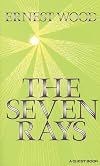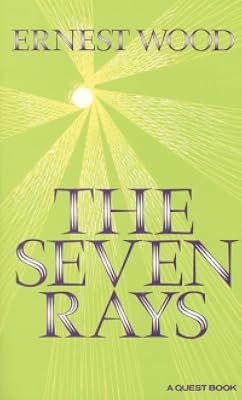
The Seven Rays (Quest Book)
by Ernest Wood
On This Page
Description
Wood examines the intriguing esoteric idea that humanity is divided into seven spiritual groups, according to our fundamental drives and aspirations.Tags
Recommendations



























Member Reviews
An intriguing examination of the subtle spiritual impulses that dominate and motivate each of us-that lead us to be: poiticians-teachers-ministers-artists-philosophers-writers-scientists.
Humanity, occultism teaches us, is divided into seven distinct groups called 'rays.' Generally speaking, your strongest motivations indicate to which of the 'ray' groupings you belong. You are influenced by all seven rays, occultism suggests, but one of the seven predominates. Would you like to know which of the seven rays is yours? 'With such knowledge,' writes the author, 'we are in a position to choose what games we will play in this life ouf ours.' For instance, if your ray is number one, you are inclined to be independent in spirit and strong in show more intuition. Is this your ray?
Study this book. Learn, not only what your ray is, but the ratioinale behind the entire concept.
Very few writers have dared to examine this deeply esoteric concept. Ernest Wood has taken the dare. Author of the Quest books Concentration and Seven Schools of Yoga, former President of the Sind National College and of Mandapalle College in India, Wood was subsequently Dean of the American Academy of Asian Studies.
Contents
Part I The source of the rays
Preface
Chapter I The pillar of light
Chapter II Consciousness
Chapter III Thought-power
Chapter IV Love-power
Chapter V Will-power
Chapter VI Matter, energy and law
Chapter VII The divine and the material
Chapter VIII Harmony
Chapter IX The seven principles
Chapter X Inter-relations
Part II The seven rays
Chapter XI The first ray
Chapter XII The second ray
Chapter XIII The third ray
Chapter XIV The fourth ray
Chapter XV The fifth ray
Chapter XVI The sixth ray
Chapter XVII The seventh ray
Chapter XVIII A master's table
Part III The great use and danger of knowledge of the rays
Chapter XIX Your ray
Chapter XX Progress without danger
Chapter XXI Stages of self-realization
Glossary of principal Sanskrit words used in this book show less
Humanity, occultism teaches us, is divided into seven distinct groups called 'rays.' Generally speaking, your strongest motivations indicate to which of the 'ray' groupings you belong. You are influenced by all seven rays, occultism suggests, but one of the seven predominates. Would you like to know which of the seven rays is yours? 'With such knowledge,' writes the author, 'we are in a position to choose what games we will play in this life ouf ours.' For instance, if your ray is number one, you are inclined to be independent in spirit and strong in show more intuition. Is this your ray?
Study this book. Learn, not only what your ray is, but the ratioinale behind the entire concept.
Very few writers have dared to examine this deeply esoteric concept. Ernest Wood has taken the dare. Author of the Quest books Concentration and Seven Schools of Yoga, former President of the Sind National College and of Mandapalle College in India, Wood was subsequently Dean of the American Academy of Asian Studies.
Contents
Part I The source of the rays
Preface
Chapter I The pillar of light
Chapter II Consciousness
Chapter III Thought-power
Chapter IV Love-power
Chapter V Will-power
Chapter VI Matter, energy and law
Chapter VII The divine and the material
Chapter VIII Harmony
Chapter IX The seven principles
Chapter X Inter-relations
Part II The seven rays
Chapter XI The first ray
Chapter XII The second ray
Chapter XIII The third ray
Chapter XIV The fourth ray
Chapter XV The fifth ray
Chapter XVI The sixth ray
Chapter XVII The seventh ray
Chapter XVIII A master's table
Part III The great use and danger of knowledge of the rays
Chapter XIX Your ray
Chapter XX Progress without danger
Chapter XXI Stages of self-realization
Glossary of principal Sanskrit words used in this book show less
Ratings
Members
- Recently Added By
Author Information
24 Works 590 Members
Common Knowledge
- Original publication date
- 1925
- First words
- I see no means to avoid, in the writing of this book, and the putting forth of what I hope are clear ideas about the Rays, certain matters of a rather abstract character, and foremost among them a statement about the universa... (show all)lity of God or Brahman, whom some regard as living far away on a high plane somewhere beyond our vision.
- Last words
- (Click to show. Warning: May contain spoilers.)If any teach NIRVANA is to live, Say unto such they err; not know this, Nor what light shines beyond their broken lamps Nor lifeless, timeless bliss.
Classifications
- Genres
- Nonfiction, Religion & Spirituality, Philosophy
- DDC/MDS
- 212.52 — Religion Philosophy & theory of religion Existence of God, ways of knowing God, attributes of God Theosophy
- LCC
- BP565 .W67 — Philosophy, Psychology and Religion Islam. Bahaism. Theosophy, etc. Islam. Bahai Faith. Theosophy, etc. Theosophy
- BISAC
Statistics
- Members
- 63
- Popularity
- 495,254
- Reviews
- 1
- Rating
- (3.75)
- Languages
- English
- Media
- Paper, Ebook
- ISBNs
- 5
- ASINs
- 5