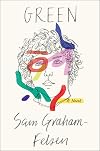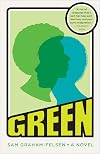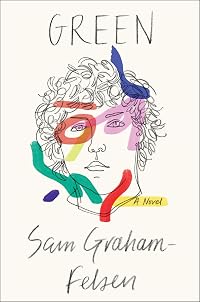
Green: A Novel
by Sam Graham-Felsen
On This Page
Description
Boston, 1992. David Greenfeld is one of the few white kids at the Martin Luther King, Jr., Middle School. Everybody clowns him, girls ignore him, and his hippie parents won't even buy him a pair of Nikes, let alone transfer him to a private school. Unless he tests into the city's best public high school--which, if practice tests are any indication, isn't likely--he'll be friendless for the foreseeable future. Nobody's more surprised than Dave when Marlon Wellings sticks up for him in the show more school cafeteria. Mar's a loner from the public housing project on the corner of Dave's own gentrifying block, and he confounds Dave's assumptions about black culture: He's nerdy and neurotic, a Celtics obsessive whose favorite player is the gawky, white Larry Bird. Before long, Mar's coming over to Dave's house every afternoon to watch vintage basketball tapes and plot their hustle to Harvard. But as Dave welcomes his new best friend into his world, he realizes how little he knows about Mar's. Cracks gradually form in their relationship, and Dave starts to become aware of the breaks he's been given--and that Mar has not.--Provided by Publisher. show lessTags
Recommendations












Member Reviews
GREEN by Sam Graham-Felsen is the raw, uninhibited, and hilarious venture of David Greenfield, known as Green, as he maneuvers through puberty as a 6th grader growing up in the "ghetto"(as Green refers to it) of Boston in the early 1990's. A character you love despite all his faults and just want him to come out a winner in the end, Graham-Felsen takes us back to when we (the readers) were awkwardly growing up and learning life lessons by stumbling through them.
Graham-Felsen not only writes a poignant piece about leaving childhood and learning adulthood, but he writes in such an honest, unfiltered way that is very true to how a young man thinks; self doubts, strong beliefs, and the neverending curiosity. Also, Graham-Felsen channels a show more teenagers brain in his writing style, often spending too long on something (seemingly) fickle while minimizng what is truly important. Graham-Felsen reminds us that in 6th grade that girls are a conundrum, friends are fickle, school is a warzone, and family is equal parts embarrassing and a safe haven.
GREEN was such a delight to read and it is a book I will freely recommend to anyone who wants to remember that for everything good and bad that 6th grade was, it is a time few of us will ever forget.
I received this book as part of the Goodreads Giveaway program. show less
Graham-Felsen not only writes a poignant piece about leaving childhood and learning adulthood, but he writes in such an honest, unfiltered way that is very true to how a young man thinks; self doubts, strong beliefs, and the neverending curiosity. Also, Graham-Felsen channels a show more teenagers brain in his writing style, often spending too long on something (seemingly) fickle while minimizng what is truly important. Graham-Felsen reminds us that in 6th grade that girls are a conundrum, friends are fickle, school is a warzone, and family is equal parts embarrassing and a safe haven.
GREEN was such a delight to read and it is a book I will freely recommend to anyone who wants to remember that for everything good and bad that 6th grade was, it is a time few of us will ever forget.
I received this book as part of the Goodreads Giveaway program. show less
One of the best things about reading is the opportunity books provide you to expand your horizons and learn about new cultures, different experiences, and what it is like for others outside your sociological/economic/gender/race sphere of influence. Sometimes, this is a side benefit of reading a certain novel. At other times, it appears to be the purpose of the book. Sam Graham-Felsen’s Green, is more of the latter than the former as it explores growing up as a minority white teenager in a predominantly black neighborhood in 1992 Boston.
When reflecting on Green, I cannot overcome the feeling of discomfort I have after reading it. Some of my discomfort is due to Dave. His adoption of teenage black culture is understandable given how show more much he does not want to stand out at his new middle school, and yet it makes for some truly uncomfortable scenes. Everything about Dave screams poseur. His choice of vernacular, his choice of dress, and his “preference” for girls of color may help him avoid notice but they do nothing to help make him fit into the school and surrounding neighborhood. In fact, his choices only prove how different he is and make for some truly cringe-worthy scenes.
Dave’s character made me think a lot about cultural appropriation. In theory, since Dave is a minority student at Martin Luther King, Jr. Middle School as one of two white students, his use of the black vernacular and style of dress should not be cultural appropriation. He is not a member of the dominant culture adopting elements of the minority culture. At least on the surface he is not. Yet, I cannot help but think that is exactly what Mr. Graham-Felsen is having Dave do. After all, the story is about the difference in opportunities and justice that race brings. Dave may be a minority student at King, but as a white male in a very white male world he has more opportunities for advancement than anyone else he knows. His adoption of the black culture as a method of survival strikes me as crass because it only seems to highlight the differences and therefore the difference in opportunities between him and everyone else.
Thankfully, the addition of Marlon to Dave’s life provides some of the desperately-needed sanity the reader craves. It is Marlon who tries to make Dave embrace his identity through their shared love of the Celtics. Similarly, it is Marlon who drives Dave to success in school. The tragedy of the situation is the fact that every push Marlon gives Dave towards the path to Harvard, his own path grows murkier and steeper – a fact of which everyone but Dave is aware. Even though Dave might attend a black school and live in a black neighborhood, he has no idea what life is like for his fellow students and Marlon most of all. The growing awareness he has that Marlon and he are being forced onto separate paths is painful and awkward and unfortunately all too true.
If Dave got me thinking about cultural appropriation, Marlon’s story had me thinking about the appropriateness of a highly educated white man writing a story about a poverty-stricken black teenager living in the Boston projects. Mr. Graham-Felsen is everything Marlon is not in terms of color of skin, opportunities afforded him, and success. His very life ensures he cannot accurately portray Marlon because there is no real way for him to truly understand what it means to not be able to afford private school or summer theater classes and what that might mean for any child’s future. This again leads me back to the idea of cultural appropriation, for now we have to remember that Mr. Graham-Felsen is writing Dave as a white man. Dave is nothing but his estimation of how a black teen from 1992 acted and talked. It is not quite like putting on blackface, but I cannot help but feel Green is a lot closer to that than it is to an enlightening story of race and injustice.
I cannot say that Green helped me learn more about the 1990s black culture. After all, it is Mr. Graham-Felsen’s own (presumably) researched opinion about black culture and therefore it can never be a true picture of it. Nor did I learn anything new about race and injustice and opportunities from the novel. The ending is all but a foregone conclusion, and the realizations Dave (finally) understands are nothing more than confirmations of things most people already know. The story is a tough one, as is any story in which there is clearly a winner and a loser in the life lottery, and it is always good to remember that others have far more difficult paths to success than you might have had. Still, Dave’s utter lack of empathy makes Green a difficult novel to read let alone enjoy. Mr. Graham-Felsen’s novel is a great reminder that life is not fair for many reasons, and that is never an easy idea to stomach. show less
When reflecting on Green, I cannot overcome the feeling of discomfort I have after reading it. Some of my discomfort is due to Dave. His adoption of teenage black culture is understandable given how show more much he does not want to stand out at his new middle school, and yet it makes for some truly uncomfortable scenes. Everything about Dave screams poseur. His choice of vernacular, his choice of dress, and his “preference” for girls of color may help him avoid notice but they do nothing to help make him fit into the school and surrounding neighborhood. In fact, his choices only prove how different he is and make for some truly cringe-worthy scenes.
Dave’s character made me think a lot about cultural appropriation. In theory, since Dave is a minority student at Martin Luther King, Jr. Middle School as one of two white students, his use of the black vernacular and style of dress should not be cultural appropriation. He is not a member of the dominant culture adopting elements of the minority culture. At least on the surface he is not. Yet, I cannot help but think that is exactly what Mr. Graham-Felsen is having Dave do. After all, the story is about the difference in opportunities and justice that race brings. Dave may be a minority student at King, but as a white male in a very white male world he has more opportunities for advancement than anyone else he knows. His adoption of the black culture as a method of survival strikes me as crass because it only seems to highlight the differences and therefore the difference in opportunities between him and everyone else.
Thankfully, the addition of Marlon to Dave’s life provides some of the desperately-needed sanity the reader craves. It is Marlon who tries to make Dave embrace his identity through their shared love of the Celtics. Similarly, it is Marlon who drives Dave to success in school. The tragedy of the situation is the fact that every push Marlon gives Dave towards the path to Harvard, his own path grows murkier and steeper – a fact of which everyone but Dave is aware. Even though Dave might attend a black school and live in a black neighborhood, he has no idea what life is like for his fellow students and Marlon most of all. The growing awareness he has that Marlon and he are being forced onto separate paths is painful and awkward and unfortunately all too true.
If Dave got me thinking about cultural appropriation, Marlon’s story had me thinking about the appropriateness of a highly educated white man writing a story about a poverty-stricken black teenager living in the Boston projects. Mr. Graham-Felsen is everything Marlon is not in terms of color of skin, opportunities afforded him, and success. His very life ensures he cannot accurately portray Marlon because there is no real way for him to truly understand what it means to not be able to afford private school or summer theater classes and what that might mean for any child’s future. This again leads me back to the idea of cultural appropriation, for now we have to remember that Mr. Graham-Felsen is writing Dave as a white man. Dave is nothing but his estimation of how a black teen from 1992 acted and talked. It is not quite like putting on blackface, but I cannot help but feel Green is a lot closer to that than it is to an enlightening story of race and injustice.
I cannot say that Green helped me learn more about the 1990s black culture. After all, it is Mr. Graham-Felsen’s own (presumably) researched opinion about black culture and therefore it can never be a true picture of it. Nor did I learn anything new about race and injustice and opportunities from the novel. The ending is all but a foregone conclusion, and the realizations Dave (finally) understands are nothing more than confirmations of things most people already know. The story is a tough one, as is any story in which there is clearly a winner and a loser in the life lottery, and it is always good to remember that others have far more difficult paths to success than you might have had. Still, Dave’s utter lack of empathy makes Green a difficult novel to read let alone enjoy. Mr. Graham-Felsen’s novel is a great reminder that life is not fair for many reasons, and that is never an easy idea to stomach. show less
Post-Rodney King 1992 in Boston. David Greenfeld is a Jewish "white boy" struggling to fit in at the predominantly black middle school. He's at the bottom of the social pyramid at Martin Luther King Jr. Middle School - constantly teased and waiting to get out and start over in high school. Surprisingly, he makes a new friend with Marlon Wellings. They bond over Celtics tapes and dream about getting into Harvard. Growing pains stress their friendship and the divide between neighborhoods, schools, and race weighs down on Dave and Mar.
This book was a surprise hit for me. Dave is truly 'green' in more ways than one. Graham-Felsen captures that teenage awkwardness that colors every 'first'-- first date, first real friendship and first show more fight. It's a sharp take on adolescence and racial division from a truly unique voice. The lingo is a bit mystifying at first but it's rhythmic and engaging. Highly recommended read for adults. show less
This book was a surprise hit for me. Dave is truly 'green' in more ways than one. Graham-Felsen captures that teenage awkwardness that colors every 'first'-- first date, first real friendship and first show more fight. It's a sharp take on adolescence and racial division from a truly unique voice. The lingo is a bit mystifying at first but it's rhythmic and engaging. Highly recommended read for adults. show less
One reason this debut novel succeeds so very well are the layers. It can be enjoyed by teens but just as well by adults. Race, religion, ethnicity, family dynamics, growing up, sexual awakenings, being harassed, winning admiration, feeling out of place, making friends and losing them…all these things are eloquently addressed in the hip hop slang of a white boy trying to fit in a primarily minority school in Boston. He is twelve and on the cusp.
Graham-Felsen gets the awkwardness and uncertainty of twelve just right. The time is 1990s Boston before the explosion of high-speed internet and we are treated to the excruciatingly slow process of downloading color jpegs, presumably from dial-up modems. The segregation in Boston schools does show more not feel so distant, however. The white-black friendship between David and Marlon, our narrator and a boy in his class, always feels a bit tentative and unsure, just like the boys themselves.
On an ordinary day, most of us might not be rapt listening to the thoughts of a twelve-year-old for nearly three hundred pages, but David’s jive language adds a layer of complexity to the picture that completely works. We understand that he uses this language with his friends and peers and not with his parents, two Harvard-educated hippies now living with their two sons in Jamaica Plain. The Arnold Arboretum, one of the largest collection of plant species from around the world, is part of David’s walk to his ‘ghetto’ school so that he can avoid the housing projects where he has been harassed.
Everything about the setting, the characters, the situations ring true. Dave’s parents believe in public schools so they won't consider a private school for David but instead encourage him to win a place at Boston Latin, the best public school in the city for grades 7-12. Dave and Marlon both have their sights set on Harvard because of the money they could make: just a look at the statistics for heads of corporations and heads of state tell them a Harvard degree is stone cold gold.
But Graham-Felsen adds the spice—that layering again—by having a teacher looking to show the boys what’s possible bring them to meet a city councilor who graduated Harvard and who has some pretty harsh things to say about the experience. The city councilor is black and knows that Harvard’s aura of success mostly works for whites but less well for people of color.
Another of Dave’s classmates, Jimmy, is Vietnamese and living in what Dave calls a real ghetto in Chinatown. One day Jimmy surreptitiously shows Dave a switchblade he’d brought to school; Dave considers getting a blade like it for his own protection, and so visits Jimmy’s ‘crib.’ This scene is painfully realistic and beautifully rendered. Jimmy knows there is practically no chance he will get into Boston Latin because of the quotas for Asian students. Reverse quotas.
All of this rich material is artfully mined by Graham-Felsen. It never feels heavy handed; the absurdity of the blond white boy speaking inner-city lingo just lightens the whole experience, even when we have reason to feel sadness, for example when considering that members of both Dave and Marlon’s families struggle with a mental illness diagnosis. Dave’s younger brother refuses to speak for a reason never revealed, and Marlon’s mother may be bipolar or schizophrenic. The families deal the best they can, both very differently, naturally.
The very best parts of the novel may be those sections that are not about being white, but are about being black: when Dave convinces Marlon to help clear snow to make some loot, most of Dave’s old customers don’t answer the door when Marlon rings the bell. Or the time the boys are invited to a party in a nice section of Jamaica Plain and are followed by a cop car as they walk. Or the times Marlon wants Dave to just figure it out why he does not want to get caught doing something even marginally illegal, or why he does not want to pick up recyclable cans at a Harvard reunion, or why he has never entered the gates at Arnold Arboretum despite the fact it is free to everyone, or why he doesn’t want to attend an exclusive arts camp in New Hampshire for the summer.
Finally I know the answer to the joke about what the whitest thing I ever did is. Everyone will have their own answers, and it is worth spending the time to figure out what your answer would be to this question. The novel is a triumph of noticing, of seeing color and speaking of it, as well as a paean to youth, to curiosity, to seeking, to becoming. I hope everyone gets a chance to weigh in on this one--it's a real conversation starter. Families can read it together. It’s a crossover novel on many levels.
Listening to this book is a terrific way to enjoy the language. Brilliantly read by Prentice Onayemi and published by Random House Audio, this book is available for Whispersync. The book is a fast read, and I moved between the two. show less
Graham-Felsen gets the awkwardness and uncertainty of twelve just right. The time is 1990s Boston before the explosion of high-speed internet and we are treated to the excruciatingly slow process of downloading color jpegs, presumably from dial-up modems. The segregation in Boston schools does show more not feel so distant, however. The white-black friendship between David and Marlon, our narrator and a boy in his class, always feels a bit tentative and unsure, just like the boys themselves.
On an ordinary day, most of us might not be rapt listening to the thoughts of a twelve-year-old for nearly three hundred pages, but David’s jive language adds a layer of complexity to the picture that completely works. We understand that he uses this language with his friends and peers and not with his parents, two Harvard-educated hippies now living with their two sons in Jamaica Plain. The Arnold Arboretum, one of the largest collection of plant species from around the world, is part of David’s walk to his ‘ghetto’ school so that he can avoid the housing projects where he has been harassed.
Everything about the setting, the characters, the situations ring true. Dave’s parents believe in public schools so they won't consider a private school for David but instead encourage him to win a place at Boston Latin, the best public school in the city for grades 7-12. Dave and Marlon both have their sights set on Harvard because of the money they could make: just a look at the statistics for heads of corporations and heads of state tell them a Harvard degree is stone cold gold.
But Graham-Felsen adds the spice—that layering again—by having a teacher looking to show the boys what’s possible bring them to meet a city councilor who graduated Harvard and who has some pretty harsh things to say about the experience. The city councilor is black and knows that Harvard’s aura of success mostly works for whites but less well for people of color.
Another of Dave’s classmates, Jimmy, is Vietnamese and living in what Dave calls a real ghetto in Chinatown. One day Jimmy surreptitiously shows Dave a switchblade he’d brought to school; Dave considers getting a blade like it for his own protection, and so visits Jimmy’s ‘crib.’ This scene is painfully realistic and beautifully rendered. Jimmy knows there is practically no chance he will get into Boston Latin because of the quotas for Asian students. Reverse quotas.
All of this rich material is artfully mined by Graham-Felsen. It never feels heavy handed; the absurdity of the blond white boy speaking inner-city lingo just lightens the whole experience, even when we have reason to feel sadness, for example when considering that members of both Dave and Marlon’s families struggle with a mental illness diagnosis. Dave’s younger brother refuses to speak for a reason never revealed, and Marlon’s mother may be bipolar or schizophrenic. The families deal the best they can, both very differently, naturally.
The very best parts of the novel may be those sections that are not about being white, but are about being black: when Dave convinces Marlon to help clear snow to make some loot, most of Dave’s old customers don’t answer the door when Marlon rings the bell. Or the time the boys are invited to a party in a nice section of Jamaica Plain and are followed by a cop car as they walk. Or the times Marlon wants Dave to just figure it out why he does not want to get caught doing something even marginally illegal, or why he does not want to pick up recyclable cans at a Harvard reunion, or why he has never entered the gates at Arnold Arboretum despite the fact it is free to everyone, or why he doesn’t want to attend an exclusive arts camp in New Hampshire for the summer.
Finally I know the answer to the joke about what the whitest thing I ever did is. Everyone will have their own answers, and it is worth spending the time to figure out what your answer would be to this question. The novel is a triumph of noticing, of seeing color and speaking of it, as well as a paean to youth, to curiosity, to seeking, to becoming. I hope everyone gets a chance to weigh in on this one--it's a real conversation starter. Families can read it together. It’s a crossover novel on many levels.
Listening to this book is a terrific way to enjoy the language. Brilliantly read by Prentice Onayemi and published by Random House Audio, this book is available for Whispersync. The book is a fast read, and I moved between the two. show less
It’s 1992, and twelve-year-old Dave Greenfeld desperately wants to go to private school, but his progressive parents believe in public school so there he is, one of three white kids at his predominantly African American high school. His attempt to fit in through fashion fails miserably when his new clothes are stolen, leaving him to run home in his underwear. He doesn’t even want to mention he is Jewish and adopts the nickname “Green” which gives us the title for Sam Graham-Felsen’s new book.
This is a coming-of-age story that tries to do more, to examine privilege and racism through the prism of Dave’s friendship with Marlon, through this important school year which focuses heavily on preparing students for the critical exam show more that determines whether they can attend Latin or not, the elite Boston school that feeds into Harvard and adult success. Both Dave and his friend Marlon are desperate to go to Latin, Dave mostly to get away from the bullies. Marlon is studious, Dave is anything but, far more interested in TV, games, and anything but reading.
Their friendship is quite wonderful, full of the fun and games and silliness that a childhood friendship should be. Through their friendship, Dave becomes aware of how racism works, how Marlon is suspect when he is not. The story is often humorous. Like many teenage boys, Dave is beset by inconvenient erections and figures out “tactics” for dealing with them. His use of that word throughout is hilarious.
Green is an enjoyable book. I liked Marlon and Dave and loved their friendship. However, it is burdened with additional storylines that weaken its main theme. If the goal is exploring privilege and systemic racism, or the force as Dave thinks of it, then adding Dave’s brother Benno is unnecessary. If it’s about coming-of-age, then the meeting with the councilman who explains systemic racism and the night in the Arboretum is unnecessary. Green is a fun story that is overloaded with multiple ideas that confound each other in terms of making a consistent argument. After all, in the end, it is not racism that is the greatest challenge and hurdle that Marlon faces. It is cowardice, not racism, that is Dave’s greatest failing.
I liked Green, but I think it does not meet its own obvious ambitions.
I received an e-galley of Green from the publisher through NetGalley.
Green at Penguin Random House
Sam Graham-Felsen author site
https://tonstantweaderreviews.wordpress.com/2018/01/02/9780399591143/ show less
This is a coming-of-age story that tries to do more, to examine privilege and racism through the prism of Dave’s friendship with Marlon, through this important school year which focuses heavily on preparing students for the critical exam show more that determines whether they can attend Latin or not, the elite Boston school that feeds into Harvard and adult success. Both Dave and his friend Marlon are desperate to go to Latin, Dave mostly to get away from the bullies. Marlon is studious, Dave is anything but, far more interested in TV, games, and anything but reading.
Their friendship is quite wonderful, full of the fun and games and silliness that a childhood friendship should be. Through their friendship, Dave becomes aware of how racism works, how Marlon is suspect when he is not. The story is often humorous. Like many teenage boys, Dave is beset by inconvenient erections and figures out “tactics” for dealing with them. His use of that word throughout is hilarious.
Green is an enjoyable book. I liked Marlon and Dave and loved their friendship. However, it is burdened with additional storylines that weaken its main theme. If the goal is exploring privilege and systemic racism, or the force as Dave thinks of it, then adding Dave’s brother Benno is unnecessary. If it’s about coming-of-age, then the meeting with the councilman who explains systemic racism and the night in the Arboretum is unnecessary. Green is a fun story that is overloaded with multiple ideas that confound each other in terms of making a consistent argument. After all, in the end, it is not racism that is the greatest challenge and hurdle that Marlon faces. It is cowardice, not racism, that is Dave’s greatest failing.
I liked Green, but I think it does not meet its own obvious ambitions.
I received an e-galley of Green from the publisher through NetGalley.
Green at Penguin Random House
Sam Graham-Felsen author site
https://tonstantweaderreviews.wordpress.com/2018/01/02/9780399591143/ show less
I so want to love Green by Sam Graham-Felsen. The discussion of racial and economic inequality is such an important one in our society. What makes this book even more intriguing is the fact that it presents a different perspective on the conversation. The voice of the middle school narrator, however, becomes the challenge in the book. I applaud the intent and the effort although the end result is sadly not for me.
Read my complete review at http://www.memoriesfrombooks.com/2018/02/green.html
Reviewed for Penguin First to Read program.
Read my complete review at http://www.memoriesfrombooks.com/2018/02/green.html
Reviewed for Penguin First to Read program.
A big conundrum here: a white writer tells, in first person, of the sixth grade life of protagonist Dave, one of a handful of white students at a Boston middle school in the early nineties, post-busing. The author himself has lived this very same life. The character uses slang and speech patterns that are clearly adapted from the black kids at school. Is it era, and/or, age-accurate ? Does it matter? Can the author, as Dave, also speak as Mar, one of the only black students at school who want to have anything to do with Dave? Dave's parents are crunchy-granola Jamaica Plain hippies from Harvard. His brother stopped speaking and goes to a "special" school. Mar lives with his grandmother and his mother is troubled with a drug addiction show more and mental illness. Is Mar more than a cardboard stereotype?
Dave and Mar share a strong loyalty to the Celtics, at the end of Larry Bird's career, and after the deaths of Len Bias and Reggie Lewis. The boys are being driven by their teacher and school administrator towards the upcoming entrance exam for Boston Latin, the prestigious public school that's a gateway drug to the Ivy League. Dave's parents, Harvard alums, despise the school and its trappings of privilege. These parts rings very true to me, as an almost 50 year Boston area resident.
The most stunning and well-written development is their encounter with a black classmate of Dave's parents, a politician who's "made it" in white Boston politics, but who administers a stunning beatdown of realism to Mar's hopes that has severe life/plot repercussions.
I have very mixed feelings on this novel. Sixth grade boys tend to be very annoying, both in literature and in real life. I'd like to hear their verdicts - especially about Mar's portrayal. I guess the writer's intent to "keep it real" leaves me feeling an After School Special vibe. show less
Dave and Mar share a strong loyalty to the Celtics, at the end of Larry Bird's career, and after the deaths of Len Bias and Reggie Lewis. The boys are being driven by their teacher and school administrator towards the upcoming entrance exam for Boston Latin, the prestigious public school that's a gateway drug to the Ivy League. Dave's parents, Harvard alums, despise the school and its trappings of privilege. These parts rings very true to me, as an almost 50 year Boston area resident.
The most stunning and well-written development is their encounter with a black classmate of Dave's parents, a politician who's "made it" in white Boston politics, but who administers a stunning beatdown of realism to Mar's hopes that has severe life/plot repercussions.
I have very mixed feelings on this novel. Sixth grade boys tend to be very annoying, both in literature and in real life. I'd like to hear their verdicts - especially about Mar's portrayal. I guess the writer's intent to "keep it real" leaves me feeling an After School Special vibe. show less
Members
- Recently Added By
Lists

Publishers Weekly Best Books of the Week / Starred Reviews 2018
78 works; 2 members

Amazon best fictional genre picks monthly for 2018
418 works; 9 members
Author Information
1 Work 170 Members
Some Editions
Awards and Honors
Awards
Classifications
Statistics
- Members
- 169
- Popularity
- 193,889
- Reviews
- 19
- Rating
- (3.51)
- Languages
- English
- Media
- Paper, Audiobook, Ebook
- ISBNs
- 6
- ASINs
- 2