
On This Page
Description
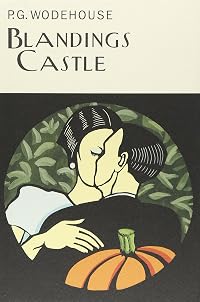
Another laugh-aloud story of Blandings Castle, set in an idyllic part of Shropshire, England, where the sun always seems to shine, even when it's stormy.Tags
Recommendations























Member Reviews
There is nothing like a visit to Blandings Castle to pick me up. This is such a light hearted romp of a read, with the usual cast of characters: Clarence, Lord Emsworth and his prize pig, the Empress of Blandings; his awful sister (the Earl's, not the pig's), Lady Constance Keeble; his niece, Millicent; her erstwhile lover and the present secretary to the Earl, Mr. Hugo Carmody; his nephew, Mr. Ronald Fish; the inimitable butler, Beach; the nasty but efficient former secretary, Baxter ; the redoubtable Mr. Galahad Threepwood, the Earl's brother; and Sue Brown, a chorus dancer. Oh, and a sleazy private detective, Percy Pilbeam.
Toss them lightly so that they get all mixed together, sprinkle with mischief and mayhem, add a soupcon of true show more love and a dash of pure English nuttiness, and you have a delightful summer read which will go down beautifully. Former secretaries fall from the sky into the lobelias, the course of true love does not run smoothly but takes the usual Wodehouseian deviations, the butler plays the horses, and neighbours are terrified by their mysterious past involving something to do with prawns.
Light and fun! show less
Toss them lightly so that they get all mixed together, sprinkle with mischief and mayhem, add a soupcon of true show more love and a dash of pure English nuttiness, and you have a delightful summer read which will go down beautifully. Former secretaries fall from the sky into the lobelias, the course of true love does not run smoothly but takes the usual Wodehouseian deviations, the butler plays the horses, and neighbours are terrified by their mysterious past involving something to do with prawns.
Light and fun! show less
Wodehouse never disappoints! If you haven't had the pleasure, the best I can do is to compare him to Oscar Wilde - they both write the sorts of stories that involve bright young things exchanging dazzlingly witty dialog and getting themselves entangled in preposterous situations that are only in the end untangled by a combination of luck and cleverness. Think The Importance of Being Ernest lite.
In this outing, Wodehouse supplies us with not one but two seemingly doomed romances, the first between Hugh Carmody, secretary to wealthy Lord Emsworth and Emsworth's haughty daughter Millicent, the second between Ronnie Fish, Emsworth's ne'er-do-well nephew and Sue, a self-possessed chorus girl. Now throw in Galahad Emsworth, who's writing a show more tell-all bio destined to embarrass most of England's peerage; Pilbeam, a comical private detective; Parsloe-Parsloe, a blustering neighbor; Baxter, Emsworth's former secretary, who has an odd propensity for falling out of windows; Beach, the unflappable butler - mix generously with a convoluted plot involving attempted larceny, impersonation, flower-pot throwing, and a particularly nefarious pig-napping - and you get this froth of a confection: bright, clever, breezy, and laugh-out-loud funny. (Honest to goodness, I almost choked trying not to burst out laughing in my doctor's waiting room.) Absolutely PERFECT beach reading, though I make a point of reading Wodehouse year-round because there's never a time when a bit of humor isn't just what the doctor ordered. show less
In this outing, Wodehouse supplies us with not one but two seemingly doomed romances, the first between Hugh Carmody, secretary to wealthy Lord Emsworth and Emsworth's haughty daughter Millicent, the second between Ronnie Fish, Emsworth's ne'er-do-well nephew and Sue, a self-possessed chorus girl. Now throw in Galahad Emsworth, who's writing a show more tell-all bio destined to embarrass most of England's peerage; Pilbeam, a comical private detective; Parsloe-Parsloe, a blustering neighbor; Baxter, Emsworth's former secretary, who has an odd propensity for falling out of windows; Beach, the unflappable butler - mix generously with a convoluted plot involving attempted larceny, impersonation, flower-pot throwing, and a particularly nefarious pig-napping - and you get this froth of a confection: bright, clever, breezy, and laugh-out-loud funny. (Honest to goodness, I almost choked trying not to burst out laughing in my doctor's waiting room.) Absolutely PERFECT beach reading, though I make a point of reading Wodehouse year-round because there's never a time when a bit of humor isn't just what the doctor ordered. show less
Inspired writing that brings a smile to the face with nearly every page and regular chuckles. This was a fantastic book to read in winter, as it breathes so much warmth of summer.
This is my first Blandings book and certainly won't be my last. As inspired as the Jeeves and Wooster books that I have read have been, I have always had the Fry and Laurie interpretation in mind, which was some of the best comedy ever on TV in my opinion. However, I think that this has diminished my enjoyment of the books when I subsequently came to them.
This has been such a joyful romp of a read, excruciatingly silly, yes, but with such a fine command of the language of comedy. It has to be read as a whole to be appreciated, as the humour is not preserved show more when quoting passages lifted from the text. However that is its strength.
The plot is about overcoming the difficulties of the love lives of bright young members of the British aristocracy in a rose tinted, imagined period following the First World War (written in 1929) and how this impacts on the disappearance and subsequent discovery of the Earl of Blandings' prize pig, the Empress of Blandings. It also involves a butler (Beach), who has not reached the intellectual pinnacle of Jeeves, a dismissed secretary (the Efficient Baxter) who is trying to recover his lost position, and a private eye, Percy Frobisher Pilbeam.
The edition that I read was published by the Folio Society and is copiously and beautifully illustrated by Paul Cox, which enhances the reading experience by making you imagine that you too have managed to sneak into some cosy sunlit library in 1920's England. Brilliant fun. show less
This is my first Blandings book and certainly won't be my last. As inspired as the Jeeves and Wooster books that I have read have been, I have always had the Fry and Laurie interpretation in mind, which was some of the best comedy ever on TV in my opinion. However, I think that this has diminished my enjoyment of the books when I subsequently came to them.
This has been such a joyful romp of a read, excruciatingly silly, yes, but with such a fine command of the language of comedy. It has to be read as a whole to be appreciated, as the humour is not preserved show more when quoting passages lifted from the text. However that is its strength.
The plot is about overcoming the difficulties of the love lives of bright young members of the British aristocracy in a rose tinted, imagined period following the First World War (written in 1929) and how this impacts on the disappearance and subsequent discovery of the Earl of Blandings' prize pig, the Empress of Blandings. It also involves a butler (Beach), who has not reached the intellectual pinnacle of Jeeves, a dismissed secretary (the Efficient Baxter) who is trying to recover his lost position, and a private eye, Percy Frobisher Pilbeam.
The edition that I read was published by the Folio Society and is copiously and beautifully illustrated by Paul Cox, which enhances the reading experience by making you imagine that you too have managed to sneak into some cosy sunlit library in 1920's England. Brilliant fun. show less
This review is written with a GPL 4.0 license and the rights contained therein shall supersede all TOS by any and all websites in regards to copying and sharing without proper authorization and permissions. Crossposted at WordPress, Blogspot, & Librarything by Bookstooge’s Exalted Permission
Title: Summer Lightning
Series: Blandings Castle #3
Authors: PG Wodehouse
Rating: 4 of 5 Stars
Genre: Humor
Pages: 240
Words: 84K
Synopsis:
From Wikipedia.org
Hugo Carmody, who became secretary to Lord Emsworth following the failure of The Hot Spot, the night club he ran with Ronnie Fish, is conducting a secret affair with Millicent Threepwood, Emsworth's niece. They hide this from Lady Constance, who is distracted with worries that the book of memoirs her show more brother Galahad is writing will bring shame to the family.
Ronnie, meanwhile, is secretly engaged to Sue Brown, a chorus girl and an old friend of Hugo. When they run into Lady Constance in London one day, Ronnie introduces Sue as Myra Schoonmaker, an American heiress he and his mother Lady Julia recently met in Biarritz.
Ronnie travels to Blandings, where Baxter has just returned, called in by Lady Constance to steal the memoirs. Hoping to get money out of Lord Emsworth, his trustee, Ronnie claims to love pigs, but his uncle has seen him bouncing a tennis ball on the Empress' back, and is enraged. Ronnie, inspired, steals the pig, planning to return it and earn his uncle's gratitude, roping in Beach to help; they hide her in a cottage in the woods.
Hugo is sent to London to fetch a detective; the job is refused by Percy Pilbeam. Hugo takes Sue out dancing, but when Ronnie arrives at the club he sees Pilbeam, who admires Sue, sat at her table. Ronnie gets angry at Pilbeam, makes a scene, spends a night in jail, and in the morning snubs Sue, who he believes has betrayed him. Millicent, feeling the same about Hugo, breaks off their engagement also. Meanwhile, Sir Gregory Parsloe-Parsloe, worrying about the memoirs, hires Pilbeam to retrieve them; Pilbeam agrees, realising he can use the pig-finding job to get into the castle.
Sue heads to Blandings, posing as Myra Schoonmaker. Just after her arrival, Mortimer Mason, Sue's employer, visits Galahad in the library to discuss the memoirs. He recognizes Sue in the garden and talks about her, so Galahad learns her true identity, sharing the knowledge only with Sue. Percy Pilbeam arrives, recognises Sue, and tries to get her help in his memoir-stealing scheme. Baxter, meanwhile, has grown suspicious that the pig was stolen by Carmody as a means of insuring his job; he spots Beach heading off to feed the pig, and follows him, just as the storm breaks.
Beach reaches the cottage to find Hugo and Millicent, gone there to shelter from the rain. Their relationship is healed, Hugo having explained about Sue and Ronnie, and Beach, protecting Ronnie, claims he stole the pig for Hugo to return and win Lord Emsworth's favour. Beach leaves, as Carmody takes the pig to a new hiding spot.
Baxter accuses Beach in front of Emsworth, and the three of them head to the cottage, Emsworth growing ever warier of Baxter's sanity. They find no pig, Carmody having moved it to Baxter's caravan, where Pilbeam, also caught in the rain, saw him stow it. While Emsworth, Lady Constance, Gally and Millicent go to dinner with Parsloe-Parsloe (lured away to leave the memoirs unguarded), Ronnie Fish confronts Pilbeam, and learns that Sue was indeed out in London with Carmody, and that she has come to Blandings to be near Ronnie.
Pilbeam gets tipsy, and tells Beach about Sue, and then tells Carmody that he saw him hide the pig. Carmody, in a panic, calls Millicent at Matchingham Hall; she advises him to tell Emsworth where the pig is at once. He does so, Emsworth is overjoyed, and agrees to their marriage, much to Lady Constance's disgust.
Meanwhile, Baxter intercepts a telegram meant for Lady Constance from Myra Schoonmaker in Paris, and goes to the imposter Sue's room to retrieve a note he sent her, criticising Lord Emsworth. Trapped by Beach bringing her dinner, he hides under the bed while she and Ronnie are reunited. Ronnie spots Pilbeam climbing into the room to steal Galahad’s memoirs, and chases him downstairs; the returning dinner party assume they are fleeing Baxter, now confirmed as mad by the presence of the stolen pig in his caravan, and Emsworth charges into Sue's room with a shotgun. Baxter crawls out from under the bed, flustered and enraged by his experience and Emsworth's harsh words, reveals Sue's deception and storms off.
Galahad, learning that Sue Brown is Dolly Henderson's daughter, reveals that he loved her mother but was forbidden to marry her, and views Sue as a kind of honorary daughter. He tells Lady Constance that he will suppress his book if she agrees to sanction Sue and Ronnie's marriage, and to persuade her sister Julia to do likewise. Pilbeam, hearing this as he once again climbs the drainpipe, gives up his mission, leaving Galahad to tell Sue the old story of Sir Gregory Parsloe-Parsloe and the prawns.
My Thoughts:
First off, somehow I skipped over the second book in this “very loose” series and I think I know how it happened. Book 2 is called “Leave It To Psmith” and it is part of another series by Wodehouse about some chappie named Psmith. So technically, it is book 2 of Blandings Castle and book 4 of Psmith. Good thing it isn't confusing at all eh? I've got it sorted out now though, so at some point I'll eventually get around to it. Not sure if it will be next or the last one I read.
On to this book.
Wodehouse has a short introduction and one of the paragraphs goes thusly:
“A certain critic – for such men, I regret to say, do exist – made the nasty remark about my last novel that it contained ‘all the old Wodehouse characters under different names’. He has probably by now been eaten by bears, like the children who made mock of the prophet Elisha: but if he still survives he will not be able to make a similar charge against Summer Lightning. With my superior intelligence, I have outgeneralled the man this time by putting in all the old Wodehouse characters under the same names. Pretty silly it will make him feel, I rather fancy.”
Now, how can you read something like that and expect this book to be anything but an uproariously good time? The answer is that you can't. Unless you're a horrible person without a good sense of humor. If that describes you, I will pray for you. Because you're going to need it! It is a little known fact but amongst the deepest of the theologians and apologists for Christianity it is known that Saint Peter will ask everyone just one question that will determine if they get into heaven or not. That question is “Did you like PG Wodehouse?” Astounding, isn't it? I always knew I was a good Christian!
Since you've had your theology lesson, time to move on to the bits and bobs of the book. In many ways I am enjoying these more than the Jeeves & Wooster series and I put that down squarely to having many more “main characters” than just J&W. While each novel so far has had 2-3 “main” characters, most of the time they don't get any more time than 3-4 other side characters. So you end up with 5-6+ characters all running around doing their thing and Wodehouse deftly weaves in the humor and misunderstandings that make me roar with laughter. It really does feel like I am reading a “weaving”, a tapestry of human humor and silliness.
I am hoping the larger cast of characters can keep things fresher, as J&W were getting stale by the end.
★★★★☆ show less
Title: Summer Lightning
Series: Blandings Castle #3
Authors: PG Wodehouse
Rating: 4 of 5 Stars
Genre: Humor
Pages: 240
Words: 84K
Synopsis:
From Wikipedia.org
Hugo Carmody, who became secretary to Lord Emsworth following the failure of The Hot Spot, the night club he ran with Ronnie Fish, is conducting a secret affair with Millicent Threepwood, Emsworth's niece. They hide this from Lady Constance, who is distracted with worries that the book of memoirs her show more brother Galahad is writing will bring shame to the family.
Ronnie, meanwhile, is secretly engaged to Sue Brown, a chorus girl and an old friend of Hugo. When they run into Lady Constance in London one day, Ronnie introduces Sue as Myra Schoonmaker, an American heiress he and his mother Lady Julia recently met in Biarritz.
Ronnie travels to Blandings, where Baxter has just returned, called in by Lady Constance to steal the memoirs. Hoping to get money out of Lord Emsworth, his trustee, Ronnie claims to love pigs, but his uncle has seen him bouncing a tennis ball on the Empress' back, and is enraged. Ronnie, inspired, steals the pig, planning to return it and earn his uncle's gratitude, roping in Beach to help; they hide her in a cottage in the woods.
Hugo is sent to London to fetch a detective; the job is refused by Percy Pilbeam. Hugo takes Sue out dancing, but when Ronnie arrives at the club he sees Pilbeam, who admires Sue, sat at her table. Ronnie gets angry at Pilbeam, makes a scene, spends a night in jail, and in the morning snubs Sue, who he believes has betrayed him. Millicent, feeling the same about Hugo, breaks off their engagement also. Meanwhile, Sir Gregory Parsloe-Parsloe, worrying about the memoirs, hires Pilbeam to retrieve them; Pilbeam agrees, realising he can use the pig-finding job to get into the castle.
Sue heads to Blandings, posing as Myra Schoonmaker. Just after her arrival, Mortimer Mason, Sue's employer, visits Galahad in the library to discuss the memoirs. He recognizes Sue in the garden and talks about her, so Galahad learns her true identity, sharing the knowledge only with Sue. Percy Pilbeam arrives, recognises Sue, and tries to get her help in his memoir-stealing scheme. Baxter, meanwhile, has grown suspicious that the pig was stolen by Carmody as a means of insuring his job; he spots Beach heading off to feed the pig, and follows him, just as the storm breaks.
Beach reaches the cottage to find Hugo and Millicent, gone there to shelter from the rain. Their relationship is healed, Hugo having explained about Sue and Ronnie, and Beach, protecting Ronnie, claims he stole the pig for Hugo to return and win Lord Emsworth's favour. Beach leaves, as Carmody takes the pig to a new hiding spot.
Baxter accuses Beach in front of Emsworth, and the three of them head to the cottage, Emsworth growing ever warier of Baxter's sanity. They find no pig, Carmody having moved it to Baxter's caravan, where Pilbeam, also caught in the rain, saw him stow it. While Emsworth, Lady Constance, Gally and Millicent go to dinner with Parsloe-Parsloe (lured away to leave the memoirs unguarded), Ronnie Fish confronts Pilbeam, and learns that Sue was indeed out in London with Carmody, and that she has come to Blandings to be near Ronnie.
Pilbeam gets tipsy, and tells Beach about Sue, and then tells Carmody that he saw him hide the pig. Carmody, in a panic, calls Millicent at Matchingham Hall; she advises him to tell Emsworth where the pig is at once. He does so, Emsworth is overjoyed, and agrees to their marriage, much to Lady Constance's disgust.
Meanwhile, Baxter intercepts a telegram meant for Lady Constance from Myra Schoonmaker in Paris, and goes to the imposter Sue's room to retrieve a note he sent her, criticising Lord Emsworth. Trapped by Beach bringing her dinner, he hides under the bed while she and Ronnie are reunited. Ronnie spots Pilbeam climbing into the room to steal Galahad’s memoirs, and chases him downstairs; the returning dinner party assume they are fleeing Baxter, now confirmed as mad by the presence of the stolen pig in his caravan, and Emsworth charges into Sue's room with a shotgun. Baxter crawls out from under the bed, flustered and enraged by his experience and Emsworth's harsh words, reveals Sue's deception and storms off.
Galahad, learning that Sue Brown is Dolly Henderson's daughter, reveals that he loved her mother but was forbidden to marry her, and views Sue as a kind of honorary daughter. He tells Lady Constance that he will suppress his book if she agrees to sanction Sue and Ronnie's marriage, and to persuade her sister Julia to do likewise. Pilbeam, hearing this as he once again climbs the drainpipe, gives up his mission, leaving Galahad to tell Sue the old story of Sir Gregory Parsloe-Parsloe and the prawns.
My Thoughts:
First off, somehow I skipped over the second book in this “very loose” series and I think I know how it happened. Book 2 is called “Leave It To Psmith” and it is part of another series by Wodehouse about some chappie named Psmith. So technically, it is book 2 of Blandings Castle and book 4 of Psmith. Good thing it isn't confusing at all eh? I've got it sorted out now though, so at some point I'll eventually get around to it. Not sure if it will be next or the last one I read.
On to this book.
Wodehouse has a short introduction and one of the paragraphs goes thusly:
“A certain critic – for such men, I regret to say, do exist – made the nasty remark about my last novel that it contained ‘all the old Wodehouse characters under different names’. He has probably by now been eaten by bears, like the children who made mock of the prophet Elisha: but if he still survives he will not be able to make a similar charge against Summer Lightning. With my superior intelligence, I have outgeneralled the man this time by putting in all the old Wodehouse characters under the same names. Pretty silly it will make him feel, I rather fancy.”
Now, how can you read something like that and expect this book to be anything but an uproariously good time? The answer is that you can't. Unless you're a horrible person without a good sense of humor. If that describes you, I will pray for you. Because you're going to need it! It is a little known fact but amongst the deepest of the theologians and apologists for Christianity it is known that Saint Peter will ask everyone just one question that will determine if they get into heaven or not. That question is “Did you like PG Wodehouse?” Astounding, isn't it? I always knew I was a good Christian!
Since you've had your theology lesson, time to move on to the bits and bobs of the book. In many ways I am enjoying these more than the Jeeves & Wooster series and I put that down squarely to having many more “main characters” than just J&W. While each novel so far has had 2-3 “main” characters, most of the time they don't get any more time than 3-4 other side characters. So you end up with 5-6+ characters all running around doing their thing and Wodehouse deftly weaves in the humor and misunderstandings that make me roar with laughter. It really does feel like I am reading a “weaving”, a tapestry of human humor and silliness.
I am hoping the larger cast of characters can keep things fresher, as J&W were getting stale by the end.
★★★★☆ show less
2019 reread via Kindle library book: 4.5*
I can't decide which parts of this Blandings Castle book I like best - is it the humiliation of the Efficient Baxter, returned to Blandings at the request of Lady Constance, or is it the ups and downs of the 2 romances, Hugh Carmody & Millicent and Ronnie Fish & Sue Brown, or the wonderful scene in which Clarence and Galahad confront Sir Godfrey Parsloe-Parsloe about the theft of that prize-winning pig the Empress? It doesn't matter - it is all deliciously funny!
I can't decide which parts of this Blandings Castle book I like best - is it the humiliation of the Efficient Baxter, returned to Blandings at the request of Lady Constance, or is it the ups and downs of the 2 romances, Hugh Carmody & Millicent and Ronnie Fish & Sue Brown, or the wonderful scene in which Clarence and Galahad confront Sir Godfrey Parsloe-Parsloe about the theft of that prize-winning pig the Empress? It doesn't matter - it is all deliciously funny!
I sprinkled these dozen stories over four months: the adorable, exasperating, and familiar Lord Emsworth, and then the tiddly raconteur, Mr Mulliner. They were published in 1935.
BLANDINGS CASTLE, 5*
Old favourites: Lord Emsworth, his feckless second son, the Empress of Blandings (not a human relative!), people outwitting each other accidentally and deliberately, multiple misunderstandings, the trials of young love, crazy coincidences, and Wodehouse's inimitable analogies. The stories are self-contained, but with a loosely connecting narrative arc.
Note: Avoid the 2013 TV adaption called Blandings. It had a good cast, but was unwatchably awful, imo.
1. The Custody of the Pumpkin
"It is never difficult to distinguish between a Scotsman with show more a grievance and a ray of sunshine."
Agriculturally, one mostly associates Lord Emsworth with competitive pig breeding, so the pumpkin angle was fresh. There are cattle, too:
“It was a fine cow, as cows go, but like so many cows, it lacked sustained dramatic interest.”
However, concerns about his son, The Hon Freddie Threepwood, cast a comic pall on his otherwise cheerful demeanour. Freddie doesn’t want confrontation either:
“He had the air of one who is being pushed towards dangerous machinery in which he is loath to become entangled.”
I also find something inherently amusing in Aggie being an unsuitable wife because her father is an American dog biscuit millionaire.
Image: Dog biscuits - similar to those I occasionally, secretly, ate as a child! (Source)
2. Lord Emsworth Acts for the Best
“Peril brings out unsuspected qualities in every man. Lord Emsworth was not a professional acrobat, but the leap he gave in this crisis would have justified his being mistaken as one.”
Further worries and interventions concerning Freddie’s love life make me question Lord Emsworth’s parenting. He wants the best for his son, but I cannot condone his judgement and methods, and his despair at the very sight of Freddie is tragic. Yet Wodehouse still makes me smile.
"A ray of sunshine, which had been advancing jauntily along the carpet, caught sight of his face and slunk out, abashed."
3. Pig-hoo-o-o-o-ey!
How to charm a pig and so win a Fat Pig contest, even though circumstances keep throwing new impediments at you.
4. Company for Gertrude
“The master of Blandings was one of those fluffy-minded old gentlemen who are happiest when experimenting with strange drugs. In a less censorious age, he would have been a Borgia.”
Another young couple, Gertrude and Rupert, facing parental objections. A dash of slapstick, plenty of confusion, misapplied medication, and general joie de vivre - eventually.
5. The Go-Getter
Freddie is immune to the carefully tended beauty of his father’s garden:
“He eyed the lobelias with an unseeing stare, as if he were cutting an undesirable acquaintance in the paddock at Ascot.”
I, on the other hand, am immune to the charms of most dogs, and this story was too focused on canines and their food, although the different reactions to a dog fight in the drawing room were brilliant.
6. Lord Emsworth and the Girl Friend
"He drank coffee with the air of a man who regretted that it was not hemlock."
Lord Emsworth at his most benevolent, in his simple, non-judgemental kindness, when others are aghast at “the admixture of the Fresh Air London children” during the time of the village fete.
Image: Fan art by ashokbhatia (Source)
A BOBBIE WICKHAM STORY
7. Mr Potter Takes a Rest Cure
“The doves in the immemorial elms cooed with precisely the right gentlemanly intonation.”
Mr Potter is a US publisher, staying at the country house of one of his authors, novelist Lady Wickham. He’s reading a manuscript titled “The Ethics of Suicide”. An interesting subject, especially in a time when attempted suicide was a crime. However, comic misunderstandings related to the subject jarred.
THE MULLINERS OF HOLLYWOOD, 3*
I was never as much of a fan of the Mulliner or Hollywood stories as Wodehouse’s others, let alone both together. Evidently, that’s still true. As with Meet Mr. Mulliner, each story takes place in The Angler’s Rest, where Mr Mulliner tells tall tales about his relatives to fellow drinkers known by their tipple: “A Tankard of Stout”, “Small Bass”, and “Gin Fizz”. Wodehouse worked as a screenwriter in Hollywood for a couple of years before publishing these stories, so I fear the horrid starlets and working conditions are some reflection of his own experience.
8. Monkey Business
“If America is not to go the way of Babylon and Rome, we must come back to normalcy and the sane outlook.”
The film “Black Africa” involves a gorilla, which provides opportunity to show machismo - or not.
9. The Nodder
“A Nodder is something like a Yes-Man, only lower in the social scale.”
But the question at the heart of this is whether child stars are really “midgets”?!
“Most people, eyeing him, would have been reminded of a corpse which had been several days in the water: but Mr Schnellenhamer thought he looked like a leopard about to spring.”
10. The Juice of an Orange
“[He] was not one of those men who can eat sandwiches aloofly and, as it were, surreptitiously… There was a brio, a gusto, about the performance which stripped it of all disguise.”
The dangers of extreme dieting, and a comic scene where an underling is told he’ll have his pay cut because the studio is struggling, but he bargains down to even less.
Image: Orange juice - delicious, but not enough to live on! (Source)
11. The Rise of Minna Nordstrom
The problem of being a studio boss is that “everybody you meet starts acting at you” - so how does an ambitious wannabe get noticed?
“The Duke of Wigan, who, as so many British dukes do, was at this time passing slowly through Hollywood.”
12. The Castaways
Hold on to your hat if you want to live happily ever after!
A better Mulliner story
Mulliner’s Buck-U-Uppo. See my review HERE. show less
BLANDINGS CASTLE, 5*
Old favourites: Lord Emsworth, his feckless second son, the Empress of Blandings (not a human relative!), people outwitting each other accidentally and deliberately, multiple misunderstandings, the trials of young love, crazy coincidences, and Wodehouse's inimitable analogies. The stories are self-contained, but with a loosely connecting narrative arc.
Note: Avoid the 2013 TV adaption called Blandings. It had a good cast, but was unwatchably awful, imo.
1. The Custody of the Pumpkin
"It is never difficult to distinguish between a Scotsman with show more a grievance and a ray of sunshine."
Agriculturally, one mostly associates Lord Emsworth with competitive pig breeding, so the pumpkin angle was fresh. There are cattle, too:
“It was a fine cow, as cows go, but like so many cows, it lacked sustained dramatic interest.”
However, concerns about his son, The Hon Freddie Threepwood, cast a comic pall on his otherwise cheerful demeanour. Freddie doesn’t want confrontation either:
“He had the air of one who is being pushed towards dangerous machinery in which he is loath to become entangled.”
I also find something inherently amusing in Aggie being an unsuitable wife because her father is an American dog biscuit millionaire.
Image: Dog biscuits - similar to those I occasionally, secretly, ate as a child! (Source)
2. Lord Emsworth Acts for the Best
“Peril brings out unsuspected qualities in every man. Lord Emsworth was not a professional acrobat, but the leap he gave in this crisis would have justified his being mistaken as one.”
Further worries and interventions concerning Freddie’s love life make me question Lord Emsworth’s parenting. He wants the best for his son, but I cannot condone his judgement and methods, and his despair at the very sight of Freddie is tragic. Yet Wodehouse still makes me smile.
"A ray of sunshine, which had been advancing jauntily along the carpet, caught sight of his face and slunk out, abashed."
3. Pig-hoo-o-o-o-ey!
How to charm a pig and so win a Fat Pig contest, even though circumstances keep throwing new impediments at you.
4. Company for Gertrude
“The master of Blandings was one of those fluffy-minded old gentlemen who are happiest when experimenting with strange drugs. In a less censorious age, he would have been a Borgia.”
Another young couple, Gertrude and Rupert, facing parental objections. A dash of slapstick, plenty of confusion, misapplied medication, and general joie de vivre - eventually.
5. The Go-Getter
Freddie is immune to the carefully tended beauty of his father’s garden:
“He eyed the lobelias with an unseeing stare, as if he were cutting an undesirable acquaintance in the paddock at Ascot.”
I, on the other hand, am immune to the charms of most dogs, and this story was too focused on canines and their food, although the different reactions to a dog fight in the drawing room were brilliant.
6. Lord Emsworth and the Girl Friend
"He drank coffee with the air of a man who regretted that it was not hemlock."
Lord Emsworth at his most benevolent, in his simple, non-judgemental kindness, when others are aghast at “the admixture of the Fresh Air London children” during the time of the village fete.
Image: Fan art by ashokbhatia (Source)
A BOBBIE WICKHAM STORY
7. Mr Potter Takes a Rest Cure
“The doves in the immemorial elms cooed with precisely the right gentlemanly intonation.”
Mr Potter is a US publisher, staying at the country house of one of his authors, novelist Lady Wickham. He’s reading a manuscript titled “The Ethics of Suicide”. An interesting subject, especially in a time when attempted suicide was a crime. However, comic misunderstandings related to the subject jarred.
THE MULLINERS OF HOLLYWOOD, 3*
I was never as much of a fan of the Mulliner or Hollywood stories as Wodehouse’s others, let alone both together. Evidently, that’s still true. As with Meet Mr. Mulliner, each story takes place in The Angler’s Rest, where Mr Mulliner tells tall tales about his relatives to fellow drinkers known by their tipple: “A Tankard of Stout”, “Small Bass”, and “Gin Fizz”. Wodehouse worked as a screenwriter in Hollywood for a couple of years before publishing these stories, so I fear the horrid starlets and working conditions are some reflection of his own experience.
8. Monkey Business
“If America is not to go the way of Babylon and Rome, we must come back to normalcy and the sane outlook.”
The film “Black Africa” involves a gorilla, which provides opportunity to show machismo - or not.
9. The Nodder
“A Nodder is something like a Yes-Man, only lower in the social scale.”
But the question at the heart of this is whether child stars are really “midgets”?!
“Most people, eyeing him, would have been reminded of a corpse which had been several days in the water: but Mr Schnellenhamer thought he looked like a leopard about to spring.”
10. The Juice of an Orange
“[He] was not one of those men who can eat sandwiches aloofly and, as it were, surreptitiously… There was a brio, a gusto, about the performance which stripped it of all disguise.”
The dangers of extreme dieting, and a comic scene where an underling is told he’ll have his pay cut because the studio is struggling, but he bargains down to even less.
Image: Orange juice - delicious, but not enough to live on! (Source)
11. The Rise of Minna Nordstrom
The problem of being a studio boss is that “everybody you meet starts acting at you” - so how does an ambitious wannabe get noticed?
“The Duke of Wigan, who, as so many British dukes do, was at this time passing slowly through Hollywood.”
12. The Castaways
Hold on to your hat if you want to live happily ever after!
A better Mulliner story
Mulliner’s Buck-U-Uppo. See my review HERE. show less
The stories of Blandings castle show Wodehouse at his most lyrical, a man in love with the world. Have you ever been in a building with translucent stone walls? This novel reminds me of that: it has the bones of a light comedy, but one suffused by an external radiance.
From the author's preface:
A certain critic -- for such men, I regret to say, do exist -- made the nasty remark about my last novel that it contained 'all the old Wodehouse characters under different names.' He has probably by now been eaten by bears, like the children who made mock of the prophet Elisha: but if he still survives he will not be able to make a similar charge against Summer Lightning. With my superior intelligence, I have out-generalled the man this time by show more putting in all the old Wodehouse characters under the same names. Pretty silly it will make him feel, I rather fancy. show less
From the author's preface:
A certain critic -- for such men, I regret to say, do exist -- made the nasty remark about my last novel that it contained 'all the old Wodehouse characters under different names.' He has probably by now been eaten by bears, like the children who made mock of the prophet Elisha: but if he still survives he will not be able to make a similar charge against Summer Lightning. With my superior intelligence, I have out-generalled the man this time by show more putting in all the old Wodehouse characters under the same names. Pretty silly it will make him feel, I rather fancy. show less
Members
- Recently Added By
Lists

Books Read in 2015
3,299 works; 126 members

Over-used titles
6 works; 1 member
Author Information

657+ Works 110,988 Members
P. G. Wodehouse was born in Guildford, United Kingdom on October 15, 1881. After completing school, he spent two years as a banker at the Hong Kong and Shanghai Bank in London and then took a job as a sports reporter and columnist for the Globe newspaper. His first novel, The Pothunters, was published in 1902. He wrote over 100 novels and short show more story collections during his lifetime including A Perfect Uncle, Love Among the Chickens, The Swoop, P. Smith in the City, Meet Mr. Milliner, Doctor Sally, Quick Service, The Old Reliable, Uneasy Money, A Damsel in Distress, Jill the Reckless, The Adventures of Sally, A Pelican at Blandings, The Girl in Blue, and Aunts Aren't Gentlemen. His most famous characters, Bertie Wooster and his manservant, Jeeves, appeared in books such as Much Obliged, Jeeves. He also wrote lyrics for musical comedies and worked as screenwriter in Hollywood in the 1930s. In 1939, he bought a villa in Le Touquet on the coast of France. He remained there when World War II started in 1939. The following year, the Germans appropriated the villa, confiscated property, and arrested him. He was detained in various German camps for almost one year before being released in 1941. He went to Berlin and spoke of his experience in five radio talks to be broadcast to America and England. The talks themselves were completely innocuous, but he was charged with treason in England. He was cleared, but settled permanently in the United States. He became a citizen in 1955. He was made a Knight Commander of the Order of the British Empire in 1975. He died from a heart attack after a long illness on February 14, 1975 at the age of 93. (Bowker Author Biography) show less
Some Editions
Awards and Honors
Notable Lists
Series

Belongs to Publisher Series
Work Relationships
Common Knowledge
- Canonical title
- Summer Lightning
- Original title
- Summer Lightning
- Alternate titles
- Fish Preferred
- Original publication date
- 1929
- People/Characters
- Clarence Threepwood (Lord Emsworth, Earl of Emsworth); Galahad Threepwood (the Honourable); Lady Constance Keeble; Ronnie Fish; Sue Brown; Sebastian Beach (butler) (show all 11); Millicent Threepwood; Hugo Carmody; Percy Frobisher Pilbeam; Sir Gregory Parsloe-Parsloe; Rupert Baxter
- Important places
- Blandings Castle, Shropshire, England, UK; Shropshire, England, UK
- Dedication
- To Denis MacKail, Author of 'Greenery Street', 'The Flower Show', and other books which I wish I had written
- First words
- A certain critic - for such men, I regret to say, do exist - made the nasty remark about my last novel that it contained 'all the old Wodehouse characters under different names'.
(Preface)
Blandings Castle slept in the sunshine. - Quotations
- I recognized it immediately as the ideal title for a novel. My exuberance has been a little diminished since by the discovery that I am not the only one who thinks highly of it. [...] I can only express the modest hope that t... (show all)his story will be considered worthy of inclusion in the list of the Hundred Best Books Call Summer Lightning. (Preface)
It was plain to the butler that his employer had begun to dodder. Left to himself this human cuckoo-clock would go maundering on like this indefinitely. Repectfully, but with the necessary firmness, he called him to order. - Last words
- (Click to show. Warning: May contain spoilers.)If he could have found it, he would have had a word with that owl.
- Original language*
- englanti
- Disambiguation notice
- UK title 'Summer Lightning', US title 'Fish Preferred'
*Some information comes from Common Knowledge in other languages. Click "Edit" for more information.
Classifications
Statistics
- Members
- 1,471
- Popularity
- 15,934
- Reviews
- 32
- Rating
- (4.17)
- Languages
- 12 — Czech, Danish, Dutch, English, Finnish, German, Hungarian, Italian, Norwegian (Bokmål), Norwegian, Romanian, Swedish
- Media
- Paper, Audiobook, Ebook
- ISBNs
- 59
- ASINs
- 44