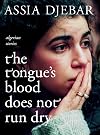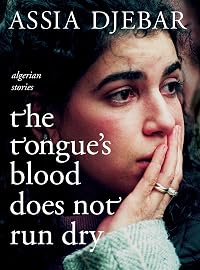
The Tongue's Blood Does Not Run Dry: Algerian Stories
by Assia Djebar
On This Page
Description
Internationally acclaimed novelist, scholar, poet and filmmaker Assia Djebar presents a brutal yet delicate exposition of how wars are fought upon women's lives and bodies. A French woman is renamed in order to be buried beside her Algerian husband; another loses her daughter to that continental divide. Despite divergent loyalties, the human heart exists within, beneath and beyond geographical borders.Tags
Recommendations







Member Reviews
This review was first published in Belletrista.
If Children of the New World represents the optimism of the mid 1950s in Djebar's work, The Tongue's Blood Does Not Run Dry represents the sorrow and anger of forty years later. This book comprises seven stories, each inspired by an actual story told to Djebar, and focused on the toll exacted by Algeria's turmoil on its women.
In the first part of the book the reader is faced with the terror of Algeria's Civil War. In a time when 160,000 to 200,000 assassinations took place, to take any side at all was to risk being executed. Women are left coping with murdered parents in "Oran, Dead Language" or a slain spouse in "The Attack" because speaking out against government corruption or oppression show more earned a death sentence from the OAS death squads.
Yet the alternative was no better. In the most haunting and fairy tale-like story of the collection, "The Woman in Pieces", Islamic fundamentalists callously kill an exceptional teacher in front of her students simply for teaching them fables. Or, in "Non-return Returns", we see even the bond between mother and daughter broken apart simply for sitting with a boy, in an oppressive regard for "the honor of the venerable, betrayed father."
These horrific stories, all the more so for being based in actual experience, serve to memorialize the forgotten voices in the struggle between one oppressor and another.
The second portion of the book looks at those caught between the two worlds of France and Algeria, and the seeming inability for them to coexist peacefully. In "Annie and Fatima" a French mother, seeing her daughter who was kidnapped by the Algerian father, must face a young girl in a chador who "could get used to the idea of having a French mother" but could not get used to a mother who did not observe Islamic law.
In "Félicie's Body", the children of a French mother and Algerian father reflect on the polarity of their lives, each with an Arabic and a French name, two religions, two sets of expectations. As Ourdia/Louise muses, "[It's] as if they had placed their sons and their daughters on a frontier, a crest, a no-man's land...it's as if when we were born you told us, there, you've got two sides, two faces." In the end, they grapple with the fact that modern Algeria would simply not let this duality exist. To bury their mother, they must give her an Arabic name and pay to have her declared Muslim so that she can be interred with her husband in Algeria, as Armand/Karim says, "...two countries (which to disown, which to adopt?)"
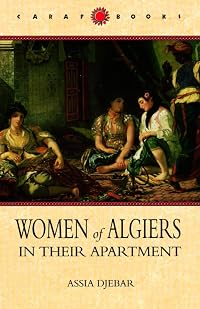
In looking at the distance between the optimism of Children of the New World and the despair of The Tongue's Blood Does Not Run Dry, we can see that the plight of women expressed so clearly in Women of Algiers can be read both literally and as a metaphor for Algeria herself. The loss of voice and public identity at the individual level was echoed at the national level. Djebar shows us that to speak up was to be silenced permanently by either OAS fanatics or Islamic extremists; to have an identity other than "French" on one hand or "Arab" on the other might keep you alive, but it left no room to be a bit of both or even Berber. The 1950s changed everything but, in the end, had changed nothing. When all is done, there is almost a tone of "why did we bother?" Assia Djebar's metaphor becomes explicit at the end of the book:
Except that the other, the other woman, the one in transit, wandering, today the mother of so many innocents who are pursued, expelled, and so many other who remain to be stifled with fear over there, yes, the other, Algeria—she rises up before me in Félicie's image. A murderer, a second, a third knocks into her, assaults her, pulls her by the hair...Who will save her? What word, what object can make the lunatic attacking her recoil? show less
If Children of the New World represents the optimism of the mid 1950s in Djebar's work, The Tongue's Blood Does Not Run Dry represents the sorrow and anger of forty years later. This book comprises seven stories, each inspired by an actual story told to Djebar, and focused on the toll exacted by Algeria's turmoil on its women.
In the first part of the book the reader is faced with the terror of Algeria's Civil War. In a time when 160,000 to 200,000 assassinations took place, to take any side at all was to risk being executed. Women are left coping with murdered parents in "Oran, Dead Language" or a slain spouse in "The Attack" because speaking out against government corruption or oppression show more earned a death sentence from the OAS death squads.
Yet the alternative was no better. In the most haunting and fairy tale-like story of the collection, "The Woman in Pieces", Islamic fundamentalists callously kill an exceptional teacher in front of her students simply for teaching them fables. Or, in "Non-return Returns", we see even the bond between mother and daughter broken apart simply for sitting with a boy, in an oppressive regard for "the honor of the venerable, betrayed father."
These horrific stories, all the more so for being based in actual experience, serve to memorialize the forgotten voices in the struggle between one oppressor and another.
The second portion of the book looks at those caught between the two worlds of France and Algeria, and the seeming inability for them to coexist peacefully. In "Annie and Fatima" a French mother, seeing her daughter who was kidnapped by the Algerian father, must face a young girl in a chador who "could get used to the idea of having a French mother" but could not get used to a mother who did not observe Islamic law.
In "Félicie's Body", the children of a French mother and Algerian father reflect on the polarity of their lives, each with an Arabic and a French name, two religions, two sets of expectations. As Ourdia/Louise muses, "[It's] as if they had placed their sons and their daughters on a frontier, a crest, a no-man's land...it's as if when we were born you told us, there, you've got two sides, two faces." In the end, they grapple with the fact that modern Algeria would simply not let this duality exist. To bury their mother, they must give her an Arabic name and pay to have her declared Muslim so that she can be interred with her husband in Algeria, as Armand/Karim says, "...two countries (which to disown, which to adopt?)"
In looking at the distance between the optimism of Children of the New World and the despair of The Tongue's Blood Does Not Run Dry, we can see that the plight of women expressed so clearly in Women of Algiers can be read both literally and as a metaphor for Algeria herself. The loss of voice and public identity at the individual level was echoed at the national level. Djebar shows us that to speak up was to be silenced permanently by either OAS fanatics or Islamic extremists; to have an identity other than "French" on one hand or "Arab" on the other might keep you alive, but it left no room to be a bit of both or even Berber. The 1950s changed everything but, in the end, had changed nothing. When all is done, there is almost a tone of "why did we bother?" Assia Djebar's metaphor becomes explicit at the end of the book:
Except that the other, the other woman, the one in transit, wandering, today the mother of so many innocents who are pursued, expelled, and so many other who remain to be stifled with fear over there, yes, the other, Algeria—she rises up before me in Félicie's image. A murderer, a second, a third knocks into her, assaults her, pulls her by the hair...Who will save her? What word, what object can make the lunatic attacking her recoil? show less
A set of Algerian stories, linked by the themes of identity and struggle. Mostly told from the point of view of women as national and international concerns affect personal lives in painful and fatal ways. The struggle for identity of the country during and after its messy divorce from France is played out in the characters own contradictory and confused identities. The title nicely picks up on the part of language in identity -- French, Arabic and Berber -- as well as the urgency and importance of these stories being told come what may.
Powerful and poetic writing, which comes over well in Tegan Raleigh's English translation. Not a cheering read, but an important one, whose themes are relevant to today's conflicts around the world.
Powerful and poetic writing, which comes over well in Tegan Raleigh's English translation. Not a cheering read, but an important one, whose themes are relevant to today's conflicts around the world.
In the 1990's Algeria suffered a bloody civil war between the government forces and Muslim fundamentalists. These stories were written in 1996 and 1997 by renowned Algerian author Assia Djebar, while she was living in Paris after fleeing her homeland. All these stories are based on conversations she had with women from Algeria who had lived through the events she relates.
There are grown daughters returning to Algeria with next-to-nothing to remember their murdered parents; an elderly lady whose children have to make the decision of where to bury her; a teacher whose husband has recently been assassinated who is terrified after inadvertently dropping a French word in a classroom.
My favorites in the collection incorporate classical themes show more and magical realism from Arab literature and the “One Thousand And One Nights”. One of these is “The Woman in Pieces” where the severed head continues to tell its truth. In another Berber texts are sun by Mzab women.
These stories, while reflecting the bloody struggle of the 90's, are also relevant to the Middle Eastern conflicts today. As the cover blurb says: Djebar ”explores the conflicting realities of the role of women in the Arab world … and the struggle for change...” show less
There are grown daughters returning to Algeria with next-to-nothing to remember their murdered parents; an elderly lady whose children have to make the decision of where to bury her; a teacher whose husband has recently been assassinated who is terrified after inadvertently dropping a French word in a classroom.
My favorites in the collection incorporate classical themes show more and magical realism from Arab literature and the “One Thousand And One Nights”. One of these is “The Woman in Pieces” where the severed head continues to tell its truth. In another Berber texts are sun by Mzab women.
These stories, while reflecting the bloody struggle of the 90's, are also relevant to the Middle Eastern conflicts today. As the cover blurb says: Djebar ”explores the conflicting realities of the role of women in the Arab world … and the struggle for change...” show less
"The stories linger on in your mind long after you've started a different narrative."
read more: http://likeiamfeasting.blogspot.co.uk/2013/04/the-tongues-blood-does-not-run-dry...
read more: http://likeiamfeasting.blogspot.co.uk/2013/04/the-tongues-blood-does-not-run-dry...
Racconti brevi, dal ritmo incalzante in cui emerge predominante l'atmosfera cupa e drammatica della condizione algerina. E' un omaggio alla memoria dei tanti amici fraterni e colleghi intellettuali, caduti sotto i colpi spietati e brutali degli integralisti.
Aug 28, 2013Italian
Ratings
Members
- Recently Added By
Author Information

26+ Works 1,561 Members
Assia Djebar was born Fatima-Zohra Imalayan in Cherchell, Algeria on June 30, 1936. She read history at the Sorbonne in Paris, and, after teaching at Tunis and Rabat universities, emigrated to France with her husband and children. Her first novel, La Soif (The Mischief), was published in 1957. She wrote more than 15 novels during her lifetime show more including Algerian White, So Vast the Prison, The Tongue's Blood Does Not Run Dry, and The Children of the New World. She was also a playwright and filmmaker. In 2005, she became the fifth woman to be elected to the Académie Française. She received numerous awards for her work including the International Prize of Palmi, the Peace Prize of the Frankfurt Book Fair, the International Critics' Prize at the Venice Biennale for the film La Nouba des Femmes du Mont Chenoua, and the International Literary Neustadt Prize. She died on February 7, 2015 at the age of 78. (Bowker Author Biography) show less
Common Knowledge
- Canonical title
- The Tongue's Blood Does Not Run Dry: Algerian Stories
- Original publication date
- 2006 (English translation) (English translation)
- Important places
- Algeria
Classifications
- Genres
- Fiction and Literature, General Fiction, Historical Fiction
- DDC/MDS
- 843.914 — Literature & rhetoric French Literature French fiction 1900- 20th Century 1945-1999
- LCC
- PQ3989.2 .D57 .A2 — Language and Literature French, Italian, Spanish and Portuguese literatures French literature Provincial, local, colonial, etc.
- BISAC
Statistics
- Members
- 96
- Popularity
- 335,625
- Reviews
- 5
- Rating
- (3.58)
- Languages
- English, French, German, Italian
- Media
- Paper, Ebook
- ISBNs
- 9
- ASINs
- 2