On This Page
Description
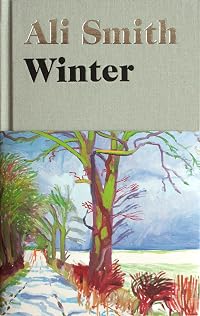
From Man Booker Prize Finalist Ali Smith, Winter is the second novel in her Seasonal Quartet. This much-anticipated follow-up to Autumn is one of the Best Books of the Year from the New York Public Library.“A stunning meditation on a complex, emotional moment in history.” —Time
Winter. Bleak. Frosty wind, earth as iron, water as stone, so the old song goes. And now Art’s mother is seeing things. Come to think of it, Art’s seeing things himself.
When four people, show more strangers and family, converge on a fifteen-bedroom house in Cornwall for Christmas, will there be enough room for everyone?
Winter. It makes things visible. Ali Smith’s shapeshifting Winter casts a warm, wise, merry and uncompromising eye over a post-truth era in a story rooted in history and memory and with a taproot deep in the evergreens, art and love. show less
Tags
Recommendations









Member Reviews
Ali Smith writes books that make me think; her prose is unusual and often experimental. Winter opens in a way that immediately makes you wonder, “what is this all about?” Just as discomfort sets in, Smith transitions to a more traditional narrative style, taking readers inside the mind of Sophia Cleves, an older woman seeking help for some unusual symptoms. And then we meet Sophia’s son Art, who will be visiting Sophia for Christmas accompanied by his partner Charlotte. Except Charlotte recently left Art, and he doesn’t want to tell his mother this, so he offers to pay a young woman he’s barely met a considerable sum to accompany him and pretend to be Charlotte. Surprisingly, she accepts his offer.
While there’s considerable show more comedic potential in this setup, Smith doesn’t go there. Just as winter exposes a landscape, Smith exposes the tensions between family members, and the secrets they’ve kept over the years. Charlotte’s stand-in, Lux, is a sympathetic outsider who uses her role for good while managing her own secrets and needs. Smith periodically diverts the reader’s attention to political issues, past and present, and to be honest I’m still thinking about how these segments fit into the narrative. Despite that bit of confusion, this book was compelling, moving, and well crafted. show less
While there’s considerable show more comedic potential in this setup, Smith doesn’t go there. Just as winter exposes a landscape, Smith exposes the tensions between family members, and the secrets they’ve kept over the years. Charlotte’s stand-in, Lux, is a sympathetic outsider who uses her role for good while managing her own secrets and needs. Smith periodically diverts the reader’s attention to political issues, past and present, and to be honest I’m still thinking about how these segments fit into the narrative. Despite that bit of confusion, this book was compelling, moving, and well crafted. show less
The second instalment of Ali Smith's seasonal sequence - not a sequel to Autumn, but a standalone story that links to its precursor only in its images and themes, with a new set of characters and events.
Sophia is a fairly prosperous retired businesswoman, living in a big old house in Cornwall. Her son, Art, is coming to stay for Christmas with his girlfriend Charlotte (only he's just had a fight with her, and brings a Charlotte-stand-in instead...). And when Sophia gets up in the night of Christmas Eve, she discovers that Art has also smuggled in his aunt, Sophia's older sister Iris, a Greenham Common veteran and all-purpose peacenik, who definitely wasn't invited.
This is not a ghost story, Smith tells us, but all the same there are show more plenty of echoes of A Christmas Carol going on, and both Sophia and Art get their share of quasi-supernatural experiences in the course of the story. Shakespeare's Cymbeline is another strong intertextual presence, helped along by not-Charlotte, who turns out to be a Croatian Shakespeare scholar set adrift by the "Brexit" fiasco. I was expecting there to be a lot about Barbara Hepworth (we get a reproduction of one of her works on the inside back cover), and she does come into the story at a couple of crucial points, but she actually has rather less impact on the text than you would expect from one of Smith's "artists in residence".
Fun, but with plenty of well-observed criticism of the state of the world and the mess we're making of it, Britain in particular. And an overdue reminder of what we all owe to the Greenham Common women, and what they went through. (A small prize to anyone who can get through this book without getting Elvis's version of Muß i denn stuck in their brain...) show less
Sophia is a fairly prosperous retired businesswoman, living in a big old house in Cornwall. Her son, Art, is coming to stay for Christmas with his girlfriend Charlotte (only he's just had a fight with her, and brings a Charlotte-stand-in instead...). And when Sophia gets up in the night of Christmas Eve, she discovers that Art has also smuggled in his aunt, Sophia's older sister Iris, a Greenham Common veteran and all-purpose peacenik, who definitely wasn't invited.
This is not a ghost story, Smith tells us, but all the same there are show more plenty of echoes of A Christmas Carol going on, and both Sophia and Art get their share of quasi-supernatural experiences in the course of the story. Shakespeare's Cymbeline is another strong intertextual presence, helped along by not-Charlotte, who turns out to be a Croatian Shakespeare scholar set adrift by the "Brexit" fiasco. I was expecting there to be a lot about Barbara Hepworth (we get a reproduction of one of her works on the inside back cover), and she does come into the story at a couple of crucial points, but she actually has rather less impact on the text than you would expect from one of Smith's "artists in residence".
Fun, but with plenty of well-observed criticism of the state of the world and the mess we're making of it, Britain in particular. And an overdue reminder of what we all owe to the Greenham Common women, and what they went through. (A small prize to anyone who can get through this book without getting Elvis's version of Muß i denn stuck in their brain...) show less
Winter, the second in Ali Smith's seasons quintet, centers on Art, who has a side gig writing a blog about nature, a blog he just makes up. When his girlfriend dumps him, he hires a girl he meets at a bus stop to stand in for his girlfriend during his trip to his mother's house for Christmas. But a stand in girlfriend is not the greatest secret in the house over the holidays. Art's mother isn't doing well, and her estranged sister is called in to help. What follows is an uncomfortable, but necessary encounter between mother and son, between sisters, and Art learning a little about himself. The only stable person in the house is a homeless foreign girl trying to stay under the radar until the Brexit question is settled.
As I read this show more novel, I felt that it was missing the thing that made Autumn such a good book. The relationship between Daniel and Elisabeth had been so extraordinary that following that with a book about difficult people struggling was a hard sell. But then, on a rainy Sunday afternoon, I looked up to see that it was a few hours and half a book later -- the lack of deeply sympathetic characters didn't hamper Smith's ability to deliver a compelling story. I'm looking forward to continuing with this series of books. show less
As I read this show more novel, I felt that it was missing the thing that made Autumn such a good book. The relationship between Daniel and Elisabeth had been so extraordinary that following that with a book about difficult people struggling was a hard sell. But then, on a rainy Sunday afternoon, I looked up to see that it was a few hours and half a book later -- the lack of deeply sympathetic characters didn't hamper Smith's ability to deliver a compelling story. I'm looking forward to continuing with this series of books. show less
It’s a Christmas story, or at least a winter’s tale, and in either case there are bound to be misrepresentations, ghosts, flights of fancy, and the likelihood of mistletoe. Art is a nature blogger, a copyright checker, a fraud. Charlotte (actually Lux) is only posing as Charlotte. Art’s mother Sophia is a bit lost in her big house, especially at Christmas. And Iris, Art’s aunt, is so mythologizing that she may just talk herself into this story. It’s a homecoming of sorts, a dinner party theatrical, an opportunity to take one more look in the mirror.
Ali Smith continues her seasonal series here with the deftness of wordplay that can only be expected by now. Puns, twists, doubled meanings, even enlivened clichés play a part. show more There are outside viewpoints, both from characters when they were younger and from a current outsider (Lux). There is a coating of love, again not surprising for Smith. And then there are the heavy hitters, the clunky, clanky, current issue of what it means to be an outsider and of those who try to make an outsider of so many of us. Typically delightful and conspicuously serious.
Just what you hope for from the next Ali Smith novel.
Recommended. show less
Ali Smith continues her seasonal series here with the deftness of wordplay that can only be expected by now. Puns, twists, doubled meanings, even enlivened clichés play a part. show more There are outside viewpoints, both from characters when they were younger and from a current outsider (Lux). There is a coating of love, again not surprising for Smith. And then there are the heavy hitters, the clunky, clanky, current issue of what it means to be an outsider and of those who try to make an outsider of so many of us. Typically delightful and conspicuously serious.
Just what you hope for from the next Ali Smith novel.
Recommended. show less
I think it's hard to approach "why did I like this book so much". So if I start at the obvious "why would I *dis*like it, even if I didn't, overall" instead. The two viewpoint characters are both disagreeable politically - at least in my opinion and clearly the author's too. I think this is a difficult needle to thread for an author: how to create characters that you disagree with without them being obviously wrong. And I think as in Autumn the places where it breaks down are those where Smith directly addresses Brexit. Which is understandable, because even 5 and a half years from the vote, living with the consequences, having been involved in the "conversation", I still struggle to find the motivations comprehensible because from my show more personal perspective even those articulated by people are evil, facile and/or just objectively obviously wrong. Luckily these are only little bits.
So then there's also the obvious thing that Sophia and Art aren't super pleasant people. Sophia is given a lot of background that makes her sympathetic but Art... he barely gets a backstory that explains how he is how he is. He just behaves in ways that are inconsiderate and callous with no introspection and - spoiler, I guess - by the end of the book it's not clear that he's changed much. Like part of me was reading in the hope he'd finally realise and then the PoV focuses on himgetting an erection because a younger (lesbian!) woman is sleeping near him for cash. It's sad and pathetic. The extent to which it's clear he instrumentalises a vulnerable woman and treats her intelligence and insight mainly as something For Him is painful.
But... he's not evil. Most of what he does is just... banal. He has a relatively easy job doing something that's a net negative to the world but on the scale of things it's only a small thing and no worse than the average job. He's trying to write a blog on nature that he thinks is really important while ignoring politics and keeps slipping on updating it, makes up "personal" stories that didn't happen, is engaging with a small audience. We all make a decision about how much we engage with politics even when we know it's really important. We all have hobbies. Being a bad writer isn't a bad thing. It's good to express yourself. He fails to engage with the emotions of his politically aware ex-girlfriend but that's not that surprising, for a man. Lots of men like to pretend their reactions to things are "rational" in a way that denies the feelings of women. I mean, bad? Yeah. Not unusual though.
So then... you come to how he treats Lux. Lux appears in the story mostly for what she does for Sophia and Art. She says enough about herself that we get some insight into how she feels and what she cares about. She mentions casually a historyas a child of refugees from the Yugoslav wars, who left them because she couldn't deal with the weight of trauma . She's insightful and caring. And yet we never get a chance to see from her point of view. It's hard to avoid thinking about manic pixie dream girl type stuff, at least when you get shown stuff from Art's perspective. And there's a sense too a little bit here of betrayal by the author - she's casually used as part of Being Relevant To Brexit when she points out that due to Brexit she's not even sure how long she'll be allowed to stay in with a Croatian passport .
Although ok - isn't that kind of, also a point, like an important one? In that she basically becomes a sort of, temporary carer for Sophia which is a reflection of actual labour issues in the UK. And of course we're only seeing it through the eyes of two quite selfish and inconsiderate people who instrumentalise her so of course we don't get the perspective even the author one. And of course they only see her for what she can give them but without even bothering to try and address the material issues that mean she can't give them more and then moping about it... honestly like I complain a little bit and then I realise it's all weaved in more expertly than I'd thought at first.
And I think the thing is... the way Lux gets treated is uncomfortably familiar. It's very, very easy to slip into thinking that things suck for you but if only this one person would fix it for you. Then you'd be ok. Looking for solutions outside yourself to problems that are your own. Thinking of other people only as ways to make you better, the main character. Art does come across as a dick, but a mundane one. The sort of person it's easy to slide into being. And of course, by the endhe's only a little bit changed - he's willing to try a little harder in some ways and thinking about changing his job but he's still reliant on the work of his ex-gf for self realisation. He's looking for Lux but only when it's too late, and seemingly without having a thought about what her life is like. Even his quest for a particular Shakespeare folio is him unable to look for beauty that comes from his own understanding like his unreal nature blog. For now we see through a glass, darkly.
Sophia is in a way an easier character. Her contempt forher sister's politics and activism is given some complex background that makes her basically sympathetic. We also avoid any in depth look into her business life, we just see her afterwards, which means you don't need to think of any of her shadier actions there. Instead, she's mostly characterised negatively by inaction. show less
So then there's also the obvious thing that Sophia and Art aren't super pleasant people. Sophia is given a lot of background that makes her sympathetic but Art... he barely gets a backstory that explains how he is how he is. He just behaves in ways that are inconsiderate and callous with no introspection and - spoiler, I guess - by the end of the book it's not clear that he's changed much. Like part of me was reading in the hope he'd finally realise and then the PoV focuses on him
But... he's not evil. Most of what he does is just... banal. He has a relatively easy job doing something that's a net negative to the world but on the scale of things it's only a small thing and no worse than the average job. He's trying to write a blog on nature that he thinks is really important while ignoring politics and keeps slipping on updating it, makes up "personal" stories that didn't happen, is engaging with a small audience. We all make a decision about how much we engage with politics even when we know it's really important. We all have hobbies. Being a bad writer isn't a bad thing. It's good to express yourself. He fails to engage with the emotions of his politically aware ex-girlfriend but that's not that surprising, for a man. Lots of men like to pretend their reactions to things are "rational" in a way that denies the feelings of women. I mean, bad? Yeah. Not unusual though.
So then... you come to how he treats Lux. Lux appears in the story mostly for what she does for Sophia and Art. She says enough about herself that we get some insight into how she feels and what she cares about. She mentions casually a history
Although ok - isn't that kind of, also a point, like an important one? In that she basically becomes a sort of, temporary carer for Sophia which is a reflection of actual labour issues in the UK. And of course we're only seeing it through the eyes of two quite selfish and inconsiderate people who instrumentalise her so of course we don't get the perspective even the author one. And of course they only see her for what she can give them but without even bothering to try and address the material issues that mean she can't give them more and then moping about it... honestly like I complain a little bit and then I realise it's all weaved in more expertly than I'd thought at first.
And I think the thing is... the way Lux gets treated is uncomfortably familiar. It's very, very easy to slip into thinking that things suck for you but if only this one person would fix it for you. Then you'd be ok. Looking for solutions outside yourself to problems that are your own. Thinking of other people only as ways to make you better, the main character. Art does come across as a dick, but a mundane one. The sort of person it's easy to slide into being. And of course, by the end
Sophia is in a way an easier character. Her contempt for
‘’God was dead: to begin with.
And romance was dead. Chivalry was dead.
Poetry, the novel, painting, they were all dead, and art was dead. Theatre and cinema were both dead. Literature was dead. The book was dead.’’
Winter. I concluded my first reading experience in Ali Smith’s universe on a day when the centre of Athens was covered in snow. Sun and snow in the heart of the capital, the first in almost 20 years. During a break in my teaching sessions - because Zoom is still going strong, damn it!- I looked outside my window as the snow was falling. Silence and children’s laughter. And I thought, why does winter fascinate us so much? What is it that makes it so special? Does it bring us together or drive us apart? In Ali show more Smith’s moving masterpiece, both happen. As in life itself.
‘’It can do this because it’s midwinter, which is a time of year when children and gods are meant to meet, when a child can speak to gods and gods are meant to listen, a time that’s about children and gods being related.’’
Sophie, Iris, Art, Lux. Four people trying to spend Christmas Day as peacefully as they can, trying to remain unscathed by their reluctant interaction. Small chance, really. Two sisters, as different as day and night, and two strangers that decided to follow one another, each one obeying a special motive. Memories come and go, past anger and regrets come to the surface. Who are they? What are they looking for? Where will this search end? Why don’t we listen but remain too much in love with our own voice? Moving back and forth to an eventful past and a frighteningly uncertain present, Ali Smith’s characters share their thoughts on age and obligations, dreams and reality, ghosts and the people that pass by in a flash, freedom and revolution and propriety. Love and anger.
In a world where money is all there is because we chose to make it so, in a country where Brexit is a reality, in a time when a madman enters the White House, one may feel like a piece of stone, heavy and still. Do we let others create a sculpture of us, projecting their image on ourselves? Or do we CHOOSE to grab the tools and break the mold? After the attack on the Capitol by a bunch of uneducated bigots/racists/all-around barbarians obeying a monster, the final pages in Smith’s masterpiece became all the more poignant.
‘’It’s winter, still. There’s no snow. There’s been almost none all winter. It’ll be one of the warmest winters on record, again.
Still, it’s colder in some places than others.
This morning there was frost on the ridges of the turned earth across the fields, frost the sun had melted on one side only.
Art in nature.’’
My reviews can also be found onhttps://theopinionatedreaderblog.wordpress.com/ show less
And romance was dead. Chivalry was dead.
Poetry, the novel, painting, they were all dead, and art was dead. Theatre and cinema were both dead. Literature was dead. The book was dead.’’
Winter. I concluded my first reading experience in Ali Smith’s universe on a day when the centre of Athens was covered in snow. Sun and snow in the heart of the capital, the first in almost 20 years. During a break in my teaching sessions - because Zoom is still going strong, damn it!- I looked outside my window as the snow was falling. Silence and children’s laughter. And I thought, why does winter fascinate us so much? What is it that makes it so special? Does it bring us together or drive us apart? In Ali show more Smith’s moving masterpiece, both happen. As in life itself.
‘’It can do this because it’s midwinter, which is a time of year when children and gods are meant to meet, when a child can speak to gods and gods are meant to listen, a time that’s about children and gods being related.’’
Sophie, Iris, Art, Lux. Four people trying to spend Christmas Day as peacefully as they can, trying to remain unscathed by their reluctant interaction. Small chance, really. Two sisters, as different as day and night, and two strangers that decided to follow one another, each one obeying a special motive. Memories come and go, past anger and regrets come to the surface. Who are they? What are they looking for? Where will this search end? Why don’t we listen but remain too much in love with our own voice? Moving back and forth to an eventful past and a frighteningly uncertain present, Ali Smith’s characters share their thoughts on age and obligations, dreams and reality, ghosts and the people that pass by in a flash, freedom and revolution and propriety. Love and anger.
In a world where money is all there is because we chose to make it so, in a country where Brexit is a reality, in a time when a madman enters the White House, one may feel like a piece of stone, heavy and still. Do we let others create a sculpture of us, projecting their image on ourselves? Or do we CHOOSE to grab the tools and break the mold? After the attack on the Capitol by a bunch of uneducated bigots/racists/all-around barbarians obeying a monster, the final pages in Smith’s masterpiece became all the more poignant.
‘’It’s winter, still. There’s no snow. There’s been almost none all winter. It’ll be one of the warmest winters on record, again.
Still, it’s colder in some places than others.
This morning there was frost on the ridges of the turned earth across the fields, frost the sun had melted on one side only.
Art in nature.’’
My reviews can also be found onhttps://theopinionatedreaderblog.wordpress.com/ show less
Winter - Ali Smith
Audio performance by Melody Grove
5 stars
I know that many people who loved Smith’s Autumn were disappointed with this one. Not wanting to be disappointed, I put off reading Winter for quite a while. I started and stopped reading it at least twice, thinking that I would like it less as I read deeper into the book. As it turned out, the opposite was true. For me, the book just kept getting better.
This is a family Christmas celebration story. It is clear from the strange beginning that at least one family member is having some serious mental health issues. Sophia is obviously struggling and she’s also the curmudgeon of the story. I could sympathize with the difficulties she had at the bank and the optometrist. I love show more Smith’s satiric humor with real world frustrations.
There’s endless satire in Sophia’s son, Art(hur). There’s the fact that he gets paid to surf the internet looking for copyright infringement; that alone is a playground of irony for an author like Smith. He is also the author of a pretentious nature blog, Art in Nature, providing an opening for much derision at Art’s expense. Even better, Smith plays with that well worn romance trope; Art has to find a stranger to bring home with him because his girlfriend just dumped him.
The family gathering is completed with the arrival of Sophia's radical older sister, Iris. A series of back flashes provides insight into why this small family is unusual. Iris also gives Smith the opportunity for political comment on everything from the cold war and nuclear proliferation to the current refugee crisis, Brexit, and the American president, And now for our entertainment when we want humiliation we’ve got reality TV instead, Iris says. And soon instead of reality TV we’ll have the President of the United States.” I loved Iris and I loved the rocky but loving relationship between the two very different sisters. I could relate.
What else did I like? I enjoyed the word play and the literary references. We all owe so much to Dickens. Absolutely best of all was the bus load of avid bird watchers trekking to the fraudulently reported sighting of a rare bird. I laughed aloud. Been there. Done that. show less
Audio performance by Melody Grove
5 stars
I know that many people who loved Smith’s Autumn were disappointed with this one. Not wanting to be disappointed, I put off reading Winter for quite a while. I started and stopped reading it at least twice, thinking that I would like it less as I read deeper into the book. As it turned out, the opposite was true. For me, the book just kept getting better.
This is a family Christmas celebration story. It is clear from the strange beginning that at least one family member is having some serious mental health issues. Sophia is obviously struggling and she’s also the curmudgeon of the story. I could sympathize with the difficulties she had at the bank and the optometrist. I love show more Smith’s satiric humor with real world frustrations.
There’s endless satire in Sophia’s son, Art(hur). There’s the fact that he gets paid to surf the internet looking for copyright infringement; that alone is a playground of irony for an author like Smith. He is also the author of a pretentious nature blog, Art in Nature, providing an opening for much derision at Art’s expense. Even better, Smith plays with that well worn romance trope; Art has to find a stranger to bring home with him because his girlfriend just dumped him.
The family gathering is completed with the arrival of Sophia's radical older sister, Iris. A series of back flashes provides insight into why this small family is unusual. Iris also gives Smith the opportunity for political comment on everything from the cold war and nuclear proliferation to the current refugee crisis, Brexit, and the American president, And now for our entertainment when we want humiliation we’ve got reality TV instead, Iris says. And soon instead of reality TV we’ll have the President of the United States.” I loved Iris and I loved the rocky but loving relationship between the two very different sisters. I could relate.
What else did I like? I enjoyed the word play and the literary references. We all owe so much to Dickens. Absolutely best of all was the bus load of avid bird watchers trekking to the fraudulently reported sighting of a rare bird. I laughed aloud. Been there. Done that. show less
Members
- Recently Added By
Published Reviews
In the solid second entry in Smith’s seasonally themed quartet of novels, three estranged relatives and a charming stranger argue their way through Christmas in a manor house in the English countryside. Like Autumn, the novel employs a scattered, evocative plot and prose style, reflecting the fractured emotional, intellectual, and political states occupied by its contemporary characters. show more Though the approach misses more than it hits this time out, it’s still an engaging novel due to the ecstatic energy of Smith’s writing, which is always present on the page. show less
added by VivienneR
Lists

1001 Books You Must Read Before You Die
1,448 works; 1,134 members

Favourite Books
1,819 works; 316 members

Best of Scottish Literature
35 works; 6 members

Books Read in 2023
5,638 works; 147 members

A's favorite novels
100 works; 3 members

Kirkus Starred Fiction Reviews of Books Published in 2018
330 works; 3 members

To Read
617 works; 7 members

Books Read in 2018
4,360 works; 110 members

Books Read in 2019
4,052 works; 110 members

Books Read in 2021
5,361 works; 113 members

Novels without quotation marks
25 works; 1 member
Author Information

54+ Works 17,461 Members
Some Editions
Awards and Honors
Awards
Distinctions
Series

Work Relationships
Is contained in
Common Knowledge
- Canonical title
- Winter
- Original title
- Winter
- Original publication date
- 2017
- People/Characters
- Sophia Cleves; Arthur; Charlotte; Iris; Lux
- Important places
- Greenham, Berkshire, England, UK; Cornwall, England, UK
- Important events
- Brexit
- Epigraph
- Nor for the furious winter's rages.
William Shakespeare
Landscape directs its own images.
Barbara Hepworth
But if you believe you're a citizen of the world,
you're a citizen of nowhere.
Theresa May, 5 October 2016
We have returned the realm of mythology.Muriel Spark
Darkness is cheap.Charles Dickens - Dedication
- For Sarah Danielin the lion's denwith love
and for Sarah Woodmuß i' dennwith love - First words
- God was dead: to begin with.
- Last words
- (Click to show. Warning: May contain spoilers.)Art in nature.
- Original language*
- Engels
*Some information comes from Common Knowledge in other languages. Click "Edit" for more information.
Classifications
Statistics
- Members
- 1,384
- Popularity
- 17,190
- Reviews
- 60
- Rating
- (3.92)
- Languages
- 17 — Catalan, Chinese, Czech, Danish, Dutch, English, Finnish, French, German, Greek, Italian, Polish, Portuguese, Romanian, Russian, Spanish, Swedish
- Media
- Paper, Audiobook, Ebook
- ISBNs
- 46
- ASINs
- 7