On This Page
Description
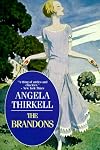
The irresistible Brandons, their friends and servants, are full of youthful nonsense and middle-aged folly. People will fall in love with the wrong person, and all are determined to misunderstand each other. Like Barbara Pym, E.F. Benson, and Jane Austen herself, Angela Thirkell has created a small world of her own in the English countryside. Calf-love, village affairs, and literary effort are her nominal subjects; but her real interest is people, at their imperfect best. This is the show more gentlest of social satire. show lessTags
Recommendations



















Member Recommendations



Member Reviews
I took a while to warm up to The Brandons.
The story revolves around significant social events for the Brandon family, the comfortably widowed Mrs Brandon and her two (barely) grown-up children: a picnic, the upcoming church fete and visits to their bedridden aunt, Miss Brandon, at Brandon Abbey. There is some question over whether Miss Brandon will leave the Abbey to the Brandons or to a distant nephew (none of whom want it), and also over what will happen to Miss Brandon’s companion. Meanwhile, Mrs Brandon has servants vying for her favour and admirers wanting to read things to her (which both Mrs Brandon and I found a little tedious!)
However, I became engrossed enough to read the second half in one sitting. There were a few times show more when I laughed aloud or found passages worthy of bookmarking.
The Brandons are friends with the Morelands (from High Rising and Summer Half) and the Keiths (from Summer Half), and I enjoyed the lively appearances of the younger members of both those families.
Thirkell is insightful about her characters’ foibles, but she also treats her characters with a certain gentleness - although her characters can be irritating or silly, they’re not defined by that. On the whole, they became people I wanted happy endings for. I also appreciate that they get different sorts of happy endings. For some character, that’s an engagement, while for others it’s the beginnings of the romance or the relief of no romance at all.
I didn’t find The Brandons as delightful as Summer Half or Pomfret Towers but I was sufficiently entertained - and immediately borrowed another Thirkell from the library. Even though I have other books to read first - even though I have other books I’m looking forward to - it’s comforting to know there’s another Thirkell sitting on my shelf, waiting for me.
“[...] Hullo, there’s a car at the front door.”
“A car?” said the invalid. “Whose car? No one has any business to bring cars here.”
“I can’t see whose, Aunt Sissie,” said Francis, “except that it’s a Rolls, but the county is rather well off in Rollses, so it might be anyone. I think cars ought to have the names of their owners painted very large on the roof so that one could see who is there and not open the front door.”
“Don’t talk nonsense,” said the old lady. “Cars indeed! When I was younger we knew all our friends’ carriages by sight, and their horses and their coachmen and footmen. Go and see whose car it is, Miss Morris. I will not have cars in my drive.” show less
The story revolves around significant social events for the Brandon family, the comfortably widowed Mrs Brandon and her two (barely) grown-up children: a picnic, the upcoming church fete and visits to their bedridden aunt, Miss Brandon, at Brandon Abbey. There is some question over whether Miss Brandon will leave the Abbey to the Brandons or to a distant nephew (none of whom want it), and also over what will happen to Miss Brandon’s companion. Meanwhile, Mrs Brandon has servants vying for her favour and admirers wanting to read things to her (which both Mrs Brandon and I found a little tedious!)
However, I became engrossed enough to read the second half in one sitting. There were a few times show more when I laughed aloud or found passages worthy of bookmarking.
The Brandons are friends with the Morelands (from High Rising and Summer Half) and the Keiths (from Summer Half), and I enjoyed the lively appearances of the younger members of both those families.
Thirkell is insightful about her characters’ foibles, but she also treats her characters with a certain gentleness - although her characters can be irritating or silly, they’re not defined by that. On the whole, they became people I wanted happy endings for. I also appreciate that they get different sorts of happy endings. For some character, that’s an engagement, while for others it’s the beginnings of the romance or the relief of no romance at all.
I didn’t find The Brandons as delightful as Summer Half or Pomfret Towers but I was sufficiently entertained - and immediately borrowed another Thirkell from the library. Even though I have other books to read first - even though I have other books I’m looking forward to - it’s comforting to know there’s another Thirkell sitting on my shelf, waiting for me.
“[...] Hullo, there’s a car at the front door.”
“A car?” said the invalid. “Whose car? No one has any business to bring cars here.”
“I can’t see whose, Aunt Sissie,” said Francis, “except that it’s a Rolls, but the county is rather well off in Rollses, so it might be anyone. I think cars ought to have the names of their owners painted very large on the roof so that one could see who is there and not open the front door.”
“Don’t talk nonsense,” said the old lady. “Cars indeed! When I was younger we knew all our friends’ carriages by sight, and their horses and their coachmen and footmen. Go and see whose car it is, Miss Morris. I will not have cars in my drive.” show less
What a fun read this was! Angela Thirkell's Barsetshire is a 20th-century version of the fictional place created by Anthony Trollope. The novels focus on one or two families, and the typical activities of those at a certain level of society: fairly well off, but perhaps just a tier below the very rich, landed gentry. The Brandons is the story of Lavinia Brandon and her two young adult children, and a dying aunt who may or may not leave her fortune to Lavinia's son Francis. Enter a cousin Hilary, the aunt's caretaker Miss Morris, the vicar Mr Miller, and assorted others all portrayed with considerable wit and satire, and I found myself chuckling even as dear Aunt Sissie slipped away. Thirkell's novels always involve an element of show more romance, which had me guessing from the very beginning, as to who will be paired off in the end. That, too, is part of the fun. Thirkell's novels make for perfect vacation or comfort reading. show less
A very agreeable bit of silliness, with what I'm beginning to recognise as the standard Thirkell plot elements (A thinks (s)he's in love with B, but the reader knows A and C go together and B is doomed to remain single...). An English summer, picnics, the church fête, squabbling servants, kitchen disasters, and a bit of suspense about an elderly relative's will that turns out not to be terribly important in the end. It's 1939, there are passing references to Mussolini, the Spanish civil war, and the expansion of the air force, but we don't really get the feeling that any of these things is going to influence the tranquil pace of life in Barsetshire.
I’ve said before how I really need to be in the right frame of mind for Angela Thirkell. Well clearly, I chose the perfect time to read The Brandons, I can honestly say it is my favourite one of hers to date. Deeply charming, and gently humorous, I found there was less of the silliness that I have encountered in previous Thirkell novels.
For those readers who love Tony Morland he and his mother are friends of the Brandons and make another appearance in this novel. If you are one of those readers who can’t stand him – he isn’t around much.
Set in a golden interwar period in the fictional Barsetshire, first created by Trollope, The Brandons is typical, ironic, cosy middlebrow fare. Almost everyone it seems has money, if they don’t show more have money they are in the fortunate position of working (often in service) for someone who does have money, generally in pleasant surroundings, where they are treated well. Everyone has an allotted sphere in life and no one steps outside of it – and should one of Thirkell’s central characters be unfortunate enough to not have much money – we are generally assured they are of very good family – lest we imagine they are of a lower order. Those lower orders exist on the periphery – the children contract chicken pox – the parents sob in gratitude over every little bit of help they are given. In short – The Brandons is of its time, but it is very, very enjoyable – and while it may not offer us a completely accurate portrait of 1930s society, it is a world I revelled in unashamedly for a while.
Mrs Brandon is a very beautiful, slightly ditzty widow with two young adult children.
“Francis and Delia again exchanged glances. It was a habit of their mother’s to make them entirely responsible for any difficulties brought into the family by the late Mr Brandon, saying the words ‘your father’ in a voice that implied a sinister collaboration between that gentleman and the powers of darkness for which her children were somehow to blame. As for Mr Brandon’s merits, which consisted chiefly in having been an uninterested husband and father for some six or seven years and then dying and leaving his widow quite well off, no one thought of them.”
Mrs Brandon is a woman everyone simply adores and for whom almost every man who encounters her develops a crush. Francis and Delia are the grown-up children – if it was ever revealed what (if anything) Francis does I failed to register it – Delia is nineteen (but comes across as about fourteen) – and is ghoulishly fascinated by anything and everything relating to accidents and illness. Francis and Delia’s Nurse is still very much a part of the family, and is frequently found chasing Miss Delia around complaining about the state of her knickers.
“I’m sorry to disturb you, madam,’ said Nurse, ‘but I thought I’d better speak to you. It’s about Miss Delia’s knickers’ she continued, after a glance at the Vicar and a rapid decision that his cloth protected him. ‘She really hasn’t a pair fit to wear…”
Everybody’s main concern is who will elderly spinster Miss Brandon, leave her crumbling abbey to. Miss Brandon has been threatening for years to leave everything to a never seen cousin, unaware that neither Mrs Brandon or her children really want to inherit. Marshalling her offspring to visit the old lady – having been prompted by a letter from Miss Morris; Miss Brandon’s companion, they find her even more confined to bed then formally. They are surprised to meet Hilary Grant, a young man studying classics with their vicar Mr Miller – and who it is revealed is the son of that cousin, and now a possible legatee. Hilary, Delia and Francis become fast friends, deciding that if one of them should inherit – they will share it. Hilary Grant, is a sensitive young man, and has unwittingly fallen under Mrs Brandon’s spell. He isn’t the only one, there have been moments when Mr Miller has cast a dewy eye her way too. To his horror Hilary’s mother decides to visit from Italy – staying at a local hostelry, everyone feels obliged to entertain her regularly. Mrs Grant is the kind of character Thirkell writes so well, loud, tweedy and opinionated. She loves nothing more than to talk about her ‘Calabrian peasants’ at every opportunity. In the midst of all this, Miss Brandon’s health seems to be deteriorating and Mr Miller has a fete to organise, and he really could do with some help.
Mrs Brandon is very delightful, she could so easily have been irritating but happily Thirkell makes her gloriously lovable. Both Hilary Grant and Mr Miller are writing books, and they will come and try and read bits to Mrs Brandon, who is always so easily distracted – and is forever having Nurse or the gardener coming to talk to her that they never get very far at all. Mrs Brandon is particularly concerned by Miss Morris, the lot of the literary companion is not always a happy one, and poor Miss Morris has been rather put upon. Mrs Brandon is completely in her element when she is trying to improve the lot of Miss Morris – who naturally is the most capable and sensible character in the novel.
In some ways, not a huge amount happens in the Brandons, but it is the gentle humour and affectionately drawn characters that drive the novel, making it a lovely, gentle cosy read. show less
For those readers who love Tony Morland he and his mother are friends of the Brandons and make another appearance in this novel. If you are one of those readers who can’t stand him – he isn’t around much.
Set in a golden interwar period in the fictional Barsetshire, first created by Trollope, The Brandons is typical, ironic, cosy middlebrow fare. Almost everyone it seems has money, if they don’t show more have money they are in the fortunate position of working (often in service) for someone who does have money, generally in pleasant surroundings, where they are treated well. Everyone has an allotted sphere in life and no one steps outside of it – and should one of Thirkell’s central characters be unfortunate enough to not have much money – we are generally assured they are of very good family – lest we imagine they are of a lower order. Those lower orders exist on the periphery – the children contract chicken pox – the parents sob in gratitude over every little bit of help they are given. In short – The Brandons is of its time, but it is very, very enjoyable – and while it may not offer us a completely accurate portrait of 1930s society, it is a world I revelled in unashamedly for a while.
Mrs Brandon is a very beautiful, slightly ditzty widow with two young adult children.
“Francis and Delia again exchanged glances. It was a habit of their mother’s to make them entirely responsible for any difficulties brought into the family by the late Mr Brandon, saying the words ‘your father’ in a voice that implied a sinister collaboration between that gentleman and the powers of darkness for which her children were somehow to blame. As for Mr Brandon’s merits, which consisted chiefly in having been an uninterested husband and father for some six or seven years and then dying and leaving his widow quite well off, no one thought of them.”
Mrs Brandon is a woman everyone simply adores and for whom almost every man who encounters her develops a crush. Francis and Delia are the grown-up children – if it was ever revealed what (if anything) Francis does I failed to register it – Delia is nineteen (but comes across as about fourteen) – and is ghoulishly fascinated by anything and everything relating to accidents and illness. Francis and Delia’s Nurse is still very much a part of the family, and is frequently found chasing Miss Delia around complaining about the state of her knickers.
“I’m sorry to disturb you, madam,’ said Nurse, ‘but I thought I’d better speak to you. It’s about Miss Delia’s knickers’ she continued, after a glance at the Vicar and a rapid decision that his cloth protected him. ‘She really hasn’t a pair fit to wear…”
Everybody’s main concern is who will elderly spinster Miss Brandon, leave her crumbling abbey to. Miss Brandon has been threatening for years to leave everything to a never seen cousin, unaware that neither Mrs Brandon or her children really want to inherit. Marshalling her offspring to visit the old lady – having been prompted by a letter from Miss Morris; Miss Brandon’s companion, they find her even more confined to bed then formally. They are surprised to meet Hilary Grant, a young man studying classics with their vicar Mr Miller – and who it is revealed is the son of that cousin, and now a possible legatee. Hilary, Delia and Francis become fast friends, deciding that if one of them should inherit – they will share it. Hilary Grant, is a sensitive young man, and has unwittingly fallen under Mrs Brandon’s spell. He isn’t the only one, there have been moments when Mr Miller has cast a dewy eye her way too. To his horror Hilary’s mother decides to visit from Italy – staying at a local hostelry, everyone feels obliged to entertain her regularly. Mrs Grant is the kind of character Thirkell writes so well, loud, tweedy and opinionated. She loves nothing more than to talk about her ‘Calabrian peasants’ at every opportunity. In the midst of all this, Miss Brandon’s health seems to be deteriorating and Mr Miller has a fete to organise, and he really could do with some help.
Mrs Brandon is very delightful, she could so easily have been irritating but happily Thirkell makes her gloriously lovable. Both Hilary Grant and Mr Miller are writing books, and they will come and try and read bits to Mrs Brandon, who is always so easily distracted – and is forever having Nurse or the gardener coming to talk to her that they never get very far at all. Mrs Brandon is particularly concerned by Miss Morris, the lot of the literary companion is not always a happy one, and poor Miss Morris has been rather put upon. Mrs Brandon is completely in her element when she is trying to improve the lot of Miss Morris – who naturally is the most capable and sensible character in the novel.
In some ways, not a huge amount happens in the Brandons, but it is the gentle humour and affectionately drawn characters that drive the novel, making it a lovely, gentle cosy read. show less
When my grandmother was paring down her belongs to move from her largish condo to a smaller home in another state, she let me go through her books and decide which, if any, I wanted to keep. As I rescued books I remember reading as a child (Tales of a Korean Grandmother anyone?), I also stumbled across The Brandons by Angela Thirkell. I had fallen in love with Thirkell's writing some time before but had thought her to be fairly obscure. And perhaps she is not well known to the current generation of book lovers but she was obviously much better known at one point in time. Her relative obscurity now is a shame because she is a wonderful and wonderfully prolific author. So despite the fact that I already had a copy of this book, I happily show more set my grandmother's 1939 hardcover aside to keep instead of my more recent paperback copy.
The Brandons is one of Thirkell's Barsetshire series of books, set in her imaginary English countryside and is as delightful as the book which precede it in the series. Set before WWII, The Brandons focuses on the eponymous family. Opening when wealthy, elderly Aunt Sissy, a bit of a termagant, is starting to fail more substantially than she has been for these many years. She has called upon Mrs. Brandon and her three mostly grown children to attend to her, as she has done periodically over the years. When they visit, the family meets Aunt Sissy's self-effacing nurse, Miss Morris, as well as another relative who has as much claim on Sissy's fortune as Francis Brandon.
But this is no struggle over an inheritance, instead it is a gentle, mocking novel with flashes of Thirkell's formidable wit focused in many ways more on the characters rather than the situation at hand. As a matter of fact, neither Francis nor Hilary Grant, the other relative, want to be saddled with Aunt Sissy's stately, though rather frightening and damp, home. And Aunt Sissy's health and eventual death are really a background to the relationship machinations detailed herein. We watch as Mrs. Brandon gamely and somewhat unconsciously accepts the devotion of all the men in her orbit, being obliged to listen politely to the poetry and lengthy prose each of them has undertaken. She also quietly and off-handedly tries to manipulate one of her admirers into professing an attachment to Miss Morris instead. Her own children regard her with fond amusement and she is not only masterfully drawn, but she is a fantastic foil for Hilary Grant's abrasive mother.
Thirkell's character construction is outstanding and her grasp of human nature is spot on. Her books rarely shout out for recognition but their understated elegance and their high entertainment value should garner them that recognition anyway. She has been compared to Jane Austen and in some ways, the similarities of their drawing room comedies barely masking social commentaries do deserve the comparison. But in most ways, they are very different writers, tackling very different societal norms and expectations. I do love Thirkell and her precise characters, the gentle tone, the sparkling, unexpected humor, and English village plots of her novels. I only wish more people would discover the delightfully entertaining Thirkell. show less
The Brandons is one of Thirkell's Barsetshire series of books, set in her imaginary English countryside and is as delightful as the book which precede it in the series. Set before WWII, The Brandons focuses on the eponymous family. Opening when wealthy, elderly Aunt Sissy, a bit of a termagant, is starting to fail more substantially than she has been for these many years. She has called upon Mrs. Brandon and her three mostly grown children to attend to her, as she has done periodically over the years. When they visit, the family meets Aunt Sissy's self-effacing nurse, Miss Morris, as well as another relative who has as much claim on Sissy's fortune as Francis Brandon.
But this is no struggle over an inheritance, instead it is a gentle, mocking novel with flashes of Thirkell's formidable wit focused in many ways more on the characters rather than the situation at hand. As a matter of fact, neither Francis nor Hilary Grant, the other relative, want to be saddled with Aunt Sissy's stately, though rather frightening and damp, home. And Aunt Sissy's health and eventual death are really a background to the relationship machinations detailed herein. We watch as Mrs. Brandon gamely and somewhat unconsciously accepts the devotion of all the men in her orbit, being obliged to listen politely to the poetry and lengthy prose each of them has undertaken. She also quietly and off-handedly tries to manipulate one of her admirers into professing an attachment to Miss Morris instead. Her own children regard her with fond amusement and she is not only masterfully drawn, but she is a fantastic foil for Hilary Grant's abrasive mother.
Thirkell's character construction is outstanding and her grasp of human nature is spot on. Her books rarely shout out for recognition but their understated elegance and their high entertainment value should garner them that recognition anyway. She has been compared to Jane Austen and in some ways, the similarities of their drawing room comedies barely masking social commentaries do deserve the comparison. But in most ways, they are very different writers, tackling very different societal norms and expectations. I do love Thirkell and her precise characters, the gentle tone, the sparkling, unexpected humor, and English village plots of her novels. I only wish more people would discover the delightfully entertaining Thirkell. show less
Angela Thirkell is one of those writers whose books I believe I first came across at a library sale, and picked up primarily for Mom; she can be hard to find reading matter for sometimes, but a nice solid British novel from the thirties is usually a safe bet. I don't know if Mom liked this (probably) – but I did. It plunked me down in the middle of Angela Thirkell's Barteshire Novels, but the structure of the series seems to be very forgiving of this sort of thing. It worked for me, anyway.
I've read Mapp and Lucia since finishing The Brandons, and I have to say that from this point of view Angela Thirkell's take on the upper middle class is a slightly kinder, gentler version of E.F. Benson's. There is skewering going on, and the show more characters are shown in their most ridiculous light – but my impression is that, unlike Benson, Thirkell genuinely enjoyed the characters she brought to life. For me, this makes for a much more pleasant read.
Mrs. Brandon is a gently self-centered, stunningly shallow, yet still somehow likeable young(ish) widow with two grown children, who tolerate her in a lovingly exasperated way. Her main concern in life is to avoid effort and strain; theirs is to keep her from saying too many completely inappropriate and overly frank things in any given public situation. One of their concerns is not, particularly, one which they might be expected to care deeply about: whether or not their crotchety elderly maiden great-aunt will leave her fortune to them or to the cousin she keeps bringing up as a threat whenever she feels neglected. She feels neglected fairly often, because she was their father's aunt, not their mother's, and sheer stubborn stiff-upper-lip duty is all that has dragged any of them to her door over the years. She is difficult, she is cantankerous, she has a stuffed gorilla, and it really doesn't matter to them where her money goes; they have enough of their own – but she is their relation, after all, and alone (except for the servants), and so go they must. They're rather nice people, despite themselves, and grudgingly.
There is match-making, match-avoiding, unrequited love, and a country fair. The book as a whole is not exactly plot-heavy, but it's also not utter froth: it's more of a meringue, toothsome fluff you can actually bite into. (That should be part of what "toothsome" means, darn it.) It's written with a light touch, so that not a soul in the book is wholly unpalatable; everyone has some crinkle or quirk that is if nothing else interesting. It's a lot of fun.
An Englishism I was driven to look up: Tin loaves - which are simply loaves of bread baked in loaf pans, and nothing to do after all with that brown bread baked in tin cans. But then how are loaves baked otherwise? Just as is on baking sheets? Obviously I need to do some serious bread research. show less
I've read Mapp and Lucia since finishing The Brandons, and I have to say that from this point of view Angela Thirkell's take on the upper middle class is a slightly kinder, gentler version of E.F. Benson's. There is skewering going on, and the show more characters are shown in their most ridiculous light – but my impression is that, unlike Benson, Thirkell genuinely enjoyed the characters she brought to life. For me, this makes for a much more pleasant read.
Mrs. Brandon is a gently self-centered, stunningly shallow, yet still somehow likeable young(ish) widow with two grown children, who tolerate her in a lovingly exasperated way. Her main concern in life is to avoid effort and strain; theirs is to keep her from saying too many completely inappropriate and overly frank things in any given public situation. One of their concerns is not, particularly, one which they might be expected to care deeply about: whether or not their crotchety elderly maiden great-aunt will leave her fortune to them or to the cousin she keeps bringing up as a threat whenever she feels neglected. She feels neglected fairly often, because she was their father's aunt, not their mother's, and sheer stubborn stiff-upper-lip duty is all that has dragged any of them to her door over the years. She is difficult, she is cantankerous, she has a stuffed gorilla, and it really doesn't matter to them where her money goes; they have enough of their own – but she is their relation, after all, and alone (except for the servants), and so go they must. They're rather nice people, despite themselves, and grudgingly.
There is match-making, match-avoiding, unrequited love, and a country fair. The book as a whole is not exactly plot-heavy, but it's also not utter froth: it's more of a meringue, toothsome fluff you can actually bite into. (That should be part of what "toothsome" means, darn it.) It's written with a light touch, so that not a soul in the book is wholly unpalatable; everyone has some crinkle or quirk that is if nothing else interesting. It's a lot of fun.
An Englishism I was driven to look up: Tin loaves - which are simply loaves of bread baked in loaf pans, and nothing to do after all with that brown bread baked in tin cans. But then how are loaves baked otherwise? Just as is on baking sheets? Obviously I need to do some serious bread research. show less
Oh my goodness, I had so much fun listening to this book! This novel, set in the 1930s in Anthony Trollope's fictional county of Barsetshire, was a delightful and occasionally laugh-out-loud comedy chronicling the lives of the English gentry. I can't even begin to describe the plot, so I'll describe some of the characters: Mrs. Brandon, a well-off widow who seems to have no time to speak of, though her primary responsibility is arranging flowers for the drawing room; her tart-tongued and attractive offspring Francis and Delia; the good hearted vicar Mr. Miller; the acerbic Miss Brandon, Mrs. Brandon's wealthy, elderly, and distantly-related aunt, whose arrangement of affairs as she nears the end of her life causes considerable gossip show more and worry from her family, each of whom fervently wishes not to inherit her estate; Miss Morris, who is Miss Brandon's long-suffering paid companion; Mrs. Grant, the dreadful visiting mother of Mr. Miller's pupil (and Mrs. Brandon's distant cousin) whose remark on nearly everything is a Calabrian saying favored by her delightful Calabrian peasants, but probably one that you would not understand because of the nuance of the Calabrian dialect; and even the servants Nurse and Rose the housekeeper, waging a bitter, decades-long battle for the favor of Mrs. Brandon. The narration, by Nadia May, was sublime, and I will now look for more of Angela Thirkell's books. Marvelous, light fun -- think early 20th century Jane Austen. Reading more about Angela Thirkell led me to this New York Times article on the pleasures of her work:
http://www.nytimes.com/2008/01/04/opinion/04fri3.html show less
http://www.nytimes.com/2008/01/04/opinion/04fri3.html show less
Members
- Recently Added By
Lists

Favourite Virago Modern Classics
183 works; 38 members
Author Information

47+ Works 8,508 Members
Series

Belongs to Publisher Series
Common Knowledge
- Canonical title
- The Brandons
- Original publication date
- 1939
- People/Characters
- Mrs Lavinia Brandon; Francis Brandon; Delia Brandon; Noel Merton; Hilary Grant; Tony Morland (show all 17); Mr Miller; Miss 'Ella' Morris; Amelia Brandon 'Aunt Sissie'; Laura Morland; Lydia Keith; Rose; Nurse; Cook; Mrs Grant; Curwen; Sir Edmund Pridham
- First words
- "I wonder who this is from", said Mrs Brandon, picking up a letter out of the heap that lay by her plate and holding it at arm's length upside down.
- Last words
- (Click to show. Warning: May contain spoilers.)Mr Merton's guardian angel, puzzled but on the whole satisfied, spread his wings and soon his path was vague in distant spheres.
Classifications
Statistics
- Members
- 454
- Popularity
- 67,371
- Reviews
- 18
- Rating
- (3.88)
- Languages
- English
- Media
- Paper, Audiobook, Ebook
- ISBNs
- 20
- ASINs
- 19