On This Page
Description
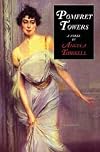
Pomfret Towers, Barsetshire seat of the earls of Pomfret, was constructed, with great pomp and want of concern for creature comforts, in the once-fashionable style of Sir Gilbert Scott's St Pancras station. It makes a grand setting for a house party at which gamine Alice Barton and her brother Guy are honoured guests, mixing with the headstrong Rivers family, the tally-ho Wicklows and, most charming of all, Giles Foster, nephew and heir of the present Lord Pomfret. But whose hand will Mr show more Foster seek in marriage, and who will win Alice's tender heart? Angela Thirkell's classic 1930s comedy is lively, witty and deliciously diverting. show lessTags
Recommendations




















Member Recommendations


Member Reviews
This is the 3rd Angela Thirkell I've read so far (and finished - I DNF'd one last year), and it is, by far, the most biting, painfully hilarious of the lot yet. I say painfully because all those moments you wish would happen in books, when the evil/nasty/rude character is at work, happen in this book. But I almost dnf'd this one too, because it doesn't start off well at all.
At the opening, it appears that the narrative (3rd person omniscient, btw) is going to focus primarily on Alice Barton, a character so Mary Sue that the Mary Sue trope should have been named Alice Barton. She is ridiculous; frankly, she's barely functioning. As I write this, it occurs to me that in current times, she might have been thought to be agoraphobic; she show more isn't, she's just terrified of everything beyond belief.
Fortunately the biting humor was making me laugh or giggle too often, so I kept on and discovered the story rapidly becomes an ensemble, and even though Alice continues to get more page time than the rest, her growing confidence makes her a tiny bit more bearable. Tiny bit. Fair warning, by the end of the book she's still pretty ridiculous.
But along the way, Thirkell does something interesting with Alice; something very unexpected from what I know of her Barsetshire books. She uses Alice's character to sniff around the edges of masochism and emotional abuse. Just the edges, mind you; events that would seem inconsequential or pathetic on their own start to add up to a disturbing pattern, and Thirkell writes a scene or two where her friends discuss her pattern of behaviour quite frankly. This doesn't go anywhere, of course; this book's destiny was to be a frivolous, entertainment, so of course everything works out in the end. But given the time it takes place (~1930), I found it to be an unexpected and interesting thread and raised the story's merit in my estimation.
The end was a tad trite, and could only be expected, but my rating stands because, man, this book was funny. show less
At the opening, it appears that the narrative (3rd person omniscient, btw) is going to focus primarily on Alice Barton, a character so Mary Sue that the Mary Sue trope should have been named Alice Barton. She is ridiculous; frankly, she's barely functioning. As I write this, it occurs to me that in current times, she might have been thought to be agoraphobic; she show more isn't, she's just terrified of everything beyond belief.
Fortunately the biting humor was making me laugh or giggle too often, so I kept on and discovered the story rapidly becomes an ensemble, and even though Alice continues to get more page time than the rest, her growing confidence makes her a tiny bit more bearable. Tiny bit. Fair warning, by the end of the book she's still pretty ridiculous.
But along the way, Thirkell does something interesting with Alice; something very unexpected from what I know of her Barsetshire books. She uses Alice's character to sniff around the edges of masochism and emotional abuse. Just the edges, mind you; events that would seem inconsequential or pathetic on their own start to add up to a disturbing pattern, and Thirkell writes a scene or two where her friends discuss her pattern of behaviour quite frankly. This doesn't go anywhere, of course; this book's destiny was to be a frivolous, entertainment, so of course everything works out in the end. But given the time it takes place (~1930), I found it to be an unexpected and interesting thread and raised the story's merit in my estimation.
The end was a tad trite, and could only be expected, but my rating stands because, man, this book was funny. show less
Alice is invited to a weekend house party by Lord and Lady Pomfret. She is very shy and would rather stay home and paint in her studio, but her parents make her go and she has a surprisingly enjoyable time, falling in love with the appalling Julian.
This is my least favourite Thirkell Barsetshire novel to date, mostly because I found Alice very young, being both naive and lacking in self confidence to a degree that made it hard to relate to her. Mrs Rivers was entertaining, as was Julian, but I think Gillie married the wrong woman...
This is my least favourite Thirkell Barsetshire novel to date, mostly because I found Alice very young, being both naive and lacking in self confidence to a degree that made it hard to relate to her. Mrs Rivers was entertaining, as was Julian, but I think Gillie married the wrong woman...
She just gets better and better. I've had to request a whole new batch from the library. Someday I will finish reading all her books for the first time and then I will be sad. Then I suppose I'll just start figuring out which are the very best and re-reading those.
I don't have any desire to be part of a large house party eating cold food in a drafty dining room, constantly changing clothes, and cetra. But she hits a sweet spot for me with the middle-aged mother and the newly grown-up children, and a whole slew of writers. I particularly enjoyed the references to characters from the other books.
Library copy
I don't have any desire to be part of a large house party eating cold food in a drafty dining room, constantly changing clothes, and cetra. But she hits a sweet spot for me with the middle-aged mother and the newly grown-up children, and a whole slew of writers. I particularly enjoyed the references to characters from the other books.
Library copy
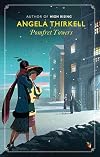
Unashamedly cosy alert! Angela Thirkell’s Barsetshire novels are beloved of many readers, for their humour and charm, Virago have been re-issuing them a few at a time, with these rather delicious looking covers. I now have the next three waiting for me, as I felt I needed them to look forward to.
Alice Barton the painfully shy and rather gauche, daughter of successful historical writer Susan Barton and her architect husband, is terrified at the idea of a weekend country house party at Pomfret Towers, the home of the irascible Lord Pomfret. Having grown up sickly and sheltered there is an awful lot that frightens Alice; the complicated matter of tipping maids and talking to butlers, lively dogs, being induced to speak in front of show more strangers, just some of them. Despite the invitation to Pomfret Towers including Alice’s older brother Guy, and their good friends, brother and sister, Sally and Roddy Wicklow, Roddy – who already works for the estate – an ever comforting presence to Alice, she is still daunted at the prospect.
The earl is a crusty old so and so, set in his ways but eager to please his wife, whose idea it was to have the weekend party. Angela Thirkell’s characters are wonderful, some of them endearing, some hilariously exasperating. The other main players are; the reluctant Pomfret heir shy, genial Giles Foster, the Rivers family, cousins by marriage of the Earl; they strident writer of travel romances, and her lovely daughter Phoebe, and her selfish artist son Julian. Mrs Rivers is a marvellous creation, referred to by her on publishers as the Baedeker bitch, she writes novels about middle aged women who go to exotic locations to find themselves and meet younger men are tempted, but ultimately return to their husbands reputation intact.
“I once looked at one.’ Lady Pomfret continued, ‘about people in Rome. A woman with a grown up son who lets herself have a kind of affair with a young American writer. When the characters spoke Italian it was not very correct. Of course the heroine was meant to be herself, but that was so foolish. Everyone knows that although she has made her husband’s – Lord Pomfret’s cousin you know- life a perfect burden by her airs, she is a most faithful wife. In fact I don’t think any man has ever looked at her, so she has hardly had much chance.’
Luckily things get off to a really good start when Alice is immediately taken care of by Phoebe Rivers, her lost parcel retrieved by Giles Foster. So finding a blessed bath in the corner of her room, meaning she won’t have to run the gauntlet of trips to the bathroom in a house full of strangers, puts Alice further at ease. The redoubtable Mrs Rivers meanwhile, – who has even arranged for her publisher Mr Johns to be invited so she can bend his poor ear remorsefully, – is determined to marry her daughter Phoebe to Giles. The two cousins have already decided, that friends though they are, spouses they will never be. Alice still has to contend with dinner, talk of hunting and hounds and the alarming red faced man and the strange shrieking girl, but she soon realises that in Phoebe, Giles and Roddy she has allies in abundance. On her first evening Alice is sat between Giles Foster and Julian Rivers during dinner, one look at Julian is enough for the tender young Alice to be smitten. As the weekend continues poor Alice is incapable of seeing Julian as he really is, self-centred and rather stupid, much to the despair of Roddy and Guy.
“Your sister was very kind to me,’ she said,
‘Oh, she’s all right,’ said Julian Rivers, adding, ‘I could make a picture of you, you know. I was looking at you in the drawing-room before dinner. Your face is all out of drawing, and I like that purple tint under your jawbone, and there’s a splendid green bit under you’re your eyes. God! how I could put in your nose with my thumb. I must do it.”
The scene is therefore set for plenty of 1930’s country house fun, with friendships and alliances being formed, and Alice slowly gaining in confidence. Incidently for readers of Trollope’s Barsetshire chronicles – there are some great little references slotted in that are fun to spot.
The old earl consults Mr Johns, in his own inimitable fashion, announcing his wish to publish his memoirs. Mrs Rivers trying to organise the house party her way keeps her beady eye on the friendship developing between Giles and Alice, as well as Alice and her son. Meanwhile Phoebe remains determined she will do anything to avoid her mother’s matrimonial plans. Dog loving, countrywoman Sally Wicklow is able to assist Giles in his plans for the estate, the future responsibility of which so overwhelms him. As the weekend comes to an end, the Rivers are staying on for a while, but Alice, Guy and the Wicklows head home, Alice enchanted with the idea that Julian wants to paint her, and Guy seeming to be a little smitten himself.
Angela Thirkell maybe shouldn’t be taken too seriously, these are the kind of books to curl up following a tiring day, a mug of tea and a plateful of crumpets at your side. They are witty, comforting and deeply charming, and I for one don’t think there is much wrong with any of that. Who will end up with whom? The nice thing about Angela Thirkell is that the reader is fairly sure of at least one happy ending. show less
Alice Barton the painfully shy and rather gauche, daughter of successful historical writer Susan Barton and her architect husband, is terrified at the idea of a weekend country house party at Pomfret Towers, the home of the irascible Lord Pomfret. Having grown up sickly and sheltered there is an awful lot that frightens Alice; the complicated matter of tipping maids and talking to butlers, lively dogs, being induced to speak in front of show more strangers, just some of them. Despite the invitation to Pomfret Towers including Alice’s older brother Guy, and their good friends, brother and sister, Sally and Roddy Wicklow, Roddy – who already works for the estate – an ever comforting presence to Alice, she is still daunted at the prospect.
The earl is a crusty old so and so, set in his ways but eager to please his wife, whose idea it was to have the weekend party. Angela Thirkell’s characters are wonderful, some of them endearing, some hilariously exasperating. The other main players are; the reluctant Pomfret heir shy, genial Giles Foster, the Rivers family, cousins by marriage of the Earl; they strident writer of travel romances, and her lovely daughter Phoebe, and her selfish artist son Julian. Mrs Rivers is a marvellous creation, referred to by her on publishers as the Baedeker bitch, she writes novels about middle aged women who go to exotic locations to find themselves and meet younger men are tempted, but ultimately return to their husbands reputation intact.
“I once looked at one.’ Lady Pomfret continued, ‘about people in Rome. A woman with a grown up son who lets herself have a kind of affair with a young American writer. When the characters spoke Italian it was not very correct. Of course the heroine was meant to be herself, but that was so foolish. Everyone knows that although she has made her husband’s – Lord Pomfret’s cousin you know- life a perfect burden by her airs, she is a most faithful wife. In fact I don’t think any man has ever looked at her, so she has hardly had much chance.’
Luckily things get off to a really good start when Alice is immediately taken care of by Phoebe Rivers, her lost parcel retrieved by Giles Foster. So finding a blessed bath in the corner of her room, meaning she won’t have to run the gauntlet of trips to the bathroom in a house full of strangers, puts Alice further at ease. The redoubtable Mrs Rivers meanwhile, – who has even arranged for her publisher Mr Johns to be invited so she can bend his poor ear remorsefully, – is determined to marry her daughter Phoebe to Giles. The two cousins have already decided, that friends though they are, spouses they will never be. Alice still has to contend with dinner, talk of hunting and hounds and the alarming red faced man and the strange shrieking girl, but she soon realises that in Phoebe, Giles and Roddy she has allies in abundance. On her first evening Alice is sat between Giles Foster and Julian Rivers during dinner, one look at Julian is enough for the tender young Alice to be smitten. As the weekend continues poor Alice is incapable of seeing Julian as he really is, self-centred and rather stupid, much to the despair of Roddy and Guy.
“Your sister was very kind to me,’ she said,
‘Oh, she’s all right,’ said Julian Rivers, adding, ‘I could make a picture of you, you know. I was looking at you in the drawing-room before dinner. Your face is all out of drawing, and I like that purple tint under your jawbone, and there’s a splendid green bit under you’re your eyes. God! how I could put in your nose with my thumb. I must do it.”
The scene is therefore set for plenty of 1930’s country house fun, with friendships and alliances being formed, and Alice slowly gaining in confidence. Incidently for readers of Trollope’s Barsetshire chronicles – there are some great little references slotted in that are fun to spot.
The old earl consults Mr Johns, in his own inimitable fashion, announcing his wish to publish his memoirs. Mrs Rivers trying to organise the house party her way keeps her beady eye on the friendship developing between Giles and Alice, as well as Alice and her son. Meanwhile Phoebe remains determined she will do anything to avoid her mother’s matrimonial plans. Dog loving, countrywoman Sally Wicklow is able to assist Giles in his plans for the estate, the future responsibility of which so overwhelms him. As the weekend comes to an end, the Rivers are staying on for a while, but Alice, Guy and the Wicklows head home, Alice enchanted with the idea that Julian wants to paint her, and Guy seeming to be a little smitten himself.
Angela Thirkell maybe shouldn’t be taken too seriously, these are the kind of books to curl up following a tiring day, a mug of tea and a plateful of crumpets at your side. They are witty, comforting and deeply charming, and I for one don’t think there is much wrong with any of that. Who will end up with whom? The nice thing about Angela Thirkell is that the reader is fairly sure of at least one happy ending. show less
Discovering a new author is so much fun, especially when they have published many books, and you know you have those to look forward to as well. Such is the case with Angela Thirkell, and Pomfret Towers which is part of her 29-volume Barsetshire series. I received this book from a Secret Santa, and was looking for fun, light reads over the holidays. Pomfret Towers fit the bill completely.
The novel is set in Barsetshire, a fictional English county created by Anthony Trollope. Where Trollope's novels are set in the 1850-60s, Thirkell's take place in the first half of the twentieth century. Pomfret Towers centers on a weekend house party for the young people of Barsetshire, hosted by the elderly Lord and Lady Pomfret. For Alice Barton, it show more is her first house party and she's scared to death: unsure of what to wear, how to conduct herself, and what to expect of servants. Her first instinct is to excuse herself completely, but she is convinced to attend when she learns good friends Roddy & Susan Wicklow will be there, along with her brother Guy. Once at Pomfret Towers, Alice meets a couple of young men who capture her interest, and the feelings seem to be mutual. But Alice is an unlikely match for both, so one wonders throughout how all this will turn out. Needless to say, over the course of the weekend there is much courting, and matchmaking by older members of the party, and Thirkell keeps the reader guessing about how people will pair off. Because, of course, they do.
Thirkell delivers the romantic storyline with a strong dose of social satire, poking fun at certain character types. Besides Lord Pomfret, who provides considerable much comedic value, she makes fun of authors, like this one:
Mrs Barton was well known as the author of several learned historical novels about the more obscure bastards of Popes and Cardinals, with a wealth of documentation that overawed reviewers. Owing to living so much in the fifteenth and sixteenth centuries, she sometimes found it difficult to remember where she was. ... When the tide ebbed, leaving her stranded upon the shores of everyday life, she would emerge in a dazed condition to preside at her own table, or take a fitful interest in her neighbours. (p. 3-4)
There are also annoying party guests, social climbers, and several all-around good people. Mix them up with an interesting and funny story line, and you have a highly enjoyable novel. I look forward to reading more of this series. show less
The novel is set in Barsetshire, a fictional English county created by Anthony Trollope. Where Trollope's novels are set in the 1850-60s, Thirkell's take place in the first half of the twentieth century. Pomfret Towers centers on a weekend house party for the young people of Barsetshire, hosted by the elderly Lord and Lady Pomfret. For Alice Barton, it show more is her first house party and she's scared to death: unsure of what to wear, how to conduct herself, and what to expect of servants. Her first instinct is to excuse herself completely, but she is convinced to attend when she learns good friends Roddy & Susan Wicklow will be there, along with her brother Guy. Once at Pomfret Towers, Alice meets a couple of young men who capture her interest, and the feelings seem to be mutual. But Alice is an unlikely match for both, so one wonders throughout how all this will turn out. Needless to say, over the course of the weekend there is much courting, and matchmaking by older members of the party, and Thirkell keeps the reader guessing about how people will pair off. Because, of course, they do.
Thirkell delivers the romantic storyline with a strong dose of social satire, poking fun at certain character types. Besides Lord Pomfret, who provides considerable much comedic value, she makes fun of authors, like this one:
Mrs Barton was well known as the author of several learned historical novels about the more obscure bastards of Popes and Cardinals, with a wealth of documentation that overawed reviewers. Owing to living so much in the fifteenth and sixteenth centuries, she sometimes found it difficult to remember where she was. ... When the tide ebbed, leaving her stranded upon the shores of everyday life, she would emerge in a dazed condition to preside at her own table, or take a fitful interest in her neighbours. (p. 3-4)
There are also annoying party guests, social climbers, and several all-around good people. Mix them up with an interesting and funny story line, and you have a highly enjoyable novel. I look forward to reading more of this series. show less
aking place in Anthony Trollope's fictional Barsetshire, Pomfret Towers is Thirkell's sixth book in her series. First and foremost, it is not a book with an adventurous plot. Not a whole lot happens at Pomfret Towers. The entire book is based on human relationships and their interactions.
Lord Pomfret is considered rude, but for the sake of status no one will turn down an invitation to dine at the Towers. They put aside their pride and self worth to grovel at the feet of an annoying man. He likes to invite the townsmen (without their wives) to dine with him. Considering Pomfret does not have chain stores or even cinemas, what else does the community have to do?
Alice Barton with no small trepidation accepts an invitation to a weekend-long show more party at Pomfret Towers. Her nervousness over Lord Pomfret's invitation borders on a deep social phobia. Even though Alice would be accompanied by her brother, Guy, Alice has always been a timid girl and dreads going to this party. She simply cannot picture herself laughing and carrying on with the other guests. Meanwhile her mother thinks a social event of this magnitude might do her daughter some good. Lord Pomfret had quite the weekend was planned: Friday - guests arrive in time for playing games.
Saturday - the men go shooting while the women go to see a castle. At night there is dancing.
Sunday - guests can attend church, enjoy a luncheon and look at horses.
When Alice develops a crush on the one man everyone else thinks is horrible she finds her voice to defend her love. This is pivotal for the young girl.
A secondary plot in Pomfret Towers is about Mrs. Rivers negotiating her advance on her next book. She claims she found someone else who will give her two hundred pounds. show less
Lord Pomfret is considered rude, but for the sake of status no one will turn down an invitation to dine at the Towers. They put aside their pride and self worth to grovel at the feet of an annoying man. He likes to invite the townsmen (without their wives) to dine with him. Considering Pomfret does not have chain stores or even cinemas, what else does the community have to do?
Alice Barton with no small trepidation accepts an invitation to a weekend-long show more party at Pomfret Towers. Her nervousness over Lord Pomfret's invitation borders on a deep social phobia. Even though Alice would be accompanied by her brother, Guy, Alice has always been a timid girl and dreads going to this party. She simply cannot picture herself laughing and carrying on with the other guests. Meanwhile her mother thinks a social event of this magnitude might do her daughter some good. Lord Pomfret had quite the weekend was planned: Friday - guests arrive in time for playing games.
Saturday - the men go shooting while the women go to see a castle. At night there is dancing.
Sunday - guests can attend church, enjoy a luncheon and look at horses.
When Alice develops a crush on the one man everyone else thinks is horrible she finds her voice to defend her love. This is pivotal for the young girl.
A secondary plot in Pomfret Towers is about Mrs. Rivers negotiating her advance on her next book. She claims she found someone else who will give her two hundred pounds. show less
Pomfret Towers is about a house party and its aftermath. I didn’t find it quite as funny as Summer Half, but it’s just as cosy and delightful. It was a perfect book for a rainy day.
Alice Barton is invited, along with her brother and her two friends, to spend the weekend at Pomfret Towers. Alice has had a secluded upbringing and is painfully shy, and much of the story is about how she navigates this first taste of wider society. However, Alice isn’t the only guest to have problems. Most of the others’ problems involve Mrs Rivers, who is annoys her daughter with her matching-making, and her publisher with her demands, and the other guests with her attempts to arrange entertainment.
I really appreciated that, although there’s the show more potential for the party to be a crushing disaster for Alice, it’s a success - a realistic success. She doesn’t magically transform, like the ugly duckling turning to a beautiful swan, into a sophisticated and self-assured socialite, but people are mostly kind and some go out of their way to put her at ease, and she comes away with more confidence and more friends than she had when she started.
I also appreciated that it isn’t easy to predict how the various romantic subplots will resolve. This seems to be a strength of Thirkell’s.
Mrs Barton was well known as the author of several learned historical novels about the more obscure bastards of Popes and Cardinals, with a wealth of documentation that overawed reviewers. Owing to living so much in the fifteenth and sixteenth centuries, she sometimes found it difficult to remember where she was [...] she only had to go into her sitting room and take up a paper or a book, to be at once engulfed in the ocean of the past, re-living with intensity the lives of people about whom little was known and whose very existence was dubious. When the tide ebbed, leaving her stranded upon the shores of everyday life, she would emerge in a dazed condition to preside at her own table, or take a fitful interest in her neighbours. show less
Alice Barton is invited, along with her brother and her two friends, to spend the weekend at Pomfret Towers. Alice has had a secluded upbringing and is painfully shy, and much of the story is about how she navigates this first taste of wider society. However, Alice isn’t the only guest to have problems. Most of the others’ problems involve Mrs Rivers, who is annoys her daughter with her matching-making, and her publisher with her demands, and the other guests with her attempts to arrange entertainment.
I really appreciated that, although there’s the show more potential for the party to be a crushing disaster for Alice, it’s a success - a realistic success. She doesn’t magically transform, like the ugly duckling turning to a beautiful swan, into a sophisticated and self-assured socialite, but people are mostly kind and some go out of their way to put her at ease, and she comes away with more confidence and more friends than she had when she started.
I also appreciated that it isn’t easy to predict how the various romantic subplots will resolve. This seems to be a strength of Thirkell’s.
Mrs Barton was well known as the author of several learned historical novels about the more obscure bastards of Popes and Cardinals, with a wealth of documentation that overawed reviewers. Owing to living so much in the fifteenth and sixteenth centuries, she sometimes found it difficult to remember where she was [...] she only had to go into her sitting room and take up a paper or a book, to be at once engulfed in the ocean of the past, re-living with intensity the lives of people about whom little was known and whose very existence was dubious. When the tide ebbed, leaving her stranded upon the shores of everyday life, she would emerge in a dazed condition to preside at her own table, or take a fitful interest in her neighbours. show less
Members
- Recently Added By
Lists

Favourite Virago Modern Classics
183 works; 38 members

Comfort Reads
221 works; 40 members

Books Read in 2017
4,249 works; 130 members
Author Information

47+ Works 8,503 Members
Series

Belongs to Publisher Series
Perennial Library (P496)
Virago Modern Classics (589)
Work Relationships
Is contained in
Common Knowledge
- Canonical title
- Pomfret Towers
- Original publication date
- 1938
- People/Characters
- Earl of Pomfret; Alice Barton; Phoebe Rivers; Hermione Rivers; Guy Barton; Sally Wicklow (show all 8); Roddy Wicklow; Giles Foster
- Important places
- Pomfret Towers, Barsetshire, England, UK; Barsetshire, England, UK
- First words
- Nutfield is quite the most delightful town in that part of England.
- Quotations
- Mrs Rivers, making no sound, was standing in such mute misery as should have touched even a son.
To hear that one's oldest friend is probably in love with a stinking longhaired ass, and alternatively that the heir to an earldom is ready to lay the reversion of a coronet at her feet, is enough to make a chap think a bit.
There was on the writing-table a monstrous erection which had once been a receptacle for knives ... this case had been gutted and refitted and now contained four different sizes of notepaper of a hideous grey colour with what... (show all) looked like hundreds of hairs mangled into it and the address stamped in heavy Gothic characters, coroneted envelopes to match, postcards, telegraph forms, and gummed wrappers for newspapers.
The sixth Earl of Pomfret, while at Oxford, came under the influence of the Gothic revival. His first sight of St. Pancras station, when on his way north for some shooting, was a revelation, and a family mansion was erected f... (show all)rom plans prepared in the office of Sir Gilbert Scott. This pile, for no less a name is worthy of this vast medley of steep roofs, turrets, gables, and chimney stacks, crowned by a Victorian clock tower, took four years to build and is said to have cost its owner first and last as many hundred thousand pounds.
Lord Pomfret stopped on the threshold and glared suspiciously about him ... He was a tall elderly man with a soldierly carriage. His head was almost bald and his eyebrows very bushy. He had a heavy, old-fashioned moustache of... (show all) a pale sandy colour ... Lord Pomfret knew every inch of his estates even better than Mr. Hoare the old agent. - Last words
- (Click to show. Warning: May contain spoilers.)'Oh Roddy!' said Alice, and sighed with pure happiness.
- Original language
- English
Classifications
Statistics
- Members
- 383
- Popularity
- 81,658
- Reviews
- 11
- Rating
- (4.05)
- Languages
- English, Italian
- Media
- Paper, Audiobook, Ebook
- ISBNs
- 13
- ASINs
- 7