On This Page
Description
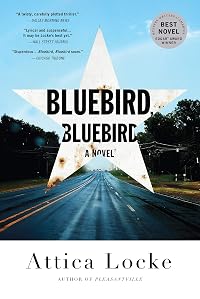
A heartbreakingly resonant thriller about the explosive intersection of love, race, and justice from a writer and producer of the Emmy-winning Fox TV show Empire. When it comes to law and order, East Texas plays by its own rules--a fact that Darren Mathews, a black Texas Ranger, knows all too well. Deeply ambivalent about growing up black in the lone star state, he was the first in his family to get as far away from Texas as he could. Until duty called him home. When his allegiance to his show more roots puts his job in jeopardy, he travels up Highway 59 to the small town of Lark, where two murders--a black lawyer from Chicago and a local white woman--have stirred up a hornet's nest of resentment. Darren must solve the crimes--and save himself in the process--before Lark's long-simmering racial fault lines erupt. From a writer and producer of the Emmy winning Fox TV show Empire, Bluebird, Bluebird is a rural noir suffused with the unique music, color, and nuance of East Texas. show lessTags
Recommendations












Member Reviews
At a time when police misconduct on the news makes police heroics on the page seem jarringly fictional, Attica Locke gives us what promises to be the first in a compelling new series that doesn't shy away from confronting the complexities of racism and its corrosive effect on policing, justice, and the American way.
Darren Mathews is in danger of losing his wife and his job. His spouse, never happy that he left law school to become a Texas Ranger, is ready to call it quits, and he's in legal trouble for coming to the aid of a friend during a dispute with a white supremacist that turned deadly. He's surprised when some higher-ups decide that, though he's been placed on leave, he's just the man to send to Lark, a small East Texas town, to show more offer the local sheriff support in solving two murders. A black man from Chicago turned up beaten and drowned in the bayou behind a local cafe just a few days before the body of a local white woman washed up in the same bayou. Maybe having a black Texas Ranger on the ground will help smooth over any negative publicity that could come to a town where black and white live side-by-side but in different worlds.
Mathews knows this territory. He grew up not far away, raised by two great-uncles, one a fierce defense lawyer and the other the first black Texas Ranger. Though he had left Texas behind to follow one uncle's example, he quit law school to follow the other's, joining the Rangers after his "9/11 moment," the day he heard about a black man being dragged to death behind a pickup truck in Jasper, a modern lynching not far from his home town. Texas isn't just a backward racist state to Mathews; it's his home, and home to people he loves. If he didn't do his duty, he figures the racists would win.
It's that stubborn devotion to the ideal of the Rangers and to the truth that makes him keep digging even after he's found a solution that seems to satisfy everyone to the double murder. Lark has a small cafe run by a black woman where he feels at home, a place where there's blues on the jukebox, good food on the stove, and a lingering mystery about the long-ago death of its former owner and his son. Lark is also home, just up the road, to a bar where members of the Aryan Brotherhood hang out and likely sell drugs. Just as he was unwilling to let Jasper define his home state, Mathews won't let easy answers solve his double homicide.
This is a rich and heady brew of a book, steeped in the past and full of East Texas flavor. It has a well-realized cast of characters, a rich sense of place, and a plot that combines reflection with the pacing of a thriller. It delves into the conflicted commitment a black man might feel toward his badge and brings to life the deep, enduring love people can have for a place where bigotry has deep roots. Like its hero, the novel refuses to investigate questions of justice without acknowledging the role racism plays in American society. Likewise, Locke doesn't shy away from the complicated way that human relationships cross over the social barriers we erect to keep our assumptions separated and simplified into black and white. It's a remarkable novel, and timely, and if it's truly the first in a series, we have a lot to look forward to. show less
Darren Mathews is in danger of losing his wife and his job. His spouse, never happy that he left law school to become a Texas Ranger, is ready to call it quits, and he's in legal trouble for coming to the aid of a friend during a dispute with a white supremacist that turned deadly. He's surprised when some higher-ups decide that, though he's been placed on leave, he's just the man to send to Lark, a small East Texas town, to show more offer the local sheriff support in solving two murders. A black man from Chicago turned up beaten and drowned in the bayou behind a local cafe just a few days before the body of a local white woman washed up in the same bayou. Maybe having a black Texas Ranger on the ground will help smooth over any negative publicity that could come to a town where black and white live side-by-side but in different worlds.
Mathews knows this territory. He grew up not far away, raised by two great-uncles, one a fierce defense lawyer and the other the first black Texas Ranger. Though he had left Texas behind to follow one uncle's example, he quit law school to follow the other's, joining the Rangers after his "9/11 moment," the day he heard about a black man being dragged to death behind a pickup truck in Jasper, a modern lynching not far from his home town. Texas isn't just a backward racist state to Mathews; it's his home, and home to people he loves. If he didn't do his duty, he figures the racists would win.
It's that stubborn devotion to the ideal of the Rangers and to the truth that makes him keep digging even after he's found a solution that seems to satisfy everyone to the double murder. Lark has a small cafe run by a black woman where he feels at home, a place where there's blues on the jukebox, good food on the stove, and a lingering mystery about the long-ago death of its former owner and his son. Lark is also home, just up the road, to a bar where members of the Aryan Brotherhood hang out and likely sell drugs. Just as he was unwilling to let Jasper define his home state, Mathews won't let easy answers solve his double homicide.
This is a rich and heady brew of a book, steeped in the past and full of East Texas flavor. It has a well-realized cast of characters, a rich sense of place, and a plot that combines reflection with the pacing of a thriller. It delves into the conflicted commitment a black man might feel toward his badge and brings to life the deep, enduring love people can have for a place where bigotry has deep roots. Like its hero, the novel refuses to investigate questions of justice without acknowledging the role racism plays in American society. Likewise, Locke doesn't shy away from the complicated way that human relationships cross over the social barriers we erect to keep our assumptions separated and simplified into black and white. It's a remarkable novel, and timely, and if it's truly the first in a series, we have a lot to look forward to. show less
A black Texas Ranger confronts the Aryan Brotherhood of Texas in this police procedural with a flawed protagonist and a twisty plot. Darren Matthews, suspended for his involvement in the defense of a friend accused of murder, travels to the tiny East Texas town of Lark to help investigate the killings of a local white girl and a black man who seemingly was just passing through, with no obvious ties to the community. Darren's family background, his two loving uncles and his wastrel mother, both supports and disadvantages him, and his estrangement from his wife and drinking problem result in his unsteadiness and self-doubt. But the true hero of the story is Geneva, owner of a small cafe that's the only welcoming institution for the black show more citizens of Lark, the wife and mother of murder victims, stoic and stolid and just barely holding it together until her dam can burst.
Quotes: "The graves themselves were spaced at haphazard and odd angles, like the teeth of a pauper."
"He was cozying up to his third drink, right on the line between a nice time and a mistake." show less
Quotes: "The graves themselves were spaced at haphazard and odd angles, like the teeth of a pauper."
"He was cozying up to his third drink, right on the line between a nice time and a mistake." show less
she does an amazing job here of balancing so much. she has this texas ranger who believes in justice but also is stepping outside the bounds of his role and not lying on the witness stand but definitely not being completely forthright either. he makes assumptions about race and the racial tensions in this small town he's a visitor to, while investigating a crime that he believes stems from the same racial assumptions and tensions. he makes bad decisions but also, when he thinks injustice - even for the criminal - is happening, he fights it.
locke is doing so much here, and all of it well. the different stories woven in, the way things come back up that you thought were dealt with, it's all deeper and more intricate than it seems. brava.
locke is doing so much here, and all of it well. the different stories woven in, the way things come back up that you thought were dealt with, it's all deeper and more intricate than it seems. brava.
This was my first by Attica Locke although her work has been on my radar for a couple years. This was a good mystery, well told. I really appreciated her writing which is a combination of earthy accuracy in dialect and timber with a literary sensibility. Her characters are well drawn and beg to be developed even further. My greatest disappointment was the last few pages. They seemed to be a contrived tag-on to set up the reader for a future installment. I resented this tease and felt it fell short of the previous quality of the book. I hope it was her editor that insisted on that as it was definitely not needed to get me to want to read more. Her work stands on its own.
Ed. Just noticed this is indeed the first in a series. I'll look show more forward to the others. show less
Ed. Just noticed this is indeed the first in a series. I'll look show more forward to the others. show less
Set in the East Texas weeds and swamps, this little debut thriller is an eye-opener. Locke takes the best of the thriller and mystery genres and turns them on their head with a hero for today - Darren Matthews, a black Texas Ranger. Suspended and in the midst of a troubled marriage, he takes on the Aryan Brotherhood, in a place where the AB and its racist notions are deeply rooted. Outside of a couple unbelievable procedural turns, the book is just about perfect. Looking forward to the sequel. The book is a great success in so many ways, not the least of which that it's author is an African-American female - not easy for a book with this kind of hero and with this kind of author to get onto the shelves.
I'm glad I waited to read Bluebird, Bluebird until now. Until the actions of #BlackLivesMatter have begun to spark this nation to change. Attica Locke takes those of us who have lived basically sheltered lives and shows us what it's really like for Blacks in the South, and it's not pretty. If you're Black, you have to navigate an entirely different roadmap from the rest of us. How did I feel as I read this book? As if I were suddenly thrown onto a different planet. As Darren Mathews walked into a bar that's home to the Aryan Brotherhood of Texas to local blind-eye law enforcement to Geneva Sweet's restaurant, I was with him, and I was on edge. You see, my way of thinking is that, if Blacks are treated like third-class citizens here in show more Lark, who's to say that someone who's not from these parts (even though she's white) will be treated any differently? I didn't feel any safer than Darren did, and that's a good bit of storytelling on Locke's part.
Mathews is an interesting character who certainly doesn't always do the sensible thing-- even when he knows how "the system" works in this area. Raised by his uncles, he's got a strong sense of justice, and he doesn't know when to quit. He can also see both sides of a situation: when things get tough for a white character, he can see that the man is being treated the exact same way the Black suspects were-- and that's not right.
Bluebird, Bluebird is a fast-paced intricate mystery that hooked me almost immediately, but be forewarned. If you don't like cliffhangers, this book ends on a doozy. Personally, I don't mind taking another trip up Highway 59. I have got to find out how Attica Locke continues Mathews' story in Heaven, My Home. show less
Mathews is an interesting character who certainly doesn't always do the sensible thing-- even when he knows how "the system" works in this area. Raised by his uncles, he's got a strong sense of justice, and he doesn't know when to quit. He can also see both sides of a situation: when things get tough for a white character, he can see that the man is being treated the exact same way the Black suspects were-- and that's not right.
Bluebird, Bluebird is a fast-paced intricate mystery that hooked me almost immediately, but be forewarned. If you don't like cliffhangers, this book ends on a doozy. Personally, I don't mind taking another trip up Highway 59. I have got to find out how Attica Locke continues Mathews' story in Heaven, My Home. show less
Bluebird, Bluebird by Attica Locke
Engrossing and laden with atmospheric foreboding-
This novel is packed with emotions, thick racial tensions and family dramas. I could almost imagine blues rifts playing in the background as the events in Lark, Texas unfolded. I could envision the town, the people, and feel the intense feeling of dread creeping up on me as the story unfolded.
When Michael Wright, a black lawyer from Chicago, stops in the small East Texas town, he never makes it back home. His body was pulled out the nearby bayou, and his fancy car disappeared somewhere along the way. A very short time later, the body of Missy Dale, a local white woman is also found dead. The possibility does exist, considering how small this town is, show more that the two deaths are connected.
Enter, Darren Matthews, a black Texas Ranger, currently on suspension, separated from his wife, in a full -on battle with a whiskey bottle. Darren is given permission to casually visit, sans his badge, Lark, Texas to get the lay of the land. There, he encounters a kindred spirit of sorts in Michael Wright’s widow, who is there to claim her husband’s body.
Before long, Darren has slapped his badge back on and finds himself in the midst of a full blown murder investigation.
The deaths seem to have a connection to Geneva Sweet, the owner of a local café. It would appear, that Michael Wright stopped by her place, asking some questions, right before he was murdered. Geneva’s past comes sharply into focus as Darren investigates Michael and Missy’s murders, amid rumors that the Aryan Brotherhood may have few contacts within Lark, meaning Missy's angry husband.
Bluebird, bluebird, please do this for me
Ooh, bluebird, please do this for me
If you see my baby, tell her I want her to come back home to me
John Lee Hooker
I could not put this book down!! The mystery is compelling and very suspenseful, but it’s the lush writing, and deep characterizations that really made this novel stand out.
Darren cuts quite a figure as a Texas Ranger, with his Stetson hat and boots, but his deep -seated sense of loyalty and all his personal baggage causes him to entertain all manner of self-recriminations, regrets, and self-doubt.
But, the history of Lark, the beautiful descriptions of the area, and the musical homage goes a long way toward creating that dense atmosphere where racial hostilities simmer, threatening to boil over. The past will catch up with the present as old buried secrets surface and long overdue justice will finally be served.
I really need Attica Locke to write a follow-up to this one, since Darren still has some serious issues to address. I’d love to see this turn into a series, or at the very least a trilogy.
Either way, this author has left quite an impression on me. I’m ready to dive into her other novels, ASAP!!
4.5 stars rounded up show less
Engrossing and laden with atmospheric foreboding-
This novel is packed with emotions, thick racial tensions and family dramas. I could almost imagine blues rifts playing in the background as the events in Lark, Texas unfolded. I could envision the town, the people, and feel the intense feeling of dread creeping up on me as the story unfolded.
When Michael Wright, a black lawyer from Chicago, stops in the small East Texas town, he never makes it back home. His body was pulled out the nearby bayou, and his fancy car disappeared somewhere along the way. A very short time later, the body of Missy Dale, a local white woman is also found dead. The possibility does exist, considering how small this town is, show more that the two deaths are connected.
Enter, Darren Matthews, a black Texas Ranger, currently on suspension, separated from his wife, in a full -on battle with a whiskey bottle. Darren is given permission to casually visit, sans his badge, Lark, Texas to get the lay of the land. There, he encounters a kindred spirit of sorts in Michael Wright’s widow, who is there to claim her husband’s body.
Before long, Darren has slapped his badge back on and finds himself in the midst of a full blown murder investigation.
The deaths seem to have a connection to Geneva Sweet, the owner of a local café. It would appear, that Michael Wright stopped by her place, asking some questions, right before he was murdered. Geneva’s past comes sharply into focus as Darren investigates Michael and Missy’s murders, amid rumors that the Aryan Brotherhood may have few contacts within Lark, meaning Missy's angry husband.
Bluebird, bluebird, please do this for me
Ooh, bluebird, please do this for me
If you see my baby, tell her I want her to come back home to me
John Lee Hooker
I could not put this book down!! The mystery is compelling and very suspenseful, but it’s the lush writing, and deep characterizations that really made this novel stand out.
Darren cuts quite a figure as a Texas Ranger, with his Stetson hat and boots, but his deep -seated sense of loyalty and all his personal baggage causes him to entertain all manner of self-recriminations, regrets, and self-doubt.
But, the history of Lark, the beautiful descriptions of the area, and the musical homage goes a long way toward creating that dense atmosphere where racial hostilities simmer, threatening to boil over. The past will catch up with the present as old buried secrets surface and long overdue justice will finally be served.
I really need Attica Locke to write a follow-up to this one, since Darren still has some serious issues to address. I’d love to see this turn into a series, or at the very least a trilogy.
Either way, this author has left quite an impression on me. I’m ready to dive into her other novels, ASAP!!
4.5 stars rounded up show less
Members
- Recently Added By
Lists

Crime Writers' Association Daggers
76 works; 4 members

Books Set in Texas
34 works; 8 members

Edgar Award
418 works; 15 members

Kirkus Starred Fiction Reviews of Books Published in 2017
412 works; 7 members

Bitter Southerner Summer Reading Roundup
198 works; 8 members

Books Read in 2019
4,052 works; 110 members

Must-Read Books by Black Authors
114 works; 92 members

Books Read in 2021
5,361 works; 114 members

Books Read in 2018
4,360 works; 110 members

Top Five Books of 2022
736 works; 272 members

Southern fiction reading list
25 works; 1 member

Books Set in Small Towns and Villages
278 works; 16 members
Author Information

8+ Works 4,133 Members
Some Editions
Awards and Honors
Awards
Distinctions
Series

Common Knowledge
- Canonical title
- Bluebird, Bluebird
- Original title
- Bluebird, Bluebird
- Original publication date
- 2017
- People/Characters
- Darren Mathews; Randie Winston; Geneva Sweet
- Important places
- Texas, USA
- Epigraph
- I told him, "No, Mr. Moore."
-Lightnin' Hopkins, "Tom Moore Blues" - Dedication
- To the
Hathorne
Jackson
Johnson
Jones
Locke
Mark
McClendon
McGowan
Perry
Sweats
Williams
men and women who said no - First words
- Geneva Sweet ran an orange extension cord past Mayva Greenwood, Beloved Wife and Mother, May She Rest with Her Heavenly Father.
- Last words
- (Click to show. Warning: May contain spoilers.)He sank into a metal lawn chair as he realized that of course she'd pocketed the gun when she found it, that she had it in her purse right now, that she held his entire career as a Texas Ranger in her hands.
- Blurbers
- Ann Patchett; Esi Edugyan; Walter Mosley; Joe Ide; Ben Winters; Michael Koryta (show all 7); Michael Farris Smith
- Canonical DDC/MDS
- 813.6
- Canonical LCC
- PS3612.O247
Classifications
Statistics
- Members
- 1,272
- Popularity
- 19,240
- Reviews
- 78
- Rating
- (3.82)
- Languages
- 7 — Dutch, English, French, German, Italian, Portuguese, Spanish
- Media
- Paper, Audiobook, Ebook
- ISBNs
- 32
- ASINs
- 6