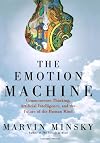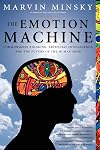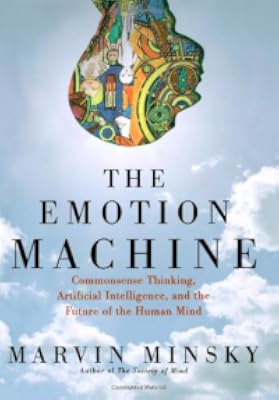
The Emotion Machine: Commonsense Thinking, Artificial Intelligence, and the Future of the Human Mind
by Marvin Minsky
On This Page
Description
In [this book, the author] shows why we should expand our ideas about thinking and how thinking itself might change in the future. [This book] explains how our minds work, how they progress from simple kinds of thought to more complex forms that enable us to reflect on ourselves -- what most people refer to as consciousness, or self-awareness. Unlike other broad theories of the mind, this book proceeds in a step-by-step fashion that draws on detailed and specific examples. It shows that show more thinking -- even higher-level thinking -- can be broken down into a series of specific actions. From emotional states to goals and attachments and on to consciousness and awareness of self, we can understand the process of thinking in all its intricacy. And once we understand thinking, we can build machines -- artificial intelligences -- that can assist with our thinking, machines that can follow the same thinking patterns that we follow and that can think as we do. These humanlike thinking machines would also be emotion machines -- just as we are.-Dust jacket. show lessTags
Recommendations





















Member Reviews
One of the geniuses behind modern artificial intelligence offers a very watered down, but still interesting view into neuroscience and processing of the human mind. Good for now, but I'd like to review one of his more technical works soon.
Veteran AI man Minsky ruminates on the mental architecture of the human animal, building on his earlier "society of mind" ideas. Not at all iconoclastic, and some chapters are quite bland and superficial. www.emotionmachine.net
Being part of a project proposal at the moment has sent me down the road of looking at what the Japanese are doing with robots and somehow this got me here.
I'm guessing it all would have been awfully useful to look at a couple of months ago.
Notes:
The Japanese see no sense of difference between themselves and everything around them.
The Japanese see no sense of separateness in the way we do between body and mind.
These two ideas might help come up with different ways of approaching the problem at hand.
I'm guessing it all would have been awfully useful to look at a couple of months ago.
Notes:
The Japanese see no sense of difference between themselves and everything around them.
The Japanese see no sense of separateness in the way we do between body and mind.
These two ideas might help come up with different ways of approaching the problem at hand.
An effort to understand human emotions. Is it possible from this ideas to emulate emotions for a robot, what for?. How can we exploit the positive side of our emotions in a robot?.
Ratings
Members
- Recently Added By
Author Information

21+ Works 3,240 Members
Marvin Minsky is Toshiba Professor of Media Arts and Sciences and Professor of Electrical Engineering and Computer Science at the Massachusetts Institute of Technology and cofounder of the M.I.T. Artificial Intelligence Laboratory
Common Knowledge
- Original publication date
- 2006
Classifications
Statistics
- Members
- 428
- Popularity
- 72,365
- Reviews
- 4
- Rating
- (3.77)
- Languages
- English, Spanish
- Media
- Paper, Ebook
- ISBNs
- 5
- UPCs
- 1
- ASINs
- 4