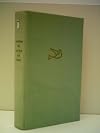
The Doves of Venus
by Olivia Manning
On This Page
Description
The dramatic and intense depiction of a love triangle set against the fashionable background of 1940s London. Pretty, brave and eighteen, Ellie has come to London in search of adventure. She soon finds it in Quintin Bellot, the handsome but tired dilettante who finds her a job in fashionable Chelsea. But Quintin, the seducer of one dove, is also the husband of another. And Petta, his once beautiful wife, is fighting back age as fiercely as Ellie is plunging into it.Tags
Recommendations









Member Reviews
I’ve really come to love Olivia Manning’s writing, and so I was delighted when I received The Doves of Venus as part of the Librarything Virago secret Santa parcel exchange. This accompanied me on the journey home from Devon almost two weeks ago now and proved to be one of the highlights of last month. Sometimes it is hard to write about a book I loved as much as I did this one, as I can’t really be objective. So, I should probably keep this simple.
Actually, the plot is very simple, but Olivia Manning brings so much to the story, her exploration of the characters is absolutely spot on. As always, her characters step fully formed from the page, they have a past and a future – and speak with the voices of people Olivia Manning show more herself must have known.
Eighteen-year old Ellie leaves her home in the provincial seaside town of Eastsea in search of independence. In Eastsea, Ellie’s mother runs a restaurant, and favours Ellie’s sister – who is about to get married. Ellie’s help is wanted – and everyone in the town seems to think it entirely appropriate that Ellie should stay and help her mother – and completely scandalous that she has gone off to London instead. Ellie is suffocated by the atmosphere of home; the small-town mind is not hers – she seems to be able to do nothing right anyway – and is always getting on the wrong side of her mother. Having done a night school art class at the technical college Ellie has her sights set on the art world.
In London, Ellie takes a small bedsit in Chelsea and manages to get a job at a furniture studio – initially in packing – but soon she is moved to the ‘antiquing’ room where she paints bits of furniture. She also acquires a middle-aged lover Quintin Bellot – who has a much more laid-back attitude to their affair than Ellie – who has fallen head over heels. The affair is destined to be a short one, with Ellie learning quickly, the complexities of a married lover.
“During her weeks with Quintin she had lived, it seemed like the ‘Snow Queen’ girl, in a garden where it was always summer. Now she was shut out from the summer garden of love.
‘My fault’ she said
All female gossip, all advice given in women’s magazines, made it clear that a woman thrown over had only herself to blame.”
Quintin is harried continually by his estranged wife – Petta; a familiar figure around the pubs on the Kings Road with her circle of assorted bohemians. When Petta leaves her most recent lover, she lands back at Quintin’s flat – much to his irritation – charming his housekeeper Mrs Trimmer and setting up home in his dressing room. Petta is manipulative and slightly hysterical, bitterly resentful toward all of Quintin’s ‘little girls’ – shrugging off her own indiscretions, a previous marriage and an abandoned daughter. She yearns sadly for a time that is long gone, a world she understood, the world as it had been when she was young.
“‘Why is it all so dismal now? What happened to life? What’s missing from it? It used to be such fun. It’s true, conditions were different. Money bought things then. Everyone had country cottages: they picked them up for a few pounds. Other people did the work for us – but it wasn’t all that that made life fun…’”
When Quintin tells Ellie, he won’t be able to see her anymore, she is devastated – but is determined to believe he will come back to her in time. In the meantime, Ellie concentrates hard on impressing with her work at the studio – and ignoring her mother’s attempts to get her to go home. Ellie is at the bottom of the rung at the studio – her tasks quite menial – she attempts to win the friendship of colleagues Denis and Bertie and when a new girl Nancy starts the two become firm friends.
Although she doesn’t see Quintin again for months – Ellie unknowingly spends time in a world not so far from Quintin. Nancy introduces Ellie to her uncle. Tom Claypole an old roué – who is also related to Quintin. Tom loves to surround himself with young girls, the doves of the title (nothing inappropriate occurs, Tom’s a gentleman). Ellie and Nancy spend several delightful weekends at Clopals – Tom’s country home. Nancy wants to put Tom’s mistress Maxine’s nose out of joint – and the two enjoy dancing attendance on the old man – who is a generous host. There is a wonderful exchange between Nancy and Tom about equal pay for men and women – an argument that rumbles on still.
“Recently she had spoken to Daze, the chief of staff, and had been told that there was one wage scale for men and another for women.
Tom nodded his approval: ‘Men need more money.’
‘They don’t need more’ said Nancy crossly, ‘they just get more, that’s all. Prices aren’t reduced for me because I’m a woman. You bet they’re not.’
‘Surely my dear girl, you’ve discovered by now that you’re living in a man’s world. You must try to gain things by your charms. We men are delighted to reward you, but we won’t disarm ourselves in your favour, Why should we? Eh?”
As the months pass, Quintin is never too far from Ellie’s thoughts – though the image of him fades a little – and she stops seeing him everywhere she goes. When they do meet again, he is no longer quite the romantic figure he was. Ellie has had to learn how to live in London on little money – and with few friends – she loses her job and is terrified to be in debt to her landlady. Ellie’s determination to remain independent sees her through – and by the time the novel ends she is a stronger, wiser young woman – who has found a new happiness for herself.
The Doves of Venus is a brilliant novel – which has reminded me I should get back to the Pringles and read The Levant Trilogy – having finished my re-read of The Balkan trilogy some months ago. show less
Actually, the plot is very simple, but Olivia Manning brings so much to the story, her exploration of the characters is absolutely spot on. As always, her characters step fully formed from the page, they have a past and a future – and speak with the voices of people Olivia Manning show more herself must have known.
Eighteen-year old Ellie leaves her home in the provincial seaside town of Eastsea in search of independence. In Eastsea, Ellie’s mother runs a restaurant, and favours Ellie’s sister – who is about to get married. Ellie’s help is wanted – and everyone in the town seems to think it entirely appropriate that Ellie should stay and help her mother – and completely scandalous that she has gone off to London instead. Ellie is suffocated by the atmosphere of home; the small-town mind is not hers – she seems to be able to do nothing right anyway – and is always getting on the wrong side of her mother. Having done a night school art class at the technical college Ellie has her sights set on the art world.
In London, Ellie takes a small bedsit in Chelsea and manages to get a job at a furniture studio – initially in packing – but soon she is moved to the ‘antiquing’ room where she paints bits of furniture. She also acquires a middle-aged lover Quintin Bellot – who has a much more laid-back attitude to their affair than Ellie – who has fallen head over heels. The affair is destined to be a short one, with Ellie learning quickly, the complexities of a married lover.
“During her weeks with Quintin she had lived, it seemed like the ‘Snow Queen’ girl, in a garden where it was always summer. Now she was shut out from the summer garden of love.
‘My fault’ she said
All female gossip, all advice given in women’s magazines, made it clear that a woman thrown over had only herself to blame.”
Quintin is harried continually by his estranged wife – Petta; a familiar figure around the pubs on the Kings Road with her circle of assorted bohemians. When Petta leaves her most recent lover, she lands back at Quintin’s flat – much to his irritation – charming his housekeeper Mrs Trimmer and setting up home in his dressing room. Petta is manipulative and slightly hysterical, bitterly resentful toward all of Quintin’s ‘little girls’ – shrugging off her own indiscretions, a previous marriage and an abandoned daughter. She yearns sadly for a time that is long gone, a world she understood, the world as it had been when she was young.
“‘Why is it all so dismal now? What happened to life? What’s missing from it? It used to be such fun. It’s true, conditions were different. Money bought things then. Everyone had country cottages: they picked them up for a few pounds. Other people did the work for us – but it wasn’t all that that made life fun…’”
When Quintin tells Ellie, he won’t be able to see her anymore, she is devastated – but is determined to believe he will come back to her in time. In the meantime, Ellie concentrates hard on impressing with her work at the studio – and ignoring her mother’s attempts to get her to go home. Ellie is at the bottom of the rung at the studio – her tasks quite menial – she attempts to win the friendship of colleagues Denis and Bertie and when a new girl Nancy starts the two become firm friends.
Although she doesn’t see Quintin again for months – Ellie unknowingly spends time in a world not so far from Quintin. Nancy introduces Ellie to her uncle. Tom Claypole an old roué – who is also related to Quintin. Tom loves to surround himself with young girls, the doves of the title (nothing inappropriate occurs, Tom’s a gentleman). Ellie and Nancy spend several delightful weekends at Clopals – Tom’s country home. Nancy wants to put Tom’s mistress Maxine’s nose out of joint – and the two enjoy dancing attendance on the old man – who is a generous host. There is a wonderful exchange between Nancy and Tom about equal pay for men and women – an argument that rumbles on still.
“Recently she had spoken to Daze, the chief of staff, and had been told that there was one wage scale for men and another for women.
Tom nodded his approval: ‘Men need more money.’
‘They don’t need more’ said Nancy crossly, ‘they just get more, that’s all. Prices aren’t reduced for me because I’m a woman. You bet they’re not.’
‘Surely my dear girl, you’ve discovered by now that you’re living in a man’s world. You must try to gain things by your charms. We men are delighted to reward you, but we won’t disarm ourselves in your favour, Why should we? Eh?”
As the months pass, Quintin is never too far from Ellie’s thoughts – though the image of him fades a little – and she stops seeing him everywhere she goes. When they do meet again, he is no longer quite the romantic figure he was. Ellie has had to learn how to live in London on little money – and with few friends – she loses her job and is terrified to be in debt to her landlady. Ellie’s determination to remain independent sees her through – and by the time the novel ends she is a stronger, wiser young woman – who has found a new happiness for herself.
The Doves of Venus is a brilliant novel – which has reminded me I should get back to the Pringles and read The Levant Trilogy – having finished my re-read of The Balkan trilogy some months ago. show less
I’ve been a fan of Manning’s writing since reading her The Balkan Trilogy and The Levant Trilogy (they were adapted for television as Fortunes of War). Manning spent World War II outside the UK after her husband was first posted to Romania… followed by Greece, Egypt and Palestine. She then returned to England, where she remained until she died in 1980. And The Doves of Venus is clearly written by someone who had tasted better and now found the UK miserable and close-minded. I can sympathise. The book is set in the 1950s but is partly based on Manning’s own life in London during the 1930s. An eighteen-year-old young woman tries to make her own way in London. She meets a man, much older, whose wife has left him, and enters into an show more affair. Her lover’s wife comes back. She makes friends with a woman at work and they visit the friend’s rich uncle in the country. And so a small group of people sort of circle about each other, meeting up unexpectedly, some living hand-to-mouth, but others rich but parsimonious… and I suppose part of the problem with this novel is that its cast is too small for its story, and the way they keep on bumping into each other seems wildly implausible in a city the size of London. The protagonist, Elsie, is well-drawn and refreshingly independent, especially so given the period (and this was written in the 1950s too), although she’s woefully naive when it comes to her lover (albeit not entirely implausibly). But the 1930s casts a shadow over The Doves of Venus its purported setting can’t overcome. I’ve read other novels set in London during the 1930s, set in the same group of people to which Manning belonged, such as Lawrence Durrell’s Pied Piper of Lovers (1935), and it bears more resemblance to The Doves of Venus than, say, many of the films I’ve watched that were set, and made, in 1950s Britain. There’s also that bitter air to the novel, the feeling of constraint and close-mindedness, that is hard to get past. Manning’s books apparently received mixed reviews on release, with The Balkan Trilogy and The Levant Trilogy generally highly regarded and other books less so. I think she has an oeuvre worth exploring, even if it is variable, and the aforementioned trilogies certainly giver her a huge amount of credit. One for fans. show less
Ellie Parsons is proud of being an 18-year-old independent working woman in London, having left her mother and sister, and their family restaurant, behind in Eastsea. She seeks work as an artist and, through a liaison with a married man, finds work in a furniture refinishing studio. Meanwhile Quintin, the married man, is being harassed by his estranged wife, Petta and decides to put distance between himself and Ellie. This challenges Ellie’s perception of her own independence and shatters her self confidence.
Ellie befriends her co-worker Nancy and joins her on a weekend visit to her rich uncle, Tom Claypole. Tom lavishes attention on Ellie in a way any objective observer would describe as truly creepy, but Ellie soaks it up and show more attaches unrealistic importance to their relationship. The daily lives of Ellie, Quintin, Petta, and Tom unfold in tangentially connected ways. Ellie is jerked around by almost everyone and falls on hard times, but refuses to bow to pressure to return to her mother’s house. The circumstances resolve in a somewhat surprising but ultimately satisfying way.
At the beginning, I thought this would be a typical early 20th century novel about a plucky heroine who cheerfully overcomes the odds. It turned out to be darker than expected with a less clear-cut resolution. In other words: good. show less
Ellie befriends her co-worker Nancy and joins her on a weekend visit to her rich uncle, Tom Claypole. Tom lavishes attention on Ellie in a way any objective observer would describe as truly creepy, but Ellie soaks it up and show more attaches unrealistic importance to their relationship. The daily lives of Ellie, Quintin, Petta, and Tom unfold in tangentially connected ways. Ellie is jerked around by almost everyone and falls on hard times, but refuses to bow to pressure to return to her mother’s house. The circumstances resolve in a somewhat surprising but ultimately satisfying way.
At the beginning, I thought this would be a typical early 20th century novel about a plucky heroine who cheerfully overcomes the odds. It turned out to be darker than expected with a less clear-cut resolution. In other words: good. show less
Ellie Parsons, the heroine of The Doves of Venus, captivates from the very first page. Early in the 1950s she is at the point in life where everything seems possible and she is walking, maybe dancing, home across London.
She has left her home and her conventional mother and sister for a bedsit in Chelsea.
She has a job in the art world – painting “antique” furniture.
And, best of all, she has Quentin, her middle-aged lover.
It is soon clear, though not to the besotted Ellie, that Quentin is not such a wonderful catch. He has a history of short term relationships with young girls and, while he is charmed by Ellie, he certainly isn’t going to get too involved with a penniless girl living in a bedsit.
Quentin’s life is complicated by show more the return of Petta, his estranged wife. She has fallen out with her new lover and has attempted suicide. Now she has decided she wants to settle back into her own life and though Quentin does not want her back he cannot quite let her go.
Eventually though, and without making the break absolute, Quentin does disappear from Ellie’s life. She slowly comes to terms with his loss and, with the resilience of youth and an undiminished faith in life’s possibilities she moves on. Ellie makes new friends, and she discovers new worlds and new possibilities. And maybe, just maybe, she will eventually find her place in the world.
The Doves of Venus is pack full of themes and ideas, about youth, about ageing, about how to life, and much much more. Yes, it is busy, but it is a joy to read.
London, in all of its colours, is brought to life on the page, and the world, caught between the conventions of life before the war and new and exciting possibilities, is wonderfully evoked.
Olivia Manning writes beautifully, and with great understanding of the inner life of all of her diverse cast of characters.
And, best of all, there is Ellie. She matures before your eyes without ever losing her vitality and charm.
It was lovely to meet her. show less
She has left her home and her conventional mother and sister for a bedsit in Chelsea.
She has a job in the art world – painting “antique” furniture.
And, best of all, she has Quentin, her middle-aged lover.
It is soon clear, though not to the besotted Ellie, that Quentin is not such a wonderful catch. He has a history of short term relationships with young girls and, while he is charmed by Ellie, he certainly isn’t going to get too involved with a penniless girl living in a bedsit.
Quentin’s life is complicated by show more the return of Petta, his estranged wife. She has fallen out with her new lover and has attempted suicide. Now she has decided she wants to settle back into her own life and though Quentin does not want her back he cannot quite let her go.
Eventually though, and without making the break absolute, Quentin does disappear from Ellie’s life. She slowly comes to terms with his loss and, with the resilience of youth and an undiminished faith in life’s possibilities she moves on. Ellie makes new friends, and she discovers new worlds and new possibilities. And maybe, just maybe, she will eventually find her place in the world.
The Doves of Venus is pack full of themes and ideas, about youth, about ageing, about how to life, and much much more. Yes, it is busy, but it is a joy to read.
London, in all of its colours, is brought to life on the page, and the world, caught between the conventions of life before the war and new and exciting possibilities, is wonderfully evoked.
Olivia Manning writes beautifully, and with great understanding of the inner life of all of her diverse cast of characters.
And, best of all, there is Ellie. She matures before your eyes without ever losing her vitality and charm.
It was lovely to meet her. show less
This novel was written and set in the 1950s. It was rescued in the 80s by the Virago Press.
The story focuses on Ellie who is determined to leave the stifling and uncongenial atmosphere of her home in a small seaside provincial town, much to the disapproval of her widowed mother and older sister. Ellie is determined to make a life for herself in London and never return.
She rents a room in the Victoria area and is willingly seduced by the so-charming Quintin. Ellie is a naïve young woman who believes Quintin really loves her. He is a man-about-town figure who lives on unearned income and spends his life picking up young girls. He is separated from the beautiful Petta who also indulges in numerous affairs.
If one didn’t know Olivia show more Manning had a reputation as a good novelist (famous for her Balkan Trilogy) you would think this a well-worn theme and not bother to keep turning the pages. What made it an interesting read for me was in the detail of London life at the time for both working-class young women and also the upper middle-class types she comes across: you can sense the author’s distaste for the latter. There is for Ellie the exhilaration of being caught up in the life of the metropolis but also the downside of not being able to take advantage of what it has to offer when the last shilling has to go in the gas meter or when it’s a choice of toast or bun in a tea-shop,not both. This is before the era of equal pay and Ellie is badly paid for her work in the ‘antiquing’ department of a second-hand furniture store.
For me it worked on two counts – the sociological aspect and the London scene of the time. For anybody not particularly interested in those aspects of a novel, I suspect it might be a no-no. I subsequently found out that when Olivia Manning died in 1980 it was the only novel of hers not mentioned in the long obituary notice in The Times. show less
The story focuses on Ellie who is determined to leave the stifling and uncongenial atmosphere of her home in a small seaside provincial town, much to the disapproval of her widowed mother and older sister. Ellie is determined to make a life for herself in London and never return.
She rents a room in the Victoria area and is willingly seduced by the so-charming Quintin. Ellie is a naïve young woman who believes Quintin really loves her. He is a man-about-town figure who lives on unearned income and spends his life picking up young girls. He is separated from the beautiful Petta who also indulges in numerous affairs.
If one didn’t know Olivia show more Manning had a reputation as a good novelist (famous for her Balkan Trilogy) you would think this a well-worn theme and not bother to keep turning the pages. What made it an interesting read for me was in the detail of London life at the time for both working-class young women and also the upper middle-class types she comes across: you can sense the author’s distaste for the latter. There is for Ellie the exhilaration of being caught up in the life of the metropolis but also the downside of not being able to take advantage of what it has to offer when the last shilling has to go in the gas meter or when it’s a choice of toast or bun in a tea-shop,not both. This is before the era of equal pay and Ellie is badly paid for her work in the ‘antiquing’ department of a second-hand furniture store.
For me it worked on two counts – the sociological aspect and the London scene of the time. For anybody not particularly interested in those aspects of a novel, I suspect it might be a no-no. I subsequently found out that when Olivia Manning died in 1980 it was the only novel of hers not mentioned in the long obituary notice in The Times. show less
The Doves of Venus is the story of Ellie, a young woman making a life for herself in London as she chooses, rather than staying in Eastsea with her mother, but it's also the story of Petta, the estranged wife of Ellie's first lover, who once was a bright young thing and now struggles to let go of her marriage and other relationships gone sour. I found Ellie infuriating at times, but her faith in herself and her future was very compelling all the way through.
i really enjoyed this until the end which came so suddenly. she's starving and cold, walking the streets of london and then she's married and unmoved by her former beau for whom she cried a river?
Members
- Recently Added By
Author Information

27+ Works 3,697 Members
Some Editions
Series
Belongs to Publisher Series
Virago Modern Classics (149)
Work Relationships
Is contained in
Common Knowledge
- Canonical title
- The Doves of Venus
- Original title
- The Doves of Venus
- Original publication date
- 1955
- Dedication
- To William Gerhardie
- First words
- When Olivia Manning dies in 1980, the only novel of hers not mentioned in the long obituary notice in The Times was The Doves of Venus. (Introduction)
Walking home one night, taking a round-about route to add to experience, to stay awake a little longer and meet, perhaps, some curiosity of life not met before, Ellie Parsons, aged eighteen, independent, employed person, livi... (show all)ng in Chelsea, passed, near the Victoria Coach Station, a couple from her home town. - Last words
- (Click to show. Warning: May contain spoilers.)When the bus moved off, it passed in spectral quiet through the twilight of Kentish Town and Camden Town, journeying westwards into the transformed city where Ellie had her home.
Classifications
Statistics
- Members
- 177
- Popularity
- 185,755
- Reviews
- 7
- Rating
- (3.90)
- Languages
- English, German
- Media
- Paper, Ebook
- ISBNs
- 6
- ASINs
- 5