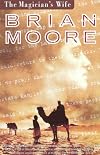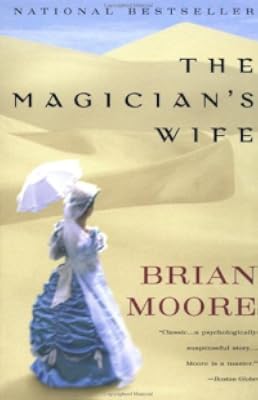
The Magician's Wife
by Brian Moore
On This Page
Description
The restless wife of an illusionist becomes embroiled in a North African holy war in this "tour de force" of historical fiction (The New York Times).Early in her marriage to renowned prestidigitator Henri Lambert, Emmeline had exulted in his fame, the foreign tours, and the command performances of his "Magical Evenings." Now, Henri's given it all up to pursue a quiet life in their remote country manor, but restless, devoted Emmeline longs to see her husband return to his former glory.
It show more all changes again when, in service to their country, Henri and Emmeline are invited to spend seven days at Compiègne as guests of Napoléon III. The emperor wants Henri to work his magic on a charismatic Algerian marabout who's influencing his followers to overthrow the French in a holy war. For Henri, convincing a man of where his allegiance should lie will be the performance of a lifetime. But for Emmeline, ushered from the lavish royal courts to the barren Sahara, it will prove to be an illuminating journey that will challenge her views on God and faith, open her eyes to her husband's weaknesses, and expose the treachery of her own country.
"Flashing his own sleight of hand, [Moore] transforms a historical fact into a story both true to its time and relevant to the present day." —The New York Times
. show less
Tags
Recommendations


































Member Reviews
Interesting enough novel that seems to have been constrained by the true story upon which it has been based. There is no stylistic attempt to exaggerate here.
The greatest magician in Europe is cajoled by Napoleon III to impress the marabouts and tribal leaders of Algeria in a cynical attempt to prove the superiority of Christian Europe, in this case, in the realm of divine influence through magical powers.
The most perceptive of the characters is Emmeline, the magician's wife, a woman who is relegated at home taking second place to her husband's work on improving his repertoire of deceptive skills and his inventions.
It is she who is not deceived by the French calculation in improving their prospects at an outright subjugation of all show more Algeria, nor by the naked ambition of the political and military personnel involved in the ruse.
It is not a spectacular novel, but it is well written, it is unflagging in pace and historically interesting as a footnote to Algeria's troubled relationship with her former colonial overlord. show less
The greatest magician in Europe is cajoled by Napoleon III to impress the marabouts and tribal leaders of Algeria in a cynical attempt to prove the superiority of Christian Europe, in this case, in the realm of divine influence through magical powers.
The most perceptive of the characters is Emmeline, the magician's wife, a woman who is relegated at home taking second place to her husband's work on improving his repertoire of deceptive skills and his inventions.
It is she who is not deceived by the French calculation in improving their prospects at an outright subjugation of all show more Algeria, nor by the naked ambition of the political and military personnel involved in the ruse.
It is not a spectacular novel, but it is well written, it is unflagging in pace and historically interesting as a footnote to Algeria's troubled relationship with her former colonial overlord. show less
We begin Magician's Wife in 1856 France. Emmaline Lambert stands in the shadow of her famous magician husband, Henri Lambert. Her personality dims next to the brilliance of her husband's growing notoriety as an illusionist and inventor. The crowds are agog over his inexplicable trickery. Emmaline almost becomes a cliche being described as uneasy, nervous, foolish, and unsure; acting with trepidation and panic. But in reality, she is just a lonely woman without intimacy in her marriage. It is all about the choices you make in life. Emmeline admits she married a man she did not love. Upon being summoned to the opulent estate of Napoleon III the Lamberts meet dashing Colonel Charles Deniau. Like tendrils of relentlessly advancing vines of show more kudzu, the Colonel ensnares Emmeline Lambert's confidences little by little. France has a mission for Henri: in an effort to increase France's empire and conquer Algeria, astound the Bedouins of North Africa. Frighten them into submission. Is Emmaline falling in love with Deniau? Will she convince her husband to perform the ultimate illusion for the sake of domination? show less
The story at the heart of Brian Moore’s novel The Magician’s Wife is based on true historical events. That proves to be both the main source of its interest and, ultimately, the primary reason it fails to satisfy.
The story opens in France, 1856, and is told through the eyes of Emmeline Lambert, who is the wife of France’s most famous magician, Henri Lambert. Henri is being courted by the Emperor himself, Napoleon III, to lead a secret effort deemed critical to France’s national interest. I won’t tell you what that effort is – Moore builds suspense in the novel by keeping both Emmeline and readers in the dark about the Emperor’s goals. But I will tell you that what Napoleon is planning involves Henri Lambert’s powers of show more prestidigitation and it really happened in France and Algeria between 1856 and 1857 (though Moore has changed the names of those involved in order to craft his fictionalized version of events).
I can also say the Emperor’s plan involves a head-to-head competition between Christian and Muslim theologies and worldviews, which is particularly interesting in light of the turmoil that same clash of worldviews is causing to this day.
Read the book to see just how far some went in their efforts to subjugate another sovereign people; read it to be amazed and provoked by the thought they would do such a thing and the thought that we’re still fighting many of the same battles today.
But don’t read this novel expecting a satisfying journey of fully-developed characters, full of surprise and who, ultimately, experience real growth. Emmeline starts the story as an insecure, vaguely dissatisfied woman unable to connect with her husband or his work; by the end of the story she is perhaps slightly less insecure, but is just as dissatisfied; Henri begins as an ambitious and oblivious husband and he’s largely unchanged by the end of the story; Emmeline’s is a “fish-out-of-water” experience as she moves from her quiet country existence to the world of the French Royal Court and then to the exoticism of Algeria, but she doesn’t truly ever develop a sense of comfort in these new environments and, in the end, she retreats back to her comfort zone. These characters follow closely the course traced by the real people they’re based on and Moore seems constrained, limited, by his awareness of the historical basis of his story. Ironically, as a result, The Magician’s Wife is mildly interesting, but it doesn’t transport—frankly, it lacks magic. show less
The story opens in France, 1856, and is told through the eyes of Emmeline Lambert, who is the wife of France’s most famous magician, Henri Lambert. Henri is being courted by the Emperor himself, Napoleon III, to lead a secret effort deemed critical to France’s national interest. I won’t tell you what that effort is – Moore builds suspense in the novel by keeping both Emmeline and readers in the dark about the Emperor’s goals. But I will tell you that what Napoleon is planning involves Henri Lambert’s powers of show more prestidigitation and it really happened in France and Algeria between 1856 and 1857 (though Moore has changed the names of those involved in order to craft his fictionalized version of events).
I can also say the Emperor’s plan involves a head-to-head competition between Christian and Muslim theologies and worldviews, which is particularly interesting in light of the turmoil that same clash of worldviews is causing to this day.
Read the book to see just how far some went in their efforts to subjugate another sovereign people; read it to be amazed and provoked by the thought they would do such a thing and the thought that we’re still fighting many of the same battles today.
But don’t read this novel expecting a satisfying journey of fully-developed characters, full of surprise and who, ultimately, experience real growth. Emmeline starts the story as an insecure, vaguely dissatisfied woman unable to connect with her husband or his work; by the end of the story she is perhaps slightly less insecure, but is just as dissatisfied; Henri begins as an ambitious and oblivious husband and he’s largely unchanged by the end of the story; Emmeline’s is a “fish-out-of-water” experience as she moves from her quiet country existence to the world of the French Royal Court and then to the exoticism of Algeria, but she doesn’t truly ever develop a sense of comfort in these new environments and, in the end, she retreats back to her comfort zone. These characters follow closely the course traced by the real people they’re based on and Moore seems constrained, limited, by his awareness of the historical basis of his story. Ironically, as a result, The Magician’s Wife is mildly interesting, but it doesn’t transport—frankly, it lacks magic. show less
Emmeline Lambert is the young wife of the most famous magician in France, Henri Lambert. When he wooed her, he performed daily in his own Paris theatre, he flattered her and his life was exciting. Emmeline married Henri despite her father's protests. Eight years later, Henri retired from the stage young and moved his household to the country, where he works on his inventions. Emmeline has had two miscarriages, and though she doesn't believe she is still in love with her husband, she resents that he neglects her.
In their quiet life comes an enormous honor, and invitation to join a week long party at the Emperor's. While Emmeline realizes that she isn't a part of the aristocratic world, Henri leaps at the chance to gain more prestige, and show more so they go. Why Napoleon III would want both the magician and his wife to attend is revealed in time, but Emmeline sees a benefit to herself, as she decides that a dashing Colonel will be her way of getting back at Henri for his neglect.
I've read several of Moore's novels, yet this is the only one that fell flat for me towards the end. Emmeline began as a rather sympathetic character, unhappy, bored and lonely, though so introverted that she was afraid to go to the country estate. She became so angry at the why she was being manipulated by the men around her that she actually commits a selfish, traitorous act, one that puts thousands of lives at immediate risk, in the name of relieving her guilt. show less
In their quiet life comes an enormous honor, and invitation to join a week long party at the Emperor's. While Emmeline realizes that she isn't a part of the aristocratic world, Henri leaps at the chance to gain more prestige, and show more so they go. Why Napoleon III would want both the magician and his wife to attend is revealed in time, but Emmeline sees a benefit to herself, as she decides that a dashing Colonel will be her way of getting back at Henri for his neglect.
I've read several of Moore's novels, yet this is the only one that fell flat for me towards the end. Emmeline began as a rather sympathetic character, unhappy, bored and lonely, though so introverted that she was afraid to go to the country estate. She became so angry at the why she was being manipulated by the men around her that she actually commits a selfish, traitorous act, one that puts thousands of lives at immediate risk, in the name of relieving her guilt. show less
This is the first Brian Moore novel I have read and, it appears, it was the last novel he wrote.
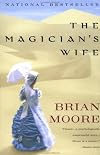
I picked it up in a bargain bookstore and bought it as a first sampling of Brian Moore’s writing. The picture on the cover and the title led me to believe it was a medieval murder mystery but I was wrong. I discovered I was wrong in quite a pleasant way.
As I started reading the book I realised it was set in 1850s France and written, as the title might suggest, from the viewpoint of a woman married to a magician. As the story unfolded I learnt that the magician and his wife lived near Tours, the magician had a workshop where he had people make items to his design, and that he was marvellous at making automata. This was enough information show more to raise my suspicions. The details of the magician’s life struck me as familiar. Although the character of the magician in the book is called Harry Lambert his life reminded me of the details I had learnt during my visits to “La Maison de la Magie” (The house of the magician) in Blois, France, less than an hour’s drive East of Tours.
La Maison de la Magie is a museum containing the magic and automata of the great French magician Robert-Houdin, the man who so impressed another young magician that he used the name Houdini for his stage name, in honour of the French master.
It took very little effort in this Internet day to discover that Brian Moore had based his character on Robert-Houdin and that the main action of the story was based on Robert-Houdin’s journey to Algeria at the request of Napoleon III to impress the local population with his magic tricks and to undermine the local religious leaders who were drumming up resistance to France and claiming to work miracles.
Moore has played around with some of the facts of the journey to France, but the basic story is relatively intact. At the end of the day the novel is fiction, but with the aid of readily available material on the Internet I was able to see where the fact ended and the fantasy began.
This was an enjoyable read and I feel anyone wanting to get a sense of life in the court of Napoleon III could do worse than read this book. Reading this prompted me to delve into the history of Algeria a little more and a book that does that cannot be regarded as bad. show less
I picked it up in a bargain bookstore and bought it as a first sampling of Brian Moore’s writing. The picture on the cover and the title led me to believe it was a medieval murder mystery but I was wrong. I discovered I was wrong in quite a pleasant way.
As I started reading the book I realised it was set in 1850s France and written, as the title might suggest, from the viewpoint of a woman married to a magician. As the story unfolded I learnt that the magician and his wife lived near Tours, the magician had a workshop where he had people make items to his design, and that he was marvellous at making automata. This was enough information show more to raise my suspicions. The details of the magician’s life struck me as familiar. Although the character of the magician in the book is called Harry Lambert his life reminded me of the details I had learnt during my visits to “La Maison de la Magie” (The house of the magician) in Blois, France, less than an hour’s drive East of Tours.
La Maison de la Magie is a museum containing the magic and automata of the great French magician Robert-Houdin, the man who so impressed another young magician that he used the name Houdini for his stage name, in honour of the French master.
It took very little effort in this Internet day to discover that Brian Moore had based his character on Robert-Houdin and that the main action of the story was based on Robert-Houdin’s journey to Algeria at the request of Napoleon III to impress the local population with his magic tricks and to undermine the local religious leaders who were drumming up resistance to France and claiming to work miracles.
Moore has played around with some of the facts of the journey to France, but the basic story is relatively intact. At the end of the day the novel is fiction, but with the aid of readily available material on the Internet I was able to see where the fact ended and the fantasy began.
This was an enjoyable read and I feel anyone wanting to get a sense of life in the court of Napoleon III could do worse than read this book. Reading this prompted me to delve into the history of Algeria a little more and a book that does that cannot be regarded as bad. show less
Honestly a disappointment. I was expecting so much more from this.
First of all, I hated that the switches between first and third person were so sudden and unannounced. Not even a change in typeset like italics to denote it.
Secondly, while the plot itself is very intriguing, I honestly just felt let down by the ending. I felt like there was much more that could be done.
That being said I did like the fact that Emmeline falls in love with a culture outside of her own and how she views the people of Algeria. And Moore doesn't fall trap to describing female characters in strange ways as some male authors tend to do.
First of all, I hated that the switches between first and third person were so sudden and unannounced. Not even a change in typeset like italics to denote it.
Secondly, while the plot itself is very intriguing, I honestly just felt let down by the ending. I felt like there was much more that could be done.
That being said I did like the fact that Emmeline falls in love with a culture outside of her own and how she views the people of Algeria. And Moore doesn't fall trap to describing female characters in strange ways as some male authors tend to do.
Henri Lambert is a stage magician who is recruited by Napoleon III to go to North Africa on a mission that is vital to France's colonial aspirations.
Emmeline, his wife, is sent with him. She ultimately makes a decision that could ruin the mission and destroy her husband and their marriage.
This book was not great, but it was interesting and enjoyable.
Emmeline, his wife, is sent with him. She ultimately makes a decision that could ruin the mission and destroy her husband and their marriage.
This book was not great, but it was interesting and enjoyable.
Members
- Recently Added By
Author Information

31+ Works 5,937 Members
Brian Moore, 1921 - 1999 Brian Moore was born in Belfast on August 25, 1921 to Doctor James Bernard Moore and Eileen McFadden. He attended St. Malachy's College, a Catholic school, where the students where beaten on the hands daily. He left the college without a School Leaving Certificate because he failed Math. In 1941, a bomb damaged the family show more home, so they moved to a house on Camden Street. A year later, his father died. In 1942, he joined the National Fire Service, but knew that he wanted to be a writer. Moore knew some French, so he was hired by the British Ministry of War Transport to go as a port official to Algiers, North Africa. Afterwards, he traveled to Italy, France, and after the war, Warsaw (1945), Spain, Canada (1948), the United States and England, finally settling in California. Moore immigrated to Canada in 1948, where he worked as a proofreader and reporter for the Montreal Gazette. In 1951, he published his first story in the Northern Review and married Jacqueline Sirois, a fellow journalist. His only child, Michael, was born on November 24, 1953. He split with his wife in 1964 and then married Jean Denney, who he stayed married to until his death. Moore published "The Lonely Passion of Judith Hearne" (1955), "The Feast of Lupercal" (1957) and "The Emperor of Ice Cream" (1966), which is his most autobiographical novel. He recounts his school experiences, as well as what is was like during the bombing. In the 1990's, he wrote political fables and four novels. "Lies of Silence" is a thriller set in Belfast and was a more political statement than the previous novels. It was nominated for the Booker Prize and was his bestselling book. Several of his books were made into films such as "The Luck of Ginger Coffey," "Catholics," "The Lonely Passion of Judith Hearne" and "The Temptation of Eileen Hughes" was adapted for television. Moore received many awards, which included the Governor General's Award in 1961 for "The Luck of Ginger Coffey" and again in 1975 for "The Great Victorian Collection," which also won the James Tait Black Award in England. He was short listed for the Booker Prize in 1987 for "The Colour of Blood" and again in 1990 for "Lies of Silence." In July 1987, he conferred an honorary doctorate by Queen's University, Belfast. His film "Catholics" received the W.H. Smith Award in 1973 and the Peabody Award in 1974. In 1999, Brian Moore died at his home in Malibu, California. (Bowker Author Biography) show less
Awards and Honors
Common Knowledge
- Original title
- The Magician's Wife
- Original publication date
- 1998-01
- People/Characters
- Emmeline Lambert; Henri Lambert; Napoleon III; Colonel Deniau
- Important places
- Algeria; France
- Dedication
- For Jean
comme d'habitude - First words
- The colonel left the house at five o'clock. As his carriage drove out towards the main gates Emmeline put down her petit point and went to look through the window of her sitting room. She wondered about this visitor. He must... (show all) be important.
- Last words
- (Click to show. Warning: May contain spoilers.)She did not wave.
- Blurbers
- Lee, Hermione; Humphries, Barry; Byatt, A. S.; Oates, Joyce Carol
Classifications
- Genres
- Fiction and Literature, General Fiction, Historical Fiction
- DDC/MDS
- 813.54 — Literature & rhetoric American literature in English American fiction in English 1900-1999 1945-1999
- LCC
- PR9199.3 .M617 .M25 — Language and Literature English English Literature English literature: Provincial, local, etc.
- BISAC
Statistics
- Members
- 471
- Popularity
- 64,429
- Reviews
- 12
- Rating
- (3.07)
- Languages
- 8 — Danish, Dutch, English, German, Greek, Italian, Portuguese, Spanish
- Media
- Paper, Audiobook, Ebook
- ISBNs
- 25
- ASINs
- 8