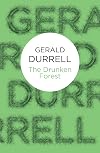
The Drunken Forest
by Gerald Durrell
On This Page
Description
Gerald Durrell is among the best-selling authors in English. His adventurous spirit and his spontaneous gift for narrative and anecdote stand out in his accounts of expeditions in Africa and South America in search of rare animals. He divines the characters of these creatures with the same clear, humorous and unsentimental eyes with which he regards those chance human acquaintances whose conversation in remote places he often reproduces in all its devastating and garbled originality. To have show more maintained, for over fifteen years, such unfailing standards of entertainment can only be described as a triumph. The Argentine pampas and the little-known Chaco territory of Paraguay provide the setting for The Drunken Forest. With Durrell for interpreter, an orange armadillo or a horned toad, or a crab-eating raccoon suddenly discovers the ability not merely to set you laughing but also to endear itself to you. 'His sympathy with the animal world encourages the Disney in every creature to show itself' "Time And Tide" show lessTags
Recommendations














Member Reviews
From early in his career as a wild animal collector. This book describes a trip in 1954, to Argentina and Paraguay. It was not, in the eyes of Durrell and his wife, a great success in terms of bringing animals home- but the description of their travels, the local people they met and of course the native wildlife are still fascinating reading. Durrell is a great storyteller, and he made me laugh out loud a good number of times in this book.
Quite a few of the species mentioned in here were unfamiliar to me- the viscacha, the douracouli (a nocturnal monkey), a crab-eating raccoon. A beautifully marked tiger bittern- their description of doctoring its broken wing was very lively. Other things of note: I didn't know that armadillos eat show more carrion. Durrell got hold of a young bird that it turns out would only eat freshly masticated spinach leaves- and he convinced his wife to do the chewing. They told about catching a large number of brown guira cuckoos, which they thought were rather dumb birds. Years later they visited a zoo where a number of these cuckoos now lived, and were surprised that the birds obviously recognized them. It made them think again their initial assessment of any animals' intelligence, especially under duress in captive situations. The author also debunks some common misconceptions about wild animals. For example, he tells how he caught a large anaconda- a funny account, especially as he compared his experience to the lurid tales spouted in popular literature of the time (jungle thrillers).
He also refutes the frequent criticism he received at shutting up wild animals in cages. True, many of the animals initially try to escape. But there was a very touching chapter in this book, where at the end of gathering their collection and meticulously caring for them, they were forced to suddenly leave the country due to civil war and could not take most of the animals as planned. They were simply released. The reptiles and some of the birds took off immediately. But most of the birds and small mammals hung around the camp for days, expecting to be fed again. Some even tried to get back into the cages. It was obvious they appreciated the free meals (and maybe the comfort and attention) they had become used to receiving. The Durrells had to harden their hearts against the animals' begging, and chase some of them off to force them to go back into the wild. They worried that the animals were now accustomed enough to people they would be friendly to strangers and get themselves killed...
I find it kind of amusing that the cover of the book depicts Durrell as an older man with a paunch and a white beard, whereas the lively pen illustrations inside (by Ralph Tompson) clearly show him as a young man.
more at the Dogear Diary show less
Quite a few of the species mentioned in here were unfamiliar to me- the viscacha, the douracouli (a nocturnal monkey), a crab-eating raccoon. A beautifully marked tiger bittern- their description of doctoring its broken wing was very lively. Other things of note: I didn't know that armadillos eat show more carrion. Durrell got hold of a young bird that it turns out would only eat freshly masticated spinach leaves- and he convinced his wife to do the chewing. They told about catching a large number of brown guira cuckoos, which they thought were rather dumb birds. Years later they visited a zoo where a number of these cuckoos now lived, and were surprised that the birds obviously recognized them. It made them think again their initial assessment of any animals' intelligence, especially under duress in captive situations. The author also debunks some common misconceptions about wild animals. For example, he tells how he caught a large anaconda- a funny account, especially as he compared his experience to the lurid tales spouted in popular literature of the time (jungle thrillers).
He also refutes the frequent criticism he received at shutting up wild animals in cages. True, many of the animals initially try to escape. But there was a very touching chapter in this book, where at the end of gathering their collection and meticulously caring for them, they were forced to suddenly leave the country due to civil war and could not take most of the animals as planned. They were simply released. The reptiles and some of the birds took off immediately. But most of the birds and small mammals hung around the camp for days, expecting to be fed again. Some even tried to get back into the cages. It was obvious they appreciated the free meals (and maybe the comfort and attention) they had become used to receiving. The Durrells had to harden their hearts against the animals' begging, and chase some of them off to force them to go back into the wild. They worried that the animals were now accustomed enough to people they would be friendly to strangers and get themselves killed...
I find it kind of amusing that the cover of the book depicts Durrell as an older man with a paunch and a white beard, whereas the lively pen illustrations inside (by Ralph Tompson) clearly show him as a young man.
more at the Dogear Diary show less
Gerald Durrell’s The Drunken Forest is the story of a specimen collecting trip he and his wife Jacquie took to Argentina and Paraguay in early 1950s on behalf of several zoos in Great Britain. I read it on a whim to meet a TIOLI Challenge and found it to be an unexpected delight.
Durrell possesses not only a true gift for writing (which must run in the family as his brother was author and editor Lawrence Durrell) but also a sincere love of animals. The birds, mammals and reptiles in the book are described with great affection and humor. I think it was the humor that surprised me most; I hadn’t anticipated The Drunken Forest being funny. I thoroughly enjoyed his depictions of the antics of the ‘bichos’ (animals) and the landscapes show more around him.
Later in his life, Durrell became unhappy with the conditions in which many animals live in zoos (although the zoo he founded bears his name since his death) and he turned efforts toward conservation. When I felt uncomfortable with the methods of capture or other treatment of his acquisitions, I remind myself standards have changed and this is not the book he would have written in later years. This applies, too, to some of the descriptions of individuals he met, particularly non Europeans.
This is a wonderful, charming book. Give it a shot. show less
Durrell possesses not only a true gift for writing (which must run in the family as his brother was author and editor Lawrence Durrell) but also a sincere love of animals. The birds, mammals and reptiles in the book are described with great affection and humor. I think it was the humor that surprised me most; I hadn’t anticipated The Drunken Forest being funny. I thoroughly enjoyed his depictions of the antics of the ‘bichos’ (animals) and the landscapes show more around him.
Later in his life, Durrell became unhappy with the conditions in which many animals live in zoos (although the zoo he founded bears his name since his death) and he turned efforts toward conservation. When I felt uncomfortable with the methods of capture or other treatment of his acquisitions, I remind myself standards have changed and this is not the book he would have written in later years. This applies, too, to some of the descriptions of individuals he met, particularly non Europeans.
This is a wonderful, charming book. Give it a shot. show less
Gerald Durrell was a British animal collector for zoos and preservation societies in the 1900s. This book's adventures take place in 1954, in Argentina and Paraguay. He and his wife traveled by ship, train, ox cart, autovia, horse and foot to collect interesting species to ship back to Britain.
These memoirs are filled with delightful humour and interesting tales of their adventures. It was wonderful to read with my smartphone nearby so I could look up the images and sounds of the various species, but even if I didn't have any technology to do this, the illustrations in the book by Ralph Thompson are accurate and lovely. Durrell writes in such a way as to transport you to the place he is; very descriptive, catching the joy, the pathos show more and the very essence of what he sees around him. show less
These memoirs are filled with delightful humour and interesting tales of their adventures. It was wonderful to read with my smartphone nearby so I could look up the images and sounds of the various species, but even if I didn't have any technology to do this, the illustrations in the book by Ralph Thompson are accurate and lovely. Durrell writes in such a way as to transport you to the place he is; very descriptive, catching the joy, the pathos show more and the very essence of what he sees around him. show less
Again another Durrell in the tradition of Attenborough, collecting wild animals from the hinterland of Argentina and Paraguay. The whole 'plundering the native animal species for the entertainment of visitors to European Zoos' is treated quite casually in this story from the 1950's, but there is a redeeming note (or two). Firstly Durrell is a a proper zoologist, and secondly he has an evident affection and sense of empathy with his captives that sees them as more than commodities, valuable only in their market or scientific value. With that qualification this is an enjoyable, if light-weight book.
I haven't read this author before, and I am terribly delighted to have made his acquaintance.
The book is a bit dated, but it is so fun to read of his madcap adventures collecting animals in the wild, (in South america, in this case.)
I loved the humor, and managed to learn a bit about animals as well. I'll definitely read him again!
The book is a bit dated, but it is so fun to read of his madcap adventures collecting animals in the wild, (in South america, in this case.)
I loved the humor, and managed to learn a bit about animals as well. I'll definitely read him again!
Always enjoy reading about Durrell’s adventures
Ratings
Members
- Recently Added By
Lists

Global Reads: Books Set South and Central America
40 works; 7 members

Llibres que he llegit el 2016
36 works; 1 member
Author Information

109+ Works 21,847 Members
Gerald Durrell was born on January 7, 1925 in Jamshedpur, India to British parents. After the death of his father in 1928, the family lived in England and Europe before settling in Corfu, where he spent much of his childhood. Educated by private tutors, he became interested in natural history and amassed a private collection of dozens of creatures show more from scorpions to owls. He went on numerous wildlife expeditions and founded the Jersey Zoological Park and the Jersey Wildlife Preservation Trust with the purpose of breeding endangered species. His first book, The Overloaded Ark, was published in 1953. He wrote 37 books during his lifetime including My Family and Other Animals, The Bafut Beagles, A Zoo in My Luggage, Rosy Is My Relative, and The Mockery Bird. He received the Order of the British Empire in 1982 and was featured in the United Nations' Roll of Honor for Environmental Achievement in 1988. He died from complications related to a liver transplant on January 30, 1995 at the age of 70. (Bowker Author Biography) show less
All Editions
Some Editions
Awards and Honors
Notable Lists
Series
Belongs to Publisher Series
Work Relationships
Is contained in
The Overloaded Ark | Three Singles to Adventure | The Bafut Beagles | My Family and Other Animals | The Drunken Forest by Джеральд Даррелл
The Bafut Beagles / The Drunken Forest / Encounters with Animals / Menagerie Manor / My Family and Other Animals / Three Singles to Adventure / The Whispering Land / A Zoo in My Luggage by Gerald Durrell
Common Knowledge
- Canonical title
- The Drunken Forest
- Original title
- The drunken forest
- Original publication date
- 1956
- People/Characters
- Gerald Durrell; Jacquie Durrell
- Important places
- Argentina; Paraguay; Gran Chaco
- Dedication
- For my wife Jacquie in memory of Prairie Pigs and other Bichos
- First words
- As the ship nosed its way into port we leant on the rail and gazed at the panorama of Buenos Aires gradually curving around us.
- Last words
- (Click to show. Warning: May contain spoilers.)We waved and nodded and then, as our friends started to disappear into the fast-gathering dusk, the air was full of the most mournful sound in the world: the deep, lugubrious roar of the siren, the sound of a ship saying good-bye.
- Original language*
- englanti
*Some information comes from Common Knowledge in other languages. Click "Edit" for more information.
Classifications
Statistics
- Members
- 692
- Popularity
- 41,503
- Reviews
- 6
- Rating
- (3.83)
- Languages
- 12 — Czech, English, Estonian, Finnish, French, Hebrew, Hungarian, Italian, Latvian, Lithuanian, Russian, Spanish
- Media
- Paper, Ebook
- ISBNs
- 25
- ASINs
- 29