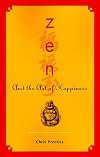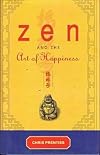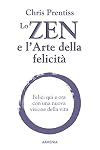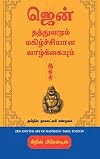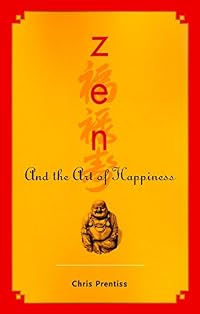
Zen and the Art of Happiness
by Chris Prentiss
On This Page
Description
Zen and the Art of Happiness is a popular book by Chris Prentiss that has been translated and published in more than 20 countries around the world. According to Chris Prentiss, by training oneself to think and feel in a certain manner, changes can happen in the body, which can go a long way in improving the overall well-being of the person. In this audiobook, he gives valuable insights on how to create a vibrant life for oneself. You will learn: - how to control the way you think, act, and show more feel; - how to adapt to life's inevitable changes; - how to deal with stress in a healthy way; - how to nurture a mindful happiness in your daily life. What is happiness? This question can be answered in different ways. Zen and the Art of Happiness will show you how to think and feel so that what you think and feel creates happiness and vibrancy in your life. Enjoy listening to this audiobook and create a personal philosophy that will sustain you through anything!. show lessTags
Recommendations













Member Reviews
This book claims (from the back cover) that "Cutting-edge science and spirituality tell us what what we believe, think, and feel actually determine the makeup of our body at the cellular level". If this sounds like the pseudo-science-riddled movie "What the Bleep Do We Know!?" you won't be surprised that the author mentions this movie twice by chapter 6. You will also be unsurprised by the over-simplification of "The Molecules of Emotion" by Candace B. Pert and the mention of "bodybrain", where each cell of our body is a tiny little part of our overall brain. It also espouses the author's own Universal Laws, which are presented as statements of fact and use Newton's laws of motion to back up the author's metaphysics. The book then uses show more the "4-minute mile" myth to stake the claim that by faith and willingness to do so we can do things that were previously thought impossible.
And if you look at the back of the book you'll notice many other books by the same author (and a stable of relatively few authors). In that list are a bunch of books about the "I Ching". After reading "the gift shop" page at the back I was unsurprised to later read that the author found the "I Ching" and found it valuable. At that point I stopped reading because up until that point the only useful nuggets I'd received from the book were to be happy in every moment, no matter what comes along.
TL;DR: DNF. My Bogo-meter broke while reading this pseudo-scientific mish-mash of new-age scientific nonsense and mysticism purporting to be Zen-based happiness. show less
And if you look at the back of the book you'll notice many other books by the same author (and a stable of relatively few authors). In that list are a bunch of books about the "I Ching". After reading "the gift shop" page at the back I was unsurprised to later read that the author found the "I Ching" and found it valuable. At that point I stopped reading because up until that point the only useful nuggets I'd received from the book were to be happy in every moment, no matter what comes along.
TL;DR: DNF. My Bogo-meter broke while reading this pseudo-scientific mish-mash of new-age scientific nonsense and mysticism purporting to be Zen-based happiness. show less
I'm a little uncomfortable writing a negative review of this book for several reasons. First, Chris Prentiss seems like a nice person with a positive outlook on life. Who would be against that? Second, do I really want to be the guy who shows up at a children's Christmas party and announces that Santa Claus won't be coming this year because he doesn't exist? With those thoughts in mind, I won't say anything negative about this book. I'll just pick a few highlights from it and let readers decide for themselves.
1) If you handle every event, even a life-threatening injury, as a positive experience, good things will happen to you. Here's the relevant excerpt (shortened a bit) about an accident re. a falling rock:
"The ... rock hit me show more squarely on the top of the head. I was slammed into the ground ... two bones were broken ... (I was) unable to breathe and unable to move because all my vertebrae had been compressed and I was paralyzed. ... "I wonder what good thing will come from this?" ... My vertebrae began to decompress and I was slowly able to move. ... One week later, I was lying in bed recovering and I opened up a copy of the I Ching to read. Suddenly the passages that had earlier baffled me were now understandable. Somehow, that blow to the head had opened the channels that allowed me to perceive the meanings of what had before been unintelligible. Since that time, I've written ten books on the I Ching ...
2) There are no coincidences. What we think of as coincidence or luck is actually the Universe communicating to us.
"We're thinking of someone, the phone rings, it's that person. We're trying to locate someone whose address we've lost and we meet a friend who says, 'Guess who I saw yesterday?' ... Coincidence? No. Communication from the Universe."
Not explained, unfortunately, is why the Universe would choose to give us forewarning of one or two inconsequential phone calls out of thousands, but not any of the others. Or why it would bother in any case.
3) Everything that happens in the Universe is for the best. "The Universe doesn't make mistakes. Everything is happening just as it should. ... we are an integral part of the Universe that is fully alive, conscious, and totally aware of us ..."
I believe Voltaire made some comments about this in "Candide" that are far better than anything I can come up with.
That said, I believe being positive is a good thing, and I agree with Prentiss that thinking negatively and feeling stress and apprehension about what might happen is not healthy. If you're looking for a book that tells you to "Always look on the bright side of life" then this is for you. However, if you want to learn something about Zen Buddhism, I can't recommend it. show less
1) If you handle every event, even a life-threatening injury, as a positive experience, good things will happen to you. Here's the relevant excerpt (shortened a bit) about an accident re. a falling rock:
"The ... rock hit me show more squarely on the top of the head. I was slammed into the ground ... two bones were broken ... (I was) unable to breathe and unable to move because all my vertebrae had been compressed and I was paralyzed. ... "I wonder what good thing will come from this?" ... My vertebrae began to decompress and I was slowly able to move. ... One week later, I was lying in bed recovering and I opened up a copy of the I Ching to read. Suddenly the passages that had earlier baffled me were now understandable. Somehow, that blow to the head had opened the channels that allowed me to perceive the meanings of what had before been unintelligible. Since that time, I've written ten books on the I Ching ...
2) There are no coincidences. What we think of as coincidence or luck is actually the Universe communicating to us.
"We're thinking of someone, the phone rings, it's that person. We're trying to locate someone whose address we've lost and we meet a friend who says, 'Guess who I saw yesterday?' ... Coincidence? No. Communication from the Universe."
Not explained, unfortunately, is why the Universe would choose to give us forewarning of one or two inconsequential phone calls out of thousands, but not any of the others. Or why it would bother in any case.
3) Everything that happens in the Universe is for the best. "The Universe doesn't make mistakes. Everything is happening just as it should. ... we are an integral part of the Universe that is fully alive, conscious, and totally aware of us ..."
I believe Voltaire made some comments about this in "Candide" that are far better than anything I can come up with.
That said, I believe being positive is a good thing, and I agree with Prentiss that thinking negatively and feeling stress and apprehension about what might happen is not healthy. If you're looking for a book that tells you to "Always look on the bright side of life" then this is for you. However, if you want to learn something about Zen Buddhism, I can't recommend it. show less
Ratings
Members
- Recently Added By
Author Information

15 Works 461 Members
Classifications
- Genres
- Nonfiction, Religion & Spirituality, Philosophy, General Nonfiction
- DDC/MDS
- 294.3444 — Religion Other religions Buddhism/Hinduism Buddhism Buddhism - practice Religious experience, life, practice Religious life and practice
- LCC
- BQ9286.2 .P74 — Philosophy, Psychology and Religion Buddhism Buddhism Modifications, schools, etc. Special modifications, sects, etc. Zen Buddhism
- BISAC
Statistics
- Members
- 314
- Popularity
- 101,288
- Reviews
- 2
- Rating
- (3.39)
- Languages
- English, Finnish, Italian, Tamil
- Media
- Paper, Audiobook, Ebook
- ISBNs
- 11
- ASINs
- 2