On This Page
Description
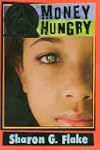
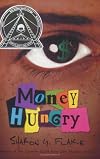
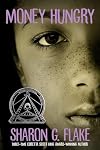
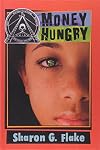
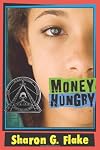
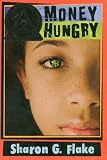
All thirteen-year-old Raspberry can think of is making money so that she and her mother never have to worry about living on the streets again.Tags
Recommendations





Member Reviews
The narrator of this story of poverty and pluck is an endearing thirteen-year-old named Raspberry Hill. Her mom named her after the fruit because of her red hair, red eyebrows “and enough freckles on my face that you can play connect the dots.” Raspberry and her mom live in the projects “with gangbangers and junkies” but they try to make the best of it.
They used to have a home and a nuclear family, but Raspberry’s dad started using drugs and sold all their things. When he started beating her mom, they moved out. It wasn’t long until the money ran out and they were sleeping on the street. Now at least they have a roof over their heads but it’s not a good situation. So Raspberry has become obsessed with making money to help show more them get out. And she’s good at it. She works hard and saves and stashes money in her room. She says:
"…as long as I got two hands, I ain’t never living in the street no more. Ain’t never gonna be broke, neither.”
Her momma helps her keep her dreams alive:
"‘One day,’ she’d say, ‘we gonna have our own place. With a family room, and a fireplace. What color room you want? Yeah, I figured you’d want blue…but what about letting me paint some clouds on the walls for you? And a few stars, so we don’t forget that even bad times is sprinkled with a little good,’ she’d say, reaching up at the sky like she was gonna grab a fistful of stars and hand ‘em to me.”
Raspberry scrounges food, scrounges money, resells pencils, washes cars, cleans houses, and does whatever she can while her mom works three jobs. But living in the projects means you’re at constant risk, and one day, everything falls in on them; their money is gone, their apartment has become unsafe, and they are back where they started.
Discussion: The author has a wonderful way of bringing the problems of severe poverty to life without miring the readers in a black hole of depression. She fills out her story with Raspberry’s observations of her girlfriends, cute boys at school, and the cares of adolescence that transcend economic boundaries. She shows the occasional cruelty of kids as well as their unexpected kindnesses, all without seeming to impose any value judgments: these are just kids, she seems to say.
But in the end, after you close the book, and think what a good book, and sit back on your comfortable chair in your nice, safe house, you can’t stop thinking: why shouldn’t everyone who works hard have a safe place to live and enough food and clothes to survive? What you see so clearly in this book is the sucking whirlpool of poverty that drags you back down even as you struggle to get out of its grasp. There is so little room to maneuver at the margin; if you get sick or get robbed or break your arm or your car breaks down or any of the things that the middle classes can accommodate, down you slide back to the bottom. A few get a lucky push or pull at the edge of the abyss to escape the vortex. But generally there aren’t any friends or relatives in your milieu who can help you start to climb back out again. Something isn’t right about that.
Evaluation: Flake is a talented writer. For this book, she won the Coretta Scott King Honor Award and five additional honors, and some of her other books have garnered even more accolades. (See the amazing list of awards on her website, here.) Raspberry Hill is a girl really not too unlike Anne of Green Gables. No matter what happens, she picks herself up and concentrates on the positive and on what she needs to do next. You won’t regret getting to know her. In my opinion, Flake strikes a marvelous balance by bringing the problems of poverty to the young readers’ attention with a light touch, gentle humor and a charming protagonist. show less
They used to have a home and a nuclear family, but Raspberry’s dad started using drugs and sold all their things. When he started beating her mom, they moved out. It wasn’t long until the money ran out and they were sleeping on the street. Now at least they have a roof over their heads but it’s not a good situation. So Raspberry has become obsessed with making money to help show more them get out. And she’s good at it. She works hard and saves and stashes money in her room. She says:
"…as long as I got two hands, I ain’t never living in the street no more. Ain’t never gonna be broke, neither.”
Her momma helps her keep her dreams alive:
"‘One day,’ she’d say, ‘we gonna have our own place. With a family room, and a fireplace. What color room you want? Yeah, I figured you’d want blue…but what about letting me paint some clouds on the walls for you? And a few stars, so we don’t forget that even bad times is sprinkled with a little good,’ she’d say, reaching up at the sky like she was gonna grab a fistful of stars and hand ‘em to me.”
Raspberry scrounges food, scrounges money, resells pencils, washes cars, cleans houses, and does whatever she can while her mom works three jobs. But living in the projects means you’re at constant risk, and one day, everything falls in on them; their money is gone, their apartment has become unsafe, and they are back where they started.
Discussion: The author has a wonderful way of bringing the problems of severe poverty to life without miring the readers in a black hole of depression. She fills out her story with Raspberry’s observations of her girlfriends, cute boys at school, and the cares of adolescence that transcend economic boundaries. She shows the occasional cruelty of kids as well as their unexpected kindnesses, all without seeming to impose any value judgments: these are just kids, she seems to say.
But in the end, after you close the book, and think what a good book, and sit back on your comfortable chair in your nice, safe house, you can’t stop thinking: why shouldn’t everyone who works hard have a safe place to live and enough food and clothes to survive? What you see so clearly in this book is the sucking whirlpool of poverty that drags you back down even as you struggle to get out of its grasp. There is so little room to maneuver at the margin; if you get sick or get robbed or break your arm or your car breaks down or any of the things that the middle classes can accommodate, down you slide back to the bottom. A few get a lucky push or pull at the edge of the abyss to escape the vortex. But generally there aren’t any friends or relatives in your milieu who can help you start to climb back out again. Something isn’t right about that.
Evaluation: Flake is a talented writer. For this book, she won the Coretta Scott King Honor Award and five additional honors, and some of her other books have garnered even more accolades. (See the amazing list of awards on her website, here.) Raspberry Hill is a girl really not too unlike Anne of Green Gables. No matter what happens, she picks herself up and concentrates on the positive and on what she needs to do next. You won’t regret getting to know her. In my opinion, Flake strikes a marvelous balance by bringing the problems of poverty to the young readers’ attention with a light touch, gentle humor and a charming protagonist. show less
Ross McGee
EDCI 5120
Flake, S. G. (2001). Money hungry. New York: Hyperion
Grade Levels: 6-12
Category: Contemporary Realism
Read Alouds: 1-10 (Raspberry introduces herself and her love of money), 49-65 (Raspberry argues with Ja’nae and then loans her the money), 158-170 (Raspberry experiences living day to day and talks about how hard it is).
Summary: Raspberry is a thirteen year-old girl who lives with her mom and the two barely get by. She is constantly scheming on ways to make money, saving it so that she and her mom will never again have to live in their car or worse. When someone robs their house they are once again forced out of their home and have to try and make it on their own. Raspberry has constant problems with her friends show more because of her attitude about money but in the end they stick by her and her mother is able to get a house in a nice neighborhood that is right by her boyfriend.
Themes: Money Hungry is a look at some of the things that happens when children are aware of the adult world of bills and money. Raspberry should not, at thirteen, have to worry about trying to save money to help pay the rent so that she doesn’t have to live on the streets, and yet she does, because it has happened to her. This book is also a look at life in the projects where most families have to scrape by and the stresses of money and bills spill over to the children. Raspberry’s friends, except for Zora, all are disturbingly aware of their parents constantly being on the edge of not paying their bills. The relationships between the young girls are pressured by this concept, despite all the girls staying true to one another in the end.
Discussion Questions:
Is Raspberry wrong for her love of money? Is it her mom’s fault?
Is the language used in this book a good way to understand the culture Raspberry lives in, or
does it simply make the story less sophisticated?
Dr. Mitchell says that Raspberry’s mother needs to learn that she can count on people, do you
agree?
Reader Response: Money Hungry was a nice quick read with an undercurrent of complexity. It seemed like a fairly straightforward story without much depth until I started thinking about the social constructs of living on the street or even further, being a child in a family that could at any moment be living on the street. The emotional toll that a situation like that would take on a child is immense. Raspberry’s mother is obviously a moral person that has passed on her ethics to her child. Because of this, Raspberry is simply “money hungry” but is not a full-fledged thief or criminal. I imagine what it would be or is like for children of parents who not only pass on a lack of morality to their children, but also put them in a position where they are worried about where their next meal is going to come from or where they are going to sleep tonight. It’s no wonder there is so much crime in cities where the unemployment rates are high. Like I said, Money Hungry is a seemingly straightforward novel, but ultimately disturbing and complex, the more I think about it. show less
EDCI 5120
Flake, S. G. (2001). Money hungry. New York: Hyperion
Grade Levels: 6-12
Category: Contemporary Realism
Read Alouds: 1-10 (Raspberry introduces herself and her love of money), 49-65 (Raspberry argues with Ja’nae and then loans her the money), 158-170 (Raspberry experiences living day to day and talks about how hard it is).
Summary: Raspberry is a thirteen year-old girl who lives with her mom and the two barely get by. She is constantly scheming on ways to make money, saving it so that she and her mom will never again have to live in their car or worse. When someone robs their house they are once again forced out of their home and have to try and make it on their own. Raspberry has constant problems with her friends show more because of her attitude about money but in the end they stick by her and her mother is able to get a house in a nice neighborhood that is right by her boyfriend.
Themes: Money Hungry is a look at some of the things that happens when children are aware of the adult world of bills and money. Raspberry should not, at thirteen, have to worry about trying to save money to help pay the rent so that she doesn’t have to live on the streets, and yet she does, because it has happened to her. This book is also a look at life in the projects where most families have to scrape by and the stresses of money and bills spill over to the children. Raspberry’s friends, except for Zora, all are disturbingly aware of their parents constantly being on the edge of not paying their bills. The relationships between the young girls are pressured by this concept, despite all the girls staying true to one another in the end.
Discussion Questions:
Is Raspberry wrong for her love of money? Is it her mom’s fault?
Is the language used in this book a good way to understand the culture Raspberry lives in, or
does it simply make the story less sophisticated?
Dr. Mitchell says that Raspberry’s mother needs to learn that she can count on people, do you
agree?
Reader Response: Money Hungry was a nice quick read with an undercurrent of complexity. It seemed like a fairly straightforward story without much depth until I started thinking about the social constructs of living on the street or even further, being a child in a family that could at any moment be living on the street. The emotional toll that a situation like that would take on a child is immense. Raspberry’s mother is obviously a moral person that has passed on her ethics to her child. Because of this, Raspberry is simply “money hungry” but is not a full-fledged thief or criminal. I imagine what it would be or is like for children of parents who not only pass on a lack of morality to their children, but also put them in a position where they are worried about where their next meal is going to come from or where they are going to sleep tonight. It’s no wonder there is so much crime in cities where the unemployment rates are high. Like I said, Money Hungry is a seemingly straightforward novel, but ultimately disturbing and complex, the more I think about it. show less
Cracking YA novel about Raspberry Hill, a young teen obsessed with making money. She and her mother teeter on the brink of being homeless. Raspberry never procures money illegally but she does... hustle... a bit . Her efforts sometimes land her in trouble and earn her a not completely deserved reputation of being greedy. She has a rich circle of friends and a mother who is sympathetic. Dialogue is urban and true. Great reading for the young teen who wants a view into life in the inner city.
Raspberry Hill is obsessed with money. She will sell pencils, potato chips, and even stale candy to make a buck. She is compelled to make money to prevent a return to living on the streets with her mother. Gritty, real, and somewhat sympathetic characterization of Raspberry made me want to keep reading. If you have ever struggled, you can understand why money drives her so much.
Additionally, I like the friendship dynamic between Raspberry and her friends because at one point Raspberry does make money stand between her and one of her friends.
Overall, a good read !
Additionally, I like the friendship dynamic between Raspberry and her friends because at one point Raspberry does make money stand between her and one of her friends.
Overall, a good read !
Money Hungry gives students who have never lived in the projects an opportunity to feel how a young woman their age feels about the lack of money and a continuing threat of becoming homeless again. In our area many of the students come from homes where they get everything they want and do not have to work for anything. If placed in the situation that Raspberry was living many of these students would have a hard time acclimating to their new world. I like how the author draws you into Raspberry’s obsession with having money in a world where not all inhabitants have equal money sources. Multicultural literature is wonderful ways for our students to see how other young adults live and how their struggles are different. Raspberry is show more probably not the typical child in the projects because she wanted to work for money to make for a better world for her and her mother. This is a contrast for most people living in the projects. I think the greatest lesson students should take away if one is money hungry is hiding your money in better places so you do not get ripped off. I think Raspberry and her Momma should have gotten together about the money earlier and put the money in the bank, but then there would not have been a lesson to learn: Blood is more constant than money and is never lost. show less
RGG: A wonderful character, Raspberry, struggles to come to terms with the hardships of her life--homelessness, a drug-addicted father--with the help of her friends and her mother.
Members
- Recently Added By
Author Information

19+ Works 5,650 Members
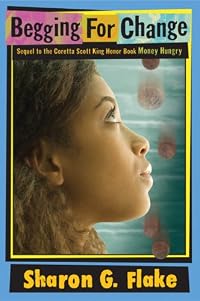
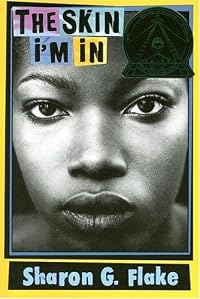
Sharon G. Flake was named a Publishers Weekly Flying Start as an author to watch. Her books for teens have received many accolades, including the Coretta Scott King/John Steptoe Award for The Skin I'm In and a Coretta Scott King Honor for Money Hungry. "Flake's strength ... lies in developing genuine, believable adults and children," the Bulletin show more declared in a starred review for Begging for Change, a Bulletin Blue Ribbon Book and ALA Quick Pick. Ms. Flake is a former youth counselor. She lives in Pittsburgh with her daughter. show less
Awards and Honors
Awards
Distinctions
Notable Lists
Series

Common Knowledge
- People/Characters
- Raspberry Hill; Virginia Hill; Zora Mitchell; Dr. Mitchell; Ja'nae; Mai Kim (show all 11); Ming Kim; Sato; Kevin; Shoe; Check
Classifications
Statistics
- Members
- 733
- Popularity
- 38,362
- Reviews
- 15
- Rating
- (3.60)
- Languages
- English, French, Spanish
- Media
- Paper, Ebook
- ISBNs
- 22
- ASINs
- 2