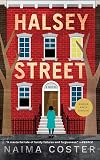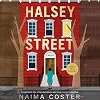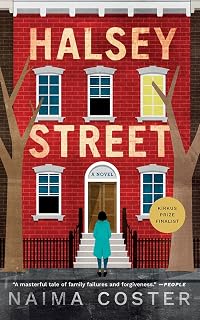
Halsey Street
by Naima Coster
On This Page
Description
Penelope Grand has scrapped her failed career as an artist in Pittsburgh and moved back to Brooklyn to keep an eye on her ailing father. She's accepted that her future won't be what she'd dreamed, but now, as gentrification has completely reshaped her old neighborhood, even her past is unrecognizable. Old haunts have been razed, and wealthy white strangers have replaced every familiar face in Bed-Stuy. Even her mother, Mirella, has abandoned the family to reclaim her roots in the Dominican show more Republic. That took courage. It's also unforgivable. When Penelope moves into the attic apartment of the affluent Harpers, she thinks she's found a semblance of family, and maybe even love. But her world is upended again when she receives a postcard from Mirella asking for reconciliation. As old wounds are reopened, and secrets revealed, a journey across an ocean of sacrifice and self-discovery begins. show lessTags
Recommendations






Member Reviews
Penelope Grand was raised in an apartment on Halsey Street. She escaped, briefly, for a year at RISD and then five years in Pittsburgh, working as a bartender and sometimes a substitute art teacher, but when her father has an accident, she returns home to take care of him - her mother has left, returning to the Dominican Republic, where she was born. Penelope feels that her life has stalled: she is angry at her mother for leaving, angry at her father for refusing to do the physical therapy exercises and for drinking, angry at the way the neighborhood has changed - her father's record store was finally forced to close as rents rose.
Penelope's parents are angry, too: her father mourns the loss of his store and his community and his show more physical ability. Her mother, Mirella (who narrates a good chunk of the book, but it still seems like Penelope's story primarily), is angry that Ralph devoted his whole life to the store instead of her and his family; she's also angry at her own parents (her father died when she was young, and her mother moved them from Santiago back to the campo).
Reconciliation comes haltingly when it comes at all, and sometimes too late. Sub-plots include Penelope's relationship with her landlady's family and her friendship-turned-more with a local bartender, Jon.
Quotes
"It's a shame that making room for white folks mean the the rest of us have to go. But it's always been that way, hasn't it?" (Ralph to Penelope, 71)
Why did women have children they would someday hate? (130)
This is what it meant to be Dominican - to be bound for life one moment, and the next, left for dead on the road. (158)
"Marcus and I have been together long enough that we know the things we can share and the things that we can't. Marriage is like that.
...
You can create the life you want." (Samantha to Penelope, 179)
"You know, no one ever believes old men when we say how good our lives were then. But they believe us when we say how bad our lives are now." (Ralph to Penelope, 192)
She had lost her own family and now had the theater of another instead. (211)
...it seemed terrible to Penelope that a day like this could seem so pretty and benign as to trick you into believing this was a good place to live, that every instant, someone in this city wasn't losing something, that bad news couldn't come anytime anywhere, that every day might be the worst day. (249)
Every block in Bed-Stuy was its own universe, the changes coming at a distinct pace on every street, but Ralph didn't see the difference. Everyone was leaving. Everyone was gone. Nothing was the same. (267)
If she could have written more things she would have: how we do things we do not mean; we do evil things; if we see an open door, we will dart through it, before we lose our guts, no matter who is left behind, we will move at the chance to be free. (Mirella, 281)
"When she was alive, at least there was a chance. Even if most of the time we don't really know how to change. We can't hardly figure out how to love right. But there was hope. Now....Nothing is as final as death." (Ralph, 319) show less
Penelope's parents are angry, too: her father mourns the loss of his store and his community and his show more physical ability. Her mother, Mirella (who narrates a good chunk of the book, but it still seems like Penelope's story primarily), is angry that Ralph devoted his whole life to the store instead of her and his family; she's also angry at her own parents (her father died when she was young, and her mother moved them from Santiago back to the campo).
Reconciliation comes haltingly when it comes at all, and sometimes too late. Sub-plots include Penelope's relationship with her landlady's family and her friendship-turned-more with a local bartender, Jon.
Quotes
"It's a shame that making room for white folks mean the the rest of us have to go. But it's always been that way, hasn't it?" (Ralph to Penelope, 71)
Why did women have children they would someday hate? (130)
This is what it meant to be Dominican - to be bound for life one moment, and the next, left for dead on the road. (158)
"Marcus and I have been together long enough that we know the things we can share and the things that we can't. Marriage is like that.
...
You can create the life you want." (Samantha to Penelope, 179)
"You know, no one ever believes old men when we say how good our lives were then. But they believe us when we say how bad our lives are now." (Ralph to Penelope, 192)
She had lost her own family and now had the theater of another instead. (211)
...it seemed terrible to Penelope that a day like this could seem so pretty and benign as to trick you into believing this was a good place to live, that every instant, someone in this city wasn't losing something, that bad news couldn't come anytime anywhere, that every day might be the worst day. (249)
Every block in Bed-Stuy was its own universe, the changes coming at a distinct pace on every street, but Ralph didn't see the difference. Everyone was leaving. Everyone was gone. Nothing was the same. (267)
If she could have written more things she would have: how we do things we do not mean; we do evil things; if we see an open door, we will dart through it, before we lose our guts, no matter who is left behind, we will move at the chance to be free. (Mirella, 281)
"When she was alive, at least there was a chance. Even if most of the time we don't really know how to change. We can't hardly figure out how to love right. But there was hope. Now....Nothing is as final as death." (Ralph, 319) show less
Penelope is a frustrated artist and heavy-drinking bartender who reluctantly returns to Brooklyn in order to care for her ailing father. Doing so means that Penelope has to confront many things she'd rather not: gentrification and racism, her self-sabotage as an artist, her troubled relationship with her mother. There's no easy moralising here, with Naima Coster resisting the urge to give the reader either an uplifting ending or a remorselessly bleak one. It's possible that her characters—frustrating, prickly, understandable—will be able to make some changes in their lives, while remaining determinedly unchanged in others. Things may get better; they may be bad in different ways. The lack of neat closure in Halsey Street rings truer show more than such a tactic does in many other novels because it is the result of Coster's insistent, careful observation of how familial problems can fester. A very strong debut. show less
This should receive accolades as one of the 10 Best Novels of 2017, or any, year. The story is movingly told from the points of view of Penelope, who's half black and half Dominican, and her mother Mirella, whose loss of her wealthy father at an early age stunts her emotional growth. Also at the center is Ralph Grand, the father, owner of a celebrated Bed-Stuy roots record store forced out by the tsunami of Brooklyn gentrification.
Penelope had never recovered from her freshman year at RISD, where her art was ridiculed as "illustrations", and she's drifted ever since. Mirella, after twenty years cleaning homes for wealthy white families, left Ralph after he lost his store and his mojo and returned to the DR, and has completely cut off show more contact with him, ignoring his physical deterioration from accidents and his subsequent alcoholism. Penelope reluctantly returns to the neighborhood to help with Ralph's care and is astonished at the changes wrought by the brownstone-by-brownstone elimination of people of color.
Penelope's actions, her decisions, her seeming paralysis and inability to move on, are so perfectly described that the reader will not want to let go. I rarely wish for a sequel when a novel is as complete in itself as this one, but a return to Halsey Street and Penelope feels like a necessity to me. Highly recommended!
Quotes: " The neighborhood had never been anything more to Penelope than where she was from."
"Her body was the kind that you shape for yourself, not the kind that is the sum of all your accidents, labor, appetite, and genes." show less
Penelope had never recovered from her freshman year at RISD, where her art was ridiculed as "illustrations", and she's drifted ever since. Mirella, after twenty years cleaning homes for wealthy white families, left Ralph after he lost his store and his mojo and returned to the DR, and has completely cut off show more contact with him, ignoring his physical deterioration from accidents and his subsequent alcoholism. Penelope reluctantly returns to the neighborhood to help with Ralph's care and is astonished at the changes wrought by the brownstone-by-brownstone elimination of people of color.
Penelope's actions, her decisions, her seeming paralysis and inability to move on, are so perfectly described that the reader will not want to let go. I rarely wish for a sequel when a novel is as complete in itself as this one, but a return to Halsey Street and Penelope feels like a necessity to me. Highly recommended!
Quotes: " The neighborhood had never been anything more to Penelope than where she was from."
"Her body was the kind that you shape for yourself, not the kind that is the sum of all your accidents, labor, appetite, and genes." show less
Penelope Grand, an unfulfilled artist, is living in Pittsburgh when she is forced to return NYC where her father has had an accident. Her mother, with whom she has a non-existent relationship, has left and moved back to her native Dominican Republic, leaving Penelope's father on his own. This is a book about mothers and daughters and their often contentious relationships. It's also about finding your place in the world and gentrification of NYC neighborhoods and its effect on the old timers who've lived their lives and now don't know if they still have a home. Very well written and I look forward to Coster's new book due out this year.
Finding where you belong isn’t easy when life around you, changes drastically in every way.
Plot Summary - In this book, the main character Penelope, is an art school drop-out in her mid-twenties who has yet to truly find herself. She frequently uses alcohol to self medicate and is no stranger to one night stands. She is a young woman who is living by her own rules, but lacks direction and seems to be a bit depressed. After living on her own for seven years in Pittsburgh, she finds herself being pulled back to her childhood community in Brooklyn after her father has an accident and requires her help. When Penelope returns to Bedford-Stuyvesant, she feels as if she is an outsider. The gentrification of the area she once lived in, has show more contributed to her demeanor. Her father was once the owner of a very successful neighborhood record store, but as the area’s demographics began to change, he was forced out of the business. It was around this time that Penelope’s mother, feeling unappreciated and jaded, also left for her native Dominican Republic after years of cleaning the “rich white people’s homes”. This story goes back and forth between Penelope’s situation and perspectives and her mother, Mirella’s.
Personal Response: The author did a wonderful job of developing characters in this story who were relatable, yet not predictable. She paints Penelope as a free-spirited young lady who hasn’t “found herself” yet and wants to separate from the people and places of her past. She is also angry about much of what she cannot change (her mom leaving her father, her father allowing her to leave without a fight, and the gentrification of her neighborhood that makes it unfamiliar). As she moves from one life situation to the next, her anger sometimes manifests itself in poor decision making. This makes for an intriguing storyline that keeps the reader hooked.
Curricular Connections: This story revolves around a Dominican-American family in New York. Conversations should occur about gentrification and how change can push us to make directions that have consequences we might not realize until it’s too late. show less
Plot Summary - In this book, the main character Penelope, is an art school drop-out in her mid-twenties who has yet to truly find herself. She frequently uses alcohol to self medicate and is no stranger to one night stands. She is a young woman who is living by her own rules, but lacks direction and seems to be a bit depressed. After living on her own for seven years in Pittsburgh, she finds herself being pulled back to her childhood community in Brooklyn after her father has an accident and requires her help. When Penelope returns to Bedford-Stuyvesant, she feels as if she is an outsider. The gentrification of the area she once lived in, has show more contributed to her demeanor. Her father was once the owner of a very successful neighborhood record store, but as the area’s demographics began to change, he was forced out of the business. It was around this time that Penelope’s mother, feeling unappreciated and jaded, also left for her native Dominican Republic after years of cleaning the “rich white people’s homes”. This story goes back and forth between Penelope’s situation and perspectives and her mother, Mirella’s.
Personal Response: The author did a wonderful job of developing characters in this story who were relatable, yet not predictable. She paints Penelope as a free-spirited young lady who hasn’t “found herself” yet and wants to separate from the people and places of her past. She is also angry about much of what she cannot change (her mom leaving her father, her father allowing her to leave without a fight, and the gentrification of her neighborhood that makes it unfamiliar). As she moves from one life situation to the next, her anger sometimes manifests itself in poor decision making. This makes for an intriguing storyline that keeps the reader hooked.
Curricular Connections: This story revolves around a Dominican-American family in New York. Conversations should occur about gentrification and how change can push us to make directions that have consequences we might not realize until it’s too late. show less
Title: Halsey Street
Author: Naima Coster
Publisher: Little A
Reviewed By: Arlena Dean
Rating: Four
Review:
"Halsey Street" by Naima Coster
My Thoughts....
What a read "Halsey Street" [Bed-Stuy] was being well written thought-provoking read that involved what happens when Penelope Grand who carried deep pain from childhood to adulthood. This was quite a emotional complexed journey for Penelope being raised in a dysfunctional family as she suffered from 'abandonment, unworthiness, love/hate detachment, anger and recklessness' while her parents were having real life issues of their own. I found this read filled with sadness for this entire family that I found it so very hard to read at times. This author gives the reader some well developed show more characters that were not likable at times lacking in communication and understanding. My favorite characters were the grandmother, Brooklyn boyfriend and the heartsick neighbor. My main concern in this read was just finding out why was Penelope so mad most of the time and had such animosity toward her Mom.
I found this story about the relationship between this daughter [Penelope] and mother [Mirella], the neighborhood and her father [Ralph] were quite a intriguing sad read that was quite raw, gritty, painful and yet in the end being a story that seemed to end with love and hope. I did felt that this story ended quite abruptly leaving me with some questions that I wished had been answered. show less
Author: Naima Coster
Publisher: Little A
Reviewed By: Arlena Dean
Rating: Four
Review:
"Halsey Street" by Naima Coster
My Thoughts....
What a read "Halsey Street" [Bed-Stuy] was being well written thought-provoking read that involved what happens when Penelope Grand who carried deep pain from childhood to adulthood. This was quite a emotional complexed journey for Penelope being raised in a dysfunctional family as she suffered from 'abandonment, unworthiness, love/hate detachment, anger and recklessness' while her parents were having real life issues of their own. I found this read filled with sadness for this entire family that I found it so very hard to read at times. This author gives the reader some well developed show more characters that were not likable at times lacking in communication and understanding. My favorite characters were the grandmother, Brooklyn boyfriend and the heartsick neighbor. My main concern in this read was just finding out why was Penelope so mad most of the time and had such animosity toward her Mom.
I found this story about the relationship between this daughter [Penelope] and mother [Mirella], the neighborhood and her father [Ralph] were quite a intriguing sad read that was quite raw, gritty, painful and yet in the end being a story that seemed to end with love and hope. I did felt that this story ended quite abruptly leaving me with some questions that I wished had been answered. show less
3.5 The oftentimes complicated relationship between mother and daughter is fully explored in this wonderful Noel, that takes us from Brooklyn, New York to the Dominican Republic. This is not a quick read, the pace is rather slow in fact, but it covers the gentrification of a neighborhood, the disintegration of a marriage, and of a daughter who may wait too long to reconcile with her mother.
What made this a special read for me is that I could picture all this happening, it is so vividly written, seemed so realistic.
Mirella, the mother, and Penelope, the daughter are complex characters, sometimes likable, many times not. Their misunderstandings, years in the making are not easily resolved, especially as Penny seems only to understand and show more relate to her father. They narrate their stories in alternate chapters, and I have to admit loving those set in the Dominican Republic, the colors, the flavors of the Caribbean, so lush. We find out what happened between Mirella and Ralph, how they came to live in different countries. There is an iconic record story whose closing will start the downward spiral of marriage and neighborhood. We see how gentrification changes things, makes them unrecognizable, neighborhood and people.
Most of all this is a realistic portray of the dynamics, flaws and all, of family relationships. Was a slower read but a good one.
ARC from Netgalley. show less
What made this a special read for me is that I could picture all this happening, it is so vividly written, seemed so realistic.
Mirella, the mother, and Penelope, the daughter are complex characters, sometimes likable, many times not. Their misunderstandings, years in the making are not easily resolved, especially as Penny seems only to understand and show more relate to her father. They narrate their stories in alternate chapters, and I have to admit loving those set in the Dominican Republic, the colors, the flavors of the Caribbean, so lush. We find out what happened between Mirella and Ralph, how they came to live in different countries. There is an iconic record story whose closing will start the downward spiral of marriage and neighborhood. We see how gentrification changes things, makes them unrecognizable, neighborhood and people.
Most of all this is a realistic portray of the dynamics, flaws and all, of family relationships. Was a slower read but a good one.
ARC from Netgalley. show less
Members
- Recently Added By
Lists

Must-Read Books by Black Authors
114 works; 92 members

Kirkus Starred Fiction Reviews of Books Published in 2018
330 works; 3 members
Author Information

4+ Works 943 Members
Awards and Honors
Awards
Distinctions
Common Knowledge
- Canonical title
- Halsey Street
Classifications
Statistics
- Members
- 300
- Popularity
- 106,850
- Reviews
- 11
- Rating
- (3.75)
- Languages
- English
- Media
- Paper, Audiobook, Ebook
- ISBNs
- 6
- ASINs
- 2