On This Page
Description
People find Mr Hire strange, disconcerting. The tenants he shares his building with try to avoid him. He is a peeping Tom, a visitor of prostitutes, a dealer in unsavoury literature. He is also the prime suspect for a brutal murder that he did not commit. Yet Mr Hire's innocence will not stand in the way of those looking for a scapegoat. Georges Simenon's quietly devastating and deeply unnerving novel is a chilling portrayal of tragic love, persecution and betrayal.Tags
Recommendations
















Member Reviews
Simenon showing what he could do when he was really trying, in an early non-Maigret story. A young woman has been murdered, and as far as the police and his neighbours are concerned the sleazy M. Hire, a middle-aged loner who lives in an apartment building close to the scene of the crime, is the obvious suspect. The only person who seems curiously unafraid of him is the woman across the courtyard, whom he watches undressing every night.
It's a surprisingly simple storyline, and we see roughly where it’s headed a long time before the end, but Simenon handles it very cleverly, building up the atmosphere with cunning use of repetition and trivial detail. When it comes to the pursuit sequences, he shows off his real mastery of the genre: show more there aren't many writers who can get anything like the psychological mileage Simenon gets out of a Métro ticket. Maybe Patricia Highsmith?
The only place where Simenon perhaps shows his inexperience a bit is in the ludicrously-overdone final sequence. Although perhaps there is some method in his madness even there: semi-comic grand-guignol is a lot less likely to go wrong and upset the readers than an attempt at real tragedy, which can so easily turn into mere sentiment. And it's a great hook for any film producer who might happen to come across your work... show less
It's a surprisingly simple storyline, and we see roughly where it’s headed a long time before the end, but Simenon handles it very cleverly, building up the atmosphere with cunning use of repetition and trivial detail. When it comes to the pursuit sequences, he shows off his real mastery of the genre: show more there aren't many writers who can get anything like the psychological mileage Simenon gets out of a Métro ticket. Maybe Patricia Highsmith?
The only place where Simenon perhaps shows his inexperience a bit is in the ludicrously-overdone final sequence. Although perhaps there is some method in his madness even there: semi-comic grand-guignol is a lot less likely to go wrong and upset the readers than an attempt at real tragedy, which can so easily turn into mere sentiment. And it's a great hook for any film producer who might happen to come across your work... show less
Hounded to Death
Review of the Penguin Classics paperback edition (2020) of a translation by Anna Moschovakis* of the French language original "Les Fiançailles de M.Hire" (1933)
Mr Hire's Engagement is a parable for the dangers of mob mentality and the persecution of "the other," but it is disguised as a thriller about obsession and betrayal. The protagonist Mr. Hire is portrayed as not likeable. He runs a small-time mail-order scam business in the 'get rich quick' category. He is a voyeur, particularly of a neighbour woman named Alice. He is a frequenter of prostitutes, although he seems to be of the 'I only want to talk' variety, from the one scene that we observe. Another aspect of his 'otherness' is in his Jewish origins. This is not show more emphasized very much in the book, but became a key element in the post-WWII film adaptation "Panique" (1946) (see Trivia and Link below).
Regardless of those factors, Hire still becomes our object of sympathy as he is framed for the murder of a woman whose body has been found in the neighbourhood. His appearance, his solitary habits, his awkwardness, his 'otherness,' make him the target for suspicion by his neighbours and the police. His obsession with his neighbour Alice (whose boyfriend is the real murderer) leads to his targeting and final destruction. There is a slight indication that justice might be served in the end if a message he has sent to the police gets through and is acted on, but given the overall atmosphere that is portrayed it seems very unlikely.
See cover image at https://upload.wikimedia.org/wikipedia/en/8/8c/LesFian%C3%A7aillesDeMHire.jpg
Cover of the first French language edition published by Fayard in 1933. Image sourced from Wikipedia
I've now read over a dozen of the early Simenon novellas/novels in the past five weeks and they continue to impress with how different they are not only from each other, but also from other "Golden Age of Crime" novels of that interwar era. I'm going to read a dozen of the Chief Inspector Maigret books and a half-dozen of the non-Maigret in this deep dive of the early Simenon. Many of the non-Maigret books are being translated into English for the first time and with 500 books in total there are probably quite a few yet to go.
Mr Hire's Engagement is the second of my readings of Georges Simenon's romans durs** (French: hard novels) which was his personal category for his non-Chief Inspector Maigret fiction. This is like Graham Greene, who divided his work into his "entertainments" and his actual "novels." Similar to Greene, the borders between the two areas are quite flexible as we are often still dealing with crime and the issues of morals and ethics. Simenon's romans durs are definitely in the noir category though, as compared to the sometimes lighter Maigrets where the often cantankerous Chief Inspector provides a solution and the guilty are brought to justice.
Trivia and Links
* This is the same translation by Anna Moschovakis as was previously issued as The Engagement (2007) by NYRB (New York Review of Books). That earlier edition includes an Afterword by John N. Gray which is not provided in the Penguin edition. Bonus Trivia: Anna Moschovakis was the translator for the 2021 International Booker Prize winner At Night All Blood Is Black (2020), translated from the French language original Frère d'âme (2018) by David Diop.
** There is a limited selection of 100 books in the Goodreads' Listopia of Simenon's romans durs which you can see here. Other sources say there are at least 117 of them, such as listed at Art and Popular Culture.
Mr. Hire's Engagement has been adapted 3 (some sources say 4) times as a feature film. The 1st film adaptation was the French language "Panique" (1946) dir. Julien Duvivier. This has been described as one of the finest adaptations of Simenon on film ever made. In a restored and expanded edition for Criterion it is described as a "noirish critique of the dangers of mob mentality during wartime." A trailer of the restored version with English subtitles can be viewed on YouTube here.
The 2nd and 3rd adaptation was as the Portuguese language Viela, Rua Sem Sol (The Alley, A Street Without Sun) (1947) and the Spanish language "Barrio (Neighbourhood) (1947) by director Ladislao Vajda. For some reason these are listed as 2 separate films on sources such as IMDb, so perhaps it is a case of different editing rather than simply different language versions. A non-English subtitled trailer can be viewed on YouTube here.
The 4th film adaptation was the French language "Monsieur Hire" (1989) dir. Patrice Leconte. Popular film critic Roger Ebert (1942-2013) included it in his list of Great Movies and you can read his review here. A trailer with English subtitles can be viewed on YouTube here. show less
Review of the Penguin Classics paperback edition (2020) of a translation by Anna Moschovakis* of the French language original "Les Fiançailles de M.Hire" (1933)
Mr Hire's Engagement is a parable for the dangers of mob mentality and the persecution of "the other," but it is disguised as a thriller about obsession and betrayal. The protagonist Mr. Hire is portrayed as not likeable. He runs a small-time mail-order scam business in the 'get rich quick' category. He is a voyeur, particularly of a neighbour woman named Alice. He is a frequenter of prostitutes, although he seems to be of the 'I only want to talk' variety, from the one scene that we observe. Another aspect of his 'otherness' is in his Jewish origins. This is not show more emphasized very much in the book, but became a key element in the post-WWII film adaptation "Panique" (1946) (see Trivia and Link below).
Regardless of those factors, Hire still becomes our object of sympathy as he is framed for the murder of a woman whose body has been found in the neighbourhood. His appearance, his solitary habits, his awkwardness, his 'otherness,' make him the target for suspicion by his neighbours and the police. His obsession with his neighbour Alice (whose boyfriend is the real murderer) leads to his targeting and final destruction. There is a slight indication that justice might be served in the end if a message he has sent to the police gets through and is acted on, but given the overall atmosphere that is portrayed it seems very unlikely.
See cover image at https://upload.wikimedia.org/wikipedia/en/8/8c/LesFian%C3%A7aillesDeMHire.jpg
Cover of the first French language edition published by Fayard in 1933. Image sourced from Wikipedia
I've now read over a dozen of the early Simenon novellas/novels in the past five weeks and they continue to impress with how different they are not only from each other, but also from other "Golden Age of Crime" novels of that interwar era. I'm going to read a dozen of the Chief Inspector Maigret books and a half-dozen of the non-Maigret in this deep dive of the early Simenon. Many of the non-Maigret books are being translated into English for the first time and with 500 books in total there are probably quite a few yet to go.
Mr Hire's Engagement is the second of my readings of Georges Simenon's romans durs** (French: hard novels) which was his personal category for his non-Chief Inspector Maigret fiction. This is like Graham Greene, who divided his work into his "entertainments" and his actual "novels." Similar to Greene, the borders between the two areas are quite flexible as we are often still dealing with crime and the issues of morals and ethics. Simenon's romans durs are definitely in the noir category though, as compared to the sometimes lighter Maigrets where the often cantankerous Chief Inspector provides a solution and the guilty are brought to justice.
Trivia and Links
* This is the same translation by Anna Moschovakis as was previously issued as The Engagement (2007) by NYRB (New York Review of Books). That earlier edition includes an Afterword by John N. Gray which is not provided in the Penguin edition. Bonus Trivia: Anna Moschovakis was the translator for the 2021 International Booker Prize winner At Night All Blood Is Black (2020), translated from the French language original Frère d'âme (2018) by David Diop.
** There is a limited selection of 100 books in the Goodreads' Listopia of Simenon's romans durs which you can see here. Other sources say there are at least 117 of them, such as listed at Art and Popular Culture.
Mr. Hire's Engagement has been adapted 3 (some sources say 4) times as a feature film. The 1st film adaptation was the French language "Panique" (1946) dir. Julien Duvivier. This has been described as one of the finest adaptations of Simenon on film ever made. In a restored and expanded edition for Criterion it is described as a "noirish critique of the dangers of mob mentality during wartime." A trailer of the restored version with English subtitles can be viewed on YouTube here.
The 2nd and 3rd adaptation was as the Portuguese language Viela, Rua Sem Sol (The Alley, A Street Without Sun) (1947) and the Spanish language "Barrio (Neighbourhood) (1947) by director Ladislao Vajda. For some reason these are listed as 2 separate films on sources such as IMDb, so perhaps it is a case of different editing rather than simply different language versions. A non-English subtitled trailer can be viewed on YouTube here.
The 4th film adaptation was the French language "Monsieur Hire" (1989) dir. Patrice Leconte. Popular film critic Roger Ebert (1942-2013) included it in his list of Great Movies and you can read his review here. A trailer with English subtitles can be viewed on YouTube here. show less
Published in 1933 this the third story in Volume I of the collection of SImenon's Les Romans Durs and a bitter hard story it proved to be. A mutilated body of a young woman has been found in one of the outer suburbs of Paris. Monsieur Hire becomes a suspect following his concierge reporting to the police that she had seen him with blood on his face. The police keep him under surveillance and flood the area with detectives and patrolmen. Simenon tells the story from the perspective of M. Hire as he goes about his daily business. He is a loner, an unattractive blob of a man who travels into Paris every day and operates some sort of scam. He works in a run down apartment block; writing invitations to various people with the promise that show more they can "get rich quick." He is a regular customer at a brothel in another part of town and back in his apartment he enjoys watching the woman in the apartment across the courtyard (Alice) as she undresses ready for bed and who seems to be putting on a little show for him. The police close in on their suspect who is well aware of his situation, but he dreams of escaping the net and running away with Alice.
If Mr Hire is the epitome of sleaze then the people around him are little better. The concierge is a mean woman who is saddled with a sick child. Alice has a boyfriend with more than a hint of a vicious nature, the police spend as much time drinking in local bars as they do following Mr Hire and seem to have no plan of action other than to 'fit up' their suspect. The local tradespeople struggle in a poor part of town and of course the weather is awful, heavy rainstorms which turns the streets into mud. Nothing good is ever going to happen.
This is not a psychological study of a murderer, because the reader rarely sees into the mind of Mr Hire, but what is fascinating is the details that are revealed of his daily life. Simenon tells of his travels to work on the trams and metro, details of a visit to the brothel, his meagre lifestyle in his small apartment; the reader follows his movements just as the detectives follow the likely suspect on his road to nowhere. Depressing it is, as Simenon takes us into a world of people who live 'around the corner' from Mr Hire. The novel is heavy on atmosphere and details of life in a 1930's suburb of Paris and together with a good story make this Roman Dur a winner - 4 stars show less
If Mr Hire is the epitome of sleaze then the people around him are little better. The concierge is a mean woman who is saddled with a sick child. Alice has a boyfriend with more than a hint of a vicious nature, the police spend as much time drinking in local bars as they do following Mr Hire and seem to have no plan of action other than to 'fit up' their suspect. The local tradespeople struggle in a poor part of town and of course the weather is awful, heavy rainstorms which turns the streets into mud. Nothing good is ever going to happen.
This is not a psychological study of a murderer, because the reader rarely sees into the mind of Mr Hire, but what is fascinating is the details that are revealed of his daily life. Simenon tells of his travels to work on the trams and metro, details of a visit to the brothel, his meagre lifestyle in his small apartment; the reader follows his movements just as the detectives follow the likely suspect on his road to nowhere. Depressing it is, as Simenon takes us into a world of people who live 'around the corner' from Mr Hire. The novel is heavy on atmosphere and details of life in a 1930's suburb of Paris and together with a good story make this Roman Dur a winner - 4 stars show less
"Now I'm afraid to run into him on the stairs!" cried the concierge. "I've always been scared of him. Everyone's scared!" No question about it, Mr. Hire gives everyone the creeps, especially the men and women in his seedy apartment building, and most especially after a prostitute is brutally murdered just two blocks away.
And Mr. Hire doesn’t have to metamorphose into a giant Gregor Samsa-like bug; being a loner, an outsider who looks the way he does - short flabby body, round staring eyes, puffy waxen face, curled moustache as if it drawn on with India ink - is all he needs to mark him as a loathsome pervert, almost subhuman, the perfect murder suspect. And since he also served a prison term for trafficking in pornography and show more currently ekes out a living by his scam mail order business, police and state officials judge Mr. Hire guilty on all counts until (fat chance, haha) proven innocent.
Engagement was published in 1933 when Georges Simenon was thirty-years-old, the same age range as when Albert Camus wrote The Stranger, Franz Kafka wrote Metamorphosis and Jean-Paul Sartre wrote Nausea. What is it about existential themes and that time in a sensitive author's life? And Simenon’s Engagement is all about existential themes, mainly fear and alienation. The prominence of fear prompted me to include the above film still from Czeck director Zbyněk Brynych’s 1964 The Fifth Horseman is Fear. The film's title could have been this novel's title.
Georges Simenon is best known for all his many novels featuring Detective Maigret, sometimes referred to as the French Sherlock Holmes. Well, unlike Maigret or Homes, there’s nothing appealing about the detectives in Engagement; quite the contrary, they are portrayed as cartoonish dolts, a gaggle of self-centered brutes who slug down booze or seek out quick sex, seeking not justice but simply closing the case so they can move on. And the police commissioner is hardly any better – the way Simenon sketches Mr. Hire under interrogation (and dehumanization) is both chilling and deeply disturbing.
On the subject of drinking booze, the detectives hardly have the exclusives. At every turn the men and woman in the novel sit down with a bottle or glass morning, noon or night, downing drink after drink. It’s as if liquor goes hand in hand and is the sordid complement with hearts constricted, cold and calculating.
Many were the times when reading this novel I was reminded of poor Parisians drinking themselves into a stupor in Émile Zola's 1877 novel, L'Assommoir (The Drinking Den). My goodness, some things never change. Let me take that back - some things do change: when Zola's novel was first published, critics complained the book was too fierce, too brutal, too sordid. No such complaint from critics with The Engagement - another fifty years removed from European Romanticism and fierce, brutal and sordid are all accepted as the norm.
Georges Simenon had a lifelong dread of crowds, having once witnessed a crowd whipped into a frenzy and then mauling an innocent victim. A crowd transformed into an impassioned mob in the last chapter of The Engagement is foreshadowed when Mr. Hire furtively trails his neighbor Alice and her boyfriend to a soccer match; Mr. Hire sits directly behind Alice and stares at the nape of her bare neck during the entire match (Mr. Hire is also a Peeping Tom; Alice lives in the apartment directly across the narrow courtyard from Mr. Hire and Mr. Hire has been staring into her bedroom night after night).
Anyway, at one point in the match, “The stands resonated like a drum, shuddered, then positively shook as thousands of people rose at once to cheer.” Such mass excitation reminds me of a quote from French philosopher Gilles Deleuze: “If you're trapped in the dream of the Other, you're fucked.”
The story is riveting, written in lean, crystal-clear language – from the first to last sentence, not a word is wasted; every turn of phrase, metaphor and image hones character and drives action, for example, Mr. Hire isolated in his apartment: “Sitting at the table, Mr. Hire ate buttered bread and drank coffee, impassively, staring straight ahead. When he had finished, he remained there for a moment, without moving, as if frozen in time and space. He began to hear noises, at first weak and anonymous – creaks, footsteps, collisions – and soon he could feel his entire universe, with this room at its center, dissolving into the furtive sounds.”
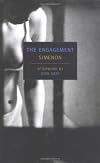
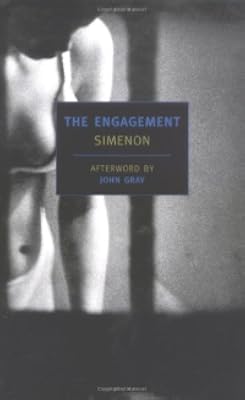
This New York Review Books publication also includes an Afterward written by John Gray. Gray does an excellent job highlighting various Simenon themes. At one point Grey notes: “Nearly all of Simenon’s romans durs - the books he termed “hard” novels to distinguish them from the hundreds of popular thrillers he also wrote – deal with people whose lives are disrupted by seemingly random happenings or impulses. Anything – from the catastrophe of war to the most trivial daily incident – can break up the routines that give them a sense of themselves.” Another word for “routine” could be “habit” and Simenon spotlights how much habit plays in everyday life. Unfortunately in our modern urbanized world, fear can count as one such habit. Read all about it in this short existential novel.
"A dirty bit of legal swindling. The old trick of a hundred francs a day without quitting your job, and a box of paints. You seduce poor people with your ads, and since after all you do send them something for their money, you can't be prosecuted. Tell me, Mr. Hire or Hirovitch, what was that about coming here to give me your word of honor?" show less
Mr. Hire is not liked by his neighbours. Some even fear him. And he's not a likeable character. He's a peeping tom who works in the mail-order pornography industry and frequents prostitutes. And he finds himself the only suspect in the recent murder of a prostitute nearby.
This story so so well written. It's very atmospheric: seedy, a little creepy. But we come to see Mr. Hire's vulnerabilities, which aren't enough to make him likeable, but they make him real. We see the impact of social norms and group think long before the advent of social media.
Very entertaining and intriguing book.
This story so so well written. It's very atmospheric: seedy, a little creepy. But we come to see Mr. Hire's vulnerabilities, which aren't enough to make him likeable, but they make him real. We see the impact of social norms and group think long before the advent of social media.
Very entertaining and intriguing book.
"Now I'm afraid to run into him on the stairs!" cried the concierge. "I've always been scared of him. Everyone's scared!" No question about it, Mr. Hire gives everyone the creeps, especially the men and women in his seedy apartment building, and most especially after a prostitute is brutally murdered just two blocks away. And Mr. Hire doesn’t have to metamorphose into a giant Gregor Samsa-like bug; being a loner, an outsider who looks the way he does - short flabby body, round staring eyes, puffy waxen face, curled moustache as if it drawn on with India ink - is all he needs to mark him as a loathsome pervert, almost subhuman, the perfect murder suspect. And since he also served a prison term for trafficking in pornography and show more currently ekes out a living by his scam mail order business, police and state officials judge Mr. Hire guilty on all counts until (fat chance, haha) proven innocent.
Engagement was published in 1933 when Georges Simenon was thirty-years-old, the same age range as when Albert Camus wrote The Stranger, Franz Kafka wrote Metamorphosis and Jean-Paul Sartre wrote Nausea. What is it about existential themes and that time in a sensitive author's life? And Simenon’s Engagement is all about existential themes, mainly fear and alienation. The prominence of fear prompted me to include the above film still from Czeck director Zbyněk Brynych’s 1964 The Fifth Horseman is Fear. The film's title could have been this novel's title.
Georges Simenon is best known for all his many novels featuring Detective Maigret, sometimes referred to as the French Sherlock Holmes. Well, unlike Maigret or Homes, there’s nothing appealing about the detectives in Engagement; quite the contrary, they are portrayed as cartoonish dolts, a gaggle of self-centered brutes who slug down booze or seek out quick sex, seeking not justice but simply closing the case so they can move on. And the police commissioner is hardly any better – the way Simenon sketches Mr. Hire under interrogation (and dehumanization) is both chilling and deeply disturbing.
On the subject of drinking booze, the detectives hardly have the exclusives. At every turn the men and woman in the novel sit down with a bottle or glass morning, noon or night, downing drink after drink. It’s as if liquor goes hand in hand and is the sordid complement with hearts constricted, cold and calculating. Many were the times when reading this novel I was reminded of poor Parisians drinking themselves into a stupor in Émile Zola's 1877 novel, L'Assommoir (The Drinking Den). My goodness, some things never change. Let me take that back - some things do change: when Zola's novel was first published, critics complained the book was too fierce, too brutal, too sordid. No such complaint from critics with The Engagement - another fifty years removed from European Romanticism and fierce, brutal and sordid are all accepted as the norm.
Georges Simenon had a lifelong dread of crowds, having once witnessed a crowd whipped into a frenzy and then mauling an innocent victim. A crowd transformed into an impassioned mob in the last chapter of The Engagement is foreshadowed when Mr. Hire furtively trails his neighbor Alice and her boyfriend to a soccer match; Mr. Hire sits directly behind Alice and stares at the nape of her bare neck during the entire match (Mr. Hire is also a Peeping Tom; Alice lives in the apartment directly across the narrow courtyard from Mr. Hire and Mr. Hire has been staring into her bedroom night after night). Anyway, at one point in the match, “The stands resonated like a drum, shuddered, then positively shook as thousands of people rose at once to cheer.” Such mass excitation reminds me of a quote from French philosopher Gilles Deleuze: “If you're trapped in the dream of the Other, you're fucked.”
The story is riveting, written in lean, crystal-clear language – from the first to last sentence, not a word is wasted; every turn of phrase, metaphor and image hones character and drives action, for example, Mr. Hire isolated in his apartment: “Sitting at the table, Mr. Hire ate buttered bread and drank coffee, impassively, staring straight ahead. When he had finished, he remained there for a moment, without moving, as if frozen in time and space. He began to hear noises, at first weak and anonymous – creaks, footsteps, collisions – and soon he could feel his entire universe, with this room at its center, dissolving into the furtive sounds.”
This New York Review Books publication also includes an Afterward written by John Gray. Gray does an excellent job highlighting various Simenon themes. At one point Grey notes: “Nearly all of Simenon’s romans durs - the books he termed “hard” novels to distinguish them from the hundreds of popular thrillers he also wrote – deal with people whose lives are disrupted by seemingly random happenings or impulses. Anything – from the catastrophe of war to the most trivial daily incident – can break up the routines that give them a sense of themselves.” Another word for “routine” could be “habit” and Simenon spotlights how much habit plays in everyday life. Unfortunately in our modern urbanized world, fear can count as one such habit. Read all about it in this short existential novel.
"A dirty bit of legal swindling. The old trick of a hundred francs a day without quitting your job, and a box of paints. You seduce poor people with your ads, and since after all you do send them something for their money, you can't be prosecuted. Tell me, Mr. Hire or Hirovitch, what was that about coming here to give me your word of honor?" show less
In The Engagement, an ironical title, the tension begins early and never lets up. In 1930s Paris, Mr. Hire, a milquetoast, loner fat man, a ready-made scapegoat, is accused of and basically framed for the murder of a woman. He has some unfortunate tendencies - voyeurism, an iffy way of making a living, and an unsavory arrest in the past.
The woman he has been peeking on conspires with her slimy boyfriend - the actual murderer - to draw suspicion to Mr. Hire. The world in the story is flattened morally - nobody appears to have purely good intentions.
The woman he has been peeking on conspires with her slimy boyfriend - the actual murderer - to draw suspicion to Mr. Hire. The world in the story is flattened morally - nobody appears to have purely good intentions.
Members
- Recently Added By
Author Information

1,336+ Works 63,181 Members
The prolific Belgian-born writer Georges Simenon produced hundreds of fictional works under his own name and 17 pseudonyms, in addition to more than 70 books about Inspector Maigret, long "the favorite sleuth of highbrow detective-story readers" (SR). More than 50 "Simenons" have been made into films. In addition to his mystery stories, he wrote show more what he called "hard" books, the serious psychological novels numbering well over 100. The autobiographical Pedigree, set in his native town of Liege, is perhaps his finest work. The publication of Simenon's intimate memoirs also attracted considerable attention. Simenon himself once said that he would never write a "great novel." Yet Gide called him "a great novelist, perhaps the greatest and truest novelist we have in French literature today," and Thornton Wilder (see Vol. 1) found that Simenon's narrative gift extends "to the tips of his fingers." The following are some of Simenon's novels, exclusive of the Maigret detective stories, that are in print. (Bowker Author Biography) Georges Simenon was born on February 13, 1903 in Liege, Belgium. He wrote more than 200 fiction works under 16 different pseudonyms. His first book, The Case of Peter the Lent led to 80 more of the like including the main character, Inspector Maigret. He published over 400 books that were translated into 50 different languages and sold by the millions. He also wrote psychological novels, including The Man Who Watched the Train Go By. He died on September 4, 1989 in Lausanne. (Bowker Author Biography) show less
Some Editions
Awards and Honors
Series

Work Relationships
Is contained in
Has the adaptation
Common Knowledge
- Canonical title*
- Les fiançailles de M. Hire
- Original title
- Les Fiançailles de M. Hire
- Alternate titles
- Mr. Hire's Engagement; The Engagement
- Original publication date
- 1933; 1956 (English translation: Daphne Woodward) (English translation: Daphne Woodward); 2007 (English translation: Anna Moschovakis) (English translation: Anna Moschovakis)
- Important places
- Paris, France; Villejuif, Île-de-France, France
- Related movies
- Panique (1946 | IMDb)
- First words
- The concierge cleared her throat before knocking, fixed her eyes on on the Belle-Jardinere catalog in her hand, and announced, "Mail for you, Mr Hire."
- Blurbers
- Banville, John; Cowper Powys, John; Spark, Muriel
- Original language
- French
- Disambiguation notice
- Originally published in French as Les Fiançailles de M. Hire (1933). Published variously in English as:
(i) Mr. Hire's Engagement (1956) (tr. Daphne Woodward);
(ii) The Engagement<... (show all)/i> (2007) and Mr Hire's Engagement (2014) (tr. Anna Moschovakis).
*Some information comes from Common Knowledge in other languages. Click "Edit" for more information.
Classifications
- Genres
- Fiction and Literature, General Fiction, Mystery
- DDC/MDS
- 843.912 — Literature & rhetoric French Literature French fiction 1900- 20th Century 1900-1945
- LCC
- PQ2637 .I53 .F513 — Language and Literature French, Italian, Spanish and Portuguese literatures French literature Modern literature 1900-1960
- BISAC
Statistics
- Members
- 521
- Popularity
- 57,774
- Reviews
- 17
- Rating
- (3.89)
- Languages
- 8 — Danish, Dutch, English, Finnish, French, German, Italian, Spanish
- Media
- Paper, Ebook
- ISBNs
- 20
- ASINs
- 12