On This Page
Description
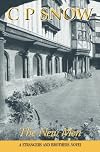
It is the onset of World War II in the fifth in the Strangers and Brothersseries. A group of Cambridge scientists are working on atomic fission. But there are consequences for the men who are affected by it. Hiroshima also causes mixed personal reactions.Tags
Recommendations















Member Reviews
This is the 6th novel in C.P. Snow's Strangers and Brothers series. Goodness how I have been enjoying these books, which I've been reading through at the rate of one or two per year. The series takes protagonist Lewis Eliot, and English society, from the mid-1920s through the mid-1960s. Eliot is a "self-made man" who has battled his from working class roots into the relatively high echelons of British government work, his early plans to become a high-powered attorney having been short circuited by his love and loyalty to a depressive wife who know will barely see him, so reclusive has she become. Now we are back in the years of World War 2, where we also spent much of The Light and the Dark. Eliot finds himself as, more or less, second show more in command to a cabinet minister whose portfolio lands Eliot in the midst of gathering funding and manpower for the British attempt to create an atom bomb. The ethics of creating such a weapon, Eliot's relationship with his younger brother, a scientist whom Eliot wishes to help "get on" in ways he himself had not been able to, the gathering of middle age and the interpersonal and power-related relationships of scientists, politicians, friends, brothers and lovers are all deftly handled. Snow was an acute observer of the human condition, a writer with a keen eye to human ego, frailty, desires and strengths. He has the grace not to descend into cynicism. In fact, Nicolas Tredell's study of Snow and his works is entitled C.P. Snow: The Dynamics of Hope. The writing is always low key, with the first person narrative infused with what we Americans, at any rate, would describe as a standard English diffidence. Within this, however, the language is alive with wit and the sort of tiny detail of speech and thought that makes characters really come alive, at least for me. Some might find this writing too slow, I suppose, but for me Snow's writing is entirely delightful. show less
Summary: The tension between two brothers involved in nuclear weapons research during and after World War 2 in England.
Between 1940 and 1970, C. P. Snow wrote eleven “Strangers and Brothers” novels narrated by Lewis Eliot, who rises from an attorney to a Cambridge don, and finally a senior civil servant in government. The novels explore power in the political context and the challenge of maintaining personal integrity. Recently, Open Road has reissued the series in e-book format. In this case, their efforts brought to my attention a book as old as I am. Yet the questions it explores have been those many of us have wrestle with through all our lives. Can nuclear weapons and the arms race be morally justified?
Lewis assists his brother show more Martin, a physicist, in obtaining a position in a highly secret research program at Barford, the fictional site of England’s atomic research program during World War 2. He will work under Walter Luke in building an atomic pile. This is the first step in creating fissionable material for a bomb.
The novel works at several levels. One is a fictional narrative that captures the rivalry as well as cooperation of the British and Americans to build a bomb before Germany did. Snow narrates setbacks such as failures in activating the nuclear pile, and later, a near fatal accident involving Luke and Sawbridge. In part, because of these failures, the Americans build and use the bomb. But, in an effort to preserve Britain’s place in the world, they win continued support to build Britain’s own nuclear arsenal.
The second level is an exploration of the moral issues. Like some of the scientists at Los Alamos, the scientific challenge to build the bomb was separate from the idea that it might actually be used. The effects of radiation exposure on Luke and Sawbridge underscore the particular horror of radioactive fallout. Snow portrays ineffectual efforts to prevent the American use of the bomb. Also, the advantage of the West grates on Sawbridge and others, who provide information to the Soviets. In fact, it did not make an appreciable difference.
Finally the novel develops a tension between the two brothers. Lewis wants his brother’s success, which becomes a burden to Martin, who must struggle with his own ambitions and his brother’s expectations, whether in marriage or career. Then moral issues arise between the more pragmatic Lewis and idealistic Martin. First, they arise over going public in opposition to the bomb. Later, Lewis disagrees with Martin’s aggressive role in the prosecution of Sawbridge.
All this occurs against a backdrop of relational networks of Cambridge dons and Whitehall officials. These offer a glimpse of the alliance between academy and government, like the pipeline from Harvard into Washington during the “Best and the Brightest” years. Yet despite power and influence we see human flaws that undermine ambitions and aspirations, even between brothers. show less
Between 1940 and 1970, C. P. Snow wrote eleven “Strangers and Brothers” novels narrated by Lewis Eliot, who rises from an attorney to a Cambridge don, and finally a senior civil servant in government. The novels explore power in the political context and the challenge of maintaining personal integrity. Recently, Open Road has reissued the series in e-book format. In this case, their efforts brought to my attention a book as old as I am. Yet the questions it explores have been those many of us have wrestle with through all our lives. Can nuclear weapons and the arms race be morally justified?
Lewis assists his brother show more Martin, a physicist, in obtaining a position in a highly secret research program at Barford, the fictional site of England’s atomic research program during World War 2. He will work under Walter Luke in building an atomic pile. This is the first step in creating fissionable material for a bomb.
The novel works at several levels. One is a fictional narrative that captures the rivalry as well as cooperation of the British and Americans to build a bomb before Germany did. Snow narrates setbacks such as failures in activating the nuclear pile, and later, a near fatal accident involving Luke and Sawbridge. In part, because of these failures, the Americans build and use the bomb. But, in an effort to preserve Britain’s place in the world, they win continued support to build Britain’s own nuclear arsenal.
The second level is an exploration of the moral issues. Like some of the scientists at Los Alamos, the scientific challenge to build the bomb was separate from the idea that it might actually be used. The effects of radiation exposure on Luke and Sawbridge underscore the particular horror of radioactive fallout. Snow portrays ineffectual efforts to prevent the American use of the bomb. Also, the advantage of the West grates on Sawbridge and others, who provide information to the Soviets. In fact, it did not make an appreciable difference.
Finally the novel develops a tension between the two brothers. Lewis wants his brother’s success, which becomes a burden to Martin, who must struggle with his own ambitions and his brother’s expectations, whether in marriage or career. Then moral issues arise between the more pragmatic Lewis and idealistic Martin. First, they arise over going public in opposition to the bomb. Later, Lewis disagrees with Martin’s aggressive role in the prosecution of Sawbridge.
All this occurs against a backdrop of relational networks of Cambridge dons and Whitehall officials. These offer a glimpse of the alliance between academy and government, like the pipeline from Harvard into Washington during the “Best and the Brightest” years. Yet despite power and influence we see human flaws that undermine ambitions and aspirations, even between brothers. show less
Another re read. CP Snow is so very unfashionable these days, having been very much feted and celebrated at the time, that it is interesting to think why. He is one of very few serious writers who writes about the world of work and affairs - whose major focus is on the political rather than the personal. While the content of the political fades and ages (in this case the world of the atom bomb and nuclear treachery) the motivations and relationships are as real as they were then (the story of how Martin Eliot rises to the top of his research laboratory - and then refuses the prize is particularly fresh). Snow's writing is very limpid - a lack of imagery, a retiring first person single narrator, which sometimes lacks drive - perhaps at show more the time it was most appropriate for the sensation of the topic, but the novels perhaps suffer for it now... show less
1893 The New Men, by C. P. Snow (read 20 Dec 1984) This is the sixth volume in the series. It tells the story of men working in England on the atomic bomb, including Lewis Eliot's brother Martin. Much insight, much sensitive exploration of human feelings--all quite profound but not overly exciting or intriguing to a simplicist like me. Martin, on Aug 7, 1945, threatens to send a letter to the Times deploring Hiroshima. Isn't the reaction justified? But I never had it. I remember I was happy because I knew we'd win the war soon--back in those 1945 days when the war was the central event of our lives.
Snow, the scientist, as novelist writing an insightful (but technically inaccurate) account of British development of atomic bombs and its social environment.
This story is told by the protagonist, Tony Grams, whose father brought the family to America in 1899; Tony was only eight years old. As an adult, Tony was employed by Ford Motor Company in Detroit, Michigan. In 1914, Ford introduced a Sociological Department which established rules of behavior for their employees. As encouragement, they dangled a $5 pay day rate to those employees who would allow themselves and their homes to be monitored by ‘investigators’. It enticed many as the $5 per day rate was more than double their normal pay rate at that time. As part of the Investigator’s duties, they’d check the cleanliness of the home; their children’s school attendance; and monitored their bank records. They taught English to show more migrants and even held a graduation of sorts in which the graduates appeared with their ‘old world’ clothing. After going into a simulation of an ‘American Melting Pot’, they’d reappear dressed in ‘American’ clothing – ‘new men.’ Tony became one of the Investigators.
The period of Tony’s story covers the time in America from 1914 to ca. 1920. The period covered the newness of automobiles and trolley cars; World War I and the Michigan ‘Polar Bear’ unit; racial bias against Jews and Blacks; Women’s Suffrage; prohibition; and the beginnings of the Roaring Twenties. I enjoyed how well the history was expressed. Jon Enfield, the author, said the following as part of his ‘Historical Note’.
“… although a great deal of The New Men is factually accurate (often painstakingly so) and intended to reflect accurately how people at the time thought and were able to think – and although I’m proud of that accuracy – I still didn’t hesitate to tweak, omit, or imagine details, events, and characters where doing so made the novel come to life.”
I was strongly pulled in at the beginning of this story as I have a keen interest in history, and this historic part of our nation was unknown to me. Though the subject matter is a great premise for a novel, the book does tend to slow a bit and transitions in scenes were not smoothly executed at times. I rated The New Men at 3 out of 5.
http://www.fictionzeal.com/new-men-making-men-made-america-jon-enfield/ show less
The period of Tony’s story covers the time in America from 1914 to ca. 1920. The period covered the newness of automobiles and trolley cars; World War I and the Michigan ‘Polar Bear’ unit; racial bias against Jews and Blacks; Women’s Suffrage; prohibition; and the beginnings of the Roaring Twenties. I enjoyed how well the history was expressed. Jon Enfield, the author, said the following as part of his ‘Historical Note’.
“… although a great deal of The New Men is factually accurate (often painstakingly so) and intended to reflect accurately how people at the time thought and were able to think – and although I’m proud of that accuracy – I still didn’t hesitate to tweak, omit, or imagine details, events, and characters where doing so made the novel come to life.”
I was strongly pulled in at the beginning of this story as I have a keen interest in history, and this historic part of our nation was unknown to me. Though the subject matter is a great premise for a novel, the book does tend to slow a bit and transitions in scenes were not smoothly executed at times. I rated The New Men at 3 out of 5.
http://www.fictionzeal.com/new-men-making-men-made-america-jon-enfield/ show less
Een verhaal over atoomgeleerden en de morele dilemma's waarmee ze geconfronteerd worden.
Dec 28, 2011Dutch
Members
- Recently Added By
Author Information

52+ Works 6,086 Members
C. P. Snow was born on October 15, 1905 in Leicester, England. He graduated from Leicester University and received a doctorate in physics at the University of Cambridge. After working at Cambridge in molecular physics for about 20 years, he became a university administrator. During World War II, he was a scientific adviser to the British show more government. He was knighted in 1957 and created a Baron in the life peerage in 1964. He wrote an 11-volume novel sequence collectively called Strangers and Brothers, which was published between 1940 and 1970. His other works of fiction include Death Under Sail, In Their Wisdom, and A Coat of Varnish. He also wrote several non-fiction works including The Two Cultures and the Scientific Revolution, Public Affairs, Trollope: His Life and Art, and The Realists: Eight Portraits. He died on July 1, 1980 at the age of 74. (Bowker Author Biography) show less
Awards and Honors
Awards
Series

Work Relationships
Common Knowledge
- Original publication date
- 1954
- People/Characters
- Martin Eliot; Irene Eliot; Walter Luke; Thomas Bevill; Lewis Eliot
- Related movies
- Strangers and Brothers (1984 | TV series | IMDb)
- First words
- I heard the first rumour in the middle of an argument with my brother, when I was trying to persuade him not to marry, but it did not seem much more than a distraction.
- Last words
- (Click to show. Warning: May contain spoilers.)Of the human relations I had so far known, I had found, despite our mistakes, none more steady and comforting than that with my brother; I hoped that in time he would feel the same.
Classifications
Statistics
- Members
- 337
- Popularity
- 93,994
- Reviews
- 7
- Rating
- (3.33)
- Languages
- Czech, English, Italian
- Media
- Paper, Ebook
- ISBNs
- 9
- ASINs
- 29