On This Page
Description
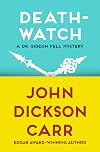
John Dickson Carr, a master of the Golden Age British-style mystery novel, presents Dr. Gideon Fell's most chilling case, in which a clock-obsessed killer terrorizes London A clockmaker is puzzled by the theft of the hands of a monumental new timepiece he is preparing for a member of the nobility. That night, one of the stolen hands is found buried between a policeman's shoulder blades, stopping "his" clock for all time. The crime is just peculiar enough to catch the attention of Dr. Gideon show more Fell, the portly detective whose formidable intellect is the terror of every criminal in London. Working closely with Scotland Yard, he finds that the case turns on the question of why the clock hands were stolen. And learning the answer will put Dr. Fell squarely in the path of a madman with nothing but time on his hands. show lessTags
Recommendations

















Member Reviews
Found this in the building laundry room. Searched it in Your books and apparently hadn’t read it before, although I can’t help thinking I haven’t cataloged all of the ones I own. Most of the Carr I’ve read (and enjoyed) was in the late 70’s when cheap paperback reprints were readily available, many in the Collier Book reprint series (the particular copy is a 1976 printing). The entertainment is in the baroque plotting; don’t expect characters you can “like.” Interestingly, the villain is a creator of elaborate plots involving staged murder, arbitrary murder, and intentional indirect murder. Dr Fell has the utmost contempt for the killer, who is cowardly, petty, conceited and indifferent to the characters harmed. The perp show more is a mirror of Carr himself: creator of mysteries of over the top complexity that depend on the reader’s emotional disengagement in order to function as entertainment; one assumes the mirroring is intentional. Not the best of the ones I recall reading, in part because of Hadley’s unusually poor police work (check for blood on the glove and for left handedness before theorizing, inspector), and Fell’s use of staged threats to get the confession rather than hard evidence. While the fake threats may be related to Fell’s apologia for the Spanish Inquisition, the strategy for me was too reminiscent of generic TV police drama. Also, red herrings are expected, a given of the genre, but were not really incorporated into the novel as a whole; perhaps I was expecting more backstory with the detours. However, this may be a characteristic limitation of golden age plotting. Finally, one really needs to focus on detailed spatial visualization at the Temple Grandin level to truly follow scenario and counter-scenario, and I’m not sure this is still a pleasurable investment of time for me at my age. Reminded me of recent jury duty on a liability claim. show less
In so many ways this is the uber Golden Age mystery. It has all of the elements of the great Golden Age mysteries, but it has them in extremes. There's the quirky sleuth- Dr. Gideon Fell- a portly academic who mostly watches the police and occasionally adds a mumble or guffaw. There's the complicated plot and this one is truly complex. There are many moving parts, and even more red herrings. The mystery involves a department store employee stabbed by a shoplifter and a detective found dead in a house, stabbed with the hands of a clock. There is a panel of potential suspects, and they are an odd lot. One of them considers the Spanish Inquisition to be his hobby. There's also a lovesick student, a disgraced police officer, and a nosy show more landlady. When the solution is revealed all the reader can do is wonder why they didn't figure it out.
All of this said, so many of the Golden Age mystery writers were women that I have become accustomed to more fully developed female characters. The women in this book are all stereotypes. In addition to the aforementioned landlady, who is also histrionic and sexually frustrated, there's a pretty young ingenue, and a female attorney who is, of course, unpleasant, and not quite as feminine as she should be.
In sum, many tropes, though they are comfortable ones, and one of the most complicated mysteries I have read in some time. show less
All of this said, so many of the Golden Age mystery writers were women that I have become accustomed to more fully developed female characters. The women in this book are all stereotypes. In addition to the aforementioned landlady, who is also histrionic and sexually frustrated, there's a pretty young ingenue, and a female attorney who is, of course, unpleasant, and not quite as feminine as she should be.
In sum, many tropes, though they are comfortable ones, and one of the most complicated mysteries I have read in some time. show less
Dr Gideon Fell is up against a diabolical murderer: a man has been stabbed to death with the hand of an outdoor clock. What kind of person would think of using that as a weapon? What is the motive for killing the victim? And how strange are the coincidences that point to one person in particular as the killer?
I acknowledge Carr's mastery of plotting locked-room mysteries and his writing style, which sounds British to my ears even though Carr was American. But I do find these mysteries exhausting sometimes because suspects are raised and cleared, and the case goes topsy-turvy at least once, more likely twice, before settling down at the end. They're best suited for extended periods when you can concentrate.
I acknowledge Carr's mastery of plotting locked-room mysteries and his writing style, which sounds British to my ears even though Carr was American. But I do find these mysteries exhausting sometimes because suspects are raised and cleared, and the case goes topsy-turvy at least once, more likely twice, before settling down at the end. They're best suited for extended periods when you can concentrate.
Originally published in 1935, DEATH-WATCH is the fifth book in the Dr Gideon Fell series by "golden-age" writer John Dickson Carr.
After marrying an Englishwoman, Dickson moved to London, the setting for many of his novels. Referred to as one of the "Golden Age" writers of mysteries, most of the books relied on complex plots, although Dickson was a particular proponent of the "locked room" style of puzzle. Dr Gideon Fell is one of the great solvers of the seemingly impossible crime and in DEATH-WATCH he is working closely with Inspector Hadley to solve the odd mystery of the death of an undercover policeman. The house in which the policeman died is that of clockmaker Johannus Carver, who is then connected to another case - the wounding show more of a store detective - and the theft of jewellery and a unique watch, also connected to the house via the maker.
DEATH-WATCH really is a classic "Golden-Age" mystery, with a complex plot relying on connections and circles within circles. To say nothing of wading through a lot of red-herrings and around a lot of possible suspects. Much of the investigating relies on the keen observation of Dr Fell, who notes, sees and considers all the actions, and comments of everyone who lives in the house. Needless to say the police are there to run errands, pick up evidence and generally serve the machinations of the Great Detective.
Obviously this is old style mystery writing, so it is very wordy compared to current standards, and quite convoluted in places. There's also a decided propensity to write hysteria and oddity into just about every female character in the book - they are either prone to suspicious behaviour, over the top outbursts, mad personal affectations, or completely bland. In DEATH-WATCH this tendency seemed to be even more pronounced than normal even allowing for the time that the novel was originally written.
If you are a fan of Golden-Age mystery writing, then you might already have come across the Dr Gideon Fell novels. If they are new to you, and you can handle the wordiness and the attitude towards women then this book is perfectly readable as a starting point, or a point in the middle, or even if you're in the mood to work your way through the series from the beginning.
http://www.austcrimefiction.org/review/review-death-watch-john-dickson-carr show less
After marrying an Englishwoman, Dickson moved to London, the setting for many of his novels. Referred to as one of the "Golden Age" writers of mysteries, most of the books relied on complex plots, although Dickson was a particular proponent of the "locked room" style of puzzle. Dr Gideon Fell is one of the great solvers of the seemingly impossible crime and in DEATH-WATCH he is working closely with Inspector Hadley to solve the odd mystery of the death of an undercover policeman. The house in which the policeman died is that of clockmaker Johannus Carver, who is then connected to another case - the wounding show more of a store detective - and the theft of jewellery and a unique watch, also connected to the house via the maker.
DEATH-WATCH really is a classic "Golden-Age" mystery, with a complex plot relying on connections and circles within circles. To say nothing of wading through a lot of red-herrings and around a lot of possible suspects. Much of the investigating relies on the keen observation of Dr Fell, who notes, sees and considers all the actions, and comments of everyone who lives in the house. Needless to say the police are there to run errands, pick up evidence and generally serve the machinations of the Great Detective.
Obviously this is old style mystery writing, so it is very wordy compared to current standards, and quite convoluted in places. There's also a decided propensity to write hysteria and oddity into just about every female character in the book - they are either prone to suspicious behaviour, over the top outbursts, mad personal affectations, or completely bland. In DEATH-WATCH this tendency seemed to be even more pronounced than normal even allowing for the time that the novel was originally written.
If you are a fan of Golden-Age mystery writing, then you might already have come across the Dr Gideon Fell novels. If they are new to you, and you can handle the wordiness and the attitude towards women then this book is perfectly readable as a starting point, or a point in the middle, or even if you're in the mood to work your way through the series from the beginning.
http://www.austcrimefiction.org/review/review-death-watch-john-dickson-carr show less
An undercover policeman is murdered in the home of clockmaker Johannus Carver. The policeman had come there based on a tip he'd received concerning a suspect who had not only been on a shoplifting spree, but who had also murdered someone during one of the crimes. The policeman was stabbed in the neck with the hand of a clock, and Dr. Fell is on hand just after the crime occurs. There are a multitude of suspects, a lot of red herrings and a serious mystery at work here. And there's Dr. Fell, whose verbal parry with Inspector Hadley over the guilt or innocence of a particular suspect was magnifico, as were his musings on the Spanish Inquisition (I know, nobody expects the Spanish Inquisition!). Anyway...a delight from start to finish.
I'd show more definitely recommend this one to Golden-Age mystery fans, or to those wondering whether or not to try one of Carr's Fell novels, I'd say this would be a fine one with which to start. It was a bit wordy, but that seems to be the norm among that group of mystery writers, so don't let that bother you. I've actually become quite used to Carr's style by now (this is #5 in a row by him I've read this month), and though it may be a bit off-putting to modern mystery readers, it's still quite well done. Just take it slow and absorb. show less
I'd show more definitely recommend this one to Golden-Age mystery fans, or to those wondering whether or not to try one of Carr's Fell novels, I'd say this would be a fine one with which to start. It was a bit wordy, but that seems to be the norm among that group of mystery writers, so don't let that bother you. I've actually become quite used to Carr's style by now (this is #5 in a row by him I've read this month), and though it may be a bit off-putting to modern mystery readers, it's still quite well done. Just take it slow and absorb. show less
A piece of masterful misdirection; dizzyingly complex.
Worth noting is a lecture by Dr. Fell on the Spanish Inquisition. A model of fairness and balance, nicely integral to the mystery, it's worth the price of the book, between the contents themselves and taking place in the glow of a pub fire, beneath old blackened beams, in an atmosphere of replete postprandial warmth.
Worth noting is a lecture by Dr. Fell on the Spanish Inquisition. A model of fairness and balance, nicely integral to the mystery, it's worth the price of the book, between the contents themselves and taking place in the glow of a pub fire, beneath old blackened beams, in an atmosphere of replete postprandial warmth.
A number of the Gideon Fell titles have been released recently as e-books with a collective title THE MURDER ROOM.
DEATH-WATCH has the reputation of a classic of Golden Age crime fiction. In some ways it's main protagonist Dr Gideon Fell reminded me of detectives who went before and those who came after. He has a reputation for his great powers of deduction as did Sherlock Holmes and Hercule Poirot. And the similarities don't end there - there is the companion/observer Melson who compares favourably with Dr. Watson and Captain Hastings, and the policeman/foil Hadley who serves to demonstrate the superiority of Fell's deductive powers.
The plot is very complex and convoluted with a number of red herrings. At one stage Hadley is ready to show more make an arrest for the two murders that have taken place, but Fell manages to prove to him that he has been cunningly led to his conclusions by the real murderer. I think the complicatedness of the plot gives the reader a greater appreciation of the pared down simplicity of Agatha Christie's novels.Add to this some of the absurdity of detail: why use the gilt covered big hand of a clock as your weapon?; the meaning of why there is a sliver rather than a patch of light; a multiplicity of skylights, staircases, and sliding panels - just to identify a few.
To be honest, this title is not going to send me rushing to find another, but students of Golden Age crime fiction will appreciate that these out-of-print titles are being made available for modern readers.
I was interested in reading this for my participation in the Vintage Mystery Reading Challenge 2014. show less
DEATH-WATCH has the reputation of a classic of Golden Age crime fiction. In some ways it's main protagonist Dr Gideon Fell reminded me of detectives who went before and those who came after. He has a reputation for his great powers of deduction as did Sherlock Holmes and Hercule Poirot. And the similarities don't end there - there is the companion/observer Melson who compares favourably with Dr. Watson and Captain Hastings, and the policeman/foil Hadley who serves to demonstrate the superiority of Fell's deductive powers.
The plot is very complex and convoluted with a number of red herrings. At one stage Hadley is ready to show more make an arrest for the two murders that have taken place, but Fell manages to prove to him that he has been cunningly led to his conclusions by the real murderer. I think the complicatedness of the plot gives the reader a greater appreciation of the pared down simplicity of Agatha Christie's novels.Add to this some of the absurdity of detail: why use the gilt covered big hand of a clock as your weapon?; the meaning of why there is a sliver rather than a patch of light; a multiplicity of skylights, staircases, and sliding panels - just to identify a few.
To be honest, this title is not going to send me rushing to find another, but students of Golden Age crime fiction will appreciate that these out-of-print titles are being made available for modern readers.
I was interested in reading this for my participation in the Vintage Mystery Reading Challenge 2014. show less
Members
- Recently Added By
Author Information

231+ Works 19,015 Members
John Dickson Carr, the master of locked room mysteries, was born in Uniontown, Pennsylvania, in 1906. He was educated at Haverford College and the Sorbonne in Paris. Carr is a prolific writer with more than 80 novels and collections of short stories to his credit. He began his writing career at the age of 26 with his first published novel, It show more Walks At Night. Some of his most popular works are The Three Coffins (1935), The Burning Coat (1937), and The Bride of Newgate (1951). Carr also collaborated with Adrian Doyle, the son of Sir Arthur Conan Doyle in The Exploits of Sherlock Holmes (1954). Carr met his wife in 1932 and settled in England in 1933. He was drafted by the United States military in World War II, and was ordered to remain in England and work with the BBC. He lived in many cities throughout the world until 1967, when he permanently moved to Greenville, South Carolina. John Dickson Carr also wrote mystery novels under the name Carter Dickson. He died in Greenville in 1977. (Bowker Author Biography) show less
Series

Belongs to Publisher Series
Adey's Locked Room Murders (0306)
Work Relationships
Common Knowledge
- Canonical title*
- Kuolemankello
- Original title
- Death-Watch
- Original publication date
- 1935
- People/Characters
- Dr. Gideon Fell
- Important places
- London, England, UK
- First words
- "Odd crimes?" said Dr. Fell, while we were discussing that case of the hats and the crossbows, and afterwards the still more curious problem of the inverted room at Waterfall Manor.
- Last words
- (Click to show. Warning: May contain spoilers.)"Have another glass of beer."
*Some information comes from Common Knowledge in other languages. Click "Edit" for more information.
Classifications
Statistics
- Members
- 333
- Popularity
- 95,753
- Reviews
- 10
- Rating
- (3.55)
- Languages
- 11 — Chinese, simplified, English, Finnish, French, German, Hebrew, Hungarian, Italian, Japanese, Russian, Spanish
- Media
- Paper, Audiobook, Ebook
- ISBNs
- 21
- ASINs
- 27