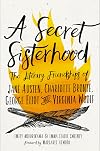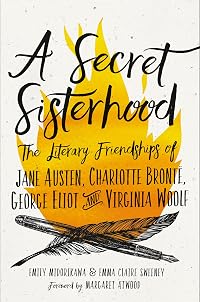
A Secret Sisterhood: The Literary Friendships of Jane Austen, Charlotte Brontë, George Eliot, and Virginia Woolf
by Emily Midorikawa, Emma Claire Sweeney
On This Page
Description
Male literary friendships are the stuff of legend; think Byron and Shelley, Fitzgerald and Hemingway. But the world's best-loved female authors are usually mythologized as solitary eccentrics or isolated geniuses. Coauthors and real-life friends Emily Midorikawa and Emma Claire Sweeney prove this wrong, thanks to their discovery of a wealth of surprising collaborations: the friendship between Jane Austen and one of the family servants, playwright Anne Sharp; the daring feminist author Mary show more Taylor, who shaped the work of Charlotte Bronte; the transatlantic friendship of the seemingly aloof George Eliot and Harriet Beecher Stowe; and Virginia Woolf and Katherine Mansfield, most often portrayed as bitter foes, but who, in fact, enjoyed a complex friendship fired by an underlying erotic charge. Through letters and diaries that have never been published before, A Secret Sisterhood resurrects these forgotten stories of female friendships. They were sometimes scandalous and volatile, sometimes supportive and inspiring, but always-until now-tantalizingly consigned to the shadows. show lessTags
Recommendations








Member Reviews
This is an engaging book, if a bit earnest for my taste. I didn't find the central thesis--that little-known women's friendships played pivotal roles in the writing of four famous female writers--particularly compelling; at least I felt that the authors overstated their case. However, the narrative parts of the book were well-written, and I'm not going to complain about time spent with Charlotte Bronte or Harriet Beecher Stowe.
I will admit that at first the tone of this book struck me as a little twee and overly whimsical. The authors likened their shared dreams of being writers to those of 19th century novelists and thus seemed to be projecting their emotions in a slightly discomforting manner. As I read on, though, I got used to this and unbent towards the book. ‘A Secret Sisterhood’ turned out to be a sensitively written, thoughtful, and moving account of four literary friendships. Each is constructed from surviving letters and journals, illuminating how women dealt with the constraints placed on their lives and artistic endeavours by society over the past two hundred years. The four friendships are presented in chronological order, which also happens show more to ascending order of available evidence. The letters between Jane Austen and Anne Sharpe haven’t survived, making this the most speculative section. By contrast, plenty of letters and journals survive to show the complexity of the bond between Virginia Woolf and Katherine Mansfield. Perhaps the most interesting aspect of the four friendships was the support and critique the women gave to each other’s literary ambitions. The authors repeatedly point out that collaborative literary friendships between men are often celebrated, while those between women tend to get forgotten. This book is an attempt to start redressing the balance. Once accustomed to its style, I found it enjoyable and informative. show less
This history of female authors and their friendships offers something new to the well-known stories of several writers. Rather than writing in isolation, friendships with other women writers sustained and propelled authors like Jane Austen, Charlotte Bronte, George Eliot, and Virginia Woolf to their success. I was especially intrigued to learn about the correspondence between George Eliot and Harriet Beecher Stowe. Overall, a great read for better understanding these pivotal writers.
In A Secret Sisterhood, co-authors Emily Midorikawa and Emma Claire Sweeney examine the fraught literary friendships of four classic female writers: Jane Austen, Charlotte Brontë, George Eliot, and Virginia Woolf. All four of these famous women relied on close relationships with female companions to sustain and inspire them. Nonetheless, these friendships were also marked by misunderstandings, petty jealousies, and long periods of estrangement. This book's prose isn't great (our heroines are constantly "putting pen to paper", to cite one overused phrase), but overall this is a solid collective biography that sheds new light on often-neglected relationships.
“A Secret Sisterhood” examines the relationships that early female writers had with friends. Most that is written about Austen and Charlotte Bronte shows them working in isolation (aside from the Bronte siblings); in fact they both had active friendships with other women both through correspondence and face to face, where they talked about their work. Eliot and Woolf have less of a reputation for loneliness, but still aren’t considered to be extroverts. But they, too, had their special friends with whom they could talk shop.
Jane Austen was friends with her brother’s nanny (which was not looked upon well), who was a playwright when not wrangling kids; author Mary Taylor helped Charlotte Bronte; the outcast George Eliot (outcast show more for cohabiting with a married man for years) had a long correspondence with Harriet Beecher Stowe; and Virginia Woolf had a relationship both friendly and very competitive with author Katherine Mansfield. These friendships helped sustain the writers in their solitary work (even with people around them, a writer works alone) and provided sounding boards for their new writings.
The authors, themselves friends since the beginnings of their writing careers and who first found success at almost the same time as each other, have done meticulous research and found previously unread documents on or by their subjects. It’s an interesting read, so see how these friendships affected their writing. Much has been made of the friendships of certain male authors- Byron and Shelley, Hemingway and F. Scott Fitzgerald, Charles Dickens and Wilkie Collins- and now at last we have the feminine side of that coin – and a foreword by Margaret Atwood. Four and a half stars. show less
Jane Austen was friends with her brother’s nanny (which was not looked upon well), who was a playwright when not wrangling kids; author Mary Taylor helped Charlotte Bronte; the outcast George Eliot (outcast show more for cohabiting with a married man for years) had a long correspondence with Harriet Beecher Stowe; and Virginia Woolf had a relationship both friendly and very competitive with author Katherine Mansfield. These friendships helped sustain the writers in their solitary work (even with people around them, a writer works alone) and provided sounding boards for their new writings.
The authors, themselves friends since the beginnings of their writing careers and who first found success at almost the same time as each other, have done meticulous research and found previously unread documents on or by their subjects. It’s an interesting read, so see how these friendships affected their writing. Much has been made of the friendships of certain male authors- Byron and Shelley, Hemingway and F. Scott Fitzgerald, Charles Dickens and Wilkie Collins- and now at last we have the feminine side of that coin – and a foreword by Margaret Atwood. Four and a half stars. show less
This is a lively and intelligent exploration of female friendships between prominent British writers in the 19th and early 20th centuries. I certainly learned something new from reading the book!
I received an ARC from the publisher via NetGalley. Full review to come closer to the publication date.
A delightful look at female literary friendships that have been too-long overlooked. Featuring Jane Austen and governess playwright Anne Sharp; the pioneering feminist author Mary Taylor and her influence on the work of Charlotte Brontë; the transatlantic correspondence of George Eliot and Harriet Beecher Stowe; and the oft misunderstood relationship between Virginia Woolf and Katherine Mansfield.
A delightful look at female literary friendships that have been too-long overlooked. Featuring Jane Austen and governess playwright Anne Sharp; the pioneering feminist author Mary Taylor and her influence on the work of Charlotte Brontë; the transatlantic correspondence of George Eliot and Harriet Beecher Stowe; and the oft misunderstood relationship between Virginia Woolf and Katherine Mansfield.
Members
- Recently Added By
Lists

Author Information

2 Works 288 Members
2 Works 265 Members
Awards and Honors
Notable Lists
Common Knowledge
- Original publication date
- 2017
- Dedication
- To Jack and Jonathan, for support from the wings of the stage
- First words
- In the most famous portrait of Jane Austen, she wears a gauzy dress and frilled cap, and sits demurely, gazing into the middle distance.
Classifications
- Genres
- Literature Studies and Criticism, Nonfiction, Biography & Memoir
- DDC/MDS
- 820.9 — Literature & rhetoric English & Old English literatures English and Old English (Anglo-Saxon) literatures History, description, critical appraisal of works in more than one form
- LCC
- PR119 .M53 — Language and Literature English English Literature
- BISAC
Statistics
- Members
- 246
- Popularity
- 132,118
- Reviews
- 7
- Rating
- (3.72)
- Languages
- English
- Media
- Paper, Audiobook, Ebook
- ISBNs
- 13
- ASINs
- 3