
The Thurber Carnival
by James Thurber
On This Page
Description
"An authentic American genius. . . . Mr. Thurber belongs in the great lines of American humorists that includes Mark Twain and Ring Lardner." -Philadelphia Inquirer James Thurber's unique ability to convey the vagaries of life in a funny, witty, and often satirical way earned him accolades as one of the finest humorists of the twentieth century. A bestseller upon its initial publication in 1945, The Thurber Carnival captures the depth of his talent and the breadth of his wit. The stories show more compiled here, almost all of which first appeared in The New Yorker, are from his uproarious and candid collection My World and Welcome to It-including the American classic "The Secret Life of Walter Mitty"-as well as from The Owl in the Attic, The Seal in the Bathroom, Men, Women and Dogs. Thurber's take on life, society, and human nature is timeless and will continue to delight readers even as they recognize a bit of themselves in his brilliant sketches. show lessTags
Recommendations













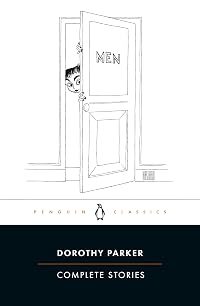
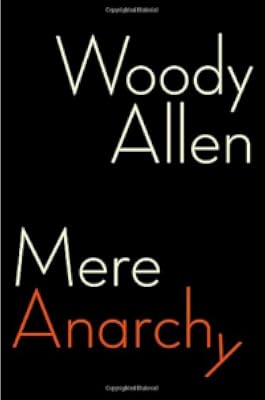
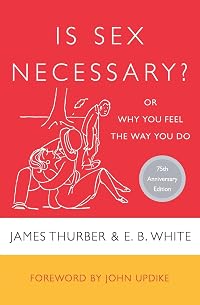






Member Reviews
We had a copy of this book on our vast bookshelves when I was a child. Thurber was a favorite of mine because of his wonderful, wonky drawings. As I grew out of toddlerhood, I loved having his stories read to me, and then began to read them myself. ( I really fell in love with The Last Flower. It came out around the same time as Where Have All the Flowers Gone and I would drive my family nuts singing while engaged in the pictures.) Still later, I read the short stories myself, and knew them well enough that at a very young age I wrote a poem in tribute to Walter Mitty (whose story is in this book), and won a prize for it. Alas that copy, which looked like the one pictured here, is no longer in my personal library. But when we found a show more box of give-away free books while walking on Locust Street here in Philly, I grabbed it. Yes it's paperback, and yellowed. Yes, its cover price was $2.75 and it has a price sticker from Encore Books for $1.00. But it has beloved Thurber sketches and witty, wonderful stories. I had to rescue it and let it feel the love I've carried for it for almost 70 years. Rounded up, because of love. show less
This is a collection of lighthearted stories and essays by James Thurber. I picked it up after getting hooked on the former Keith Olberman segment "Fridays With Thurber". The stories are good, but I enjoyed it less than I hoped for two reasons. The first is that these shine brightest when read aloud and theatrically as Olberman performs them. Sadly, I do most of my reading on my own and am far to lazy to read aloud to myself. The second reason was unexpected. I've read a decent amount of fiction in the last year and a half that was at least 50 years old. For the most part it was fairly predictable which I found unbearably dated (The Turn of the Screw) and surprising how many felt almost contemporary (Tropic of Cancer). This collection show more had a way of sticking in my craw when I just wanted to be entertained. I mean, this was supposed to be my spoonful of sugar to help Gulag go down.
The thing is Thurber dates his writing. While his primary concern is humor he draws a healthy dollop of his humor from conflict between a changing world and unchanging people. And even when he isn't specifically highlighting things contemporary to his writing he very much sets a scene in the time. Cars are cranked, Freud is cutting edge, grandfather spends half his time thinking the Civil War is still on. All that is fine, it's the casual sexism and racism that got me. I'm talking about the sort of prejudice that doesn't come from malice, but from casually steeping in a world where it's just a fact that women like baubles and can't possibly understand their husbands and "colored" people invariably speak in a manner both quaint and confounding. Without ever meaning to get into racial or gender politics Thurber draws a line between men and women, black and white. And while he probably didn't even know he was doing it he outlines a world where men and women, blacks and whites are classed and divided by the perceived inability of the female and the black to engage the white male.
Certainly Thurber is not setting up the white male as a heroic figure. Thurber is quick to make light of human weakness. And yet, too often there seems to be a beastly woman in the background bringing the worst out of the man. I tried to enjoy it as much as much as possible, but I kept remembering that saying that when you don't notice the bigotry, that's because it coincides with your own bigotry. So here it is in a nutshell. I can handle reading a lot of awful things. But what bothered me about this was the awful things were clearly not a blip in Thurber's mind. They were just things. That ignorance of and indifference to how he wrote an impassable wall between the sexes and races pissed me off. show less
The thing is Thurber dates his writing. While his primary concern is humor he draws a healthy dollop of his humor from conflict between a changing world and unchanging people. And even when he isn't specifically highlighting things contemporary to his writing he very much sets a scene in the time. Cars are cranked, Freud is cutting edge, grandfather spends half his time thinking the Civil War is still on. All that is fine, it's the casual sexism and racism that got me. I'm talking about the sort of prejudice that doesn't come from malice, but from casually steeping in a world where it's just a fact that women like baubles and can't possibly understand their husbands and "colored" people invariably speak in a manner both quaint and confounding. Without ever meaning to get into racial or gender politics Thurber draws a line between men and women, black and white. And while he probably didn't even know he was doing it he outlines a world where men and women, blacks and whites are classed and divided by the perceived inability of the female and the black to engage the white male.
Certainly Thurber is not setting up the white male as a heroic figure. Thurber is quick to make light of human weakness. And yet, too often there seems to be a beastly woman in the background bringing the worst out of the man. I tried to enjoy it as much as much as possible, but I kept remembering that saying that when you don't notice the bigotry, that's because it coincides with your own bigotry. So here it is in a nutshell. I can handle reading a lot of awful things. But what bothered me about this was the awful things were clearly not a blip in Thurber's mind. They were just things. That ignorance of and indifference to how he wrote an impassable wall between the sexes and races pissed me off. show less
Does anyone read Thurber anymore? I don't think many people do, and it's a damn shame, because that gawky misfit of a man wrote some of the greatest stories of the past century. His drawings are loveable, and the stab in his voice is mild (much less brutal than Dorothy Parker's) but penetrating and funny in a way that makes you think and laugh at the same time.
Thurber is an American master who is slipping through the cracks.
Thurber is an American master who is slipping through the cracks.
I remember reading all the books of his they had in the library when I was a kid--inspired by the short-running TV show "My World and Welcome to It" which was based on his work.
Amazingly, I found him just as entertaining as I did as a child. The Thurber Carnival is a hodge-podge of essays, stories, and drawings culled over several decades and from several other collections. Some are better than others, of course, and quite a few of them are very dated--unsurprisingly, since the book was originally published in 1945, and compiled at that time from earlier sources.
It doesn't really seem to matter. Even though I can't really relate to the early days of the automobile, it didn't stop me from laughing aloud at "Recollections of a Gas show more Buggy." Human nature hasn't changed all that much in the past 60 or 70 years.
There are quite a few classic stories in here, including "The Catbird Seat," which is a delicious story of revenge, and "The Secret Life of Walter Mitty," which I hadn't even realized was Thurber's.
His drawings are just as entertaining, which is even more startling after reading in the biography what poor eyesight he had. With just a few lines, he manages to do the same thing he does in the stories and essays with just a few words.
Most of the humor has to do with human nature--specifically, with the way people communicate, or don't. One of the best (i.e. most hilarious) examples is "What Do You Mean It Was Brillig?" in which he lampoons both his housekeeper's accent and his own misunderstanding of and reaction to it. There's also a darkly humorous story, "The Breaking Up of the Winships," about a couple who divorces over a disagreement about Greta Garbo. Change a few minor details, and these stories are as true today as they were when they were written.
I'm really happy I bought this. Not only was it wonderfully nostalgic, and still entertaining today, but I've got this lovely book of very funny, very short pieces that are easy to share with my family. I don't even begrudge the 3 days it took me to read. show less
Amazingly, I found him just as entertaining as I did as a child. The Thurber Carnival is a hodge-podge of essays, stories, and drawings culled over several decades and from several other collections. Some are better than others, of course, and quite a few of them are very dated--unsurprisingly, since the book was originally published in 1945, and compiled at that time from earlier sources.
It doesn't really seem to matter. Even though I can't really relate to the early days of the automobile, it didn't stop me from laughing aloud at "Recollections of a Gas show more Buggy." Human nature hasn't changed all that much in the past 60 or 70 years.
There are quite a few classic stories in here, including "The Catbird Seat," which is a delicious story of revenge, and "The Secret Life of Walter Mitty," which I hadn't even realized was Thurber's.
His drawings are just as entertaining, which is even more startling after reading in the biography what poor eyesight he had. With just a few lines, he manages to do the same thing he does in the stories and essays with just a few words.
Most of the humor has to do with human nature--specifically, with the way people communicate, or don't. One of the best (i.e. most hilarious) examples is "What Do You Mean It Was Brillig?" in which he lampoons both his housekeeper's accent and his own misunderstanding of and reaction to it. There's also a darkly humorous story, "The Breaking Up of the Winships," about a couple who divorces over a disagreement about Greta Garbo. Change a few minor details, and these stories are as true today as they were when they were written.
I'm really happy I bought this. Not only was it wonderfully nostalgic, and still entertaining today, but I've got this lovely book of very funny, very short pieces that are easy to share with my family. I don't even begrudge the 3 days it took me to read. show less
The Thurber carnival is another short story collection of timeless pieces by James Thurber. It is a parade of deviance. In each story one of the characters is either eccentric, weird or totally nuts. However, in each case there is sufficient suspense to let the reader gradually discover where the screw is loose.
In "The secret life of Walter Mitty" a war veteran "has not come home" so to speak. He sees the enemy hidden behind every tree, while out shopping with his wife. It is a classic story, with an almost endearing touch. "The catbird seat" tells the story of envy and backstabbing in the office, and how to get rid of troublesome colleagues. A very humourous, and cruel story. "In "The MacBeth murder mystery" a reader get Shakespeare show more all wrong, or all right, depending on your perspective.
Most stories are rather short, the volume as a whole being just over 60 pages. The stories are highly original, and hardly dated, so they can be enjoyed by contemporary readers. Great stuff. show less
In "The secret life of Walter Mitty" a war veteran "has not come home" so to speak. He sees the enemy hidden behind every tree, while out shopping with his wife. It is a classic story, with an almost endearing touch. "The catbird seat" tells the story of envy and backstabbing in the office, and how to get rid of troublesome colleagues. A very humourous, and cruel story. "In "The MacBeth murder mystery" a reader get Shakespeare show more all wrong, or all right, depending on your perspective.
Most stories are rather short, the volume as a whole being just over 60 pages. The stories are highly original, and hardly dated, so they can be enjoyed by contemporary readers. Great stuff. show less
Thurber was dark, and very perceptive. He has a lighter hand than Bierce, but that says little. We have a very comprehensive anthology here, and one to be read with profit by any civilized person.
Light prose, merely anecdotical or sketchy at points. The best are not the memories but the stories and among these the two about the husband who has left his wife and is living in a hotel. In these stories the light tone clashes with the depressing content, creating a strong impression, real literature.
Members
- Recently Added By
Lists

Favorite Fairy Tale Retellings
210 works; 62 members

1940s
221 works; 25 members

Top-Rated Books on LibraryThing
272 works; 118 members
20th Century Literature
1,161 works; 55 members

Books I Own But Haven't Read
144 works; 2 members

Undiscovered Classics to Read
70 works; 15 members

Mensa for Kids Excellence in Reading Award Program (Grades 7-8)
62 works; 3 members

Mensa for Kids Excellence in Reading Award Program (Grades 7-8)
62 works; 1 member

Michael Dirda's Desert Island Books
62 works; 5 members

Mustich's 1000 Books to Read Before You Die: A Life Changing List
1,001 works; 20 members

Publisher's Weekly NON-Fiction list - 1912 - 1975
486 works; 4 members

Ambleside Year 8
80 works; 1 member

Michael Dirda's 100 Best Comic Novels
100 works; 1 member
Author Information

136+ Works 18,329 Members
Born in Columbus, Ohio, Thurber was blinded in one eye in a childhood accident. He attended Ohio State University but left without earning a degree. In 1925 he moved to New York City, where he joined the staff of the New Yorker in 1927 at the urging of his friend E. B. White. For the rest of his lifetime, Thurber contributed to the magazine his show more highly individual pieces and those strange, wry, and disturbing pen-and-ink drawings of "huge, resigned dogs, the determined and sometimes frightening women, the globular men who try so hard to think so unsuccessfully." The period from 1925, when the New Yorker was founded, until the death of its creator-editor, Harold Ross, in 1951, was described by Thurber in delicious and absorbing detail in The Years with Ross (1959). Of his two great talents, Thurber preferred to think of himself primarily as a writer, illustrating his own books. He published "fables" in the style of Aesop (see Vol. 2) and La Fontaine (see Vol. 2)---usually with a "barbed tip of contemporary significance"---children's books, several plays (two Broadway hits, one successful musical revue), and endless satires and parodies in short stories or full-length works. "The Secret Life of Walter Mitty," included in My World---and Welcome to It (1942), is probably his best-known story and continues to be frequently anthologized. T. S. Eliot described Thurber's work as "a form of humor which is also a way of saying something serious." (Bowker Author Biography) show less
Some Editions
Awards and Honors
Distinctions
Notable Lists
Series
Belongs to Publisher Series
Work Relationships
Is contained in
Contains
Has the adaptation
Is abridged in
Common Knowledge
- Canonical title*
- Carnaval
- Original title
- The Thurber Carnival
- Original publication date
- 1931
- People/Characters
- James Thurber; Charles Thurber (James' father); Mrs. Thurber (James' mother); Roy Thurber (James' brother); Herman Thurber (James' other brother); Rex (the Thurbers' American bull terrier) (show all 18); Aunt Emma Peters; Jad Peters (Aunt Emma's husband); Aunt Lisbeth Banks; Grandfather; Briggs Beall (James' cousin); Old Aunt Melissa Beall; Aunt Sarah Shoeff; Aunt Gracie Shoeff; Mrs. Thurber's mother; Great-uncle Zenas (Grandfather's late brother); Muggs (the Thurbers' Airedale); Uncle Horatio (Mrs. Thurber's uncle)
- Important places
- Columbus, Ohio, USA
- Related movies
- The Secret Life of Walter Mitty (2013 | IMDb)
- Dedication
- For
HAROLD ROSS
with increasing admiration,
wonder, and affection - First words
- I have not actually known Thurber for fifty years, since he was only forty-nine on his last birthday, but the publishers of this volume felt "fifty" would sound more effective than "forty-nine" in the title of an introduction... (show all) to so large a book, a point which I was too tired to argue about.
*Some information comes from Common Knowledge in other languages. Click "Edit" for more information.
Classifications
Statistics
- Members
- 2,836
- Popularity
- 6,436
- Reviews
- 37
- Rating
- (4.16)
- Languages
- 5 — Dutch, English, Italian, Spanish, Swedish
- Media
- Paper, Ebook
- ISBNs
- 21
- ASINs
- 84