On This Page
Description
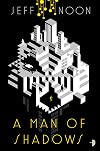
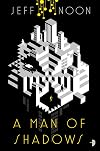
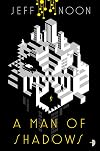
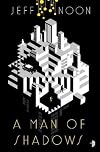
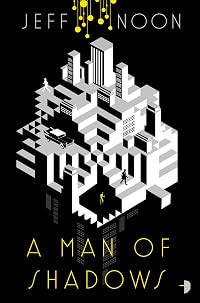
Below the neon skies of Dayzone - where the lights never go out, and night has been banished - lowly private eye John Nyquist takes on a teenage runaway case. His quest takes him from Dayzone into the permanent dark of Nocturna. As the vicious, seemingly invisible serial killer known only as Quicksilver haunts the streets, Nyquist starts to suspect that the runaway girl holds within her the key to the city's fate. In the end, there's only one place left to search: the shadow-choked zone show more known as Dusk. show lessTags
Recommendations

















Member Recommendations

grizzly.anderson Detective stories set in cites that are turned about 90 degrees from the reality we understand.
Member Reviews
This odd, fascinating novel has a lot of the standard setup of a noirish detective story: a burned-out private eye takes on the case of a missing young woman and becomes entirely too invested in her for his own good. But nothing else about this story is standard. It's set in a bizarre city in a version of the 1950s that never was, a city half of which is constantly illuminated by a sky made of glaring light bulbs and half perpetually covered in artificial night. A city that is a jumble of shifting, fragmented time zones, where time itself behaves strangely.
None of this makes any real sense, even internal sense, except in a dreamlike sort of way that just gets more and more dreamlike as the novel progresses. But I'm amazed by how well it show more works. Jeff Noon does a great job of bringing this impossible world vividly to life, despite suffering from an annoying stylistic quirk that kept threatening to throw me out of the story. (Seriously, man, there is a reason why your English teachers tried to warn you about overusing the passive voice!)
Mind you, it's entirely possible that the reason it worked so well for me, and why I enjoyed it as much as I did, has a lot to do with my own relationship to time. I've worked rotating shifts for many, many years, and I know all too well the feeling of shifting constantly between time zones without really going anywhere, the feeling of living on a clock time different from that of those around you, the feeling of not being tied to the cycles of the sun. I also know the feeling -- the deeply surreal, disconnected, timeless feeling -- that comes when the clock inside your brain finally just gives up and stops completely. And this... Well, I think this basically is that feeling translated into book form.
Rating: 4/5, although I'm tempted to rate it half a star higher just for how powerful that sense of recognition was for me. show less
None of this makes any real sense, even internal sense, except in a dreamlike sort of way that just gets more and more dreamlike as the novel progresses. But I'm amazed by how well it show more works. Jeff Noon does a great job of bringing this impossible world vividly to life, despite suffering from an annoying stylistic quirk that kept threatening to throw me out of the story. (Seriously, man, there is a reason why your English teachers tried to warn you about overusing the passive voice!)
Mind you, it's entirely possible that the reason it worked so well for me, and why I enjoyed it as much as I did, has a lot to do with my own relationship to time. I've worked rotating shifts for many, many years, and I know all too well the feeling of shifting constantly between time zones without really going anywhere, the feeling of living on a clock time different from that of those around you, the feeling of not being tied to the cycles of the sun. I also know the feeling -- the deeply surreal, disconnected, timeless feeling -- that comes when the clock inside your brain finally just gives up and stops completely. And this... Well, I think this basically is that feeling translated into book form.
Rating: 4/5, although I'm tempted to rate it half a star higher just for how powerful that sense of recognition was for me. show less
I was already a fan of Jeff Noon from his Vurt books, but it took me a while to check out his more recent work. I was thinking it would feel more different since these are essentially detective novels. But much to my delight, this one was as strange and surreal as Noon's earlier work. It really hits a sweet spot where you're not going to get lost in the weirdness but you're not going to get bored either. This is not your typical detective story. I'm excited to continue the series because from the reviews I've seen, things only get stranger from here.
I started to review this book a couple of times and really struggled. The writing and language was incredibly evocative and immersed me in the bizarre gritty world where time is arbitrary and there is a city half in perpetual daylight, half in perpetual night, and divided by an unruly dangerously wild, fog-shrouded world of Dusk.
At the same time, since it so clearly existed in some fantastic offshoot of "the real world" my mind kept struggling to make any kind of sense of how the whole thing worked. There was no science fiction unobtanium device powering individual times. There was no fantasy wizards did it explanation. It just was. It might even be simply a collective belief system, as arbitrary and illusory as hours and time zones, show more except that each person picks their own, and switches between them at the whims of capitalism and hedonism.
I finally just had to accept the world on its own terms, exactly the way the residents of the city do. Somewhere outside "normality" exists, but not here and no one is forced to be here and not there. The answer to "why" is "because". Once I did that the story just worked. It probably helped that Nyquist, the protagonist, isn't really at home in a world of arbitrary timelines either.
John Nyquist is easily recognizable as the stereotype noir detective (pun probably entirely deliberate by the author). He's a misfit outsider struggling with his own problems, grasping for any kind of solid answer to give himself purpose and stability. He's given a case to close, but definitely not to solve, and of course he can't not solve it. The need for some truth takes him through alcohol, kidnapping, murder, greed, politics and suppressed family secrets to end up more-or-less right back where he started.
If you like Phillip Marlowe, Sam Spade, Miguel Vargas, and you can accept the world of Nocturna/Dayzone on its own terms this is the book for you. show less
At the same time, since it so clearly existed in some fantastic offshoot of "the real world" my mind kept struggling to make any kind of sense of how the whole thing worked. There was no science fiction unobtanium device powering individual times. There was no fantasy wizards did it explanation. It just was. It might even be simply a collective belief system, as arbitrary and illusory as hours and time zones, show more except that each person picks their own, and switches between them at the whims of capitalism and hedonism.
I finally just had to accept the world on its own terms, exactly the way the residents of the city do. Somewhere outside "normality" exists, but not here and no one is forced to be here and not there. The answer to "why" is "because". Once I did that the story just worked. It probably helped that Nyquist, the protagonist, isn't really at home in a world of arbitrary timelines either.
John Nyquist is easily recognizable as the stereotype noir detective (pun probably entirely deliberate by the author). He's a misfit outsider struggling with his own problems, grasping for any kind of solid answer to give himself purpose and stability. He's given a case to close, but definitely not to solve, and of course he can't not solve it. The need for some truth takes him through alcohol, kidnapping, murder, greed, politics and suppressed family secrets to end up more-or-less right back where he started.
If you like Phillip Marlowe, Sam Spade, Miguel Vargas, and you can accept the world of Nocturna/Dayzone on its own terms this is the book for you. show less
In my teens I read Jeff Noon's delightfully bizarre sci-fi, including [b:Vurt|17401136|Vurt (Vurt, #1)|Jeff Noon|https://i.gr-assets.com/images/S/compressed.photo.goodreads.com/books/1361253092l/17401136._SY75_.jpg|1383955], [b:Pollen|17401123|Pollen (Vurt, #2)|Jeff Noon|https://i.gr-assets.com/images/S/compressed.photo.goodreads.com/books/1361251859l/17401123._SY75_.jpg|910696], and [b:Automated Alice|17369279|Automated Alice (Vurt, #3)|Jeff Noon|https://i.gr-assets.com/images/S/compressed.photo.goodreads.com/books/1360683018l/17369279._SX50_.jpg|1344718]. Although I remember very little about the plots, the weird technologies stuck in my mind, notably virtual reality feathers and nanotech pollen. When I saw he'd started publishing a show more new series I was a little wary of the crime noir concept, but decided to give 'A Man of Shadows' a try nonetheless. The setting is strange and vivid: an unnamed city half in permanent artificial darkness and half in permanent artificial light. Between the two is a dangerous and mysterious strip of Dusk. In the Dayzone, timezones have been privatised to improve productivity and hundreds of them compete for popularity. The result is constant extreme uncertainty about what time it is. All three zones of the city are vividly imagined and surprisingly spooky. Chronological confusion is especially unsettling to read about in the current Covid Time. A train trip through Dusk was genuinely frightening; the book's most memorable scene. Noon shows the ways that various incidental characters have been damaged by the city's peculiarities rather well. Indeed, the most striking scenes had little to do with the plot.
Unfortunately, I was disappointed by the protagonist John Nyquist. It was difficult to understand how such a weird place could produce such a thoroughly dull man. Perhaps he was meant to subvert noir tropes by embodying them all, however I found no signs of subversion or parody. He ticks every box: private investigator, estranged ex-wife, trouble paying the rent, alcohol problem, whisky specifically, embittered by life, daddy issues, no hobbies, no friends, no family. The only innovation is that he never knows what time it is. The plot follows him on a case locating a runaway teenage girl named Eleanor. This he does, then becomes obsessed with her situation, presumably because there is literally nothing else going on in his life except drinking. Eleanor doesn't much appreciate his stalking. Nyquist begins the book with fresh wounds from a fight and gets progressively more beaten up, drunk, tortured, drugged, and sleep-deprived as it goes on. By the end, I found it almost impossible to believe that he was still alive, let alone on his feet. Given the perpetual drinking and sleep deprivation, he was in desperate need of an intervention and detox throughout. I completely lost patience with him whenhe had a drug-induced hallucination of himself murdering Eleanor and immediately decided that he must emulate it, rather than protecting her. His two settings 'protect girl' and 'murder girl' make a very stupid dichotomy, frankly. You don't have to do things just because you saw them during drug-induced psychosis! It's like he has eradicated all critical thinking functions by drinking and not sleeping, which makes for a very frustrating narrative perspective. Take a nap, man.
I would have liked to read the story told instead from the perspective of Eleanor, a teenager whose parents are keeping secrets and hire a large, drunk, injured man who keeps following her. Looking back on the plot, Nyquist did not need to be involved at all. Could this have been a deliberate subversion of noir tropes? Who knows. Based on Noon's earlier books, I was also expecting more fun. 'A Man of Shadows' is gloomy in the extreme, with no levity at all. The dialogue is all like this:
Quoted in isolation that sounds like a Batman parody. I'm not sufficiently fond of crime fiction to swallow such verbiage, even when the setting is rather fascinating. Adding this to the 'great setting, shame about the protagonist' pile with [b:Aurorarama|8089555|Aurorarama (The Mysteries of New Venice, #1)|Jean-Christophe Valtat|https://i.gr-assets.com/images/S/compressed.photo.goodreads.com/books/1320559915l/8089555._SY75_.jpg|12832601], [b:Europe in Autumn|18143945|Europe in Autumn (The Fractured Europe Sequence, #1)|Dave Hutchinson|https://i.gr-assets.com/images/S/compressed.photo.goodreads.com/books/1382971951l/18143945._SY75_.jpg|25491267], and [b:Senlin Ascends|35271523|Senlin Ascends (The Books of Babel, #1)|Josiah Bancroft|https://i.gr-assets.com/images/S/compressed.photo.goodreads.com/books/1502224161l/35271523._SX50_.jpg|24467682]. show less
Unfortunately, I was disappointed by the protagonist John Nyquist. It was difficult to understand how such a weird place could produce such a thoroughly dull man. Perhaps he was meant to subvert noir tropes by embodying them all, however I found no signs of subversion or parody. He ticks every box: private investigator, estranged ex-wife, trouble paying the rent, alcohol problem, whisky specifically, embittered by life, daddy issues, no hobbies, no friends, no family. The only innovation is that he never knows what time it is. The plot follows him on a case locating a runaway teenage girl named Eleanor. This he does, then becomes obsessed with her situation, presumably because there is literally nothing else going on in his life except drinking. Eleanor doesn't much appreciate his stalking. Nyquist begins the book with fresh wounds from a fight and gets progressively more beaten up, drunk, tortured, drugged, and sleep-deprived as it goes on. By the end, I found it almost impossible to believe that he was still alive, let alone on his feet. Given the perpetual drinking and sleep deprivation, he was in desperate need of an intervention and detox throughout. I completely lost patience with him when
I would have liked to read the story told instead from the perspective of Eleanor, a teenager whose parents are keeping secrets and hire a large, drunk, injured man who keeps following her. Looking back on the plot, Nyquist did not need to be involved at all. Could this have been a deliberate subversion of noir tropes? Who knows. Based on Noon's earlier books, I was also expecting more fun. 'A Man of Shadows' is gloomy in the extreme, with no levity at all. The dialogue is all like this:
She handed it to him. He lifted the lid and listened, searching for a memory, something from his own childhood.
It wasn't there. It was dead. Dead and buried.
He threw the box to the floor and brought his boot heel down on it, breaking it in two.
"Oh my god!" cried Eleanor. "What is wrong with you?"
Nyquist stared at her. Her hands punched the air.
"You're crazy," she yelled. "I think you're actually halfway disturbed."
"I'm doing what needs to be done." He wiped at his face with his hand. "What does the time seven past seven mean to you?"
"Nothing. Why?"
"Think! Seven minutes past seven. It must mean something."
Eleanor ignored the question. Instead she started to push her belongings back in the bag. She stood up.
"Where are you going?" he asked.
"I need to get out of here."
"That's not going to happen."
"This is ridiculous. I'm leaving. Open the door."
"Sit down."
"Give me the key."
"Sit the hell down!"
Nyquist's face had a brutal look, there was no arguing with it. Eleanor sat down on the edge of the bed. She said, "You're as bad as they are, as bad as Kinkaid and Bale."
"Yes. I'm sorry."
"What is it?" she asked. "What's wrong with you?"
Nyquist took a breath. His eyes held too much darkness. And then he said, "I have no parents. None."
Quoted in isolation that sounds like a Batman parody. I'm not sufficiently fond of crime fiction to swallow such verbiage, even when the setting is rather fascinating. Adding this to the 'great setting, shame about the protagonist' pile with [b:Aurorarama|8089555|Aurorarama (The Mysteries of New Venice, #1)|Jean-Christophe Valtat|https://i.gr-assets.com/images/S/compressed.photo.goodreads.com/books/1320559915l/8089555._SY75_.jpg|12832601], [b:Europe in Autumn|18143945|Europe in Autumn (The Fractured Europe Sequence, #1)|Dave Hutchinson|https://i.gr-assets.com/images/S/compressed.photo.goodreads.com/books/1382971951l/18143945._SY75_.jpg|25491267], and [b:Senlin Ascends|35271523|Senlin Ascends (The Books of Babel, #1)|Josiah Bancroft|https://i.gr-assets.com/images/S/compressed.photo.goodreads.com/books/1502224161l/35271523._SX50_.jpg|24467682]. show less
I think this book should be proud to sit atop the "New Weird" label.
It is like Dark City, a potboiler Noir with a very timey-wimey worldbuilding twist.
For the early part of the novel, it's all hardboiled detective stuff and it's familiar and fun, but I for one was clicking my teeth for the moment it started showing me the good stuff. And it did... in time zones.
A city all in man-made darkness, stars that never moved, where time is a relative thing, where industry collapses when certain pieces of reality can slip into different time streams.
Like, cool, right? Chaos. And industry leaders, working stiffs, government officials, everyone does their very best to keep the peace and the time in place.
I can't tell you how much I love this show more idea.
The detective noir stuff is polished, too. From a missing kid to a freaky wild family mystery to lots of cool spoilery things happening. :)
I can easily say I'm going to be reading a LOT more of Jeff Noon. Mixed genres may be a kind of specialty thing for intrepid and courageous readers, but it's so damn rewarding. Let your imaginative hair down! :) show less
It is like Dark City, a potboiler Noir with a very timey-wimey worldbuilding twist.
For the early part of the novel, it's all hardboiled detective stuff and it's familiar and fun, but I for one was clicking my teeth for the moment it started showing me the good stuff. And it did... in time zones.
A city all in man-made darkness, stars that never moved, where time is a relative thing, where industry collapses when certain pieces of reality can slip into different time streams.
Like, cool, right? Chaos. And industry leaders, working stiffs, government officials, everyone does their very best to keep the peace and the time in place.
I can't tell you how much I love this show more idea.
The detective noir stuff is polished, too. From a missing kid to a freaky wild family mystery to lots of cool spoilery things happening. :)
I can easily say I'm going to be reading a LOT more of Jeff Noon. Mixed genres may be a kind of specialty thing for intrepid and courageous readers, but it's so damn rewarding. Let your imaginative hair down! :) show less
A MAN OF SHADOWS by Jeff Noon is an alternate world story about John Nyquist, an alcoholic private eye, who is struggling through life when a missing persons case falls in his lap that the deeper Nyquist investigates, the more the truth reveals itself.
A fascinating world of two lands, a permanent daytime, called Dayzone, (created by more light bulbs that can be counted) and a permanent nighttime, called Nocturna, (completely with artificially created constellations) and the world in between, the dangerous Dusk space. Time is also fabricated, with people living within different times each day, as if time is a commodity, not just a reality. Nyquist floats through everyone else's time and pays for it by constantly forcing his way through show more his own confusion and dodging insanity. Mind-bending by nature, A MAN OF SHADOWS is told through Nyquist's eyes, so the reader's grasp of this world is like how one interprets an expressionist or even an abstract painting; our perception fills in the blanks of information that don't exist in the painting to inform us of our understanding. A MAN OF SHADOWS takes Nyquist's thoughts and perceptions to introduce the unique world of the book, but the reader must complete their understanding on their own. Noon's ability to create a scene's mood and emotion is a delight to read, all the while making Nyquist and all of his alcohol induced haziness a likable hero that the reader roots for.
Unlike anything I've read before, A MAN OF SHADOWS is a thought provoking tale layered with some wonderful and mysterious scifi imagery that really comes to power, perception, and family and what's most important.
Thank you to Angry Robot, Jeff Noon, and Netgalley for a copy of this book in exchange for an honest review! show less
A fascinating world of two lands, a permanent daytime, called Dayzone, (created by more light bulbs that can be counted) and a permanent nighttime, called Nocturna, (completely with artificially created constellations) and the world in between, the dangerous Dusk space. Time is also fabricated, with people living within different times each day, as if time is a commodity, not just a reality. Nyquist floats through everyone else's time and pays for it by constantly forcing his way through show more his own confusion and dodging insanity. Mind-bending by nature, A MAN OF SHADOWS is told through Nyquist's eyes, so the reader's grasp of this world is like how one interprets an expressionist or even an abstract painting; our perception fills in the blanks of information that don't exist in the painting to inform us of our understanding. A MAN OF SHADOWS takes Nyquist's thoughts and perceptions to introduce the unique world of the book, but the reader must complete their understanding on their own. Noon's ability to create a scene's mood and emotion is a delight to read, all the while making Nyquist and all of his alcohol induced haziness a likable hero that the reader roots for.
Unlike anything I've read before, A MAN OF SHADOWS is a thought provoking tale layered with some wonderful and mysterious scifi imagery that really comes to power, perception, and family and what's most important.
Thank you to Angry Robot, Jeff Noon, and Netgalley for a copy of this book in exchange for an honest review! show less
In the end, it comes down to feeling, as much as it pains me to say, and this was solidly uninteresting. Whether an unlikeable protagonist, stock characterization, or predictable plotting, I couldn’t say. Remember when you were young, playing with toys and spent all morning setting up your Lego world/Barbies/miniature houses, but then quit playing an hour after the story finally started? That’s this book.
Our [insert stock here] hard-boiled detective takes the case to find the [insert trope] missing girl (who is, indeed, referred to as a girl). It takes him to Burnout, the last stop both literally and figuratively, in the Dayzone, an area devoted to light. Noon loves this idea so much that he interrupts his story to give us an show more excerpt from ‘Guide Book: The City of Lights:’
“As the traveller enters Dayzone, a constant haze will be seen over the streets, caused by the many billions of light sources the city uses in its tireless quest for brightness. The sky, the real sky, which even the oldest residents cannot remember seeing, is hidden behind a vast tangled web of neon signs, fluorescent images, fiery lamps, gas flames, polished steel struts, and decorative mosaics of glass. Light cascades from this canopy, its radiant chaotic beams caught, reflected, multiplied, back and forth between the shining walls of the office blocks and municipal buildings. Lower down, further sources of illumination are fixed to every available surface, adding their own brilliance to the city. Chinese lanterns swing from cables stretched across the roads, floodlights bathe the scene, powerful spotlights follow cars and pedestrians as they move along.“
But this is not enough; next stop is a bar in Shimmer Town, where the reader is to learn about time. “Chronostasis. The syndrome was becoming more prevalent. Some Dayzone residents got so confused by all the different kinds of time on offer, their minds couldn’t take it anymore. Time slowed down to zero, a space where nothing ever happened.” We also learn about the serial killer Quicksilver, who is able to kill someone in between one moment and the next without being seen.
Clearly all these things will eventually come together, and just as clearly, light and time are giant metaphors. The girl, Eleanor, is found, then lost, and when Nyquist decides he needs to become her protector, I tried to settle in for a rehash of [b:Senlin Ascends|35271523|Senlin Ascends (The Books of Babel, #1)|Josiah Bancroft|https://i.gr-assets.com/images/S/compressed.photo.goodreads.com/books/1502224161l/35271523._SX50_.jpg|24467682], another book I bounced off of.
Breaking down the why is not easy. It does come together in the end, in a way that should be satisfying. But by then it was so profoundly uninteresting to me. Did I get tired of the tour through Dusk, the in-between from Night to Day? Did I develop antipathy for Nyquist’s growing time-lag turning him erratic and paranoid? Did I find the overt symbolism tiresome? Did I once again tire of the female as holy grail plotting? Was the weird for weirdness’ sake a chore?
It could be all of these things. When I stalled out around page 100, I set it down for a month, hoping that it was a mood-based rejection. But I fared little better after a hiatus, and only finished through sheer stubbornness and a switch to skim mode. Though Noon, by other reports, operates in the New Weird along with Miéville and VanderMeer, he lacks Miéville’s momentum and build, and VanderMeer’s commitment to the unfamiliar and strange. This time, New Weird didn’t take. show less
Our [insert stock here] hard-boiled detective takes the case to find the [insert trope] missing girl (who is, indeed, referred to as a girl). It takes him to Burnout, the last stop both literally and figuratively, in the Dayzone, an area devoted to light. Noon loves this idea so much that he interrupts his story to give us an show more excerpt from ‘Guide Book: The City of Lights:’
“As the traveller enters Dayzone, a constant haze will be seen over the streets, caused by the many billions of light sources the city uses in its tireless quest for brightness. The sky, the real sky, which even the oldest residents cannot remember seeing, is hidden behind a vast tangled web of neon signs, fluorescent images, fiery lamps, gas flames, polished steel struts, and decorative mosaics of glass. Light cascades from this canopy, its radiant chaotic beams caught, reflected, multiplied, back and forth between the shining walls of the office blocks and municipal buildings. Lower down, further sources of illumination are fixed to every available surface, adding their own brilliance to the city. Chinese lanterns swing from cables stretched across the roads, floodlights bathe the scene, powerful spotlights follow cars and pedestrians as they move along.“
But this is not enough; next stop is a bar in Shimmer Town, where the reader is to learn about time. “Chronostasis. The syndrome was becoming more prevalent. Some Dayzone residents got so confused by all the different kinds of time on offer, their minds couldn’t take it anymore. Time slowed down to zero, a space where nothing ever happened.” We also learn about the serial killer Quicksilver, who is able to kill someone in between one moment and the next without being seen.
Clearly all these things will eventually come together, and just as clearly, light and time are giant metaphors. The girl, Eleanor, is found, then lost, and when Nyquist decides he needs to become her protector, I tried to settle in for a rehash of [b:Senlin Ascends|35271523|Senlin Ascends (The Books of Babel, #1)|Josiah Bancroft|https://i.gr-assets.com/images/S/compressed.photo.goodreads.com/books/1502224161l/35271523._SX50_.jpg|24467682], another book I bounced off of.
Breaking down the why is not easy. It does come together in the end, in a way that should be satisfying. But by then it was so profoundly uninteresting to me. Did I get tired of the tour through Dusk, the in-between from Night to Day? Did I develop antipathy for Nyquist’s growing time-lag turning him erratic and paranoid? Did I find the overt symbolism tiresome? Did I once again tire of the female as holy grail plotting? Was the weird for weirdness’ sake a chore?
It could be all of these things. When I stalled out around page 100, I set it down for a month, hoping that it was a mood-based rejection. But I fared little better after a hiatus, and only finished through sheer stubbornness and a switch to skim mode. Though Noon, by other reports, operates in the New Weird along with Miéville and VanderMeer, he lacks Miéville’s momentum and build, and VanderMeer’s commitment to the unfamiliar and strange. This time, New Weird didn’t take. show less
Members
- Recently Added By
Lists

2018 Hugo Eligible Novels
170 works; 16 members

Books Read in 2019
4,052 works; 110 members

Books Read in 2022
5,168 works; 114 members
Author Information

23+ Works 6,518 Members
Series

Work Relationships
Has as a commentary on the text
Common Knowledge
- Original publication date
- 2017
Classifications
Statistics
- Members
- 293
- Popularity
- 109,807
- Reviews
- 10
- Rating
- (3.27)
- Languages
- English, French, Italian
- Media
- Paper, Audiobook, Ebook
- ISBNs
- 6
- ASINs
- 3