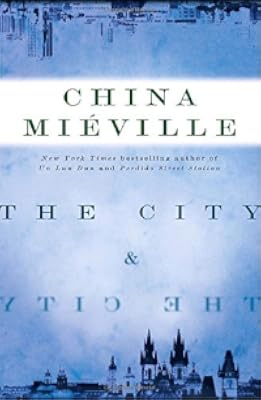
The City and the City
by China Miéville
On This Page
Description
When a murdered woman is found in the city of Beszel, somewhere at the edge of Europe, it looks to be a routine case for Inspector Tyador Borlu of the Extreme Crime Squad. But as he investigates, the evidence points to conspiracies far stranger and more deadly than anything he could have imagined. Borlu must travel from the decaying Beszel to the only metropolis on Earth as strange as his own. This is a border crossing like no other, a journey as psychic as it is physical, a shift in show more perception, a seeing of the unseen. His destination is Beszel's equal, rival, and intimate neighbour, the rich and vibrant city of Ul Qoma. With Ul Qoman detective Qussim Dhatt, and struggling with his own transition, Borlu is enmeshed in a sordid underworld of rabid nationalists intent on destroying their neighboring city, and unificationists who dream of dissolving the two into one. As the detectives uncover the dead woman's secrets, they begin to suspect a truth that could cost them and those they care about more than their lives. What stands against them are murderous powers in Beszel and in Ul Qoma: and, most terrifying of all, that which lies between these two cities. Casting shades of Kafka and Philip K. Dick, Raymond Chandler and 1984, The City & the City is a murder mystery taken to dazzling metaphysical and artistic heights. show lessTags
Recommendations

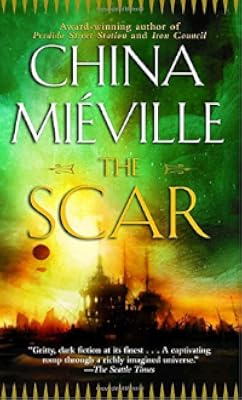
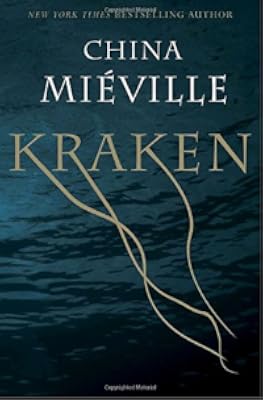
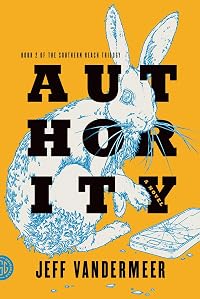
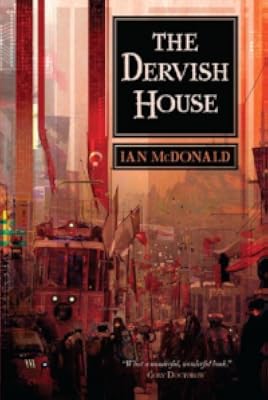

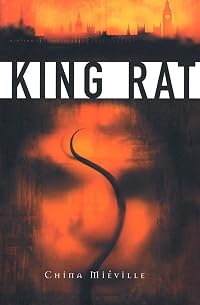
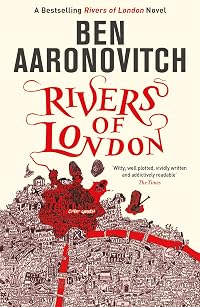
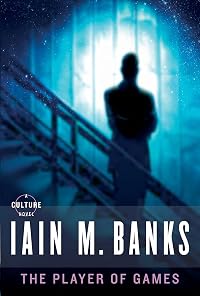
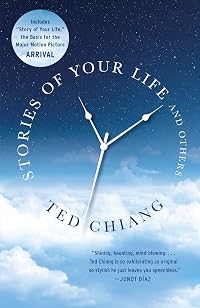
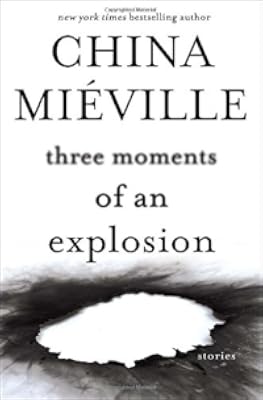
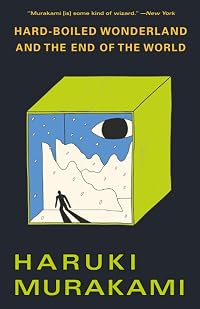
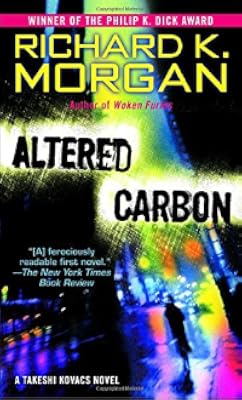
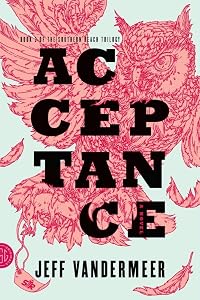
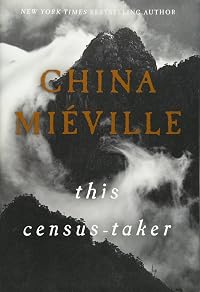
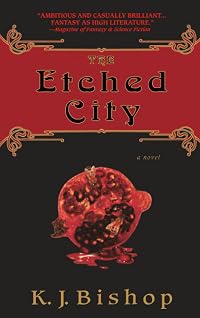
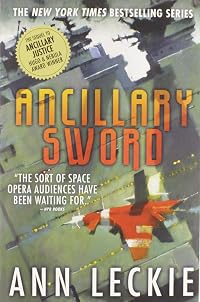
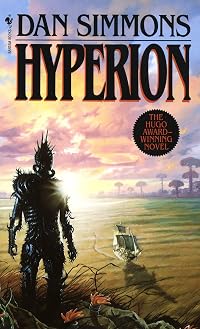

Member Recommendations
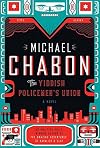
grizzly.anderson Both are police procedural mysteries set in slightly alternate worlds.
RagnarOlafson Both are detective tales in alternate settings
170
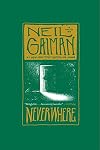

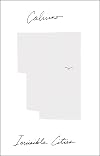
snarkhunt Calvino's book is a travelogue of impossible societies while China's book is a sweet little noir stuck in the middle of one.
112
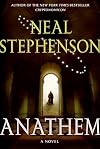
chmod007 Both novels depict coexisting-but-dissociated societies — drastically foreign to the world we live in — but help us reflect on it.
Also recommended by sturlington
81
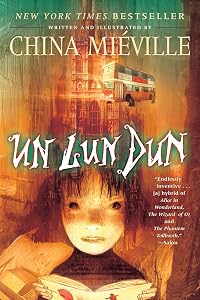
heidialice May be an obvious recommendation, but these books cover a similar (very original) premise in very different ways. Un Lun Dun is for young teens, smaller in scope and message-heavy; The City & The City for adults, deals with complex themes and offers no easy answers. Both display Mieville's consummate skills and elegant humor.
50

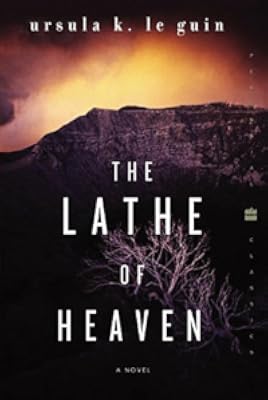
ed.pendragon Le Guin's Orsinia may have been an inspiration for Mieville's mythical Orciny in The City and the City.
61
Hav by Jan Morris
ed.pendragon Miéville's The City and the City acknowledges Jan Morris as an influence on his fractured cities novel, and Morris' travel book novel Hav (fictional trips to a fictional state) is the most likely reference.
40
julienne_preacher Both books are about divided realities (and both books are awesome).
41
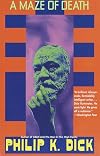
AlanPoulter Two tales of paranoia and murder set in very odd worlds that just get stranger....
30
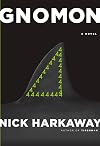
paradoxosalpha Sfnal police procedurals with an epistemological/metaphysical edge.
20
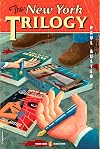
Longshanks Two books that expand the scope of detective fiction beyond the genre's traditional concerns and constraints, one existentially and one sociopolitically.
20
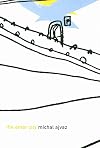
bunnygirl Czech novel about an alternate Prague; not mentioned as one of the influences for this novel, but perhaps going on a bit of the same (disputed?) territory
20

reading_fox Covers the same ground regarding visualising concepts.
31

grizzly.anderson Detective stories set in cites that are turned about 90 degrees from the reality we understand.

Jannes Two noir-ish thrillers with (vaguely) supernatural themes. Centered around sort-of-contemporary, yet fantastical urban landscapes. Both are very unique, and feels alike even if there's not many superficial similarities. More to the point, they're both damn good reading.
10
by bertilak
kgodey Has similar pair of cities that are located in the same physical location.
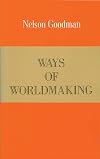
sek_smith Ways of World Making explains the cognitive processes that allow us to unsee and,thus, understand. The City & the City is a practical application of the concept, most rigorous and well weaved. Very entertaining fiction with plenty of meaning
sek_smith This is not a fiction book, but an essay on relativity applied to epistemology. For many interested in the psychological mechanisms at work in The city & the City, this is a good read.

sandstone78 Similar themes of parallel societies.
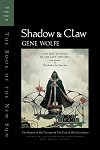
LamontCranston In many of Wolfes works he writes like Mieville has in the first person of imagined lands, unlike Mieville his characters do not improbably stop to explain to themselves (and thus to the audience) what a term or reference means - the narrative provides enough information for the audience to figure it out themselves.
10
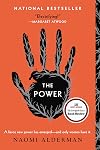
charl08 Both books ask questions about what we take for granted in our everyday realtors..
21
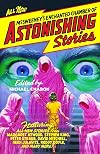

bertilak More about unseeing. Come to think of it, James Tiptree, Jr. was unseeable as Alice Sheldon. Until the breach.

bertilak In both stories that which is sought is present to the sight but unseeable.
02
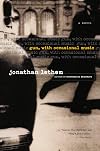
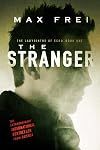
by ansate


Member Reviews
Starting out I thought the superimposed yet separate cities concept was just there to add window dressing to an otherwise routine murder mystery. But as the (audio)book progressed the political, cultural, and even metaphysical divisions between the two cities took on a presence as strong the investigation itself. Although this was slow to build, narrator Christopher Lee’s emphasis on the book’s Eastern European crime noir flavor kept me listening long enough for for Mieville’s intricate world building to take shape. And the payoff for that was definitely worth the wait.
Intriguing plot whose sci-fi setting is revealed slowly and organically, with no thudding exposition. The writing sometimes gets a little dry in parts, but the tone reminded me, in a good way, of The Spy Who Came in From the Cold -- you at first feel like you're being held at an arm's length from the main character (despite the narration in this case being first-person), yet somehow you find yourself deeply invested in their quest. Maybe it's the coincidence of current events while I read it, but it feels like a parable for Israel/Palestine.
“I always wanted to live where I could watch foreign trains.”
Take the train from the German city of Dresden towards the border town of Zittau, in the bottom right-hand corner of modern eastern Saxony. After around an hour, the train enters the borderlands between Germany and the Czech Republic (nowadays often known as Czechia). The traveller begins to see signs that they are in a marginal space. A station has its platform in one country but its exit in another. In open country, the border is marked only by red-and-yellow signs on posts, planted on the banks of an unremarkable stream, little more than a ditch.
At one point, a town is visible from the train; but it is in Czechia and the train does not stop there; there is now no sign show more that there has ever been a station there. The train rattles over a bridge, and you can look down onto a street, and see people, Czech people presumably, going about their business. But they are in one country and you are in another.
Later, the train crosses a field which the map tells you is wholly within Czechia. For a minute or so, possibly less, you are in a foreign country. Then normality is restored, and slowly the railway and the border part company. I made this journey possibly thirty years ago, but the memory of it has stuck with me ever since.
British people generally don't understand land borders. We see lines on a map that mark different jurisdictions, and we think we understand what that means, what the implications might be. But we don’t get the realities. We believe that nations with land borders are like islands, but just ones where you don’t need a boat to leave the country. And we barely understand what it feels like to be in one country and look into another.
Perhaps this lack of understanding is something that underpinned Brexit. There are people now who agitate against the European Union, even though they won the vote (if not the argument) here and the EU no longer has any direct bearing on their lives and political perceptions. Such people see sovereign nations as islands with distinct borders; they view here as different to there. On the ground, though, things are less clear. Often, there are no clear geographical indications of the borders. For every border marked by a mighty river, or the summit of a pass, there are hundreds where the border is marked by a stream or a field boundary, or even just by an arbitrary line drawn on a map in years long gone by. Architectural styles, often dependent on locally sourced building materials or influenced by prevailing weather, slowly change as you approach a border or leave one behind. Often, buildings look very much the same on either side of the border. And people? The people look the same; even their mother tongues may not reflect which authority issued their birth certificates or who they pay their taxes to. These things are arbitrary; lives are lives, no matter which side of the border you were born on.
But now imagine that you are in one country, looking into another. But that other country isn't on the other side of a river, or even a street. The other country is interlaced with your own. There is no difference between the two countries in terms of their physical locations; they occupy the same space. The only borders that matter are in the minds of each nation's citizens, established through teaching, and social norms, and policed through those same social norms, by custom and practice, and by legal penalty in the event of a significant breach. The citizens of such a place might experience the strangeness of peering into another land that they are barred from by Blake's “mind-forged manacles”, but most of the time, in order to preserve their equilibrium, they just do not see the other country. They have taught themselves that trick over successive generations. As they walk down a street, there are buildings that to them are just a blur, and people who are invisible, just as they are invisible to those others.
This is the setting of China Miéville's novel, The City & The City.
The cities of Besźel and Ul-Qoma have occupied the same space since time immemorial; indeed, the origins of what the citizens of each city call the Cleavage are lost in time, and are the subject of intense historical and archaeological research and debate. Besźel is eastern European, Christian Orthodox, old world and a little down at heel. The language is a sort of mongrel Germano-Polish and uses a script not wholly unlike Cyrillic. The architecture is a mixture of picturesque Central European and 1950s brutalist. Think of cities like Bratislava in the years immediately following the collapse of Communism.
Meanwhile, Ul-Qoma is Middle Eastern, Zoroastrian, and home to a booming economy (we might say a “tiger economy”, but the economic spirit animal of choice here is the wolf). The language is akin to Arabic, but the script was Romanised by an earlier ruler who admired Atatürk. The image is very much of the cities of the Gulf states in their first phase of modernisation.
Besźel police inspector Tyador Borlú is called to the discovery of a body on a bleak housing estate. It soon becomes clear that the victim was murdered elsewhere and dumped. Shortly afterwards, he receives a tip-off that the murder took place in Ul-Qoma. This has far-reaching implications; it restricts his ability to investigate without the help of the Ul-Qoma militsya, but it may also mean that the murderer had accomplices in Besźel who arranged the dumping of the body. And that in turn might mean that the whole case might become a matter for Breach, the mysterious body that polices the citizens of both cities to make sure that no-one contravenes the strict rules about not seeing or interacting with the other city or its inhabitants. Breach is seemingly everywhere, and when it acts, it acts swiftly, finally and without appeal. At times, it seems almost supernatural.
Matters are further complicated when it emerges that the murder victim, an archaeologist, was both a foreign citizen and involved with political dissidents in both cities who agitate about the status of Besźel and Ul-Qoma. Inspector Borlú's life is about to get very complicated.
What we have here is a police procedural, and one of Miéville's achievements is that for much of the book, it feels like a police procedural first and a novel of the fantastic second. He makes the extraordinary – the ways that all citizens deliberately unsee the other city and how that permeates almost every action – seem ordinary, and then proceeds to play out a murder story within this setting. Once I had settled into the story, my over-riding impression was of Ian Rankin's Rebus novels, which was interesting because Miéville writes about London with the assuredness of someone deeply committed to the life of that city, whilst for Rankin, it is Edinburgh that occupies that role. This juxtaposition of two cities we know puts us in the same head-space we would need if we were in either Besźel or Ul-Qoma.
At the same time, Miéville doesn’t let his own political viewpoint intrude directly into the novel. Whilst there is a political dimension to the narrative, it is part of the background, contributing to the underpinnings of the novel rather than pushing its way to the forefront.
Inspector Borlú ends the novel in a very different place to where he started out. This came as no surprise to me, though it is to Miéville's credit that Borlú's path to that particular denouement wasn’t quite what I expected. The murder is solved, perhaps less ingenuously than might have been expected; that part of the story felt a little anti-climactic to me, but it fitted the circumstance of the novel perfectly well. But what stayed with me, sometimes in the foreground, sometimes receding into the background, was the sense of otherness that the situation of Besźel and Ul-Qoma gave me. It is that sense of otherness that I have experienced in my travels, and that allowed me to relate to this seemingly fantastic situation quite unexpectedly and directly. When I sat on that train thirty years ago, travelling through Germany but looking into the Czech Republic, I had Breached. It has taken until now to find someone who has helped me explore that experience and those feelings, and that someone is China Miéville. show less
Take the train from the German city of Dresden towards the border town of Zittau, in the bottom right-hand corner of modern eastern Saxony. After around an hour, the train enters the borderlands between Germany and the Czech Republic (nowadays often known as Czechia). The traveller begins to see signs that they are in a marginal space. A station has its platform in one country but its exit in another. In open country, the border is marked only by red-and-yellow signs on posts, planted on the banks of an unremarkable stream, little more than a ditch.
At one point, a town is visible from the train; but it is in Czechia and the train does not stop there; there is now no sign show more that there has ever been a station there. The train rattles over a bridge, and you can look down onto a street, and see people, Czech people presumably, going about their business. But they are in one country and you are in another.
Later, the train crosses a field which the map tells you is wholly within Czechia. For a minute or so, possibly less, you are in a foreign country. Then normality is restored, and slowly the railway and the border part company. I made this journey possibly thirty years ago, but the memory of it has stuck with me ever since.
British people generally don't understand land borders. We see lines on a map that mark different jurisdictions, and we think we understand what that means, what the implications might be. But we don’t get the realities. We believe that nations with land borders are like islands, but just ones where you don’t need a boat to leave the country. And we barely understand what it feels like to be in one country and look into another.
Perhaps this lack of understanding is something that underpinned Brexit. There are people now who agitate against the European Union, even though they won the vote (if not the argument) here and the EU no longer has any direct bearing on their lives and political perceptions. Such people see sovereign nations as islands with distinct borders; they view here as different to there. On the ground, though, things are less clear. Often, there are no clear geographical indications of the borders. For every border marked by a mighty river, or the summit of a pass, there are hundreds where the border is marked by a stream or a field boundary, or even just by an arbitrary line drawn on a map in years long gone by. Architectural styles, often dependent on locally sourced building materials or influenced by prevailing weather, slowly change as you approach a border or leave one behind. Often, buildings look very much the same on either side of the border. And people? The people look the same; even their mother tongues may not reflect which authority issued their birth certificates or who they pay their taxes to. These things are arbitrary; lives are lives, no matter which side of the border you were born on.
But now imagine that you are in one country, looking into another. But that other country isn't on the other side of a river, or even a street. The other country is interlaced with your own. There is no difference between the two countries in terms of their physical locations; they occupy the same space. The only borders that matter are in the minds of each nation's citizens, established through teaching, and social norms, and policed through those same social norms, by custom and practice, and by legal penalty in the event of a significant breach. The citizens of such a place might experience the strangeness of peering into another land that they are barred from by Blake's “mind-forged manacles”, but most of the time, in order to preserve their equilibrium, they just do not see the other country. They have taught themselves that trick over successive generations. As they walk down a street, there are buildings that to them are just a blur, and people who are invisible, just as they are invisible to those others.
This is the setting of China Miéville's novel, The City & The City.
The cities of Besźel and Ul-Qoma have occupied the same space since time immemorial; indeed, the origins of what the citizens of each city call the Cleavage are lost in time, and are the subject of intense historical and archaeological research and debate. Besźel is eastern European, Christian Orthodox, old world and a little down at heel. The language is a sort of mongrel Germano-Polish and uses a script not wholly unlike Cyrillic. The architecture is a mixture of picturesque Central European and 1950s brutalist. Think of cities like Bratislava in the years immediately following the collapse of Communism.
Meanwhile, Ul-Qoma is Middle Eastern, Zoroastrian, and home to a booming economy (we might say a “tiger economy”, but the economic spirit animal of choice here is the wolf). The language is akin to Arabic, but the script was Romanised by an earlier ruler who admired Atatürk. The image is very much of the cities of the Gulf states in their first phase of modernisation.
Besźel police inspector Tyador Borlú is called to the discovery of a body on a bleak housing estate. It soon becomes clear that the victim was murdered elsewhere and dumped. Shortly afterwards, he receives a tip-off that the murder took place in Ul-Qoma. This has far-reaching implications; it restricts his ability to investigate without the help of the Ul-Qoma militsya, but it may also mean that the murderer had accomplices in Besźel who arranged the dumping of the body. And that in turn might mean that the whole case might become a matter for Breach, the mysterious body that polices the citizens of both cities to make sure that no-one contravenes the strict rules about not seeing or interacting with the other city or its inhabitants. Breach is seemingly everywhere, and when it acts, it acts swiftly, finally and without appeal. At times, it seems almost supernatural.
Matters are further complicated when it emerges that the murder victim, an archaeologist, was both a foreign citizen and involved with political dissidents in both cities who agitate about the status of Besźel and Ul-Qoma. Inspector Borlú's life is about to get very complicated.
What we have here is a police procedural, and one of Miéville's achievements is that for much of the book, it feels like a police procedural first and a novel of the fantastic second. He makes the extraordinary – the ways that all citizens deliberately unsee the other city and how that permeates almost every action – seem ordinary, and then proceeds to play out a murder story within this setting. Once I had settled into the story, my over-riding impression was of Ian Rankin's Rebus novels, which was interesting because Miéville writes about London with the assuredness of someone deeply committed to the life of that city, whilst for Rankin, it is Edinburgh that occupies that role. This juxtaposition of two cities we know puts us in the same head-space we would need if we were in either Besźel or Ul-Qoma.
At the same time, Miéville doesn’t let his own political viewpoint intrude directly into the novel. Whilst there is a political dimension to the narrative, it is part of the background, contributing to the underpinnings of the novel rather than pushing its way to the forefront.
Inspector Borlú ends the novel in a very different place to where he started out. This came as no surprise to me, though it is to Miéville's credit that Borlú's path to that particular denouement wasn’t quite what I expected. The murder is solved, perhaps less ingenuously than might have been expected; that part of the story felt a little anti-climactic to me, but it fitted the circumstance of the novel perfectly well. But what stayed with me, sometimes in the foreground, sometimes receding into the background, was the sense of otherness that the situation of Besźel and Ul-Qoma gave me. It is that sense of otherness that I have experienced in my travels, and that allowed me to relate to this seemingly fantastic situation quite unexpectedly and directly. When I sat on that train thirty years ago, travelling through Germany but looking into the Czech Republic, I had Breached. It has taken until now to find someone who has helped me explore that experience and those feelings, and that someone is China Miéville. show less
I first learned about this book because of the fact that in the BBC television series based on it, the creators decided to use the Georgian alphabet for one of the two cities -- because they found it sufficiently weird. Having now read the book, which came highly recommended by a number of friends, that turns out to be the least weird thing about it. The author has imagined two cities situated in the same place, sharing the same roads, and in some cases the same buildings, where it is illegal for residents of one city to see or hear the residents of the other. He creates a verb for this very purpose -- to "unsee" -- and it's bits like that which have led some to compare the author to Orwell. It's a thought-provoking book in the most show more literal sense; one is forced to pause and think many times about the issues raised, like divided cities, national and ethnic divisions, and of course social class. Michael Harrington famously described "the other America" more than half a century ago as the poor part of a wealthy society that went largely unseen by most. I haven't yet watched the BBC series and am keen to begin, not least because I cannot imagine how one can visualise two cities that largely exist only in the minds of their residents, who are busy "unseeing" what is often within touching distance. show less
When I first began The City and the City, I was mentally crafting a review that included praise for China Mieville's eye for world-building in this urban fantasy. However, moving farther into the novel, it became apparent that such praise would be...shallow, to say the least. The way that the cities are constructed is not only an impressive backdrop, but crafted in such a way to make apparent how the characters' social settings and constructs shape them, rather than just being shaped by them. The 'topolganger' cities of Beszel and Ul Qoma are divided and distinct not on any obvious bias - I must not be a careful enough reader to generally be able to note all their differences - but because of the certainty with which the characters act, show more that the two cities are night and day. Citizens who cannot be distinguished as being part of one city or the other are subjects of great uneasiness, and boundaries, however actually permeable, are strictly adhered to.
The conceit of the congruent cities teases and yet defies reader expectations and impulses to map allegory or metaphor onto it. As satisfying as specificity and meaning would be, "fiction is always more interesting to the extent that there's an evasive surplus" (from an interview with Mieville). And it's this chimeric surplus throughout the novel that keeps readers on their toes, as a crime procedural surrounding a dead woman gives way to the construct of the congruent cities, which gives way to the story of their artificiality and the breach of boundaries. So the small story being told is really a microcosm of the world that Mieville set out to explore, one nestled snugly in self-imposed boundaries and polite but false pretenses. And yet...that's every world, isn't it? Artificial constructs and politenesses exist insofar as we behave as though they do, and transgressions open up liminal spaces of opportunity for alternative realities. The 'surplus' of this reading is amazing, a sort of piece of abstract art or a Rorschach test that engages readers' own lives with and against such artificial constructs. show less
The conceit of the congruent cities teases and yet defies reader expectations and impulses to map allegory or metaphor onto it. As satisfying as specificity and meaning would be, "fiction is always more interesting to the extent that there's an evasive surplus" (from an interview with Mieville). And it's this chimeric surplus throughout the novel that keeps readers on their toes, as a crime procedural surrounding a dead woman gives way to the construct of the congruent cities, which gives way to the story of their artificiality and the breach of boundaries. So the small story being told is really a microcosm of the world that Mieville set out to explore, one nestled snugly in self-imposed boundaries and polite but false pretenses. And yet...that's every world, isn't it? Artificial constructs and politenesses exist insofar as we behave as though they do, and transgressions open up liminal spaces of opportunity for alternative realities. The 'surplus' of this reading is amazing, a sort of piece of abstract art or a Rorschach test that engages readers' own lives with and against such artificial constructs. show less
Italo Calvino and China Miéville walk into a bar, but stop in the doorway to contemplate the threshold.
Ok, that's only funny if the bar is in Prague, and it's still only funny to me.
Anyway, I fucking love this book. I could write the most precise, comprehensive study of thresholds or political and socioeconomic boundaries or taboo and cultural norms or selective seeing (or all of these), and I doubt it would trigger half the interesting thoughts of this superbly written story. It's beautifully full of metaphors and potential inferences, clever, unusual, and enjoyable I think from a number of different approaches.
This is also what I love about so-called genre fiction (oh, that term, how awful that in a culture ostensibly looking to show more eliminate marked forms, we keep adding more of them), that it can inspire the self-reflection of culture shock without the inherent restraints of physical travel.
None of that hits you in the face though, because it's first and foremost a carefully pitched crime noir story. I appreciate the application of form while exploring one of the more interesting aspects of that genre.
Other things I fucking love about it: an openness about language, a willingness to play with new words and constructions, in a very visual way that somehow reminds me of Keri Hulme; and a feeling of Prague in the streets of the city & the city, maybe not geographically, but nonetheless present.
Small disclaimer: I haven't read his other works yet. Maybe these are recurrent themes and thus less of a surprise here. I hope so, for the sake of my further reading.
Now if you'll excuse me, I'm off to post this back in time to me-in-Prague. I'm sure I'll be delighted. show less
Ok, that's only funny if the bar is in Prague, and it's still only funny to me.
Anyway, I fucking love this book. I could write the most precise, comprehensive study of thresholds or political and socioeconomic boundaries or taboo and cultural norms or selective seeing (or all of these), and I doubt it would trigger half the interesting thoughts of this superbly written story. It's beautifully full of metaphors and potential inferences, clever, unusual, and enjoyable I think from a number of different approaches.
This is also what I love about so-called genre fiction (oh, that term, how awful that in a culture ostensibly looking to show more eliminate marked forms, we keep adding more of them), that it can inspire the self-reflection of culture shock without the inherent restraints of physical travel.
None of that hits you in the face though, because it's first and foremost a carefully pitched crime noir story. I appreciate the application of form while exploring one of the more interesting aspects of that genre.
Other things I fucking love about it: an openness about language, a willingness to play with new words and constructions, in a very visual way that somehow reminds me of Keri Hulme; and a feeling of Prague in the streets of the city & the city, maybe not geographically, but nonetheless present.
Small disclaimer: I haven't read his other works yet. Maybe these are recurrent themes and thus less of a surprise here. I hope so, for the sake of my further reading.
Now if you'll excuse me, I'm off to post this back in time to me-in-Prague. I'm sure I'll be delighted. show less
This is a propulsive noir detective story above all else, but the dual-city setting is fascinating, highlighting as it does social constructs (almost literal) and how we can choose not to see what’s right in front of us. Like a good noir, greed and corruption are at the heart of the story, in this case it’s the corruption of global capitalism .
Members
- Recently Added By
Published Reviews
ThingScore 94
Subtly, almost casually, Miéville constructs a metaphor for modern life in which our habits of "unseeing" allow us to ignore that which does not directly affect our familiar lives. Yet he doesn't encourage us to understand his novel as a parable, rather as a police mystery dealing with extraordinary circumstances. The book is a fine, page-turning murder investigation in the tradition of show more Philip K Dick, gradually opening up to become something bigger and more significant than we originally suspected. show less
added by andyl
Readers should shed their preconceptions and treat themselves to a highly original and gripping experience.The City & The City is still Urban Fantasy, yes, but don't look for elves on motorcycles or spell-casting cops. China Miéville has done something very different, new, and — oh yeah — weird.
added by PhoenixTerran
The novel works best when Miéville trusts his storytelling instincts. I was immediately entranced by the premise of doppel cities and didn't need it explained at every turn.
At times, I appreciated the intellectual brilliance of "The City" more than I lost myself in it. Borlú seemed an archetype more than a fleshed-out character. That's OK. The real protagonists here are the mirror cities show more themselves, and the strange inner workings that make them, and their residents, tick. show less
At times, I appreciated the intellectual brilliance of "The City" more than I lost myself in it. Borlú seemed an archetype more than a fleshed-out character. That's OK. The real protagonists here are the mirror cities show more themselves, and the strange inner workings that make them, and their residents, tick. show less
added by Shortride
Lists

Best Science Fiction Novels
816 works; 430 members

Best Dystopias
280 works; 276 members

Best Fantasy Novels
821 works; 361 members

Noirvember: The Best Noir
113 works; 56 members

Hugo Award Winning Novels
63 works; 23 members

Weird and Weirder Fiction
270 works; 35 members

Best Urban Fantasy
632 works; 78 members

Recommend the 20 best books you've read in the last five years
2,168 works; 602 members

Magic Realism
371 works; 52 members

Favourite Fantasy Books of the 21st Century
51 works; 6 members

Slipstream or Interstitial Fiction
160 works; 19 members

Best Noir Fiction
160 works; 14 members

Favourite Science Fiction Books of the 21st Century
47 works; 8 members

Hugo Awards - Best Novel
69 works; 10 members

Jean's Sci Fi/Fantasy Reading list
189 works; 12 members

Speculative Fiction: Slipstream Literature
166 works; 16 members
Dystopian and Apocalyptic Literature
350 works; 74 members

Top Five Books of 2020
982 works; 350 members

Favourite Books
1,819 works; 316 members

Favourite Science Fantasy Books
49 works; 6 members

Arthur C. Clarke Award Winners and Shortlisted Books
219 works; 14 members

Books tagged favorites
390 works; 30 members

Tagged Parallel Worlds
43 works; 11 members

One Book, Many Authors
441 works; 40 members

Strange Cities
30 works; 7 members

Top Five Books of 2014
1,064 works; 398 members

Top Five Books of 2015
811 works; 241 members
Mind Expanding Books by hackerkid
581 works; 8 members
Unbound Worlds 100 Best SF Books
100 works; 8 members

To Read - Literature / Fiction
26 works; 1 member

Books Read in 2023
5,547 works; 145 members
Top Five Books of 2016
795 works; 229 members

READ in 2023
244 works; 1 member

Paranormal investigators and space detectives
274 works; 9 members
Books We Couldn't Put Down
443 works; 197 members

Finished in 2024
19 works; 1 member

Contemporary Fantasy to Read
63 works; 5 members

TBR - Older Books
92 works; 1 member

Top Five Books of 2023
767 works; 317 members
Book Worlds We'd Like To Visit
322 works; 158 members

Books in the Bibliography of Humans: A Monstrous History by Surekha Davies
346 works; 1 member

2026 Reading List
50 works; 1 member

Books about the Balkans
19 works; 2 members
Favorite Science Fiction
456 works; 218 members

BBC Radio 4 Bookclub
340 works; 13 members

Books Read in 2011
684 works; 19 members

Books Read in 2021
5,361 works; 114 members

Allie's List of Books I Want To Read
93 works; 1 member

The Books I Read in 2017
96 works; 1 member

Books Read in 2017
4,249 works; 130 members

To Read
617 works; 7 members
Books I may read for February 2012 TIOLI
23 works; 5 members
Books Read in 2014
2,343 works; 89 members

New Weird Fiction
69 works; 12 members

io9 Book Club
70 works; 4 members

Genre Benders: Fantasy + Mystery
108 works; 16 members

Unshelved Book Clubs
579 works; 5 members

A Novel Cure
742 works; 23 members

Books To Get From The Library
115 works; 5 members

Disco Elysium
19 works; 1 member
Talk Discussions
Past Discussions
Miéville wins Arthur C Clarke in Science Fiction Fans (May 2010)
Author Information

115+ Works 50,961 Members
China Miéville was born in Norwich, England on September 6, 1972. He received a B.A. in social anthropology from the University of Cambridge in 1994, and a Masters' degree with distinction and Ph.D in international relations from the London School of Economics, the latter in 2001. He has also held a Frank Knox fellowship at Harvard University. show more His first novel, King Rat, was nominated for both an International Horror Guild and a Bram Stoker award. His other works include Perdido Street Station, The Scar, Iron Council, Un Lun Dun, The City and the City, Embassytown, and Three Moments of an Explosion: Stories. He has won numerous awards for his works including three Arthur C. Clarke Awards, two British Fantasy Awards, the British Science Fiction Award, and the 2008 Locus Award for Best Young Adult Book. He also published a book on Marxism and international law called Between Equal Rights: A Marxist Theory of International Law. He teaches creative writing at Warwick University. (Bowker Author Biography) show less
Some Editions
Awards and Honors
Awards
Distinctions
Amazon.com Best Books (8 – 2009)
Series
Belongs to Publisher Series
Work Relationships
Has the adaptation
Common Knowledge
- Canonical title
- The City and the City
- Original title
- The City & the City
- Original publication date
- 2009-05
- People/Characters
- Tyador Borlú; Lizbyet Corwi; Qussim Dhatt; Bardo Naustin; Hamd Hamzinic; Commissar Gadlem (show all 18); Mikyael Khurusch; Mikhel Buric; Major Yorj Syedr; Yavid Nyisemu; Michael Geary; Mrs. Geary; Isabelle Nancy; Bernard Rochambeaux; David Bowden; Aikam Tsueh; Yallya Dhatt; Ashil
- Important places
- Besźel; Ul Qoma
- Related movies
- The City and the City (2018 | IMDb)
- Epigraph
- "Deep inside the town there open up, so to speak, double streets, doppelganger streets, mendacious and delusive streets."
-- Bruno Schulz, The Cinnamon Shops and Other Stories - Dedication
- In loving memory of my mother,
Claudia Lightfoot - First words
- I could not see the street or much of the estate. We were enclosed by dirt-coloured blocks, from windows out of which leaned vested men and women with morning hair and mugs of drink, eating breakfast and watching us. This ope... (show all)n ground between the buildings had once been sculpted. It pitched like a golf course - a child's mimicking of geography. Maybe they had been going to wood it and put in a pond. There was a copse but the saplings were dead. -Chapter One
- Last words
- (Click to show. Warning: May contain spoilers.)I live in the interstice yes, but I live in both the city and the city.
- Publisher's editor
- Schluep, Chris (Random House); Travathan, Jeremy
- Blurbers
- Gaiman, Neil; Mosley, Walter
- Original language
- English
- Canonical DDC/MDS
- 823.92
- Canonical LCC
- PR6113.C28
Classifications
Statistics
- Members
- 7,211
- Popularity
- 1,618
- Reviews
- 392
- Rating
- (3.96)
- Languages
- 15 — Bulgarian, Czech, English, Estonian, Finnish, French, German, Hungarian, Italian, Polish, Portuguese, Russian, Spanish, Swedish, Turkish
- Media
- Paper, Audiobook, Ebook
- ISBNs
- 53
- ASINs
- 22