
On This Page
Description
"Orsinia ... a land of medieval forests, stonewalled cities, and railways reaching into the mountains where the old gods dwell. A country where life is harsh, dreams are gentle, and people feel torn by powerful forces and fight to remain whole. In this collection, Ursula K. Le Guin brings to mainstream fiction the same compelling mastery of word and deed, of story and character, of violence and love, that has won her the Pushcart Prize, and the Kafka and National Book Awards."--Jacket.Tags
Recommendations







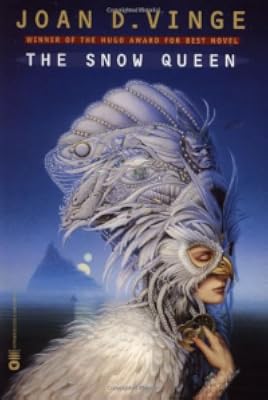


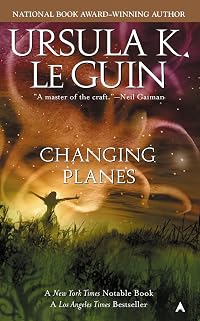
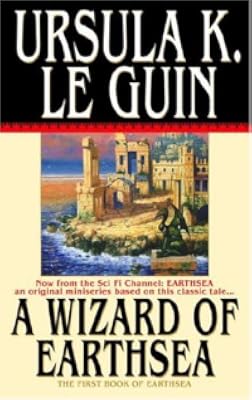


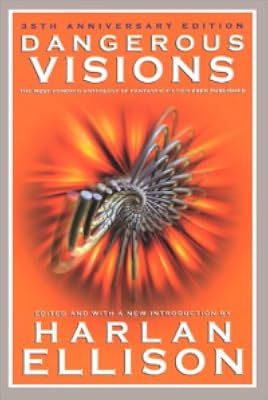





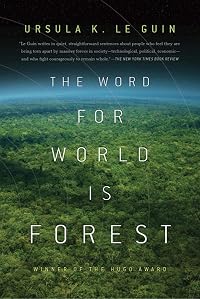
Member Recommendations

Heather39 If you enjoyed Orsinian Tales, you may also like Malafrena, Le Guin's novel set in the same place and exploring many of the themes also explored in Orsinian Tales.
50
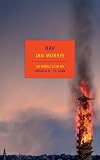
Hav by Jan Morris
ed.pendragon Two imaginary countries, Hav and Orsinia, which are almost mind maps of their respective authors.
41
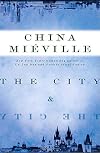
ed.pendragon Le Guin's Orsinia may have been an inspiration for Mieville's mythical Orciny in The City and the City.
31
Member Reviews
Orsinian Tales ranks among my favourites of Le Guin's short story collections. These stories, which are not fantasy or science fiction at all, are set in the imaginary European country of Orsinia in different times of the country's history, but mostly in the first part of the twentieth century. The setting is very believable, so much so that at times I was tempted to pull out a map of Europe to see if Orsinia was on it, hidden in some forgotten corner. The stories are muted, somber tales, political at times, somewhat romantic at others, but always very real, very believable. Just as in real life, there are no "happily ever after" endings in Orsinian Tales. The stories are an excellent showcase of Le Guin's skills at crafting show more interesting, multi-faceted characters, with both their flaws and strengths clearly represented. show less
Summary: A collection of eleven short stories set in the fictional eastern European country of Orsinia taking place between 1150 and 1965.
This is a lesser-known collection of Ursula K. Le Guin short stories published after her Earth-Sea books, where I first encountered Le Guin many years ago. These are set in an imaginary country, not in another world, but in Eastern Europe in the fictional country of Orsinia. The eleven stories span a period between 1150 and 1965, although not in chronological order.
The first story, The Fountains, suggests the basic theme running through these stories. An Orsinian scientist comes to Paris for a science conference, and takes the opportunity to escape and view the Fountains of Versailles, only to return show more once more to his hotel and the surveillance of the secret police. This and the other stories chronicle the efforts of people to exert their own freedom against the restrictive circumstances of their lives. A military man excels in his career only to realize he’d sacrificed what and who he’d loved forty years earlier in The Lady of Moge. A clerk with a family longs to be a musician, and despite counsel, determines to keep working on a large composition that will take him years to finish and may not provide any economic benefit. Others seek work that will help them move beyond survival, or love that seems out of reach. In The House, a divorcee comes back to her first husband to re-establish a broken relationship.
The stories pieced together trace the history of this country from a feudal power to an eastern bloc country. Many of the stories portray what seems a relatively dismal life of eking out an existence under some kind of authoritarian regime. The sense of this all was trying to find some glimpse of happiness in a life that is hard and then you die. Characters seem to seek the transcendent in a world where this doesn’t exist.
No doubt these are finely crafted tales. But the disconnected character of the stories, the jumbled chronology, and the bleak outlook of the stories failed to capture my interest. Remembering the Earth-Sea books, The Lathe of Heaven and The Left Hand of Darkness, I anticipated more. I didn’t find it here. show less
This is a lesser-known collection of Ursula K. Le Guin short stories published after her Earth-Sea books, where I first encountered Le Guin many years ago. These are set in an imaginary country, not in another world, but in Eastern Europe in the fictional country of Orsinia. The eleven stories span a period between 1150 and 1965, although not in chronological order.
The first story, The Fountains, suggests the basic theme running through these stories. An Orsinian scientist comes to Paris for a science conference, and takes the opportunity to escape and view the Fountains of Versailles, only to return show more once more to his hotel and the surveillance of the secret police. This and the other stories chronicle the efforts of people to exert their own freedom against the restrictive circumstances of their lives. A military man excels in his career only to realize he’d sacrificed what and who he’d loved forty years earlier in The Lady of Moge. A clerk with a family longs to be a musician, and despite counsel, determines to keep working on a large composition that will take him years to finish and may not provide any economic benefit. Others seek work that will help them move beyond survival, or love that seems out of reach. In The House, a divorcee comes back to her first husband to re-establish a broken relationship.
The stories pieced together trace the history of this country from a feudal power to an eastern bloc country. Many of the stories portray what seems a relatively dismal life of eking out an existence under some kind of authoritarian regime. The sense of this all was trying to find some glimpse of happiness in a life that is hard and then you die. Characters seem to seek the transcendent in a world where this doesn’t exist.
No doubt these are finely crafted tales. But the disconnected character of the stories, the jumbled chronology, and the bleak outlook of the stories failed to capture my interest. Remembering the Earth-Sea books, The Lathe of Heaven and The Left Hand of Darkness, I anticipated more. I didn’t find it here. show less
A collection of eleven short stories set in the imaginary European country of Orsinia.
I have a bit of a love/hate relationship with Le Guin's books. I find her writing absolutely beautiful and I think she explores some very interesting ideas with her work, but I can never become emotionally involved with her stories. I find them distanced, as though she's sitting on her characters' shoulders instead of riding around inside their heads.
This approach bothers me somewhat with her novels, but it works perfectly with her short stories. These tales are snippets of life in which we learn just enough about each character to get us through. The story itself, the plot, and the overarching ideas behind everything become key. Le Guin shows us show more people in bleak, often hopeless circumstances. We're forced to consider their every action as they struggle to keep hold of themselves.
Most of the stories take place in the early 20th century, when Orsinia is on the brink of becoming a communist state. Several pieces set in the 50's and 60's, (including the very first story), show us Orsinian life under the communist regime. These pieces make this a very political work... but to be honest, I'm not sure I got as much out of it as I could have, in that sense. I was born near the very end of the Cold War. These themes simply don't resonate with me the way they would with someone who grew up with them. I still found the characters' struggles thought-provoking, but more because of how they related to human nature than for any political reason. show less
I have a bit of a love/hate relationship with Le Guin's books. I find her writing absolutely beautiful and I think she explores some very interesting ideas with her work, but I can never become emotionally involved with her stories. I find them distanced, as though she's sitting on her characters' shoulders instead of riding around inside their heads.
This approach bothers me somewhat with her novels, but it works perfectly with her short stories. These tales are snippets of life in which we learn just enough about each character to get us through. The story itself, the plot, and the overarching ideas behind everything become key. Le Guin shows us show more people in bleak, often hopeless circumstances. We're forced to consider their every action as they struggle to keep hold of themselves.
Most of the stories take place in the early 20th century, when Orsinia is on the brink of becoming a communist state. Several pieces set in the 50's and 60's, (including the very first story), show us Orsinian life under the communist regime. These pieces make this a very political work... but to be honest, I'm not sure I got as much out of it as I could have, in that sense. I was born near the very end of the Cold War. These themes simply don't resonate with me the way they would with someone who grew up with them. I still found the characters' struggles thought-provoking, but more because of how they related to human nature than for any political reason. show less
Le Guin is an acquired taste as it is. These stories while wonderfully written were no so wonderfully conceived. They do not have holes, nor do they posses hokey narrative devices that weigh down the prose with gimmicks, but for all its solidity they simply are not interesting. And I desperately wanted them to be. But such is life in the drab Orsinia.
The one exception might be "Ile Forest". A great story, with a disappointing ending that let the reader down easy as they wrap up a great beginning and middle. Otherwise, meh...
The one exception might be "Ile Forest". A great story, with a disappointing ending that let the reader down easy as they wrap up a great beginning and middle. Otherwise, meh...
This book of short stories is quite slim but I decided not to finish reading it because I didn't engage with anything going on in the stories. Le Guin's writing is thoughtful and her ideas are really big and challenging, but for me the two things never meet in an interesting place. I really really want to love her books but I never do.
Not a bad book, but ultimately a disappointment from one of my favorite authors. It was just boring and by the end it felt a little bit like a chore to read. While it had some nice moments I couldn't help but feel that most of these would have worked better as a Hainish cycle short story, set in an alien society, they would have packed more punch. On the other hand I never really understood what was the point of making up a country. The book references real historical events already, so being set in real places, closer to real history could have also given it some weight. I suspect maybe this weightlessness was the point, the book is mostly trying to communicate impressions but a lot of these didn't feel new or interesting to me, mostly show more because they were familiar from either my own country's history or Le Guin's other writing. show less
I truly enjoyed [Orsinian Tales]. It took me a while to read, but only because I left it at my boyfriend's place and read about a story per weekend while I was around. As usual, Le Guin gives a fascinating universe and characters who feel real in every way. She also managed in this work to make supposedly fantastic stories feel absolutely relevant to this world and the issues we've enountered as a global society. I will say that I don't think I would have enjoyed this book quite so much had I tried to read it all through as a single work. Most of the stories are of a darker (or at least more somber) nature, and the characters and themes are similar across the full work. Ideally, I'd say it's a good work to read stories from as a break show more from longer works. Highly recommended. My favorite stories from the collection were "Ile Forest" and "The Lady of Moge", though I enjoyed all of them. show less
Members
- Recently Added By
Lists

Welcome to Ruritania!
22 works; 4 members

Stephen King's 'Danse Macabre' reading list
111 works; 25 members

Fictional European countries
58 works; 2 members

National Book Award Finalists - Fiction
377 works; 12 members

Swinging Seventies
255 works; 18 members

1960s
281 works; 16 members

Books Read in 2009
464 works; 11 members

Europe
205 works; 6 members

Short Story and Novella Collections
47 works; 6 members

Global Reads: Books Set in Eastern Europe
45 works; 10 members

Stephen King's Danse Macabre Full Appendix List
110 works; 2 members
Author Information

502+ Works 167,741 Members
Ursula K. Le Guin was born Ursula Kroeber in Berkeley, California on October 21, 1929. She received a bachelor's degree from Radcliffe College in 1951 and a master's degree in romance literature of the Middle Ages and Renaissance from Columbia University in 1952. She won a Fulbright fellowship in 1953 to study in Paris, where she met and married show more Charles Le Guin. Her first science-fiction novel, Rocannon's World, was published in 1966. Her other books included the Earthsea series, The Left Hand of Darkness, The Dispossessed: An Ambiguous Utopia, The Lathe of Heaven, Four Ways to Forgiveness, and The Telling. A Wizard of Earthsea received an American Library Association Notable Book citation, a Horn Book Honor List citation, and the Lewis Carroll Shelf Award in 1979. She received the Medal for Distinguished Contribution to American Letters in 2014. She also received the Nebula Award and the Hugo Award. She also wrote books of poetry, short stories collections, collections of essays, children's books, a guide for writers, and volumes of translation including the Tao Te Ching of Lao Tzu and selected poems by Gabriela Mistral. She died on January 22, 2018 at the age of 88. (Bowker Author Biography) show less
Some Editions
Awards and Honors
Awards
Series

Belongs to Publisher Series
Work Relationships
Is contained in
Contains
Common Knowledge
- Canonical title*
- Geschichten Aus Orsinien
- Original title
- Orsinian Tales
- Original publication date
- 1976 (collection and most stories) (collection and most stories); 1973; 1961 (An Die Musik) (An Die Musik); 1973 (Imaginary Countries) (Imaginary Countries)
- First words
- They knew, having given him cause, that Dr. Kereth might attempt to seek political asylum in Paris.
- Last words
- (Click to show. Warning: May contain spoilers.)But all of this happened a long time ago, nearly forty years ago; I do not know if it happens now, even in imaginary countries.
- Original language*
- Englisch
*Some information comes from Common Knowledge in other languages. Click "Edit" for more information.
Classifications
Statistics
- Members
- 1,731
- Popularity
- 12,846
- Reviews
- 22
- Rating
- (3.52)
- Languages
- 8 — Dutch, English, German, Japanese, Norwegian (Bokmål), Polish, Spanish, Swedish
- Media
- Paper, Ebook
- ISBNs
- 22
- ASINs
- 15