On This Page
Description
in a career spanning half a century, Ursula K. Le Guin has produced a body of work that testifies to her abiding faith in the power and art of words. She is perhaps best known for imagining future intergalactic worlds in brilliant books that challenge our ideas of what is natural and inevitable in human relations--and that celebrate courage, endurance, risk-taking, and above all, freedom in the face of the psychological and social forces that lead to authoritarianism and fanaticism. show more it is less well known that she first developed these themes in richly imagined historical fiction, including the brilliant early novel Malafrena. An epic meditation on the meaning of hope and freedom, love and duty, Malafrena takes place from 1825 to 1830 in the imaginary East European country of Orsinia, then a part of the Austrian Empire, a nation which, like its near neighbors Czechoslovakia, Poland, and Romania, has a long and vivid history of oppression, art, and revolution. itale Sorde, the idealistic heir to Val Malafrena, an estate in the rural western provinces of Orsinia, leaves home against his father's wishes to work as a journalist in the cosmopolitan capital city of Krasnoy, where he plays an integral part in the revolutionary politics that are roiling Europe. Complete with a newly researched chronology of Le Guin's life and career. show lessTags
Recommendations



















Member Recommendations
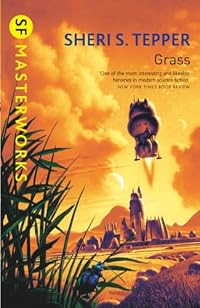
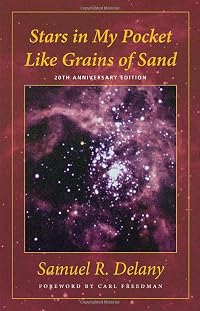
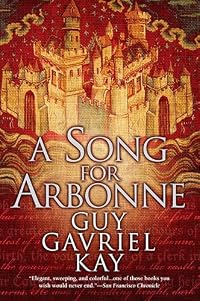
Jarandel Revolution in imaginary places, strong emphasis on familial and other bonds, on varied daily lives and experiences.
Member Reviews
Of course it is a favorite - it was written by Ursula Le Guin. And it is more than that: it is a story of a province in Eastern Europe occupied by the Austria after the Napoleonic Wars. Small land holdings and the families who occupy them, larger towns, and even larger cities form the backdrop of this book.
It starts with young Itale who is passionately interested in continuing the Revolution and kicking out the Austrians. His sister, Laura, and young Piera at the neighboring villa are the two other main voices in this book, though the older generation are also given their stories. Itale arrives in a larger town and meets his writing hero, Amadey, and while his provincial self is welcomed it is with sort of a tongue-in-cheek. Life show more ensues, Itale begins his paper, Piera is engaged then breaks the engagement, parents age, and daughters begin to take over the farming so that the estate can continue.
The "coming of age" is a nod to all three young people who begin, grow, and their lives continue despite distance, prison, and an uprising. It is a slow, melodious book and I am glad Le Guin wrote it. show less
It starts with young Itale who is passionately interested in continuing the Revolution and kicking out the Austrians. His sister, Laura, and young Piera at the neighboring villa are the two other main voices in this book, though the older generation are also given their stories. Itale arrives in a larger town and meets his writing hero, Amadey, and while his provincial self is welcomed it is with sort of a tongue-in-cheek. Life show more ensues, Itale begins his paper, Piera is engaged then breaks the engagement, parents age, and daughters begin to take over the farming so that the estate can continue.
The "coming of age" is a nod to all three young people who begin, grow, and their lives continue despite distance, prison, and an uprising. It is a slow, melodious book and I am glad Le Guin wrote it. show less
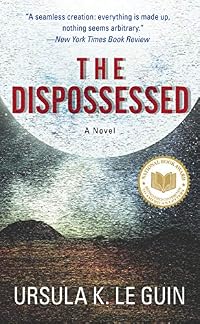
Quintessential early Ursula LeGuin. If you like that, and I do, you should like this. Although the structure of the story is simpler, the similarities to "The Dispossessed" are very strong. The difference is that, since "The Dispossessed" is science fiction, there's a wider selection of places for the protagonist to leave and to return to than in a historical fiction novel like "Malafrena". There is a significant riot at the end of both books. The theme of imprisonment recurs in both books quite strongly. The protagonist in both books has an essential circle of literary and political friends and a female companion who does not involve herself in politics but is somehow essential. LeGuin is a feminist writer, but writing historical show more novels, or even science fiction novels where the women are truly significant was hard then and is not so easy now. Cecilia Holland is another writer who wrote a succession of truly excellent historical novels lacking significant female characters before she managed a science fiction novel where the protagonist is a woman and subsequently a few historical novels. In "The Dispossessed" the protagonist has an advantage because he is, in himself, a significant person as he is a physicist of interplanetary renown. The protagonist in "Malafrena" is just the son of a landowner from the hinterland and has no significance outside his political actions.
There were a surprising number of suicides in this book.
It caused me to read a bit about the revolutions in the mid 1800s for the first time. I had probably been unaware of them as most of my European history is really just English history and the revolutions left England more or less unaffected.
A characteristic of early LeGuin novels is that even repressive regimes are not nearly as brutal as repressive regimes know how to be in this day and age. show less
There were a surprising number of suicides in this book.
It caused me to read a bit about the revolutions in the mid 1800s for the first time. I had probably been unaware of them as most of my European history is really just English history and the revolutions left England more or less unaffected.
A characteristic of early LeGuin novels is that even repressive regimes are not nearly as brutal as repressive regimes know how to be in this day and age. show less
The matter of this novel is unpleasant, and of course relevant. My life has been mercifully free of imprisonment, and to be a political prisoner is particularly unpleasant, I am sure. The psychology is of Le Guin's usual high standard, and that may have been the reason for its probable low sales. But I think the future will be kinder to this fine effort.
A big, spacious, and ambitious book, that seeks to capture the mood of a whole continent within one (fictional) country, and the country within one family. I'll be returning to this; often, probably.
Le Guin's prose is, as always, gorgeous.
Le Guin's prose is, as always, gorgeous.
This is another that I think LeGuin fans will enjoy, but it's a hard, quiet, cynical(?) book about failed ambitions.
This story takes place in the 19th century in a fictional Eastern European county. I'm afraid I found it rather tedious.
I've had this book for some time. I can't believe I never read it, since I love Leguin and have sopped up most everything she's written (well, not her fantasy). So -- I'm going to read this soon.
Members
- Recently Added By
Lists

Fictional European countries
58 works; 2 members
Author Information

486+ Works 166,336 Members
Ursula K. Le Guin was born Ursula Kroeber in Berkeley, California on October 21, 1929. She received a bachelor's degree from Radcliffe College in 1951 and a master's degree in romance literature of the Middle Ages and Renaissance from Columbia University in 1952. She won a Fulbright fellowship in 1953 to study in Paris, where she met and married show more Charles Le Guin. Her first science-fiction novel, Rocannon's World, was published in 1966. Her other books included the Earthsea series, The Left Hand of Darkness, The Dispossessed: An Ambiguous Utopia, The Lathe of Heaven, Four Ways to Forgiveness, and The Telling. A Wizard of Earthsea received an American Library Association Notable Book citation, a Horn Book Honor List citation, and the Lewis Carroll Shelf Award in 1979. She received the Medal for Distinguished Contribution to American Letters in 2014. She also received the Nebula Award and the Hugo Award. She also wrote books of poetry, short stories collections, collections of essays, children's books, a guide for writers, and volumes of translation including the Tao Te Ching of Lao Tzu and selected poems by Gabriela Mistral. She died on January 22, 2018 at the age of 88. (Bowker Author Biography) show less
Some Editions
Awards and Honors
Awards
Series

Belongs to Publisher Series
Heyne Science Fiction & Fantasy (06/4375)
Work Relationships
Common Knowledge
- Original title
- Malafrena
- Original publication date
- 1979
- People/Characters
- Itale Sorde; Piera Valtorskar; Guide Sorde; Emanuel Sorde; Laura Sorde; Count Valtorskar (show all 11); Amadey Estenskar; Luisa Paludeskar; Tomas Brelavay; Givan Karantay; Carlo Sangiusto
- Important places
- Krasnoy, Orsinia; Malafrena, Orsinia
- Epigraph
- Except the Lord build the house: their labor is but lost who build it. Except the Lord keep the city: the watchman waketh but in vain. It is but lost labor that ye haste to rise up early, and so late take rest, and eat the br... (show all)ead of carefulness: for so he giveth his beloved sleep. -- Pslam 127
- First words
- In a starless May night the town slept and the river flowed quietly through shadow.
- Last words
- (Click to show. Warning: May contain spoilers.)"Go on, go on."
Classifications
Statistics
- Members
- 852
- Popularity
- 31,844
- Reviews
- 10
- Rating
- (3.45)
- Languages
- 12 — Danish, Dutch, English, Finnish, French, German, Hebrew, Polish, Russian, Spanish, Swedish, Turkish
- Media
- Paper, Ebook
- ISBNs
- 26
- ASINs
- 9