
Steve Sem-Sandberg
Author of The Emperor of Lies
About the Author
Image credit: Steve Sem-Sandberg foto: Modernista
Works by Steve Sem-Sandberg
Sem-Sandberg Steve 1 copy
Associated Works
Spacecraft, 2000-2100 A.D.: Terran Trade Authority Handbook (1978) — Translator, some editions — 302 copies, 2 reviews
Pol Pots leende : om en svensk resa genom röda khmerernas Kambodja (2006) — Foreword, some editions — 101 copies, 2 reviews
Tagged
Common Knowledge
- Birthdate
- 1958-08-16
- Gender
- male
- Occupations
- journalist
novelist
non-fiction writer
translator - Nationality
- Sweden
- Birthplace
- Oslo, Norway
- Places of residence
- Stockholm, Sweden
- Associated Place (for map)
- Sweden
Members
Reviews
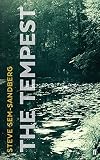
In Steve Sem-Sandberg’s slow burning yet spellbinding novel, The Tempest, the narrator is called back to his childhood home where secrets from a shadowy past are revealed and suspicions confirmed. Following the death of his foster parent, Johannes, Andreas Lehman returns to the small Norwegian island where he grew up. Johannes was living alone when he died, Andreas and his older sister Minna having years earlier left the island for the city. Minna’s recent death leaves Andreas on his own show more to sort out Johannes’ home and property. The island’s history is complex. Relevant details stretch back decades, to the dark years of the Nazi occupation. And all of this is intricately intertwined with Andreas’s own family and he and Minna’s mysterious childhood origins. Andreas’ and Minna’s story is also linked to the Kaufmanns, the island’s most prominent, and most notorious family—prominent because the Kaufmanns owned most of the land and hired people to work on it, and notorious because they collaborated with the Nazis during the occupation, Jan-Heinz Kaufmann even occupying a high position in Quisling’s government. The novel’s pivotal action follows Andreas after he arrives on the island and moves back into his childhood home, known as the Yellow Villa. Here he discovers that Johannes is in possession of various documents originally belonging to Jan-Heinz Kaufmann, documents that Kaufmann’s widow foisted on Johannes after her husband’s death. The Mains Farm, where the Kaufmanns lived, situated within sight of the Yellow Villa, still stands as it did when Andreas was a child, but the only remaining occupant is Mr. Carsten, the loathsome farm manager. There are no Kaufmanns left, both the widow and the Kaufmann daughter, Helga, who suffered from a congenital form of muscular deterioration, having also died. The slow reveal of the island’s many secrets builds excruciating narrative tension as Andreas makes a variety of unpleasant discoveries and begins a belated process of reinterpreting a past that, as a child, he was not equipped to understand. Central to the story are his recollections of living in a house with an elderly and reclusive alcoholic who was reviled by the island’s population because of his connection to the Kaufmanns (Johannes served as the Kaufmann’s driver), and a sister whose behaviour as she matured became disruptive and openly contemptuous of everything to do with the island, including her brother. The novel is stunningly atmospheric. With the wooded landscape often cloaked in mist, it almost seems as if the island itself is trying to keep shameful truths under wraps. It is densely written, in long paragraphs that go unbroken for pages at a time. And it is also a story that demands close attention from the reader because of the number of characters and the web of relationships among them. The Tempest is an example of a novel, set in a closed social realm abounding with peculiarities and steeped in its own mythology, where everyone knows everyone else’s business, a place where grudges run deep and grievances persist from one generation to the next. And, lastly, it is a courageous book, one that testifies bluntly and truthfully to the ways in which horrors from the past, kept hidden for years, can cause anguish and pain in the present. show less
Rating: I really do not know. Say three stars just to put a value here.
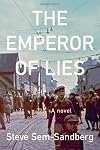
The Book Report: "There's no business like Shoah business." It's cynical, it's infuriating, and it's inevitable that this huge, horrific, and richly dramatic story should be exploited in a million different ways. This novel manages, seventy years after the fact, to find a new and interesting, if completely depressing, angle on the oft-told tale: The life and times of Chaim Rumkowski, the Eldest Jew as the Germans called show more him, who was granted ownership of all the people and property in the Lodz, Poland, ghetto.
The novel shows Rumkowski in a strong and unflattering light, casting some really dark shadows; but it also illuminates what the author presumes to be Rumkowski's inner life, fraught with the ordinary human disappointments and the everyday human hurts of a misfit with an outsized personality. How Rumkowski comes to be the King of the Jews in this horrible little ghetto and what he assents to and dissents from is the meat of the book. The gigantic cast of characters includes all the factual German and Polish overlords of the ghetto that Rumkowski strives against, as well as fictional composite characters meant to offer the author a more efficient and effective means of communicating Rumkowski's complex and unappealing, if completely relatable, character.
The entire span of existence of the Lodz ghetto is covered. It's not something I think a review should try to explain...the subject of Jewish mistreatment and misery took the author over 600 pages to explore even superficially...so I'll leave it at, Rumkowski's life as King was unenviable, bordering on unendurable, and makes for extremely emotionally fraught reading.
My Review: This is not a cheery little bagatelle with which one can wile away the heavy hours of the night. This is a "sit down right here and eat your spinach" kind of a read.
I didn't like it one little bit. I am awed by the author's audacity. I am riveted by the technical bravura of the storytelling choices he's made. I cannot speak highly enough of the translator, whose efforts on behalf of the story are heroic in the actual sense of the word: Imagine the saddest, least hopeful story ever conceived by the mind of Man and then tell it in your own language that's faithful to the poetics of another language and another person. [[Sarah Death]], what a dreadful last name she has, has served thee and me in true hero's part by taking this dark and sad and fascinating journey before us, then coming back to tell us all about it. It's a landmark achievement. I wish there was a huge, well-publicized prize for translations, one that would have the impact of the Nobels. Death deserves it.
So how to rate the book...whether to recommend it or not...it's tough to say. I didn't, as mentioned above, like the book at all, because the vast amount of and dreary sameness within Holocaustic literature has worn me thin in the empathy spot. But this is a story that's really, really involving, and the sheer magnitude of the storytelling chutzpah is worthy of praise and commentary.
How about this: The less you know about the Holocaust, the stronger my encouragement that you read this book. If all you've ever done is read The Diary of Anne Frank, then I consider this book essential to your education. For anti-Semites, it's crucial (pun intended) that you read the book.
But it is not at all fun. show less
The Book Report: "There's no business like Shoah business." It's cynical, it's infuriating, and it's inevitable that this huge, horrific, and richly dramatic story should be exploited in a million different ways. This novel manages, seventy years after the fact, to find a new and interesting, if completely depressing, angle on the oft-told tale: The life and times of Chaim Rumkowski, the Eldest Jew as the Germans called show more him, who was granted ownership of all the people and property in the Lodz, Poland, ghetto.
The novel shows Rumkowski in a strong and unflattering light, casting some really dark shadows; but it also illuminates what the author presumes to be Rumkowski's inner life, fraught with the ordinary human disappointments and the everyday human hurts of a misfit with an outsized personality. How Rumkowski comes to be the King of the Jews in this horrible little ghetto and what he assents to and dissents from is the meat of the book. The gigantic cast of characters includes all the factual German and Polish overlords of the ghetto that Rumkowski strives against, as well as fictional composite characters meant to offer the author a more efficient and effective means of communicating Rumkowski's complex and unappealing, if completely relatable, character.
The entire span of existence of the Lodz ghetto is covered. It's not something I think a review should try to explain...the subject of Jewish mistreatment and misery took the author over 600 pages to explore even superficially...so I'll leave it at, Rumkowski's life as King was unenviable, bordering on unendurable, and makes for extremely emotionally fraught reading.
My Review: This is not a cheery little bagatelle with which one can wile away the heavy hours of the night. This is a "sit down right here and eat your spinach" kind of a read.
I didn't like it one little bit. I am awed by the author's audacity. I am riveted by the technical bravura of the storytelling choices he's made. I cannot speak highly enough of the translator, whose efforts on behalf of the story are heroic in the actual sense of the word: Imagine the saddest, least hopeful story ever conceived by the mind of Man and then tell it in your own language that's faithful to the poetics of another language and another person. [[Sarah Death]], what a dreadful last name she has, has served thee and me in true hero's part by taking this dark and sad and fascinating journey before us, then coming back to tell us all about it. It's a landmark achievement. I wish there was a huge, well-publicized prize for translations, one that would have the impact of the Nobels. Death deserves it.
So how to rate the book...whether to recommend it or not...it's tough to say. I didn't, as mentioned above, like the book at all, because the vast amount of and dreary sameness within Holocaustic literature has worn me thin in the empathy spot. But this is a story that's really, really involving, and the sheer magnitude of the storytelling chutzpah is worthy of praise and commentary.
How about this: The less you know about the Holocaust, the stronger my encouragement that you read this book. If all you've ever done is read The Diary of Anne Frank, then I consider this book essential to your education. For anti-Semites, it's crucial (pun intended) that you read the book.
But it is not at all fun. show less
The Emperor of Lies: A Novel, by Steve Sem-Sandberg is quite the ambitious undertaking, and filled with exceptional, emotional and horrific captures of history. The book has left me for weeks unable to totally formulate a review due to the unimaginable content.
The novel revolves around Mordechai Chaim Rumkowski and his dynamics within the Lodz Ghetto in Poland during World War II. His actions have been debated, applauded and also detested throughout the decades. His motivations have been show more questioned. Sem-Sandberg brings us depictions of the man and his dynamics within the demeaning setting of the ghetto environment.
Rumkowski was the Jewish Elder, and, in his mind, the ruler of the Lodz Ghetto, with the power to make decisions regarding the Jewish population within the ghetto walls. From the children, the aged and the disabled to the strongest of adults, Rumkowski held their lives in his hands.
He made decisions as to whether one would live or die, and some see him as a savior for his thinking process, yet others see him as a brute, a man possessed with demons of his own. He seemed to me to be a man who did not have a deep regard for humanity, although he would probably state otherwise. His decisions forced men, women and children into labor (labor that was exchanged for life, labor that demanded long hours and hard toiling), and the end result was that the majority of those individuals eventually succumbed to the harsh environment or being deported and finally murdered by the Nazis.
Rumkowski felt and thought that if he had factories built and organized a workforce, that the ghetto would be productive and keep the Nazis from sending the Jewish population to an ultimate death. He seemed to have the mind of a manic personality, from the way Sem-Sandberg describes his actions, with him being euphoric one minute, cruel the next minute, and a man with extreme narcissism, and quite the tyrant.
Every horror imaginable fills the pages of The Emperor of Lies, every minute devastation and form of demeaning and degredadation of humanity, and every depiction of a man crazed with the thirst for power fills the pages. I was riveted and overwhelmed by the haunting depictions.
He felt he had it all, and that his life was one of importance to the Nazis. He was so possessed with his ideas and arrogance that he never imagined the final outcome for himself, just like those 250,000 before him…
Steve Sem-Sandberg has written a historical novel like no other. The Emperor of Lies is so much more than a novel, it is a stunning and historical novel filled with extreme visuals and documentations that were heavily researched. the intensity of the story is compelling, leaving one to wonder, in the end, what was the reasoning and desire in Rumkowski’s mindset. Was he friend or foe? Did he intentionally save lives or destroy other lives under the guise of saving others? Was he a savior or was he a villain in a plot in which he was a co-conspirator? Steve Sem-Sandberg leaves it up to the reader to decide for themselves through his masterful and brilliant writing.
In my opinion The Emperor of Lies is a major piece of Holocaust Literature and a masterpiece. I highly recommend it to everyone. show less
The novel revolves around Mordechai Chaim Rumkowski and his dynamics within the Lodz Ghetto in Poland during World War II. His actions have been debated, applauded and also detested throughout the decades. His motivations have been show more questioned. Sem-Sandberg brings us depictions of the man and his dynamics within the demeaning setting of the ghetto environment.
Rumkowski was the Jewish Elder, and, in his mind, the ruler of the Lodz Ghetto, with the power to make decisions regarding the Jewish population within the ghetto walls. From the children, the aged and the disabled to the strongest of adults, Rumkowski held their lives in his hands.
He made decisions as to whether one would live or die, and some see him as a savior for his thinking process, yet others see him as a brute, a man possessed with demons of his own. He seemed to me to be a man who did not have a deep regard for humanity, although he would probably state otherwise. His decisions forced men, women and children into labor (labor that was exchanged for life, labor that demanded long hours and hard toiling), and the end result was that the majority of those individuals eventually succumbed to the harsh environment or being deported and finally murdered by the Nazis.
Rumkowski felt and thought that if he had factories built and organized a workforce, that the ghetto would be productive and keep the Nazis from sending the Jewish population to an ultimate death. He seemed to have the mind of a manic personality, from the way Sem-Sandberg describes his actions, with him being euphoric one minute, cruel the next minute, and a man with extreme narcissism, and quite the tyrant.
Every horror imaginable fills the pages of The Emperor of Lies, every minute devastation and form of demeaning and degredadation of humanity, and every depiction of a man crazed with the thirst for power fills the pages. I was riveted and overwhelmed by the haunting depictions.
He felt he had it all, and that his life was one of importance to the Nazis. He was so possessed with his ideas and arrogance that he never imagined the final outcome for himself, just like those 250,000 before him…
Steve Sem-Sandberg has written a historical novel like no other. The Emperor of Lies is so much more than a novel, it is a stunning and historical novel filled with extreme visuals and documentations that were heavily researched. the intensity of the story is compelling, leaving one to wonder, in the end, what was the reasoning and desire in Rumkowski’s mindset. Was he friend or foe? Did he intentionally save lives or destroy other lives under the guise of saving others? Was he a savior or was he a villain in a plot in which he was a co-conspirator? Steve Sem-Sandberg leaves it up to the reader to decide for themselves through his masterful and brilliant writing.
In my opinion The Emperor of Lies is a major piece of Holocaust Literature and a masterpiece. I highly recommend it to everyone. show less
It took me a while to face picking this book up and reading it; not just its sheer heft (650 pages...) but also the dark subject matter, the story of the Lodz ghetto during World War II. When I did, the first 20 or 30 pages weren't all that encouraging, as it first began to read more like a documentary memoir of sorts than a novel. Then the drama and the narrative crept up on me and I was hooked.
Can a Jew really become a collaborator with the Nazis? Mordechai Chaim Rumkowski almost certainly show more never saw himself as a collaborator, but told himself that everything he did while running the Lodz ghetto for the Nazis was done with the goal of preserving as many as possible of its inhabitants from the horrors that lay outside its walls. That reveals the extent of the man's self deception and lies (as in the title) that he tells himself as well as Lodz's Jewish population. This is a novel that's a study of power, of corruption, of the daily and mundane horrors that we tend to forget about, overshadowed as they are by the concentration camps. (When Lodz's Jewish population was finally deported, the majority went straight to Chelmno -- in contrast to Auschwitz, this was truly an extermination camp that only three people are known to have survived.)
The reader, however, knows and sees only what the ghetto's inhabitants know and see. They cling to the ghetto without fully knowing what might lie ahead for them if they succumb to pressure and register for deportation. It is Rumkowski who controls their fate: he talks of "my Jews" and "my ghetto", and insists that to be saved, to be worthy of being saved, the Jews must work for their captors in factories that turn out water materiel and other goods. They must prove that they have value to the Nazis. This is a devastating character study of Rumkowski himself, who remains the kind of man who makes other people wince with embarrassment when his jokes fall flat and with his clumsy platitudes and tinny laugh. There's also a much darker side to the man who at first does seem to have some redeeming qualities, such as his pre-war commitment to creating residential homes for Jewish orphans. A childless man, the war transforms him into a paterfamilias and an emperor of lies.
The broad story line is about power but the author does a remarkable job of blending Rumkowski's own story with that of other ghetto inhabitants, real and imagined. What makes this book an astonishing achievment is the line that the author walks between fiction and fact; at times, it reads almost like a memoir or documentary novel. Then the shifting point of view and the drama kick in and you realize, no, this is fiction, but it's so tightly woven with fact that you can't separate the two. The other tremendous achievement is that Sem-Sandberg somehow manages to keep the death camps in the distance -- he writes from the perspective of his characters as if he, like them, can't and doesn't know for sure what lies beyond the boundary of the ghetto for those who are deported.
I was left stunned by this book on many levels, not least of which was the level of commitment and energy required to research and write such a dense book about such a bleak subject. It feels so authoritative that I can't imagine that anyone who wants to understand -- viscerally -- what it was like to live in the Lodz ghetto during the war would want to read anything else, unless they are a Holocaust historian. With all that has been written about Warsaw, this is a fascinating and chilling insight into a different kind of tyranny.
I'm rating it 4.5 stars, which means I recommend it, but only with a big caveat. The subject is bleak; it's difficult to read for that reason alone, and the omnipresent greyness hovers overhead. A more minor gripe: the ARC that I read had a Yiddish glossary in the back, but it was incomplete and there are reasonably frequent bits of German (conversations, signs) in here that weren't translated in my version and that aren't completely obvious to a reader. They may be there for a purpose, but without a translation, it's the kind of thing that some readers will find irritating. I found it worth persevering, though; I still feel haunted by the novel's bleakness but it goes on my list as one of the more memorable books of 2012 so far. show less
Can a Jew really become a collaborator with the Nazis? Mordechai Chaim Rumkowski almost certainly show more never saw himself as a collaborator, but told himself that everything he did while running the Lodz ghetto for the Nazis was done with the goal of preserving as many as possible of its inhabitants from the horrors that lay outside its walls. That reveals the extent of the man's self deception and lies (as in the title) that he tells himself as well as Lodz's Jewish population. This is a novel that's a study of power, of corruption, of the daily and mundane horrors that we tend to forget about, overshadowed as they are by the concentration camps. (When Lodz's Jewish population was finally deported, the majority went straight to Chelmno -- in contrast to Auschwitz, this was truly an extermination camp that only three people are known to have survived.)
The reader, however, knows and sees only what the ghetto's inhabitants know and see. They cling to the ghetto without fully knowing what might lie ahead for them if they succumb to pressure and register for deportation. It is Rumkowski who controls their fate: he talks of "my Jews" and "my ghetto", and insists that to be saved, to be worthy of being saved, the Jews must work for their captors in factories that turn out water materiel and other goods. They must prove that they have value to the Nazis. This is a devastating character study of Rumkowski himself, who remains the kind of man who makes other people wince with embarrassment when his jokes fall flat and with his clumsy platitudes and tinny laugh. There's also a much darker side to the man who at first does seem to have some redeeming qualities, such as his pre-war commitment to creating residential homes for Jewish orphans. A childless man, the war transforms him into a paterfamilias and an emperor of lies.
The broad story line is about power but the author does a remarkable job of blending Rumkowski's own story with that of other ghetto inhabitants, real and imagined. What makes this book an astonishing achievment is the line that the author walks between fiction and fact; at times, it reads almost like a memoir or documentary novel. Then the shifting point of view and the drama kick in and you realize, no, this is fiction, but it's so tightly woven with fact that you can't separate the two. The other tremendous achievement is that Sem-Sandberg somehow manages to keep the death camps in the distance -- he writes from the perspective of his characters as if he, like them, can't and doesn't know for sure what lies beyond the boundary of the ghetto for those who are deported.
I was left stunned by this book on many levels, not least of which was the level of commitment and energy required to research and write such a dense book about such a bleak subject. It feels so authoritative that I can't imagine that anyone who wants to understand -- viscerally -- what it was like to live in the Lodz ghetto during the war would want to read anything else, unless they are a Holocaust historian. With all that has been written about Warsaw, this is a fascinating and chilling insight into a different kind of tyranny.
I'm rating it 4.5 stars, which means I recommend it, but only with a big caveat. The subject is bleak; it's difficult to read for that reason alone, and the omnipresent greyness hovers overhead. A more minor gripe: the ARC that I read had a Yiddish glossary in the back, but it was incomplete and there are reasonably frequent bits of German (conversations, signs) in here that weren't translated in my version and that aren't completely obvious to a reader. They may be there for a purpose, but without a translation, it's the kind of thing that some readers will find irritating. I found it worth persevering, though; I still feel haunted by the novel's bleakness but it goes on my list as one of the more memorable books of 2012 so far. show less
Lists
Awards


You May Also Like


Associated Authors
Statistics
- Works
- 22
- Also by
- 4
- Members
- 913
- Popularity
- #28,083
- Rating
- 3.8
- Reviews
- 24
- ISBNs
- 129
- Languages
- 16
- Favorited
- 2