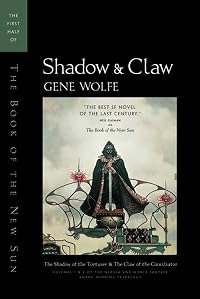
Shadow & Claw: The First Half of The Book of the New Sun
by Gene Wolfe
Solar Cycle (Collections and Selections — Omnibus 01,02), The Book of the New Sun (Collections and Selections — Omnibus 1-2)
On This Page
Description
"The Book of the New Sun is unanimously acclaimed as Gene Wolfe's most remarkable work, hailed as "a masterpiece of science fantasy comparable in importance to the major works of Tolkien and Lewis" by Publishers Weekly. Shadow & Claw brings together the first two books of the tetralogy in one volume: The Shadow of the Torturer is the tale of young Severian, an apprentice in the Guild of Torturers on the world called Urth, exiled for committing the ultimate sin of his profession -- showing show more mercy toward his victim. Ursula K. Le Guin said, "Magic stuff ... a masterpiece ... the best science fiction I've read in years!" The Claw of the Conciliator continues the saga of Severian, banished from his home, as he undertakes a mythic quest to discover the awesome power of an ancient relic, and learn the truth about his hidden destiny. "One of the most ambitious works of speculative fiction in the twentieth century." -- The Magazine of Fantasy and Science Fiction"-- show lessTags
Recommendations

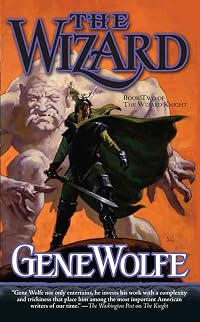
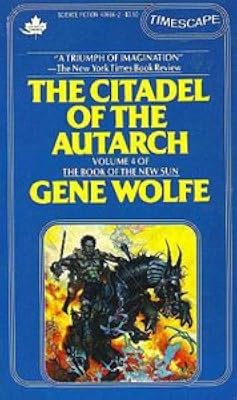

Member Recommendations
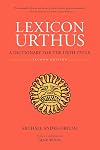
Cecrow Companion piece serving as interpretive guide to Gene Wolfe's multi-layered work.
20
LamontCranston "The composition of a novel in the first person, whose narrator would omit or disfigure the facts and indulge in various contradictions which would permit a few readers - very few readers - to perceive an atrocious or banal reality."

Member Reviews
(Review for both volumes)
A masterpiece of an anachronistic future, Wolfe's seminal work combines so many elements of philosophical musings, epic storytelling styles, unfocused wanderings of prose, literary and mythological references and high concept science fiction, that I doubt I could do justice to it - nor could perhaps anyone.
I can't say 'Severian' was a character I enjoyed following at all times (his many love arcs along with other things that happen, are not for modern sensibilities) and his conflicting musings and conversations often gave a contradictory layer to the story which served (deliberately I am sure) only to obfuscate things it had already seemed to clear up. His development was interesting though, with a unique twist show more I wont spoil here and who he is at the end versus how he started is such steady and subtle development you rarely see in literature. His supporting cast - whether human, sword (damn I loved Terminus Est as a weapon) or "other" - are the ones that provide the true emotion and tragedy to the story and there are some I admit attachments to and sadness at their own story's terminus.
I loved the style of breaking it into informal Acts and set pieces and he keeps the same structure through all four books. I loved the references to other literary works (H G Wells' Morlocks in volume one for example). I loved the anachronisms of the antique fantasy settings and the archaic nomenclature against the backdrop of a farflung future - especially given the information we are provided with by the end, some of which is mind blowing. I especially enjoyed his stories within stories - of which there are many throughout both volumes. Whilst some have analogous links to the narrative, others feel like a cheeky wink to critics of his style - especially after what happens after a particular sequence of three.
Not everything is concluded or explained acceptably for my mind, but I feel the true takeaway from the book is going to be individual for the reader, especially given so much imagery is open to interpretation and the formation of my own theories I have attributed to certain things seem to differ with others (I have yet to order all my thoughts fully on it and probably wont at least until I read it again someday). There will be people who will break down and analyse every chapter and sentence or hang on the beautiful prose that occasions some sections of the story. Fine I guess, but I'm not really a big proponent of that, although I acknowledge the craftmanship in the writing is exemplary. There is also a lot made of Severian as unreliable and a liar. I acknowledge the former, but the latter should be regarded as less clear cut. He doesn't always give the full truth at each point, but he controls it until it's time to reveal details that were missing.
Is it the greatest literary epic since Lord of the Rings? Maybe, I'm not sure. But there are breathtaking bits that as are noteworthy for the surreal mundanity in which they are conveyed as much as their concept. It will reward the patient reader, but there's a lot to take in and points seemingly meaningless and forgotten early on are referred to later - so it is wise to read the entire 1200 odd pages without too much of a gap.
It deserves its masterpiece status, but it's not always a good book. Make of that what you will. show less
A masterpiece of an anachronistic future, Wolfe's seminal work combines so many elements of philosophical musings, epic storytelling styles, unfocused wanderings of prose, literary and mythological references and high concept science fiction, that I doubt I could do justice to it - nor could perhaps anyone.
I can't say 'Severian' was a character I enjoyed following at all times (his many love arcs along with other things that happen, are not for modern sensibilities) and his conflicting musings and conversations often gave a contradictory layer to the story which served (deliberately I am sure) only to obfuscate things it had already seemed to clear up. His development was interesting though, with a unique twist show more I wont spoil here and who he is at the end versus how he started is such steady and subtle development you rarely see in literature. His supporting cast - whether human, sword (damn I loved Terminus Est as a weapon) or "other" - are the ones that provide the true emotion and tragedy to the story and there are some I admit attachments to and sadness at their own story's terminus.
I loved the style of breaking it into informal Acts and set pieces and he keeps the same structure through all four books. I loved the references to other literary works (H G Wells' Morlocks in volume one for example). I loved the anachronisms of the antique fantasy settings and the archaic nomenclature against the backdrop of a farflung future - especially given the information we are provided with by the end, some of which is mind blowing. I especially enjoyed his stories within stories - of which there are many throughout both volumes. Whilst some have analogous links to the narrative, others feel like a cheeky wink to critics of his style - especially after what happens after a particular sequence of three.
Not everything is concluded or explained acceptably for my mind, but I feel the true takeaway from the book is going to be individual for the reader, especially given so much imagery is open to interpretation and the formation of my own theories I have attributed to certain things seem to differ with others (I have yet to order all my thoughts fully on it and probably wont at least until I read it again someday). There will be people who will break down and analyse every chapter and sentence or hang on the beautiful prose that occasions some sections of the story. Fine I guess, but I'm not really a big proponent of that, although I acknowledge the craftmanship in the writing is exemplary. There is also a lot made of Severian as unreliable and a liar. I acknowledge the former, but the latter should be regarded as less clear cut. He doesn't always give the full truth at each point, but he controls it until it's time to reveal details that were missing.
Is it the greatest literary epic since Lord of the Rings? Maybe, I'm not sure. But there are breathtaking bits that as are noteworthy for the surreal mundanity in which they are conveyed as much as their concept. It will reward the patient reader, but there's a lot to take in and points seemingly meaningless and forgotten early on are referred to later - so it is wise to read the entire 1200 odd pages without too much of a gap.
It deserves its masterpiece status, but it's not always a good book. Make of that what you will. show less
(Review for both volumes)
A masterpiece of an anachronistic future, Wolfe's seminal work combines so many elements of philosophical musings, epic storytelling styles, unfocused wanderings of prose, literary and mythological references and high concept science fiction, that I doubt I could do justice to it - nor could perhaps anyone.
I can't say 'Severian' was a character I enjoyed following at all times (his many love arcs along with other things that happen, are not for modern sensibilities) and his conflicting musings and conversations often gave a contradictory layer to the story which served (deliberately I am sure) only to obfuscate things it had already seemed to clear up. His development was interesting though, with a unique twist show more I wont spoil here and who he is at the end versus how he started is such steady and subtle development you rarely see in literature. His supporting cast - whether human, sword (damn I loved Terminus Est as a weapon) or "other" - are the ones that provide the true emotion and tragedy to the story and there are some I admit attachments to and sadness at their own story's terminus.
I loved the style of breaking it into informal Acts and set pieces and he keeps the same structure through all four books. I loved the references to other literary works (H G Wells' Morlocks in volume one for example). I loved the anachronisms of the antique fantasy settings and the archaic nomenclature against the backdrop of a farflung future - especially given the information we are provided with by the end, some of which is mind blowing. I especially enjoyed his stories within stories - of which there are many throughout both volumes. Whilst some have analogous links to the narrative, others feel like a cheeky wink to critics of his style - especially after what happens after a particular sequence of three.
Not everything is concluded or explained acceptably for my mind, but I feel the true takeaway from the book is going to be individual for the reader, especially given so much imagery is open to interpretation and the formation of my own theories I have attributed to certain things seem to differ with others (I have yet to order all my thoughts fully on it and probably wont at least until I read it again someday). There will be people who will break down and analyse every chapter and sentence or hang on the beautiful prose that occasions some sections of the story. Fine I guess, but I'm not really a big proponent of that, although I acknowledge the craftmanship in the writing is exemplary. There is also a lot made of Severian as unreliable and a liar. I acknowledge the former, but the latter should be regarded as less clear cut. He doesn't always give the full truth at each point, but he controls it until it's time to reveal details that were missing.
Is it the greatest literary epic since Lord of the Rings? Maybe, I'm not sure. But there are breathtaking bits that as are noteworthy for the surreal mundanity in which they are conveyed as much as their concept. It will reward the patient reader, but there's a lot to take in and points seemingly meaningless and forgotten early on are referred to later - so it is wise to read the entire 1200 odd pages without too much of a gap.
It deserves its masterpiece status, but it's not always a good book. Make of that what you will. show less
A masterpiece of an anachronistic future, Wolfe's seminal work combines so many elements of philosophical musings, epic storytelling styles, unfocused wanderings of prose, literary and mythological references and high concept science fiction, that I doubt I could do justice to it - nor could perhaps anyone.
I can't say 'Severian' was a character I enjoyed following at all times (his many love arcs along with other things that happen, are not for modern sensibilities) and his conflicting musings and conversations often gave a contradictory layer to the story which served (deliberately I am sure) only to obfuscate things it had already seemed to clear up. His development was interesting though, with a unique twist show more I wont spoil here and who he is at the end versus how he started is such steady and subtle development you rarely see in literature. His supporting cast - whether human, sword (damn I loved Terminus Est as a weapon) or "other" - are the ones that provide the true emotion and tragedy to the story and there are some I admit attachments to and sadness at their own story's terminus.
I loved the style of breaking it into informal Acts and set pieces and he keeps the same structure through all four books. I loved the references to other literary works (H G Wells' Morlocks in volume one for example). I loved the anachronisms of the antique fantasy settings and the archaic nomenclature against the backdrop of a farflung future - especially given the information we are provided with by the end, some of which is mind blowing. I especially enjoyed his stories within stories - of which there are many throughout both volumes. Whilst some have analogous links to the narrative, others feel like a cheeky wink to critics of his style - especially after what happens after a particular sequence of three.
Not everything is concluded or explained acceptably for my mind, but I feel the true takeaway from the book is going to be individual for the reader, especially given so much imagery is open to interpretation and the formation of my own theories I have attributed to certain things seem to differ with others (I have yet to order all my thoughts fully on it and probably wont at least until I read it again someday). There will be people who will break down and analyse every chapter and sentence or hang on the beautiful prose that occasions some sections of the story. Fine I guess, but I'm not really a big proponent of that, although I acknowledge the craftmanship in the writing is exemplary. There is also a lot made of Severian as unreliable and a liar. I acknowledge the former, but the latter should be regarded as less clear cut. He doesn't always give the full truth at each point, but he controls it until it's time to reveal details that were missing.
Is it the greatest literary epic since Lord of the Rings? Maybe, I'm not sure. But there are breathtaking bits that as are noteworthy for the surreal mundanity in which they are conveyed as much as their concept. It will reward the patient reader, but there's a lot to take in and points seemingly meaningless and forgotten early on are referred to later - so it is wise to read the entire 1200 odd pages without too much of a gap.
It deserves its masterpiece status, but it's not always a good book. Make of that what you will. show less
Gene Wolfe is one of those writers that though I've long been dimly aware of him, my curiosity about him was particularly stirred up by the denizens of /r/printSF, where he has a particularly vocal and adoring group of fans. His work is famously inscrutable; the introduction to this book (by Ada Palmer of the inscrutable Terra Ignota) says that there are science fiction books that are confusing to the inexperienced reader sf—and as those books are to easier books, so is The Book of the New Sun to those books. That is to say, there are some science fiction books you can only read once you have learned how to read science fiction, and Gene Wolfe you can only read once you have learned how to read Gene Wolfe. So I was pleased when I was show more gifted the new "Tor Essentials" editions of The Book of the New Sun, and I recently read the first one, which collects the first two books, The Shadow of the Torturer and The Claw of the Conciliator.
Book of the New Sun is about a member of the guild of torturers, Severian; Shadow of the Torturer covers his adolescence in the guild, and then the beginning of his exile, when he is en route to take up a post as executioner at a distant city. At first I was wondering if the inscrutability of the book was somewhat exaggerated; sure, you have to read carefully, but that's because Wolfe has dense, rich prose, and a tendency to jump around a bit chronologically (at first; it soon settles down). The world itself is a little obscure, but I had my theories. I enjoyed these early parts a lot—a richly described world in both the macro and micro senses. The dense, traditional, circumscribed world Severian moves through is fascinating and interesting. Additionally, I always like coming-of-age stuff, and this is a good example of it.
Once Severian leaves, though, the book gets weird. It actually reminds me of medieval quest narratives, or rather my most recent example of one (it has been a long time since I was in grad school, after all), the film adaptation of The Green Knight: bizarre, weird things keep happening... that are presented so matter-of-factly and received so matter-of-factly that they thus become even weirder and bizarre. Severian is recruited into a troupe of players, and one feels that this is going to be some kind of picaresque, but then he's challenged to a duel, and now he's in a botanical garden where people live, and then he's on a carriage that accidentally smashes through a group of nuns, and then when you think the story has forgotten all about that theatrical troupe, they somehow catch up to him and they're all performing a play together!
So it's less difficult in the sense that you don't know what's happening, and more difficult in the sense that the logic underpinning the story and world doesn't seem to be the logic of story and world we know here in the twentieth/twenty-first century. Like I said, it feels like a medieval text, in that it sort of comes across as something assembled retroactively from a bunch of disparate texts about Severian: why would the theatrical troupe reappear so much later? Well, because some later scribes stuck an unrelated story about Severian's duel into the middle of the text! So captivating, but if at the end of the book you wanted me to tell you what was actually going on, I'm not sure I could have done it.
I think Shadow of the Torturer balanced on just the right side of the weirdness, and had the opening segment to keep it grounded; the story's continuation in Claw of the Conciliator was more confusing to me, more piecemeal, too disorienting. Though I liked a lot of individual incidents, there were many aspects of the story I didn't follow at all, and ultimately I struggled through this in a way I hadn't with Shadow.
Still, they say you don't read Book of the New Sun, only reread it, so I am in for the long haul I guess. There are four books, plus a coda, and they are all part of the twelve-book "Solar Cycle" so it could be quite a long haul if I am willing! In the short term, though, I think I will certainly finish out The Book of the New Sun. show less
Book of the New Sun is about a member of the guild of torturers, Severian; Shadow of the Torturer covers his adolescence in the guild, and then the beginning of his exile, when he is en route to take up a post as executioner at a distant city. At first I was wondering if the inscrutability of the book was somewhat exaggerated; sure, you have to read carefully, but that's because Wolfe has dense, rich prose, and a tendency to jump around a bit chronologically (at first; it soon settles down). The world itself is a little obscure, but I had my theories. I enjoyed these early parts a lot—a richly described world in both the macro and micro senses. The dense, traditional, circumscribed world Severian moves through is fascinating and interesting. Additionally, I always like coming-of-age stuff, and this is a good example of it.
Once Severian leaves, though, the book gets weird. It actually reminds me of medieval quest narratives, or rather my most recent example of one (it has been a long time since I was in grad school, after all), the film adaptation of The Green Knight: bizarre, weird things keep happening... that are presented so matter-of-factly and received so matter-of-factly that they thus become even weirder and bizarre. Severian is recruited into a troupe of players, and one feels that this is going to be some kind of picaresque, but then he's challenged to a duel, and now he's in a botanical garden where people live, and then he's on a carriage that accidentally smashes through a group of nuns, and then when you think the story has forgotten all about that theatrical troupe, they somehow catch up to him and they're all performing a play together!
So it's less difficult in the sense that you don't know what's happening, and more difficult in the sense that the logic underpinning the story and world doesn't seem to be the logic of story and world we know here in the twentieth/twenty-first century. Like I said, it feels like a medieval text, in that it sort of comes across as something assembled retroactively from a bunch of disparate texts about Severian: why would the theatrical troupe reappear so much later? Well, because some later scribes stuck an unrelated story about Severian's duel into the middle of the text! So captivating, but if at the end of the book you wanted me to tell you what was actually going on, I'm not sure I could have done it.
I think Shadow of the Torturer balanced on just the right side of the weirdness, and had the opening segment to keep it grounded; the story's continuation in Claw of the Conciliator was more confusing to me, more piecemeal, too disorienting. Though I liked a lot of individual incidents, there were many aspects of the story I didn't follow at all, and ultimately I struggled through this in a way I hadn't with Shadow.
Still, they say you don't read Book of the New Sun, only reread it, so I am in for the long haul I guess. There are four books, plus a coda, and they are all part of the twelve-book "Solar Cycle" so it could be quite a long haul if I am willing! In the short term, though, I think I will certainly finish out The Book of the New Sun. show less
Perhaps I should not tell it, but I lifted my sword to Heaven then, to the diminished sun with the worm in his heart; and I called, “His life for mine, New Sun, by your anger and my hope!”
—The Claw of the Conciliator by Gene Wolfe
I do not shrink from difficult prose. In fact, I seek it out. There are certain titles I plan on getting to, far in the future, sometime when I’ve gotten a tummy ache on confectionary fiction and need to equalize the pH with more savory fare. “Finnegan’s Wake”, “2666”, “War and Peace”, “The 120 Days of Sodom”—the list shall never end . . . well, until I end. However, that list is part of an invisible canon, I’d suspect, of any serious bibliophile the Western world over. “In show more Search of Lost Time” indeed; who’s got time for seven volumes of growing up in France? Without swords, that is. And that reminds me. Swords.
I’d read the first volume to “The Book of the New Sun” nearly twenty years ago. It didn’t grab me like I’d hoped, obviously, else I’d have finished the damn thing. But now that I’m on the second part, I can’t help think that maybe I was unprepared for a work of fantasy to be so challenging. Tolkien may have invented who-gives-a-shit-how-many-Elvish-languages, drew maps of worlds of Middle-earth to rival those from the Renaissance, and penned prose as purple and yawn-inducing as Henry James. Yet, once I sifted the nuggets from the scree, his works were largely accessible. Not so with Gene Wolfe. “The Claw of the Conciliator” is fucking hard. I mean, I’m looking up at least one word a page—sometimes four. Fuligin, carnifex, baluchither, thylacodon, hipparch—enough red squiggly underlines in a Word document to fool one into believing he suffered from macular degeneration. And it’s not just the lexicon you’ll scrape together to get through it (there actually IS one: “Lexicon Urthus”—no shit), but the sheer amount of omitted backstory, just dumping a poor soul in this far-flung world to wade through the waters and verbiage and huge cast of characters, makes one almost feel as if his compass were useless being that close to the magnet factory. Wolfe assumes the reader is intelligent and doesn’t spoon feed, explicate or even bother with neologisms. Swear to God, every word I’ve had to look up is either archaic, Latin or dug out of some layer in the earth only discovered once the quake ended, dislodging cities and forcing up defunct tongues on fresh mantle.
It’s exhausting. I’m taking it in pieces. Like it probably should be. And I’m being rewarded with beauty. For all that esoterica I’m finding complex souls, missions problematic and unexpected, countries divulged and summarily drowned in blood, magic and ritual. I’m not yet sure if it’s great or just greatly impressive. But its power is undeniable. And it sure as shit wrings the neck on anything a fantasy serial with feathers has presented, chicken-hearted hops in the farmyard, thus far. At least in my experience.
And what he doesn’t tell or show is a hovering shadow with more density than the average immersive fantasy author’s entire oeuvre. I can’t wait to sink my head back into this tar pit show less
—The Claw of the Conciliator by Gene Wolfe
I do not shrink from difficult prose. In fact, I seek it out. There are certain titles I plan on getting to, far in the future, sometime when I’ve gotten a tummy ache on confectionary fiction and need to equalize the pH with more savory fare. “Finnegan’s Wake”, “2666”, “War and Peace”, “The 120 Days of Sodom”—the list shall never end . . . well, until I end. However, that list is part of an invisible canon, I’d suspect, of any serious bibliophile the Western world over. “In show more Search of Lost Time” indeed; who’s got time for seven volumes of growing up in France? Without swords, that is. And that reminds me. Swords.
I’d read the first volume to “The Book of the New Sun” nearly twenty years ago. It didn’t grab me like I’d hoped, obviously, else I’d have finished the damn thing. But now that I’m on the second part, I can’t help think that maybe I was unprepared for a work of fantasy to be so challenging. Tolkien may have invented who-gives-a-shit-how-many-Elvish-languages, drew maps of worlds of Middle-earth to rival those from the Renaissance, and penned prose as purple and yawn-inducing as Henry James. Yet, once I sifted the nuggets from the scree, his works were largely accessible. Not so with Gene Wolfe. “The Claw of the Conciliator” is fucking hard. I mean, I’m looking up at least one word a page—sometimes four. Fuligin, carnifex, baluchither, thylacodon, hipparch—enough red squiggly underlines in a Word document to fool one into believing he suffered from macular degeneration. And it’s not just the lexicon you’ll scrape together to get through it (there actually IS one: “Lexicon Urthus”—no shit), but the sheer amount of omitted backstory, just dumping a poor soul in this far-flung world to wade through the waters and verbiage and huge cast of characters, makes one almost feel as if his compass were useless being that close to the magnet factory. Wolfe assumes the reader is intelligent and doesn’t spoon feed, explicate or even bother with neologisms. Swear to God, every word I’ve had to look up is either archaic, Latin or dug out of some layer in the earth only discovered once the quake ended, dislodging cities and forcing up defunct tongues on fresh mantle.
It’s exhausting. I’m taking it in pieces. Like it probably should be. And I’m being rewarded with beauty. For all that esoterica I’m finding complex souls, missions problematic and unexpected, countries divulged and summarily drowned in blood, magic and ritual. I’m not yet sure if it’s great or just greatly impressive. But its power is undeniable. And it sure as shit wrings the neck on anything a fantasy serial with feathers has presented, chicken-hearted hops in the farmyard, thus far. At least in my experience.
And what he doesn’t tell or show is a hovering shadow with more density than the average immersive fantasy author’s entire oeuvre. I can’t wait to sink my head back into this tar pit show less
First half of the Book of the New Sun tetralogy. So different than the run-of-the-mill postindustrial SFF world. In fact, for most of the first book, it isn’t clear whether this is a postindustrial or some kind of alternate medieval world. The language style is more epic and formal than most, too. But how can I not be impressed by a story that is not only metatextual, but at one point has two characters discuss semiotics, in a perfectly natural way?
Arguably one of the least best covers this series has had, why oh why. Severian the Torturer exiled for letting the woman he loved commit suicide earlier than she was supposed to meanders across Urth taking in the sights and sounds and people, occasionally executing some of them. It's extremely readable and the story has a logic all its own that's far more literary than the usual plot-heavy genre stuff we love so well, and yet under it all it's still a fantasy-type adventure in a Dying Earth setting, it just happens to use symbolism and archaic language a lot and is occasionally ambiguous, which certainly add to the texture of the experience, yet there's a sense that the plot is there, it's just hidden via sleight-of-hand, albeit that show more could just be the absence of plot-tokens, or rather the plot-tokens are there, their plot significance is left unstated. Anyway, it's great and weird and frustrating and sometimes quite disturbing. I've never had the sense that it's some great puzzle waiting to be solved, and analysis of the symbolism and imagery isn't the same, but it is a sort of exploration of language and imagery and symbolism, which are puzzles of a sort. Do I contradict myself? Perhaps. Or do I? No. Or do I? show less
What a mess of a book. I’m stumped at all the praise it received, including from people like Gaiman and Le Guin. They must be friends and thus have to praise it.
First of all, this is a series of episodes which do not really make a coherent whole. Editing out half of them would only make the reading shorter but wouldn’t necessarily affect the whole. While some of Wolfe’s episodic musings are excellent, others are prosaic, or sometimes downright dumb. The inclusion of a play Severian has remembered word for word and retells us word for word for unknown reasons was too much for me to endure. Seriously, what is that? Why are we reading the script of an amateur play for dozens of pages? Overall, it often feels we’re following show more Severian’s acid trip, which would be far more interesting if Severian was a more interesting character, but he is not. In fact, when he does have interesting thoughts, they seem out of place and out of character, as if another point of view has been introduced.
While the story has its moments and Wolfe gets points for some originality and literary ambitions with his treatment of language and text, he also fails miserably in too many ways. For me, the most unforgivable are ‘love’ episodes. They read like the most stereotypical prosaic romance stories if those were written for a male audience. I wanted to stab my eyes whenever Severian mused on his love/sex objects of interest. show less
First of all, this is a series of episodes which do not really make a coherent whole. Editing out half of them would only make the reading shorter but wouldn’t necessarily affect the whole. While some of Wolfe’s episodic musings are excellent, others are prosaic, or sometimes downright dumb. The inclusion of a play Severian has remembered word for word and retells us word for word for unknown reasons was too much for me to endure. Seriously, what is that? Why are we reading the script of an amateur play for dozens of pages? Overall, it often feels we’re following show more Severian’s acid trip, which would be far more interesting if Severian was a more interesting character, but he is not. In fact, when he does have interesting thoughts, they seem out of place and out of character, as if another point of view has been introduced.
While the story has its moments and Wolfe gets points for some originality and literary ambitions with his treatment of language and text, he also fails miserably in too many ways. For me, the most unforgivable are ‘love’ episodes. They read like the most stereotypical prosaic romance stories if those were written for a male audience. I wanted to stab my eyes whenever Severian mused on his love/sex objects of interest. show less
Members
- Recently Added By
Lists

Best Fantasy Novels
821 works; 361 members

S.F. Masterworks (Complete)
229 works; 15 members

SF Masterworks
193 works; 8 members

Favourite Books
1,820 works; 316 members

Fantasy Masterworks
66 works; 5 members
Speculative Fiction to Read
706 works; 31 members

Unreliable Narrators
170 works; 43 members

Unread books
1,063 works; 83 members
Read These Too
458 works; 9 members

Books Read in 2025
4,128 works; 98 members

What Twitter Talks About
14 works; 1 member
Author Information

316+ Works 43,743 Members
Gene Wolfe was born in New York City on May 7, 1931. He dropped out of Texas A&M University during his junior year and was drafted into the Army to fight in the Korean War. After the war, he received a degree in mechanical engineering from the University of Houston. He worked as an industrial engineer for Procter and Gamble, where he developed the show more machine that cooks the dough used to make Pringles potato chips. He was an editor of the trade journal Plant Engineering from 1972 to 1984 before retiring to become a full-time writer. He wrote more than 30 books during his lifetime including The Fifth Head of Cerberus, Peace, The Book of the New Sun, and The Land Across. He received the Campbell Memorial Award, the Edward E. Smith Memorial Award, the Locus Award four times, and the Nebula Award and the World Fantasy Award two times each. In 1996, he was given the World Fantasy Award for Lifetime Achievement. He was inducted into the Science Fiction Hall of Fame in 2007 and was named a Grand Master by the Science Fiction and Fantasy Writers of America in 2012. He died after a long battle with heart disease on April 14, 2019 at the age of 87. (Bowker Author Biography) show less
Some Editions
Awards and Honors
Notable Lists
Series

Solar Cycle
12 works (Collections and Selections — Omnibus 01,02)

The Book of the New Sun
4 works (Collections and Selections — Omnibus 1-2)
Belongs to Publisher Series
Artefakty (19)
SF Masterworks (New design)
Work Relationships
Is contained in
Common Knowledge
- Canonical title
- Shadow & Claw: The First Half of The Book of the New Sun
- Original title
- Shadow & Claw
- Alternate titles
- The Book Of The New Sun Volume 1: Shadow and Claw
- Original publication date
- 1983 (omnibus) (omnibus); 1980-05 (The Shadow of the Torturer) (The Shadow of the Torturer); 1981-03 (The Claw of the Conciliator) (The Claw of the Conciliator)
- People/Characters
- Severian; Thecla; Agia; Dorcas; Dr. Talos; Baldanders (show all 10); Jolenta; Vodalus; The Autarch; Jonas
- Important places
- Urth; Nessus; Citadel
- Epigraph
- A thousand ages in thy sight
Are like an evening gone;
Short as the watch that ends the night
Before the rising sun. - First words
- It is possible I already had some presentiment of my future.
- Last words
- (Click to show. Warning: May contain spoilers.)If you wish to walk no farther with me, reader, I do not blame you. It is no easy road.
- Publisher's editor
- Hartwell, David G.
- Blurbers
- Le Guin, Ursula K.; Martin, George R.R.
- Original language
- English
Classifications
Statistics
- Members
- 4,645
- Popularity
- 3,131
- Reviews
- 69
- Rating
- (4.10)
- Languages
- 5 — English, French, German, Polish, Swedish
- Media
- Paper, Ebook
- ISBNs
- 15
- ASINs
- 8