On This Page
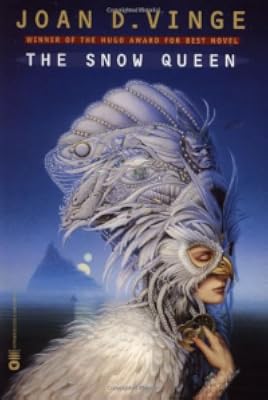
Description
The imperious Winter colonists have ruled the planet Tiamat for 150 years, deriving wealth from the slaughter of the sea mers. But soon the galactic stargate will close, isolating Tiamat, and the 150-year reign of the Summer primitives will begin. All is not lost if Arienrhod, the ageless, corrupt Snow Queen, can destroy destiny with an act of genocide. Arienrhod is not without competition as Moon, a young Summer-tribe sibyl, and the nemesis of the Snow Queen, battles to break a conspiracy show more that spans space. show lessTags
Recommendations



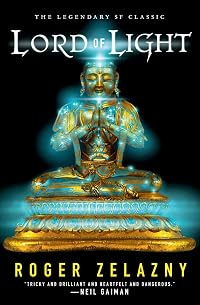


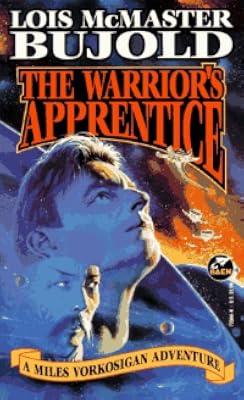
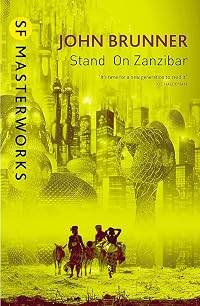

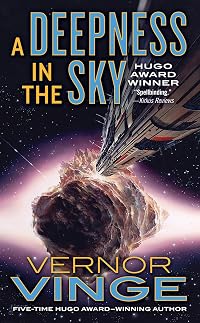

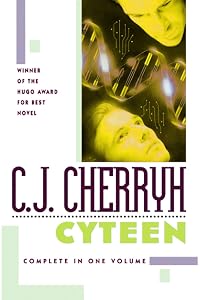
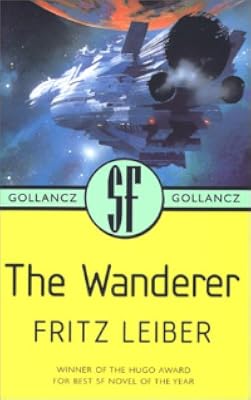

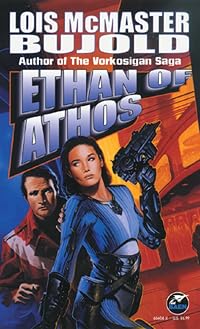
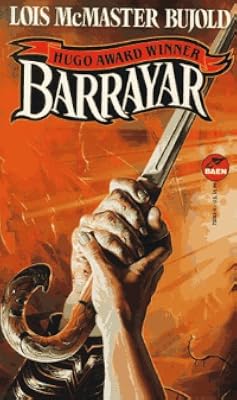




Member Recommendations

Member Reviews
The first time I read this I bounced because I was expecting something reminiscent of the fairy tale and didn't see it. This time I read far enough to see it.
Being novel-length it also fits in a whole lot more science-fictiony goodness: stellar phenomena causing a fascinating society divide, an anti-aging serum, sibyls who can channel the databanks of a mysterious computer, the appropriately named Hegemony restricting the technology the planet gets so it can continue to exploit its longevity drug.... The tech-free summer and tech-full winter cycles on the planet are in a way echoed by the way the Hegemony itself is a relatively ignorant successor to a far higher-tech fallen empire. I wonder if that's intentional; I see there a sequels show more so perhaps one day will find out. show less
Being novel-length it also fits in a whole lot more science-fictiony goodness: stellar phenomena causing a fascinating society divide, an anti-aging serum, sibyls who can channel the databanks of a mysterious computer, the appropriately named Hegemony restricting the technology the planet gets so it can continue to exploit its longevity drug.... The tech-free summer and tech-full winter cycles on the planet are in a way echoed by the way the Hegemony itself is a relatively ignorant successor to a far higher-tech fallen empire. I wonder if that's intentional; I see there a sequels show more so perhaps one day will find out. show less
Loosely based on a famous fairy tale, The Snow Queen is a story about good, evil, power, and love above all else. The planet Tiamat is defined by two cultures, which alternate power over centuries. When Tiamat is accessible by the black hole based FTL drive, it is part of the Hegemony, the Snow Queen ruling over Winter with technological tricks from the stars. For the century of Summer, when the stars of the planet orbit close on the black hole, Summer rules, a luddite culture that rejects technology. Tiamat is also the only source of the immortality drug the Water of Life, murderously extracted from the local mer, a seal-like species.
The cycle has endured for centuries, but the current Snow Queen, Arienrhod, a woman of tremendous power show more and evil, plans to break the cycle and uphold Winter. The first step of her plan is to clone herself, and have the clone raised as a member of the Summer culture. But then everything goes awry, as the clone, Moon, and her cousin and true love Sparks, refuse to fit neatly into the plan. Moon becomes a sybil; a semi-legendary breed of oracles, and winds up leaving the planet with idealistic tech-smugglers trying to help out Tiamat in their own way. Sparks falls into the orbit of Arienrhod and becomes her right hand, the masked hunter Starbuck. Most of the novel concerns the arc of degeneration around Arienrhod, her city of Carbuncle (an immense shell-like spiral constructed by the fallen Old Empire), and the moral degeneracy that is connected to the immortality drug. Meanwhile, Moon discovers the extent of her powers and returns to set things right.
Vinge is the first self-consciously feminist writer to win the Hugo for best novel, an opinion confirmed by the front and backwards material in this version. Ursula LeGuin is a great writer, but concerned more with Humanity than with women. Vonda McIntyre wrote an adolescent fantasy, and a bad one at that. I think Snow Queen is a female counterpart to Dune The similarities are clear: a chosen one with the power of prophecy; a harsh and primitive world valued for its immortality drug; themes of moral decay and personal salvation; along with inversions like water for sand, and lust instead of revenge as the prime driver for personal politics. One of the viewpoint characters, the interstellar cop Jerusha PalaThion, is a clear analog to the stark discrimination women faced in the late 1970s.
I was surprised by how much I liked this book, given that I'd never heard of Joan D. Vinge before. She had a checkered career, doing novelizations to make ends meet in the 90s, and then spending most of the 00s down with medical problems. The way that minor uses and abuses on human dignity add up to a complete lack of empathy and great evil in Arienrhod and her minions, is as good a picture of evil as any that I've read (comparable to Fallada's Every Man Dies Alone). Vinge is vividly imaginative and solid on the world-building. For example the FTL drive involves plunging into a black hole, so starships are disc-like to minimize tidal stresses, while the cultures of Tiamat and the Hegemony are brightly painted. She's an enthusiastic writer, and a great describer of place and character. If I have any strike against this book, it's that it's actually too quickly paced. I think the story could've been done better as two volumes or a trilogy, with a little more room to breath.
Not that my audience needs any reminders, but The Snow Queen is proof that great stories can be written by women, about women, for everybody. show less
The cycle has endured for centuries, but the current Snow Queen, Arienrhod, a woman of tremendous power show more and evil, plans to break the cycle and uphold Winter. The first step of her plan is to clone herself, and have the clone raised as a member of the Summer culture. But then everything goes awry, as the clone, Moon, and her cousin and true love Sparks, refuse to fit neatly into the plan. Moon becomes a sybil; a semi-legendary breed of oracles, and winds up leaving the planet with idealistic tech-smugglers trying to help out Tiamat in their own way. Sparks falls into the orbit of Arienrhod and becomes her right hand, the masked hunter Starbuck. Most of the novel concerns the arc of degeneration around Arienrhod, her city of Carbuncle (an immense shell-like spiral constructed by the fallen Old Empire), and the moral degeneracy that is connected to the immortality drug. Meanwhile, Moon discovers the extent of her powers and returns to set things right.
Vinge is the first self-consciously feminist writer to win the Hugo for best novel, an opinion confirmed by the front and backwards material in this version. Ursula LeGuin is a great writer, but concerned more with Humanity than with women. Vonda McIntyre wrote an adolescent fantasy, and a bad one at that. I think Snow Queen is a female counterpart to Dune The similarities are clear: a chosen one with the power of prophecy; a harsh and primitive world valued for its immortality drug; themes of moral decay and personal salvation; along with inversions like water for sand, and lust instead of revenge as the prime driver for personal politics. One of the viewpoint characters, the interstellar cop Jerusha PalaThion, is a clear analog to the stark discrimination women faced in the late 1970s.
I was surprised by how much I liked this book, given that I'd never heard of Joan D. Vinge before. She had a checkered career, doing novelizations to make ends meet in the 90s, and then spending most of the 00s down with medical problems. The way that minor uses and abuses on human dignity add up to a complete lack of empathy and great evil in Arienrhod and her minions, is as good a picture of evil as any that I've read (comparable to Fallada's Every Man Dies Alone). Vinge is vividly imaginative and solid on the world-building. For example the FTL drive involves plunging into a black hole, so starships are disc-like to minimize tidal stresses, while the cultures of Tiamat and the Hegemony are brightly painted. She's an enthusiastic writer, and a great describer of place and character. If I have any strike against this book, it's that it's actually too quickly paced. I think the story could've been done better as two volumes or a trilogy, with a little more room to breath.
Not that my audience needs any reminders, but The Snow Queen is proof that great stories can be written by women, about women, for everybody. show less
I've owned this book for a very long time, and actually started reading it twice, only to get distracted. This time I finished it, and I was not disappointed. It starts off kind of slow, but then Vinge gets all of her different plots going and the thing sort of gathers this incredible momentum. It's an SF novel about a world called Tiamat, which orbits two stars and a stable black hole. Due its idiosyncratic orbit, every 150 years Tiamat's atmosphere radically changes. During the cold years, the Winters rule, and during the warm, the Summers have control. The Winters are technologically minded, whereas the Summers consider technology to be heresy. So basically, every 150 years, the world devolves back to a sort of primitive state, and show more all offworld contact ceases. The Winter queen of Tiamat is hatching a plot to maintain power after the changeover, and it centers around a young Summer named Moon...
The complexity of the plot and politics brings to mind _Dune_ by Frank Herbert, although in many ways I actually preferred _The Snow Queen_ over Dune. The whole novel is more women-centered, which is interesting and welcome, but what I really enjoyed was the strength of Vinge's characterization -- there are a LOT of secondary characters, and she manages to make every one of them interesting. Even when a character had a relatively small role in the plot, I was able to get a feel for their motivations and who they were as a person. I look forward to reading the sequels. show less
The complexity of the plot and politics brings to mind _Dune_ by Frank Herbert, although in many ways I actually preferred _The Snow Queen_ over Dune. The whole novel is more women-centered, which is interesting and welcome, but what I really enjoyed was the strength of Vinge's characterization -- there are a LOT of secondary characters, and she manages to make every one of them interesting. Even when a character had a relatively small role in the plot, I was able to get a feel for their motivations and who they were as a person. I look forward to reading the sequels. show less
I always found the Hans Christian Andersen's fairy tale [b:The Snow Queen|139987|The Snow Queen|Hans Christian Andersen|http://photo.goodreads.com/books/1320401869s/139987.jpg|2535765] oddly disturbing, that business with mirror splinters in the eye creeped me out as a kid. This Hugo award winning book by Joan D. Vinge (Mrs. Vernor Vinge no less), takes the original tale and turns it up to 11. I find that female science fiction authors are frequently better at character development and are better prose stylists than their male counterparts, cases in point (off the top of my head) would be Ursula K. Le Guin, Lois McMaster Bujold, Connie Willis, Anne Macaffrey and Mrs. Vinge here very much deserves to be mentioned in the same breath with show more them (but isn't). Certainly with this book she has created some emotionally complex and believable characters who she puts through the wringer and they come out better people for it (unlike in real life when I tend to shake my fist at the sky post-wringer sessions).
The hardest villains to write are the ones who are morally complex and commit heinous acts on the basis of some warped principles, like altruism gone wrong. The super wicked titular Machiavellian character never hesitate to corrupt, murder and destroy for in the name of planetary progress. She thinks nothing of killing half the populace yet she misses her younger days when she was just a happy care-free girl and instinctively fall for a boy who reminds her of her younger self. She now ranks among my all time favorite villains. Romance is a major aspect of the story but not the adolescent starry-eyed type that will leave twitards weak at the knees. Here it is portrayed as a vastly complicated human condition that create, destroy, corrupt and redeem with equal facility.
My only complaint is that the male characters are not as well developed as the ladies, especially the two "starbucks" characters who are despicable and deserve their eventual decaffeination (sorry). The one exception is a sympathetic policeman who goes on to have his own spin-off adventures in later books.
It is a terrible shame that The Snow Queen is out of print (as I write) while Stephenie Meyer's literary manures are in plentiful supply. The most recent book by Joan D. Vinge appears to be a [b:Cowboys and Aliens|10904100|Cowboys and Aliens|Joan D. Vinge|http://photo.goodreads.com/books/1318919765s/10904100.jpg|15820209] novelization. What is the world coming to?? show less
The hardest villains to write are the ones who are morally complex and commit heinous acts on the basis of some warped principles, like altruism gone wrong. The super wicked titular Machiavellian character never hesitate to corrupt, murder and destroy for in the name of planetary progress. She thinks nothing of killing half the populace yet she misses her younger days when she was just a happy care-free girl and instinctively fall for a boy who reminds her of her younger self. She now ranks among my all time favorite villains. Romance is a major aspect of the story but not the adolescent starry-eyed type that will leave twitards weak at the knees. Here it is portrayed as a vastly complicated human condition that create, destroy, corrupt and redeem with equal facility.
My only complaint is that the male characters are not as well developed as the ladies, especially the two "starbucks" characters who are despicable and deserve their eventual decaffeination (sorry). The one exception is a sympathetic policeman who goes on to have his own spin-off adventures in later books.
It is a terrible shame that The Snow Queen is out of print (as I write) while Stephenie Meyer's literary manures are in plentiful supply. The most recent book by Joan D. Vinge appears to be a [b:Cowboys and Aliens|10904100|Cowboys and Aliens|Joan D. Vinge|http://photo.goodreads.com/books/1318919765s/10904100.jpg|15820209] novelization. What is the world coming to?? show less
It really irritates me that I can't remember why I sought out this book. I have made a concerted effort recently to find SF written by women, but still, some one or some article must have recommended this book in particular, and I don't remember what that was. It was a like a mosquito buzzing around my head the entire time I read this book.
But onto the book itself! Like Dune, the planet of our particular interest (in this case, Tiamat), is the only source of an amazing substance with powerful effects. Like in Dune, the rules of the known universe conspire to keep this planet subjugated in order to enjoy continued supply of said substance. And like in Dune, there is one character who seems uniquely predestined to rule this planet and show more lead it out of its subjugation. (Also, like in Dune, this doesn't really rely on exploiting the substance, but rather halting its production altogether.)
The Snow Queen is a highly ambitious book. Unfortunately, I didn't find Moon nearly as relatable as Paul. (Paul? Relatable? It seems strange to say such a thing, even in comparison.) Moon is foreign from top to bottom -- starting out as a Lady-worshiping, cousin-loving island girl, transformed into a sibyl for the Lady herself, then as she discovers what a sibyl truly is and finally learns that she is a clone of the Snow Queen, ruler of Tiamat, created in an attempt to retain power past the Change...
It was the minor characters and the fate of the planet itself that finally drew me in, until I was reading voraciously, turning each page with both increasing hunger and certainty that the ultimate fate I yearned to learn wouldn't be revealed until a later book. (Indeed! There are at least three more books in the series.) I fell in love with the mers, with Fate, with PalaThion, Miroe, BZ, Tor and her faithful Pollux. Some readers criticized that Snow Queen was too long, and maybe during the long, slow buildup I would have agreed. But by the end I wanted more, more more. Chapters, entire books devoted to these fascinating support characters! And more about Moon's plotting for Summer! I guess this all means I'm on the hook for at least the next book in the series... show less
But onto the book itself! Like Dune, the planet of our particular interest (in this case, Tiamat), is the only source of an amazing substance with powerful effects. Like in Dune, the rules of the known universe conspire to keep this planet subjugated in order to enjoy continued supply of said substance. And like in Dune, there is one character who seems uniquely predestined to rule this planet and show more lead it out of its subjugation. (Also, like in Dune, this doesn't really rely on exploiting the substance, but rather halting its production altogether.)
The Snow Queen is a highly ambitious book. Unfortunately, I didn't find Moon nearly as relatable as Paul. (Paul? Relatable? It seems strange to say such a thing, even in comparison.) Moon is foreign from top to bottom -- starting out as a Lady-worshiping, cousin-loving island girl, transformed into a sibyl for the Lady herself, then as she discovers what a sibyl truly is and finally learns that she is a clone of the Snow Queen, ruler of Tiamat, created in an attempt to retain power past the Change...
It was the minor characters and the fate of the planet itself that finally drew me in, until I was reading voraciously, turning each page with both increasing hunger and certainty that the ultimate fate I yearned to learn wouldn't be revealed until a later book. (Indeed! There are at least three more books in the series.) I fell in love with the mers, with Fate, with PalaThion, Miroe, BZ, Tor and her faithful Pollux. Some readers criticized that Snow Queen was too long, and maybe during the long, slow buildup I would have agreed. But by the end I wanted more, more more. Chapters, entire books devoted to these fascinating support characters! And more about Moon's plotting for Summer! I guess this all means I'm on the hook for at least the next book in the series... show less
The Snow Queen is the first book in the four-book Snow Queen Cycle, a science fiction series with some really interesting world-building. There were a lot of things I liked about this, and also some things that annoyed me. The first half went a bit slow for me at times despite being interesting, but picked up in the second half.
The setting is an interesting one. Although it’s definitely science fiction and there are science fiction explanations and back stories for everything, there are parts that have more of a fantasy feel. The story is set on a world called Tiamat which is caught in a cycle that makes it accessible to other inhabited planets for 150 years, then cut off for another 150 years. The story starts a few years before the show more end of the accessible part of the cycle. Tiamat has two factions among the native population – the Summers, who live primitive lives without technology, and the Winters, who embrace alien technology. Because Tiamat has a resource that they can’t get anywhere else, the people from other worlds keep Tiamat technologically repressed, allowing the Winters to share some of their technology while they can access the world, but ensuring that they can’t become technologically self-sufficient during their absence. The Winter faction reigns while their planet is accessible, but at the end of that period they’re forced to turn control over to the Summer faction. The current Winter queen, Arienrhod, naturally isn’t looking forward to the end of her reign, which will require her death, and she has a plot or two.
Although I liked some of the characters, I think the world-building and the story were the more interesting parts to me. I really enjoyed the concept of the sibyls, I loved seeing characters with minimal exposure to advanced technology suddenly getting a bigger taste of it than they ever imagined, and I wanted to see Tiamat become technologically self-sufficient while yet hating everything Arienrhod did.
My feelings about the characters were more mixed. I liked some of the secondary characters quite a bit once we got to know them more. As far as the main characters went, I mostly liked and sympathized with Moon, but I didn’t agree with some of her decisions. I initially liked and sympathized with Sparks too, but that didn’t last long.I hated him pretty strongly by the end. He was a wimpy, whiny, flip-flopping jerk. He became whatever the girl he was with wanted him to be and had no spine of his own. When they were young, he wanted to be a sibyl because Moon wanted to be a sibyl. As soon as he had sex with the queen, he decided he wanted to be the next Starbuck and essentially become all of the things he had believed were morally wrong. Then when Moon found him again they had sex and instantly he flip-flopped back to being good again, feeling guilty about all the things he had done and ready to do the right things again because that’s what Moon wanted of him. I never felt like he did anything because it was the right thing to do; he was driven by his emotions and what the people influencing him wanted. And so I was really annoyed at Moon for saving him and continuing to love him. I couldn’t understand how she could love somebody who had such a weak moral center that he would do the things he did, to the point of being complicit in the attempted murder of all of his people. Feeling guilty about doing horrible things doesn’t redeem you if you still did those horrible things when you knew better. Yeah, I think he made me a little angrier than I even realized until I sat down to write this review! :)
Aside from my spoiler tagged tirade about Sparks, I sometimes wished the story was a bit less romance-y. It wasn’t enough to really annoy me, because there was still a lot of interesting world-building and story to hold my interest, but there really was quite a bit of romance once you list it out. There were two connected love triangles, with offshoots. There was also a separate angsty romance, but it received very little page time.Moon-Sparks-Arienrhod make up one triangle, and Sparks-Moon-BZ make up another. Then you have Herne obsessed with Arienrhod and hints that Cress had a thing for Moon. Then Jerusha and Ngenet.
I always find it easier to rant about my complaints than the things I liked though, and the things I liked outweighed the things I didn’t by quite a lot. Although this book tells a complete story, I’m really looking forward to finding out what happens next on this world and plan to continue the series. show less
The setting is an interesting one. Although it’s definitely science fiction and there are science fiction explanations and back stories for everything, there are parts that have more of a fantasy feel. The story is set on a world called Tiamat which is caught in a cycle that makes it accessible to other inhabited planets for 150 years, then cut off for another 150 years. The story starts a few years before the show more end of the accessible part of the cycle. Tiamat has two factions among the native population – the Summers, who live primitive lives without technology, and the Winters, who embrace alien technology. Because Tiamat has a resource that they can’t get anywhere else, the people from other worlds keep Tiamat technologically repressed, allowing the Winters to share some of their technology while they can access the world, but ensuring that they can’t become technologically self-sufficient during their absence. The Winter faction reigns while their planet is accessible, but at the end of that period they’re forced to turn control over to the Summer faction. The current Winter queen, Arienrhod, naturally isn’t looking forward to the end of her reign, which will require her death, and she has a plot or two.
Although I liked some of the characters, I think the world-building and the story were the more interesting parts to me. I really enjoyed the concept of the sibyls, I loved seeing characters with minimal exposure to advanced technology suddenly getting a bigger taste of it than they ever imagined, and I wanted to see Tiamat become technologically self-sufficient while yet hating everything Arienrhod did.
My feelings about the characters were more mixed. I liked some of the secondary characters quite a bit once we got to know them more. As far as the main characters went, I mostly liked and sympathized with Moon, but I didn’t agree with some of her decisions. I initially liked and sympathized with Sparks too, but that didn’t last long.
Aside from my spoiler tagged tirade about Sparks, I sometimes wished the story was a bit less romance-y. It wasn’t enough to really annoy me, because there was still a lot of interesting world-building and story to hold my interest, but there really was quite a bit of romance once you list it out. There were two connected love triangles, with offshoots. There was also a separate angsty romance, but it received very little page time.
I always find it easier to rant about my complaints than the things I liked though, and the things I liked outweighed the things I didn’t by quite a lot. Although this book tells a complete story, I’m really looking forward to finding out what happens next on this world and plan to continue the series. show less
Tiamat is a planet inhabited by two (nearly literally) polar opposite peoples - the Summers and the Winters. They trade rule back and forth in 150-year jaunts. The story takes place during a Winter reign, and Arienrhod is the Snow Queen ruling over the entire world and who (by nefarious means, of course) has kept herself alive and young for all of her 150-year time as ruler. There is a police force, though, representing The Hegemony, a multi-world governing body, which holds power over Tiamat and holds their culture and society back for their own reasons. Moon and Sparks are a part of this world: Summers, cousins and lovers, who find themselves torn apart on many levels, fighting to find each other again, and playing more important show more roles in the turn of events than they would ever have dreamed.
Slow in places, but the story is a good one overall. Interesting premise, cool world building and solid characters. show less
Slow in places, but the story is a good one overall. Interesting premise, cool world building and solid characters. show less
Members
- Recently Added By
Lists

Best Science Fiction Novels
816 works; 430 members

Favorite Science Fiction by Women Authors
741 works; 203 members
Survey of Classic Science Fiction
171 works; 48 members

Science fiction novels with a female protagonist
105 works; 30 members

Hugo Award Winning Novels
63 works; 23 members
Best Feminist Science Fiction
188 works; 35 members

Hugo Awards - Best Novel
69 works; 10 members

Survey of Science Fiction and Fantasy
101 works; 13 members

Bookriot's 100 Must-Read Sci-Fi Fantasy Novels By Female Authors
100 works; 9 members
Locus Award for Best Novel/SF Novel
53 works; 6 members
Recommended Speculative Fiction by Women and People of Color
298 works; 45 members

Winter Books
127 works; 17 members

Favorite Fairy Tales
269 works; 103 members

Books Read in 2022
5,226 works; 112 members
Favorite Science Fiction
457 works; 221 members

1980 great books
63 works; 1 member

Books Read in 2014
2,344 works; 89 members

Books Read in 2017
4,249 works; 130 members

Books With Winter Words in the Title
42 works; 6 members

Books Read in 2010
631 works; 11 members

Books with Noble Titles
179 works; 11 members

Same Title
115 works; 3 members

Stories Inspired by Other Fiction
127 works; 24 members

Literature About Women and Girls
426 works; 40 members

Books Set on Islands
190 works; 24 members

Female Protagonist
1,056 works; 57 members
Favorite Fairy Tale Retellings
210 works; 62 members
NTS Book Channel
316 works; 1 member
Author Information

82+ Works 11,260 Members
Joan D. Vinge, 1948 - Joan Dennison Vinge was born April 2, 1948 in Baltimore, Maryland to Seymour W. Dennison, an engineer, and Carol Erwin, an executive secretary. Vinge attended San Kiego State University and received a B.A. in anthropology, with highest honors. She was married to author Vernor S. Vinge from 1972-1979. Vinge began writing show more professionally in 1973 and her first story, "Tin Soldier," appeared in Orbit 14 in 1974. Her story, "Eyes of Amber," won the 1977 Hugo Award for Best Science Fiction Novelette. Her novel "The Snow Queen" won the Hugo Award for Best Science Fiction Novel in 1981, "Psion" was named a Best Book for Young Adults by the American Library Association and "Return of the Jedi Storybook" was the #1 bestseller on the New York Times Book Review List for two months. (Bowker Author Biography) show less
Some Editions
Awards and Honors
Awards
Notable Lists
Series

Belongs to Publisher Series
Work Relationships
Common Knowledge
- Canonical title
- The Snow Queen
- Original title
- The Snow Queen
- Original publication date
- 1980
- People/Characters
- Arienrhod Winter (the Snow Queen); Fate Ravenglass Winter; Moon Dawntreader Summer; Sparks Dawntreader Summer; Geia Jerusha PalaThion; BZ Gundhalinu (show all 7); Ngenet ran Ahase Miroe
- Important places
- Carbuncle, Tiamat; Kharemough
- Epigraph
- "...strait is the gate and narrow is the way which
leadeth unto light, and few there be that find it."
- New Testament, Matthew 7:14
"You shall have joy, or you shall have power, said
God; you shall not have both.
- Ralph Waldo Emerson - Dedication
- To the Lady, who gives, and who takes away.
- First words
- The door swung shut silently behind them, cutting off the light, music, and wild celebration of the ballroom.
- Last words
- (Click to show. Warning: May contain spoilers.)He smiled, and then he began to laugh; and together they started back through the abandoned halls — returning to Carbuncle, going home.
- Blurbers
- McIntyre, Vonda N.; Norton, Andre; Zelazny, Roger; Lynn, Elizabeth A.; Clarke, Arthur C.; McCaffrey, Anne
- Original language
- English, US
Classifications
Statistics
- Members
- 2,531
- Popularity
- 7,607
- Reviews
- 57
- Rating
- (3.92)
- Languages
- 9 — Czech, English, French, German, Italian, Polish, Portuguese, Romanian, Spanish
- Media
- Paper, Audiobook, Ebook
- ISBNs
- 20
- ASINs
- 26