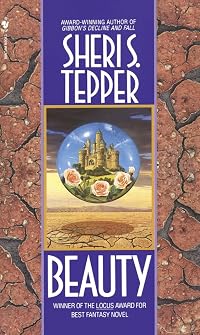
Beauty
by Sheri S. Tepper
On This Page
Description
With the critically acclaimed novels "The Gate To Women's Country, Raising The Stones," and the Hugo-nominated "Grass," Sheri Tepper has established herself as one of the major science fiction writers of out Time. In "Beauty," she broadens her territory even further, with a novel that evokes all the richness of fairy tale and fable. Drawing on the wellspring of tales such as "Sleeping Beauty," Beauty is a moving novel of love and loss, hope and despair, magic and nature. Set against a show more backdrop both enchanted and frightening, the story begins with a wicked aunt's curse that will afflict a young woman named Beauty on her sixteenth birthday. Though Beauty is able to sidestep tragedy, she soon finds herself embarked on an adventure of vast consequences. For it becomes clear that the enchanted places of this fantastic world--a place not unlike our own--are in danger and must be saved before it is too late. "From the Paperback edition." show lessTags
Recommendations












Member Recommendations
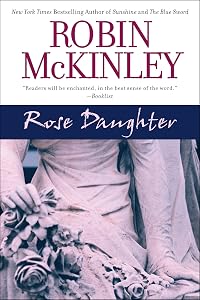
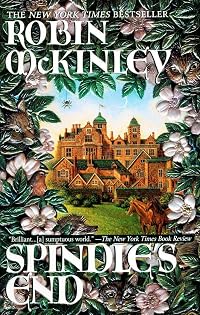
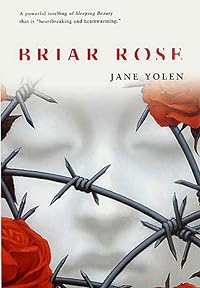
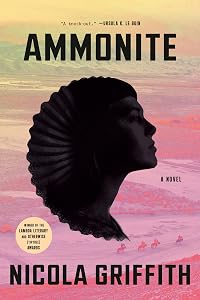
sturlington Also a fairy tale retelling with sci-fi/fantasy elements.
20

Member Reviews
Time travel and fairy tales, Beauty starts off well embedded in a 14th-century Sleeping Beauty and after lingering there jumps to a barren late 21st and violent 20th. Returning to a plague-struck 14th for a dark Cinderella and exploring imaginary realms and/including Faerie and saving Tam Lin. Well, further episodes include costly revenge, finding lost love, that idiot Snow White, a spell in Hell—one of the most memorable parts of the novel, the epic end of Faerie, and a loquacious Frog Prince. A whiff of hope for the return of Beauty is the conclusion, after religions of greed are thoroughly excoriated in Tepper fashion.
This has to be one of Ms. Tepper's better works. In too many of her books, we usually see some kind of weird deus ex machina or whatever thrown in (Family Tree, Gibbon's Decline and Fall, the Visitor) so I am pleased to say that this story is more coherent than these.
Anyone familiar with Ms. Tepper should not be surprised at her inclusion of commentaries against this or that - Ms. Tepper is quite the feminist, and snarks against religion, violence, patriarchy, the abuse of the environment/natural resources and so on and so forth. She paints a rather grim picture of the future, a future where by the end of the 21st century, the people of the earth have pretty much screwed themselves - just about everything else besides humans are show more extinct, and everyone has to eat this crap called Fidipur, which is the only thing to eat, and the world is overcrowded. Ms. Tepper doesn't seem to have an optimistic view of our future (The Companions, for example) but given the current state of the world, I can see why.
But a good part of this story is set in the fourteenth and fifteenth centuries and contains quite a bit of history. The character of Beauty is likeable. She's not SMART, but she is practical, and this in itself is pretty smart. She learns a lot when she travels to the 20th and 21st century. It's fun how other fairy tales have been woven into here with tweaks and the like to make them more realistic and adult. She is mother to Cinderella, grandmother to Snow White, and great-grandmother to the Frog Prince. Sounds crazy - but it actually works!
Faery is also wonderfully described and illustrated, as Ms. Tepper has a way with her pen that enables her to describe things wonderfully. This is definitely a good book, and thought-provoking, and wonderfully imaginative.
M.M. Strawberry Library & Reviews show less
Anyone familiar with Ms. Tepper should not be surprised at her inclusion of commentaries against this or that - Ms. Tepper is quite the feminist, and snarks against religion, violence, patriarchy, the abuse of the environment/natural resources and so on and so forth. She paints a rather grim picture of the future, a future where by the end of the 21st century, the people of the earth have pretty much screwed themselves - just about everything else besides humans are show more extinct, and everyone has to eat this crap called Fidipur, which is the only thing to eat, and the world is overcrowded. Ms. Tepper doesn't seem to have an optimistic view of our future (The Companions, for example) but given the current state of the world, I can see why.
But a good part of this story is set in the fourteenth and fifteenth centuries and contains quite a bit of history. The character of Beauty is likeable. She's not SMART, but she is practical, and this in itself is pretty smart. She learns a lot when she travels to the 20th and 21st century. It's fun how other fairy tales have been woven into here with tweaks and the like to make them more realistic and adult. She is mother to Cinderella, grandmother to Snow White, and great-grandmother to the Frog Prince. Sounds crazy - but it actually works!
Faery is also wonderfully described and illustrated, as Ms. Tepper has a way with her pen that enables her to describe things wonderfully. This is definitely a good book, and thought-provoking, and wonderfully imaginative.
M.M. Strawberry Library & Reviews show less
Wow, this one could have come straight from the fever-dreams of Andrea Dworkin. What starts out as an interesting variant of the Sleeping Beauty tale soon changes into a truly horrifying dystopian screed against humanity, particularly the male wing of same. I got about 220 pages in when I had to start skipping ahead to keep from running screaming into the night. This is so bleak and hopeless that I can't recommend it. There are some images I can't seem to get out of my head, and I'm heartily sorry.
I first read this book when I was a teenager, and it was the very first book I ever read that had reimagined fairy tales in them - I remember my elated surprise at how the different stories I knew so well were woven into something new.
I reread it when I was a bit older and was very charmed of the feminist vibes it gave me, with heaps of Strong Women who weren’t that easily cowed into submission, and who got up and fixed things.
This time I read it and thought it was rather on the nose with the climate stuff, and the ‘the world is going to hell in a handbasket because humans are greedy idiots’ thing. I do agree with the author that it’s destructive to get too used to horrible stuff, that we need the signal function. That said, show more there’s quite a lot of horrible stuff happening in this specific book, which sort of undermines the message.
I like the writing style, the subject, the characters. I dislike the moralizing and preaching. Nevertheless, this book has really grown on me over the years. Back under the bed it goes, to be reread in a few years. show less
I reread it when I was a bit older and was very charmed of the feminist vibes it gave me, with heaps of Strong Women who weren’t that easily cowed into submission, and who got up and fixed things.
This time I read it and thought it was rather on the nose with the climate stuff, and the ‘the world is going to hell in a handbasket because humans are greedy idiots’ thing. I do agree with the author that it’s destructive to get too used to horrible stuff, that we need the signal function. That said, show more there’s quite a lot of horrible stuff happening in this specific book, which sort of undermines the message.
I like the writing style, the subject, the characters. I dislike the moralizing and preaching. Nevertheless, this book has really grown on me over the years. Back under the bed it goes, to be reread in a few years. show less
I read Beauty around the time it was released, in the early 1990s, and it haunts me to this day. The dystopic elements were not per se unique -- I think I've seen most of them in other works -- but they were woven together in one of Tepper's more compelling visions, and fully utilizing her work in the horror genre. Strikingly, Tepper critiqued horror writers for creating so much, well, horror and ugliness, and at the same time she was herself writing horror.
Anyway, I recommend this book for its hopeful horrors.
Anyway, I recommend this book for its hopeful horrors.
For GENDER IN FANTASY AND SCIENCE FICTION CHALLENGE
Sheri Tepper is an accomplished science fiction writer whose books I have long enjoyed. Her retelling of the myth of sleeping beauty was a new read for me, and it did not disappoint me. In this book, Tepper addresses our all-too-real challenge of the dwindling of magic and beauty, and the loss of the natural world which she believes they require. Her concern underlies events in the book, but it never interferes with the story of Beauty and her adventures.
Tepper opens her story in 14th-century England, a time when magic and beauty were alive and well. Her narrator, Beauty, is nearing her 16th birthday as the book begins. Choosing a loquacious adolescent to tell her story allows Tepper to show more indulge in sumptuous descriptions. Fun, but just as I began to wonder if I could tolerate this fairy tale world for almost 500 pages, Beauty is swept up in adventures which takes her through a variety of centuries and worlds. As she travels, she loses her teenage voice, gains wisdom, and has an impact on the worlds which she inhabits.
The central portion of the book is good, but when Beauty is captured, Tepper’s writing suddenly became moving and profound. She writes passionately of the power of words to create horror; to make the unspeakable speakable and thus easy for us to accept. But for Tepper, words also carry the power of survival and escape. Her book ends on a note of guarded hope.
GENDER
For the last couple of centuries, the myth of sleeping beauty has been part of western civilization’s definition of womanhood. Women were supposed to be totally passive, virtually dead until a prince kisses us, gives us meaning and the resources to live with him happily ever after. The popularized version of Freudian thought reinforced such thinking in 20th century USA. Although this myth’s power has waned in some circles today, it seems to live on in the Evangelical community, fueling opposition to expanded options for women.
Yet Tepper’s retelling of sleeping beauty is not primarily about gender. Here and there she comments on and challenges conventional gender assumptions. The prince wakens the sleeping beauty by taking her out of the enchanted castle. He happens to be kissing her at the time which mistakenly leads him to believe in the power of his kiss. But Tepper never plays with alternative gender definitions as some of the books been read for this challenge do.
Beauty is no passive sleeping beauty. She is a strong woman who makes things happen, but she lacks the deliberate commitment to all women that defines feminism. As a child, she enjoys posing as Havoc, the miller’s son, to escape the limits of being a girl/woman, but she a clearly and rather conventionally a woman, and a straight monogamous one at that. (In her loving commitment if not in her actual behavior.) Tepper also gives a wonderful, nuanced descriptions of Beauty as a mother and as a daughter in which she forgives both her mother and herself as a mother.
Two thirds of the way through the book Beauty considers what it means to be a woman, but she does not ponder over the gender roles created by society. She focuses instead on the physical vulnerability of all women who can be raped and impregnated against their will. Just as nature can be raped, although Tepper does not belabor the point.
Beauty lives until she is well over a hundred (her travel between centuries make the calculation unclear), and Tepper’s depiction of her as she ages is rare model for us all. Beauty struggles with her inevitable aches and limitations and with the loss of her stunning appearance. She experiences a love beyond the urgencies of romance and physical passion. Most of all she remains the primary force in her own life right to the end, as she attempts to preserve all that she loves from destruction.
Stereotypes like the myth of sleeping beauty can harm and limit us. They can cause us to be used as objects rather than allowing us to be full human beings. Tepper realizes that there is a link between how our society regards women and how we regard the natural world, magic and beauty. But she never allows her “message” to interfere with telling a good story show less
Sheri Tepper is an accomplished science fiction writer whose books I have long enjoyed. Her retelling of the myth of sleeping beauty was a new read for me, and it did not disappoint me. In this book, Tepper addresses our all-too-real challenge of the dwindling of magic and beauty, and the loss of the natural world which she believes they require. Her concern underlies events in the book, but it never interferes with the story of Beauty and her adventures.
Tepper opens her story in 14th-century England, a time when magic and beauty were alive and well. Her narrator, Beauty, is nearing her 16th birthday as the book begins. Choosing a loquacious adolescent to tell her story allows Tepper to show more indulge in sumptuous descriptions. Fun, but just as I began to wonder if I could tolerate this fairy tale world for almost 500 pages, Beauty is swept up in adventures which takes her through a variety of centuries and worlds. As she travels, she loses her teenage voice, gains wisdom, and has an impact on the worlds which she inhabits.
The central portion of the book is good, but when Beauty is captured, Tepper’s writing suddenly became moving and profound. She writes passionately of the power of words to create horror; to make the unspeakable speakable and thus easy for us to accept. But for Tepper, words also carry the power of survival and escape. Her book ends on a note of guarded hope.
GENDER
For the last couple of centuries, the myth of sleeping beauty has been part of western civilization’s definition of womanhood. Women were supposed to be totally passive, virtually dead until a prince kisses us, gives us meaning and the resources to live with him happily ever after. The popularized version of Freudian thought reinforced such thinking in 20th century USA. Although this myth’s power has waned in some circles today, it seems to live on in the Evangelical community, fueling opposition to expanded options for women.
Yet Tepper’s retelling of sleeping beauty is not primarily about gender. Here and there she comments on and challenges conventional gender assumptions. The prince wakens the sleeping beauty by taking her out of the enchanted castle. He happens to be kissing her at the time which mistakenly leads him to believe in the power of his kiss. But Tepper never plays with alternative gender definitions as some of the books been read for this challenge do.
Beauty is no passive sleeping beauty. She is a strong woman who makes things happen, but she lacks the deliberate commitment to all women that defines feminism. As a child, she enjoys posing as Havoc, the miller’s son, to escape the limits of being a girl/woman, but she a clearly and rather conventionally a woman, and a straight monogamous one at that. (In her loving commitment if not in her actual behavior.) Tepper also gives a wonderful, nuanced descriptions of Beauty as a mother and as a daughter in which she forgives both her mother and herself as a mother.
Two thirds of the way through the book Beauty considers what it means to be a woman, but she does not ponder over the gender roles created by society. She focuses instead on the physical vulnerability of all women who can be raped and impregnated against their will. Just as nature can be raped, although Tepper does not belabor the point.
Beauty lives until she is well over a hundred (her travel between centuries make the calculation unclear), and Tepper’s depiction of her as she ages is rare model for us all. Beauty struggles with her inevitable aches and limitations and with the loss of her stunning appearance. She experiences a love beyond the urgencies of romance and physical passion. Most of all she remains the primary force in her own life right to the end, as she attempts to preserve all that she loves from destruction.
Stereotypes like the myth of sleeping beauty can harm and limit us. They can cause us to be used as objects rather than allowing us to be full human beings. Tepper realizes that there is a link between how our society regards women and how we regard the natural world, magic and beauty. But she never allows her “message” to interfere with telling a good story show less
From the fourteenth century to the twenty-first; from medieval England to the imaginary land of Chinanga; from the Faery land of Ylles and even into hell itself, Beauty's journey spans myriad settings and covers some very important issues. Beauty is ostensibly the Sleeping Beauty of legend, but the legend is re-imagined in a delightful and thought-provoking manner. I cannot summarize the plot further without giving away so many delightful surprises; in fact, I think the first sentence of this review is almost too much of a spoiler.
The writing is simply delightful, strewn with little in-jokes for those familiar with history and legend. One of my favorites is the description of a nunnery named The Sisters of Immaculate Intentions. Several show more times while reading, I was so tickled I had to stop and read sections aloud to my husband.
Beauty herself is really the only well-developed character, but so many other enchanting (pun very much intended) characters sidle through the story that you don't really notice that none of them are terribly dynamic or fleshed out.
Although some parts are sort of lagging in between the eras of Beauty's life, I very much enjoyed every moment I spent reading this book. I strongly encourage every fan of science fiction, fantasy or social justice to read this. show less
The writing is simply delightful, strewn with little in-jokes for those familiar with history and legend. One of my favorites is the description of a nunnery named The Sisters of Immaculate Intentions. Several show more times while reading, I was so tickled I had to stop and read sections aloud to my husband.
Beauty herself is really the only well-developed character, but so many other enchanting (pun very much intended) characters sidle through the story that you don't really notice that none of them are terribly dynamic or fleshed out.
Although some parts are sort of lagging in between the eras of Beauty's life, I very much enjoyed every moment I spent reading this book. I strongly encourage every fan of science fiction, fantasy or social justice to read this. show less
Members
- Recently Added By
Lists

Favorite Fairy Tale Retellings
210 works; 62 members

Best Feminist Science Fiction
188 works; 35 members

Best Time Travel Novels
165 works; 125 members

Top Five Books of 2013
1,562 works; 715 members

Best Fantasy Novels
821 works; 361 members

Best time travel books
56 works; 22 members

Recommend the 20 best books you've read in the last five years
2,168 works; 606 members

Female Protagonist
1,056 works; 57 members

Fantasy novels with a female protagonist
76 works; 15 members

Faerie Mythology
87 works; 13 members

Recommended Speculative Fiction by Women and People of Color
298 works; 45 members

Fantasy Masterworks
66 works; 5 members

BingoDOG - Books With Mythical Creatures
57 works; 15 members

Reading List: Books for Insomniacs
17 works; 4 members

Books You Couldn't Finish
202 works; 32 members

Cinderella Stories
111 works; 15 members

Books Read in 2009
464 works; 11 members

Stories Inspired by Other Fiction
127 works; 24 members
5 Best 5 Years
71 works; 4 members

Same Title
115 works; 3 members

Fiction to Read for Earth Day
50 works; 8 members

Epic Fantasy of the 90s
111 works; 4 members

Literature About Women and Girls
394 works; 39 members

Survey of Fantasy Classics
111 works; 23 members
Favorite Fairy Tales
269 works; 103 members

Dystopian and Apocalyptic Literature
350 works; 74 members

Stories About Other Worlds
145 works; 13 members
Favorite Science Fiction by Women Authors
737 works; 202 members

Best Science Fiction Novels
816 works; 426 members
Author Information

80+ Works 25,722 Members
Sheri S. Tepper was born Shirley Stewart Douglas on July 16, 1929 near Littleton, Colorado. She held numerous jobs before becoming a full-time author including working at Rocky Mountain Planned Parenthood from 1962 to 1986, eventually becoming the executive director. In the early 1960s, she wrote poems and children's stories under the name Sheri show more S. Eberhart. In the 1980s, she became a feminist and science fiction/fantasy writer. Her books include The Revenants, After Long Silence, The Gate to Women's Country, Grass, Shadow's End, Gibbon's Decline and Fall, The Family Tree, Six Moon Dance, Singer from the Sea, The Fresco, The Visitor, The Companions, and The Margarets. She received the Locus Award for Beauty and a World Fantasy life achievement award in 2015. She also wrote horror under the name E. E. Horlak and mysteries under the names A. J. Orde and B. J. Oliphant. She died on October 22, 2016 at the age of 87. (Bowker Author Biography) show less
Some Editions
Awards and Honors
Awards
Distinctions
Series
Belongs to Publisher Series
Work Relationships
Is a retelling of
Common Knowledge
- Canonical title
- Beauty
- Original title
- Beauty
- Original publication date
- 1991
- People/Characters
- Beauty; Carabosse; Giles; Tam Lin; Rapunzal; The Frog Prince (show all 7); Snow White
- Dedication
- To Malcolm Edwards who is wisely responsible for these empty pages.
- First words
- Foreword.
In the pages that follow, there are certain interpolations written by me, Carabosse, the fairy of clocks, keeper of the secrets of time.
The Journal of Beauty, daughter of The Duke of Westfaire.
Getting started on this writing, I cut five different quills and ruined them all.
Chapter 1. My Life in Westfaire.
St. Richard of Chichester's Day, April, Year of Our Lord 1347
I never knew my mother. - Last words
- (Click to show. Warning: May contain spoilers.)Perhaps that has always been my soul.
- Blurbers
- Donaldson, Stephen R. ; Bradley, Marion Zimmer ; LeGuin, Ursula K.
- Original language
- English
Classifications
Statistics
- Members
- 1,705
- Popularity
- 13,008
- Reviews
- 34
- Rating
- (3.81)
- Languages
- 5 — Dutch, English, French, German, Spanish
- Media
- Paper, Ebook
- ISBNs
- 20
- ASINs
- 11